 Birch Bay Exterior
 Why Ferndale Roofs Wear on Their Own Schedule
Ferndale sits close enough to Birch Bay and the Strait of Georgia that homes here deal with a mix of weather most inland Whatcom County towns don't see in the same combination. You get salt-laden air moving in off the water, long stretches of driving rain through fall and winter, and a moss season that can run eight months or more on north-facing slopes shaded by fir and cedar. None of these factors alone is unusual for Western Washington. Together, on the same roof, year after year, they shorten the life of materials and fasteners that would hold up longer somewhere drier or further from salt water.
A roof that's a good fit for a home in Spokane or even Bellingham's more sheltered neighborhoods isn't automatically a good fit for a Ferndale property a few miles from the bay. The right new roof installation here starts with acknowledging that difference, not applying a generic spec sheet.
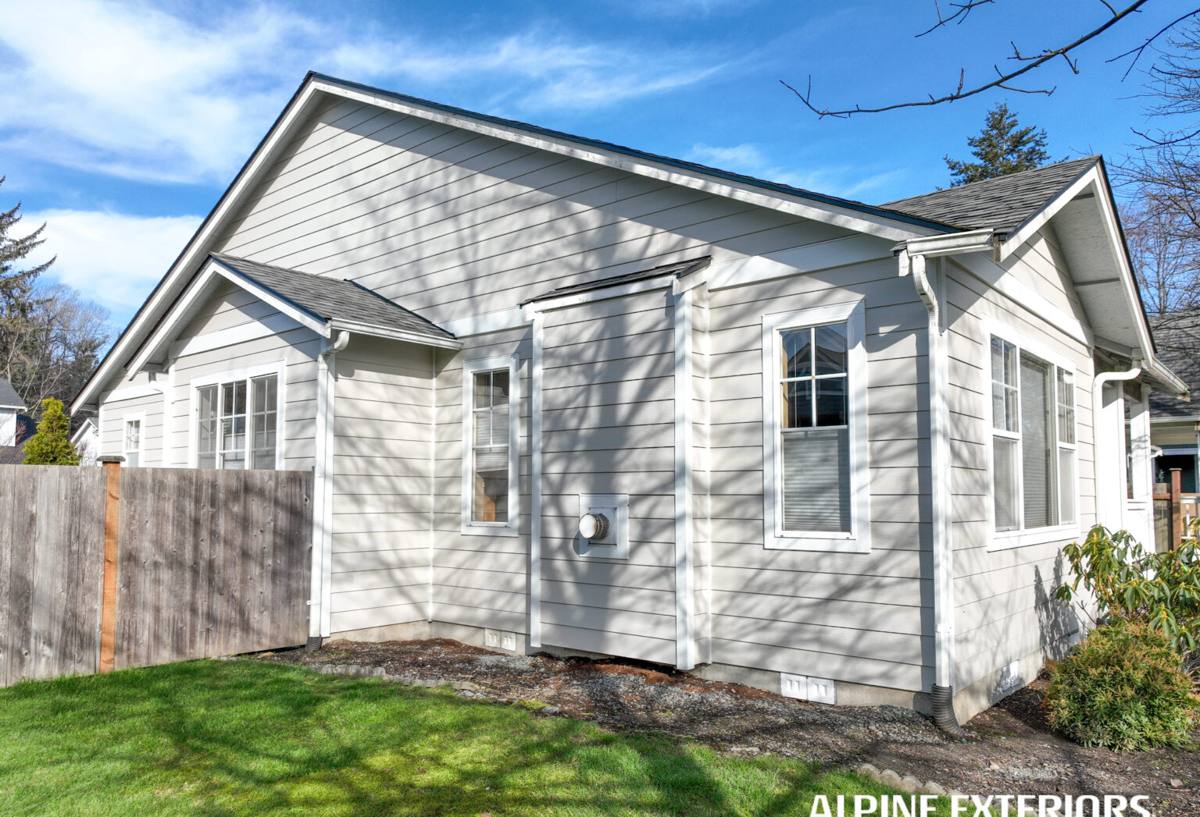
What Actually Wears Out a Roof Near the Coast
Salt Air and Metal Components
Airborne salt accelerates corrosion on anything metal — nail heads, flashing, valleys, drip edge, vent stacks. On a standard-grade roof, that shows up as rust streaking, pitted fasteners, and flashing that fails years before the shingles around it do. It's rarely dramatic; it's a slow, steady process that's easy to miss until a leak shows up at a valley or chimney.
Driving Rain
Wind-driven rain doesn't just run down a roof — it can be pushed sideways and upward under laps, edges, and around penetrations. That means underlayment quality, fastening patterns, and flashing detail work matter more here than they would in a calmer climate. A roof that's technically watertight in still conditions can still leak in a Ferndale windstorm if those details were rushed.
Moss and Sustained Moisture
Moss doesn't just sit on a roof looking bad. Once established, it holds moisture against the shingle or shake surface far longer than open air would allow, which speeds up granule loss on asphalt products and accelerates rot on wood. Shaded, north- or east-facing slopes near mature trees are the usual starting point, and once moss gets a foothold it tends to spread toward the ridge over a few seasons.
What a Correct New Roof Installation Actually Involves
"New roof" covers a lot of ground, and the difference between a roof that lasts its full expected lifespan and one that needs attention in five years usually comes down to what happens under the new material, not the material itself.
- Full tear-off to bare decking — not a layover — so we can see the actual condition of the roof, not guess at it from above
- Deck inspection and repair, replacing any sheathing that's soft, delaminated, or water-stained before anything new goes down
- Ice-and-water shield at eaves, valleys, and around penetrations, which matters more here than in drier parts of the state because of how long roofs stay wet
- Synthetic underlayment across the full field, sized and lapped correctly for wind-driven rain, not just standard felt laid loosely
- Corrosion-resistant flashing and fasteners at valleys, chimneys, skylights, and any wall-to-roof transitions, given the salt exposure
- Balanced ventilation — intake at the eaves, exhaust at the ridge — sized to the attic, not just whatever vents happened to be there before
- Correct fastening pattern for the material and this region's wind exposure, not just "enough nails to hold it down"
Any one of these steps done poorly can undercut an otherwise good roofing material. This is why we walk homeowners through the tear-off findings before we close anything up — problems in the decking or old flashing are much cheaper to fix while everything is already open.
Material Options for a Ferndale Roof
There's no single "best" roofing material for every home — it depends on budget, roof pitch, how much shade and moss pressure the property has, and how long you plan to own the home. Here's an honest comparison of what we most commonly install or discuss with Ferndale homeowners.
| Material | Typical Lifespan | How It Handles Local Conditions | Maintenance Consideration |
|---|---|---|---|
| Architectural asphalt shingle | 25–30 years | Good moisture resistance with proper underlayment; algae-resistant granule versions help slow moss and moss-adjacent staining | Benefits from periodic soft-washing on shaded slopes |
| Standing seam metal | 40–50+ years | Sheds rain and moss very well due to slick, low-friction surface and few horizontal laps for water to catch on | Higher upfront cost; fastener and flashing quality is critical near salt air |
| Composite/synthetic shake | 30–50 years | Mimics cedar look without the same rot risk in sustained wet shade | Product and installer quality varies more than with asphalt or metal |
| Cedar shake | 20–30 years with upkeep | Traditional look, but sustained moisture and moss pressure here shorten its practical lifespan without regular maintenance | Requires the most ongoing care of these options in this climate |
We'll always give a straight opinion on which of these fits a specific roof and budget rather than pushing one product across every job. On heavily shaded, low-slope sections in particular, the material's resistance to standing moisture matters more than its appearance.
Ventilation: The Part Homeowners Rarely Ask About
Attic ventilation doesn't show up in curb appeal photos, but it has an outsized effect on how long a roof lasts in a wet climate. Poor ventilation traps warm, moist air against the underside of the deck, which can lead to sheathing rot from the inside — sometimes years before any problem is visible from the outside. It also contributes to ice buildup at the eaves during cold snaps and speeds up shingle aging from below.
Part of a proper new roof installation is checking that intake and exhaust are balanced — not just present. A ridge vent with blocked or undersized soffit intake doesn't actually move much air; it just looks like a functioning system. We check this on every re-roof, not only when a homeowner specifically raises it.
Our Process, Step by Step
- On-site inspection and estimate — we look at the existing roof, attic ventilation, and any problem areas (moss buildup, valleys, chimney flashing) before quoting anything
- Written scope and material selection — a clear breakdown of what's being torn off, what's being installed, and why, so there are no surprises mid-project
- Tear-off and deck inspection — old material removed down to the sheathing, with any rot or soft spots identified and priced before covering them up
- Underlayment and flashing installation — ice-and-water shield, synthetic underlayment, and new flashing at every penetration and transition
- Material installation — shingles, metal panels, or composite product installed to manufacturer and code specifications for this wind and rain exposure
- Ventilation check and correction — intake and exhaust balanced to the attic space
- Cleanup and final walkthrough — magnetic sweep for stray fasteners, debris hauled off, and a walkthrough so you know exactly what was done
Cost Factors Worth Understanding Before You Get Quotes
Roofing quotes can vary widely, and the reasons usually come down to a handful of factors rather than one contractor simply charging more for no reason.
| Factor | Why It Moves the Price |
|---|---|
| Roof pitch and access | Steeper or harder-to-access roofs take longer and require more safety equipment |
| Layers of existing material | Removing multiple layers of old roofing costs more in labor and disposal than a single-layer tear-off |
| Deck condition | Rotted or soft sheathing found during tear-off adds material and labor not visible in an initial estimate |
| Material choice | Asphalt, metal, and composite products carry different material and installation costs, as shown above |
| Flashing and penetration count | More valleys, skylights, chimneys, and vents mean more flashing work and detail labor |
| Ventilation upgrades | Adding or correcting intake/exhaust venting is a smaller add-on cost that pays off in roof longevity |
We'd rather walk a homeowner through these factors up front than hand over a number with no explanation behind it. If your existing roof has hidden problems, we tell you before we start covering them up, with pricing attached, not after the fact.
Why a Crew That Already Works Ferndale Matters
A roofing crew that regularly works Ferndale and the broader Birch Bay area already knows which details matter here: fastener and flashing corrosion resistance near the water, moss-prone roof orientations under mature tree cover, and the wind-driven rain patterns that expose weak underlayment work. That familiarity shows up in fewer callbacks and fewer surprises during tear-off, because we've already seen how roofs in this specific climate tend to fail.
It also matters for something more practical: local permitting, disposal, and material lead times. A crew working this area regularly has those logistics dialed in, which keeps a project moving instead of stalling on paperwork or supply delays.
Signs Your Roof May Be Due for Replacement, Not Repair
- Granule loss heavy enough that you're finding grit in gutters every season
- Moss established across large sections, not just isolated patches
- Multiple past repairs to the same valley, chimney, or vent area
- Visible sagging along the ridge or between rafters
- Daylight or water staining visible from inside the attic
- Shingles curling, cupping, or losing their seal at the tabs
- The roof is nearing or past its material's expected lifespan, especially if the original installation used minimal underlayment
Not every one of these means full replacement is the only option — some are fixable with targeted repair. But when several show up together, or the roof is already at the end of its expected life, replacement is usually the more honest recommendation, and we'll tell you that directly rather than stringing out repairs on a roof that's not coming back.
Get a Straight Answer on Your Roof
If you're weighing repair against replacement, or just want an honest read on how much life is left in your current roof, we're happy to take a look. The form below gets you a free, no-pressure estimate — we'll tell you what we actually see, what it would take to do the job right for a home in this climate, and what it costs, with no obligation to move forward.