 Birch Bay Exterior
 Windows Built for Bellingham's Weather, Not Just the Showroom Floor
Bellingham sits close enough to the water and far enough into the Pacific storm track that its windows work harder than most people realize. Between the salt-laden air rolling in off Bellingham Bay, the driving rain that comes sideways during fall and winter fronts, and the long stretch of grey, damp months that let moss and algae get a foothold on anything that stays wet, a window here needs to do more than look good and keep out a draft. It needs to manage moisture at the frame and sill, resist corrosion at every fastener and hardware point, and keep performing after years of freeze-thaw swings and wind-driven wet weather. We install and service energy-efficient windows for Bellingham homeowners with that reality in mind, not a generic spec sheet written for a drier climate.
This page covers what actually matters for window performance and longevity in this part of Whatcom County, how we approach a Bellingham window job from first look to final seal, and what to ask before you hire anyone to do this work.
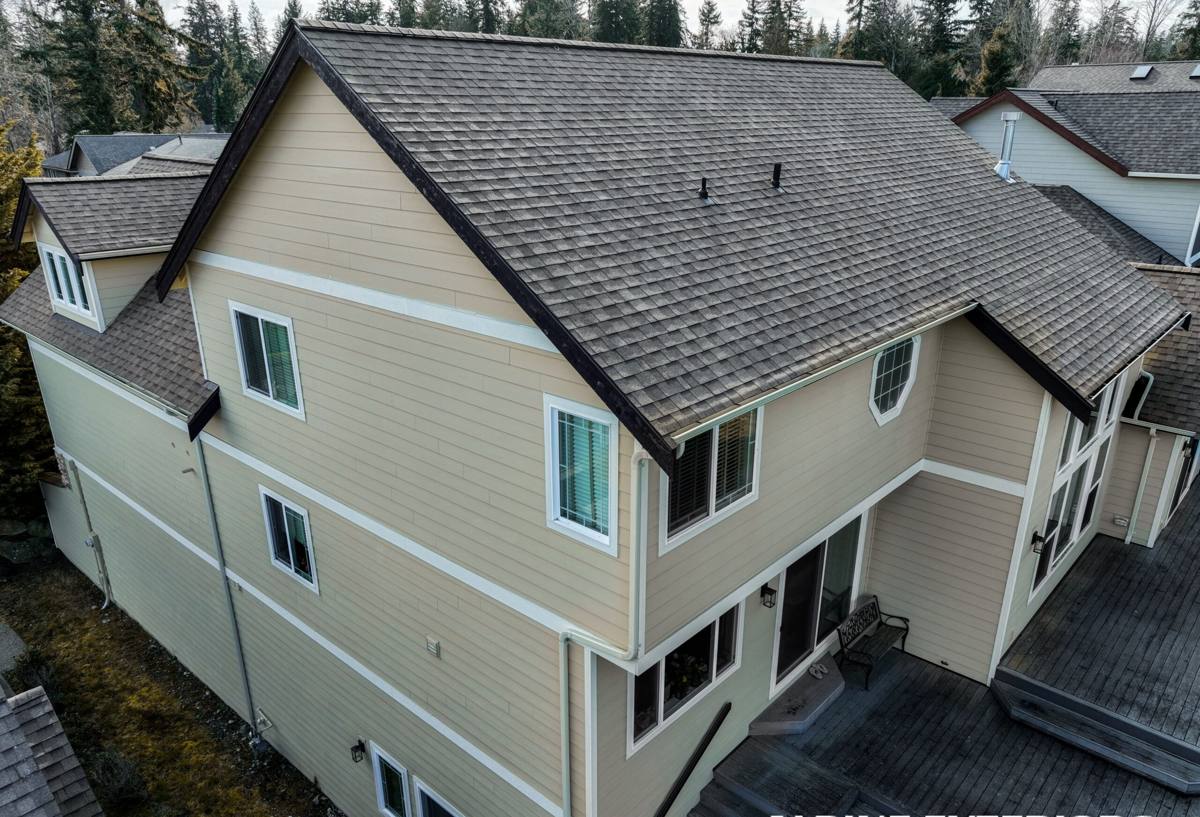
What Bellingham's Climate Actually Does to a Window
Salt Air and Metal Fatigue
Homes closer to the water pick up airborne salt that settles on exterior surfaces and works into any exposed metal — hinges, cranks, screws, and lesser-grade cladding. Over time this accelerates corrosion on hardware that isn't rated for coastal exposure, which is why the hardware package matters as much as the glass. A window that looks fine from the curb can have a corroding crank mechanism or a rusting fastener behind the trim within a handful of years if the hardware wasn't specified for a marine-influenced environment.
Driving Rain and Wind-Driven Water
Bellingham doesn't just get rain — it gets rain pushed sideways by wind off the Strait and the Sound. That changes how a window needs to be flashed and sealed. A window that would perform fine in a calmer climate can still leak here if the sill pan, flashing tape, and weep path weren't detailed for wind-driven water rather than just vertical rainfall. Most window leaks we're called out to inspect trace back to installation and flashing details, not a defective window unit.
The Long Moss and Algae Season
Whatcom County's wet season runs long, and anything that stays damp for extended stretches — sills, tracks, and frame joints — becomes a place for moss, algae, and mildew to establish. This is mostly a maintenance and material issue rather than a performance one, but it affects which finishes and frame materials we recommend and how we advise homeowners to keep tracks and weep holes clear.
Freeze-Thaw and Condensation
Whatcom County gets cold snaps, and interior humidity from cooking, showers, and everyday living condenses on cold glass and frames when the window's thermal performance isn't matched to the house. Persistent condensation on the interior of a window is often a sign the unit's U-factor or the installation's air sealing isn't doing its job, and it's a common early complaint we hear from homeowners with older or poorly installed windows.
What "Energy-Efficient" Actually Means for a Bellingham House
Energy-efficient windows aren't one product — they're a combination of glass, frame, and installation choices tuned to the climate and the house. For this region, three ratings matter most:
- U-Factor — how well the window resists heat loss. Lower is better for our cool, wet climate where heating dominates the energy bill more than cooling does.
- Solar Heat Gain Coefficient (SHGC) — how much solar heat passes through the glass. Bellingham's grey-sky months mean this matters less than it would in a sunnier climate, but orientation still matters on south- and west-facing walls.
- Air Leakage Rating — how much air passes through the assembly. This is directly tied to how well the window was installed, not just the product spec, and it's where driving rain and wind exposure make correct installation non-negotiable.
ENERGY STAR's Northern Climate Zone certification is the baseline we look for on most Bellingham jobs — it's calibrated for exactly this kind of cool, wet, heating-dominated climate rather than a national average.
Frame Material: What Holds Up Here
| Frame Material | How It Handles Bellingham's Climate | Trade-Offs |
|---|---|---|
| Vinyl | Good moisture and salt resistance, low maintenance, solid thermal performance with modern chambered designs | Limited color/finish flexibility on some product lines; quality varies a lot by manufacturer |
| Fiberglass | Excellent dimensional stability in freeze-thaw and wet-dry cycling, strong against corrosion | Higher upfront cost than vinyl |
| Aluminum-clad Wood | Attractive interior wood look with a protected exterior face | Needs correct cladding and sealant detailing at the coast — any breach in the cladding exposes wood to moisture over time, so we're selective about where and how we use it here |
| Bare Wood | Traditional appearance, good insulator | High maintenance burden in a long wet season; we don't recommend it for exposed, weather-facing elevations in this area unless the homeowner is committed to a real maintenance schedule |
We don't push one material on every house. The right call depends on the wall's sun and wind exposure, how close the home is to the water, and how much upkeep the homeowner wants to take on.
Where Installation Quality Decides Whether the Window Actually Performs
A high-spec window installed poorly will underperform a mid-spec window installed correctly — this is especially true in a climate with driving rain and wind-driven water. The details that matter most on a Bellingham install:
Sill Pan and Flashing
A proper sill pan creates a drainage plane at the bottom of the rough opening so any water that gets past the window has somewhere to go besides your wall framing. This is standard practice, but it's frequently skipped or done wrong on lower-quality installs, and it's the single most common cause of hidden water damage behind window trim.
Weather-Resistive Barrier Integration
The window's flashing needs to integrate correctly with the house wrap or building paper — lapped in the right order so water sheds outward and down, never trapped behind the siding. Getting this sequence wrong is invisible on install day and shows up as rot years later.
Air Sealing at the Rough Opening
The gap between the window frame and the rough opening needs to be sealed with the right materials — not just spray foam alone, which can trap moisture if it's the wrong type or over-applied. Correct air sealing here is what actually delivers the U-factor rating you paid for.
Fastener and Hardware Selection
Given the salt air near the water, we spec corrosion-resistant fasteners and hardware rather than standard-grade components that will start showing rust within a few seasons.
Our Process for a Bellingham Window Job
- On-site assessment — we look at each window's exposure (sun, wind, rain direction), current condition, signs of past leaks or condensation, and the house's overall wall assembly before recommending anything.
- Product recommendation — matched to that specific wall's exposure, not a one-size answer for the whole house.
- Written estimate — clear on product, install scope, and what's included, with no vague allowances.
- Removal and opening prep — old units removed carefully, rough opening inspected for hidden rot or moisture damage before anything new goes in.
- Sill pan, flashing, and install — done in the correct sequence for wind-driven rain, not just a caulk-and-set job.
- Interior and exterior finish — trim, sealant, and hardware check.
- Final walkthrough — operation check on every window, and a plain-English explanation of any maintenance you should do going forward.
A Homeowner's Pre-Hire Checklist
- Ask what sill pan and flashing method the crew uses — a vague answer is a red flag
- Confirm the hardware package is rated for coastal/salt exposure if you're near the water
- Ask to see the U-factor and SHGC ratings on the specific product line, not just a brand name
- Get the warranty terms in writing — both the manufacturer's product warranty and the installer's labor warranty
- Ask how they handle a rough opening that turns out to have hidden rot or moisture damage once the old window is out
- Confirm licensing and insurance, and ask for local references from work done in Whatcom County specifically
Signs Your Current Windows Are Underperforming
You don't need to wait for a window to fail outright. Common signs it's time for a closer look include persistent condensation between panes (a sign the seal has failed on a double- or triple-pane unit), drafts you can feel near the frame on windy days, visible staining or soft wood at the sill or trim, difficulty opening or latching a window that used to work fine, and noticeably higher heating bills without another explanation. Any of these on their own isn't necessarily an emergency, but they're worth a professional look before they turn into a bigger repair.
Maintenance That Actually Matters Here
Given the length of Whatcom County's wet season, a little seasonal upkeep goes a long way toward protecting your investment:
- Clear tracks and weep holes of debris and moss buildup, especially heading into fall
- Rinse salt residue off frames and hardware periodically if you're close to the water
- Check and refresh exterior caulking where it's cracked or pulled away
- Lubricate hardware annually to keep cranks and latches from seizing or corroding
- Watch for early condensation between panes — it's cheaper to address a failing seal early than after moisture damage sets in
Why Local Experience on This Specific Job Matters
Window installation looks straightforward until the weather it has to survive gets factored in. A crew that mainly works drier, calmer climates can install a technically correct window that still leaks here because the flashing sequence wasn't built for wind-driven rain, or spec hardware that corrodes faster than it should because salt exposure wasn't part of the thinking. We work Bellingham and the surrounding Whatcom County area regularly, so the sill pan details, hardware specs, and product choices we recommend are based on what actually holds up here — not a generic install checklist.
If your windows are drafty, fogging between panes, hard to operate, or just due for an honest look, we're happy to come take a look and give you a straightforward assessment — no pressure, no upsell. Reach out using the form below for a free estimate.