 Birch Bay Exterior
 Sandy Point's Climate Is Hard on Decks
Sandy Point sits close enough to the water that salt air is part of daily life, and that changes how a deck ages. Salt-laden air corrodes fasteners, hinges, and metal connectors faster than it would a few miles inland. Combine that with the driving rain that comes through Whatcom County in the fall and winter, plus a moss season that can stretch from October into May in shaded or north-facing yards, and you get a set of conditions that punishes decks in ways a generic repair guide doesn't cover.
None of this means a deck in Sandy Point is doomed to fail early. It means the repair work has to account for moisture cycling, wind exposure, and corrosion in a way that a dry-climate repair wouldn't need to. A patch job that would hold up fine somewhere drier can fail within a season or two out here if it ignores those realities.
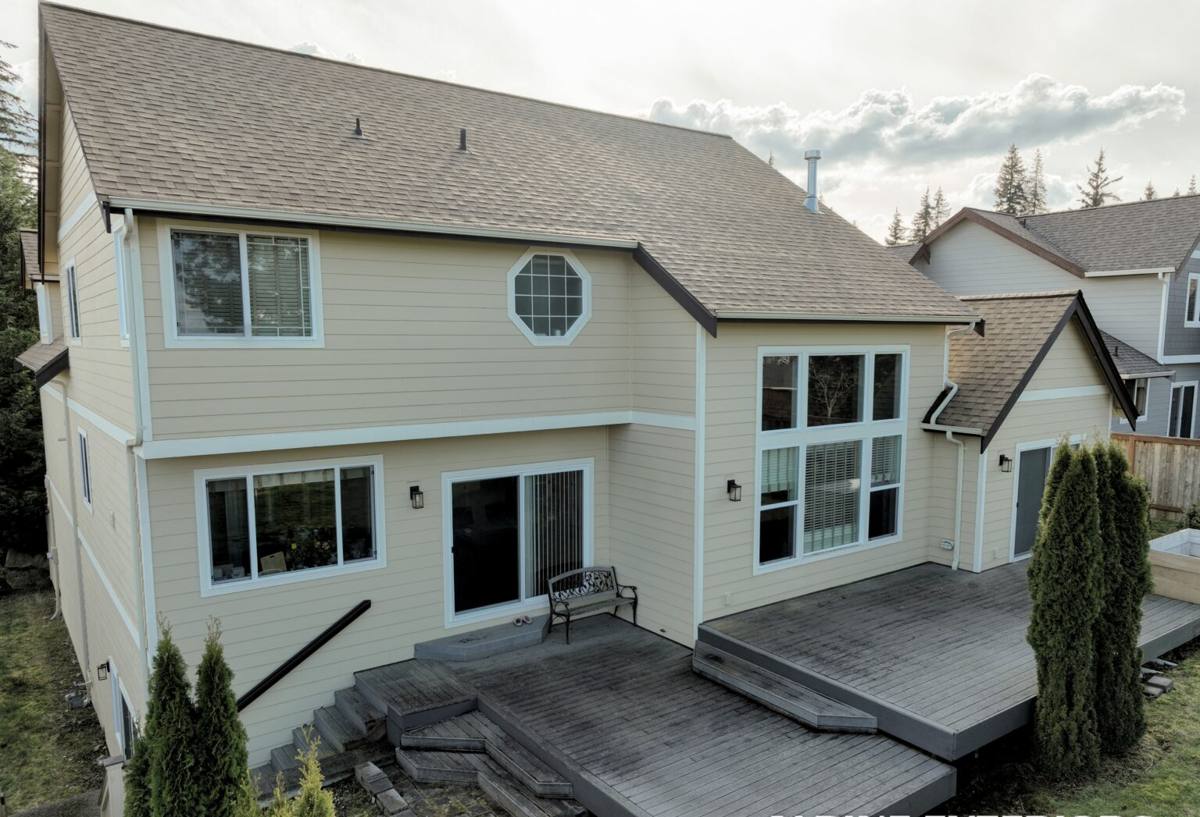
Signs Your Deck Needs Repair
Structural Warning Signs
These are the issues that affect safety, not just appearance, and they should never wait:
- Soft, spongy, or bouncy spots when you walk across the deck
- Any movement or gap where the ledger board meets the house
- Rust streaking or visible corrosion on joist hangers, bolts, or brackets
- Railings or posts that wobble or flex under hand pressure
- Stair stringers that feel loose or uneven underfoot
If you notice any of these, treat the deck as off-limits for gatherings or heavy use until it's inspected. Structural failure on a deck usually gives warning signs before it happens outright — the trick is catching them early.
Surface and Cosmetic Wear
Not every issue is urgent, but ignoring surface problems is how they turn into structural ones. Watch for:
- Cupping or splintering boards, especially on the sides that get the most sun and rain
- Gray, weathered wood that's lost its finish and started to absorb water again
- Moss or algae buildup that stays damp for days after rain
- Popped or backed-out screws and nails
- Gaps opening up between boards as fasteners loosen
What a Correct Deck Repair Actually Involves
Framing and Structural Work
Anything below the decking boards — the ledger board, joists, beams, and posts — is what actually holds the structure up, and it's where a rushed repair goes wrong. A correct repair means checking the ledger flashing (the metal that keeps water from running behind the board where it attaches to the house), confirming joist hangers are rated for the load and not just cosmetically similar, and replacing any framing member that's soft, cracked, or showing rot rather than sistering a new board next to a bad one and hoping it holds.
In a salt-air, high-moisture environment, we also pay close attention to fastener corrosion at connection points. A joist hanger with rusted nails can look fine from three feet away and still be failing at the point that matters.
Decking, Railings, and Stairs
Above the frame, repair work covers board replacement, railing and baluster repair, and stair rebuilds. The goal on board replacement is matching not just the species but the moisture content and fastening pattern of the surrounding deck, so the new boards age at roughly the same rate instead of standing out or trapping water differently than their neighbors. Railings get the same structural scrutiny as framing — a railing that looks solid but has a rotted post base is a liability, not a cosmetic issue.
Repair Scope and Cost Factors
Every deck repair is different, but the scope generally falls into a few categories. This gives you a sense of what drives the cost up or down before we ever get on-site:
| Issue | What Drives the Cost | Typical Scope |
|---|---|---|
| Individual board replacement | Number of boards, access, matching existing material | Small, often a few hours of labor |
| Railing or baluster repair | Post condition below the surface, code compliance | Moderate; may involve reframing post bases |
| Ledger board or flashing repair | Extent of hidden rot behind the siding, siding removal needed | Larger; involves temporary deck support |
| Joist or beam replacement | Number of members affected, whether the deck needs to be partially disassembled | Significant structural work |
| Stair rebuild | Stringer condition, code changes since original build | Moderate to significant depending on rise/run corrections |
As a rough guide, single-board or fastener repairs tend to land in the lower hundreds of dollars, while ledger, framing, or full stair rebuilds move into the low thousands depending on access and how much has to come apart to reach the damage. We give you the real number after we've actually looked at the deck, not before.
Materials That Hold Up Near the Water
Material choice matters more in a marine-influenced climate than it does farther inland, because the failure modes are different. Here's how we think about it:
Fasteners: We use stainless steel or high-grade coated fasteners rated for coastal exposure rather than standard galvanized hardware. The cost difference is small compared to the labor cost of redoing a repair in five years because the screws rusted through.
Framing lumber: Pressure-treated lumber rated for ground contact is our standard for anything close to grade or exposed to standing water, even where code might allow a lighter-rated product. It costs a little more up front and avoids a callback later.
Decking material: Wood decking (cedar or treated lumber) gives you a natural look but needs more regular maintenance — cleaning, sealing, and moss control — to get a long service life in this climate. Composite decking costs more initially and needs less finish maintenance, but it isn't maintenance-free; it still needs periodic cleaning to prevent mold and algae staining, and it behaves differently than wood at fastener points and cut ends, so installation details matter. We'll walk you through the honest trade-offs for your specific deck rather than pushing one material as a universal answer.
How Our Deck Repair Process Works
- On-site inspection. We walk the entire deck, check underneath where possible, and test framing and railings by hand — not just a visual look from the top.
- Written scope and estimate. You get a clear breakdown of what's failing, what we recommend fixing now versus monitoring, and why.
- Repair plan and scheduling. We plan around weather windows, since structural work is easier and safer to do correctly during drier stretches.
- The repair itself. Structural work first, then surface and cosmetic work, with attention to matching materials and finishes to what's already there.
- Final walkthrough. We show you what was done, point out anything worth watching, and answer questions before we consider the job finished.
A Maintenance Checklist That Extends the Repair
A repair done right will last a long time, but a little upkeep from you extends that further — especially given the moss season and salt exposure common around Sandy Point:
- Rinse salt residue off railings and hardware a few times a year, especially after storms
- Sweep moss and algae off before it has a chance to hold moisture against the boards
- Keep nearby vegetation trimmed back so air can move under and around the deck
- Check that gutters and downspouts aren't dumping extra runoff onto or near the deck
- Look over fastener heads once a year for rust, popping, or backing out
- Reseal cut ends and exposed end grain on wood decking when you notice the finish wearing thin
- Address small issues — a loose board, a rust spot — before the next wet season instead of after
Why Hire a Crew That Already Works Sandy Point
A contractor who works this stretch of Whatcom County regularly already knows what a Sandy Point deck is up against before they show up. That means recognizing early corrosion patterns on hardware, understanding how wind exposure off the water affects railing loads, and knowing which framing details tend to fail first in homes built for this specific combination of salt air, driving rain, and shoulder-season moss growth. It also means we're not learning on your deck — we've already seen how repairs here hold up over time and adjust our material and fastener choices accordingly.
Local presence matters for follow-through too. If something needs a second look after a storm, or a repair needs a warranty check, you're dealing with a crew that's a short drive away and already familiar with your property, not a company that treated your job as a one-off.
If your deck has soft spots, rust stains, loose railings, or just feels past its best years, we're happy to take a look. Reach out for a free, no-pressure estimate — we'll tell you honestly what needs fixing now, what can wait, and what it'll take to get it right.