 Birch Bay Exterior
 Building a Deck That Holds Up on Semiahmoo's Shoreline
Semiahmoo sits about as close to the water as a Whatcom County property can get, and that proximity is exactly why deck work here is different from deck work ten miles inland. Salt-laden air off the bay accelerates corrosion on fasteners and hardware. Wind-driven rain gets pushed sideways into ledger connections and railing posts that would stay dry on a more sheltered lot. And the mild, wet Pacific Northwest winters mean moss and algae have months to establish themselves on any deck surface that doesn't shed water and dry out quickly. A deck built to a generic spec sheet, without those conditions in mind, tends to show its age fast — soft spots at the ledger, corroded screw heads bleeding rust streaks, and boards that stay slick and green well into spring.
We build decks for Semiahmoo and the rest of Birch Bay knowing what the site is going to throw at the structure for the next twenty or thirty years. That means specific choices about hardware, fastening, drainage, and board selection — not just "what looks good in the sample rack."
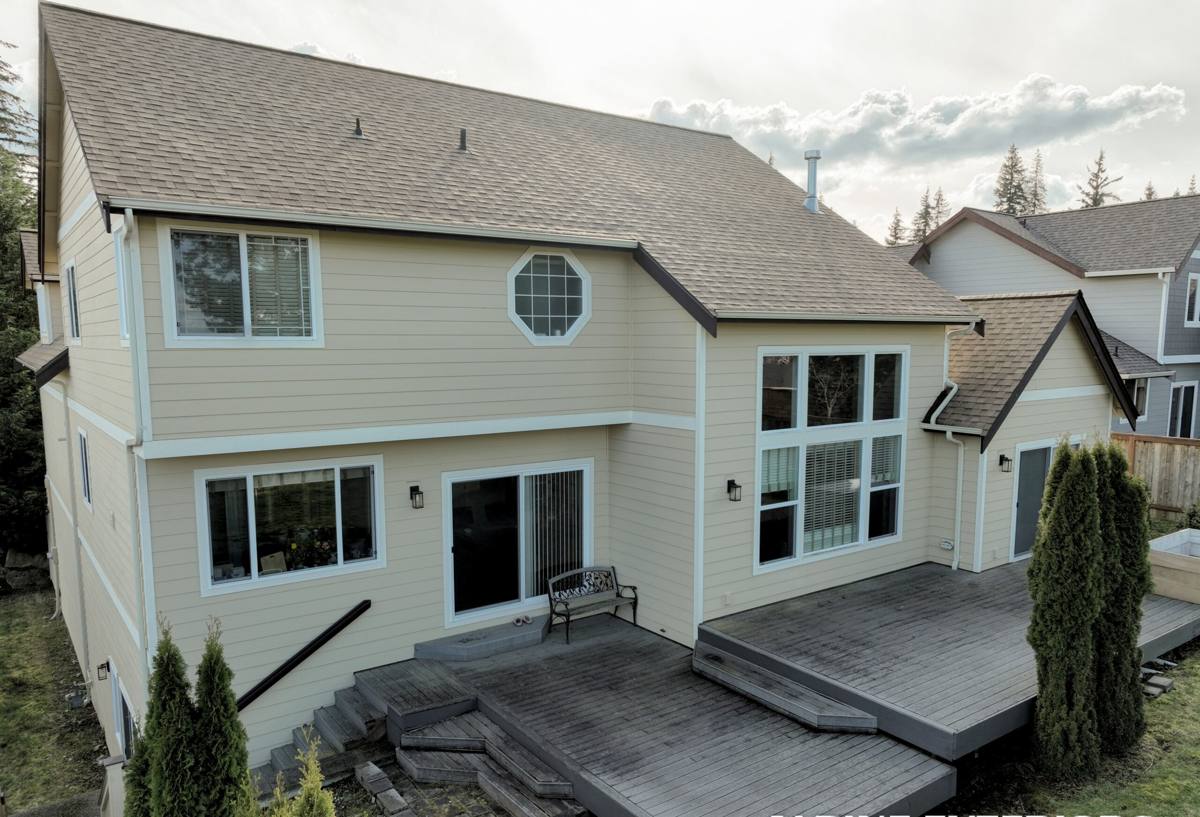
What Semiahmoo's Climate Actually Does to a Deck
Salt Air and Corrosion
Standard galvanized fasteners are rated for general outdoor use, but they're not built for sustained salt exposure. Close to the water, that coating breaks down faster than most homeowners expect, and once it does, corrosion works from the inside of the connection outward — you often don't see it until a railing post wiggles or a joist hanger lets go. We use stainless steel or heavy-duty coated fasteners rated for coastal and treated-lumber exposure on every Semiahmoo project, and we're deliberate about which metals touch which other metals, since dissimilar-metal contact speeds up corrosion in salt air.
Driving Rain and Water Intrusion
Birch Bay doesn't get the heaviest rainfall in the state, but it gets a lot of wind-driven rain off the water, and wind-driven rain finds its way into places vertical rain doesn't — behind ledger boards, around post bases, under poorly flashed rim joists. The single most common deck failure we see isn't the decking surface, it's rot at the ledger-to-house connection because that seam wasn't flashed correctly when the deck went in.
Moss, Algae, and a Long Wet Season
Whatcom County's wet season runs long, and a deck surface that holds moisture — because of poor drainage, tight board spacing, or heavy shade — will grow moss before summer even gets going. Beyond looking bad, wet moss on a walking surface is a slip hazard, and moss roots hold moisture against the board itself, which shortens the life of both wood and composite decking.
What a Correct Deck Build Involves
Ledger and Structural Connection
The ledger board — where the deck attaches to the house — is the single most important structural and moisture detail on the whole project. It needs proper flashing that directs water away from the house sheathing, correct fastener spacing and type for the load, and a gap or flashing detail that keeps water from wicking into the band joist. Get this wrong and the failure is often hidden behind the decking until it's serious.
Framing and Footings
Post footings need to sit below frost depth and bear on undisturbed or properly compacted soil — Whatcom County's mix of clay and glacial till soils can shift with seasonal moisture if footings aren't sized and set correctly. Joist spacing should match the actual decking product's span rating, not just a generic 16-inch layout, since composite and PVC boards often have tighter span requirements than wood.
Drainage and Airflow Underneath
A deck that drains well on top isn't enough — the framing underneath needs airflow so the structure can dry out between rain events. That means correct joist spacing relative to skirting, keeping vegetation and stored items from blocking airflow under low decks, and in some cases a below-deck drainage system for usable space underneath.
Fasteners and Hardware
Every hanger, screw, bolt, and post base is a corrosion point if it's the wrong spec for a coastal site. We spec stainless or coastal-rated hardware throughout, not just at the ledger.
Choosing Decking Material for a Coastal Lot
There's no universally "best" decking material — the right choice depends on how much maintenance a homeowner wants to do, budget, and how exposed the site is. Here's how the common options actually perform in a Semiahmoo/Birch Bay setting:
| Material | Coastal/Moisture Behavior | Maintenance | Typical Lifespan |
|---|---|---|---|
| Pressure-treated wood | Good if sealed and fastened correctly; needs re-sealing to resist moss and moisture cycling | Annual cleaning, re-seal every 1-3 years | 15-20 years with upkeep |
| Cedar | Naturally rot-resistant, but softer surface can hold moss if not cleaned regularly | Regular cleaning, periodic oil/sealant | 15-25 years with upkeep |
| Composite decking | Resists rot and doesn't need sealing; some early-generation composites held surface moisture and were prone to moss/algae without regular cleaning | Periodic washing, no sealing needed | 25-30+ years |
| PVC/capped composite | Best moisture resistance of the group; sheds water well and resists staining | Occasional washing | 25-30+ years |
We don't push one product line over another as a rule — we walk the site, talk through how the homeowner actually uses the deck, and match the material to the exposure and the maintenance appetite. A shaded, moisture-prone lot near the water is a different conversation than an open, sun-exposed one even a few streets over.
Railing and Hardware Details Matter Too
Railing posts and connections take the same salt exposure as the deck framing, often with less protection since they're fully exposed on all sides. Post-to-frame connections should use through-bolts rated for the application rather than lag screws alone wherever code and load require it, and any exposed metal railing components should be rated for coastal use — standard aluminum or steel hardware can pit and corrode faster this close to saltwater than most homeowners expect.
Our Process for Semiahmoo Deck Projects
- Site walk and assessment — we look at sun/shade exposure, wind direction relative to the water, existing drainage, and soil conditions before recommending anything.
- Design and material selection — sizing, layout, and material choice based on how the space will be used and the site's actual exposure.
- Permitting — most deck projects in Whatcom County require a permit, especially for elevated structures or anything attached to the house; we handle that process.
- Demolition of existing structure (if applicable), with attention to what the old ledger connection reveals about how the house has handled moisture historically.
- Footings and framing — built to span and load requirements for the chosen decking material, not a generic layout.
- Ledger flashing and structural connection — the step most failures trace back to, done correctly the first time.
- Decking, railing, and hardware installation — with coastal-rated fasteners throughout.
- Final walkthrough — reviewing drainage, gaps, and maintenance expectations with the homeowner.
Why It Matters to Hire a Crew That Already Works Semiahmoo
A contractor who mostly builds decks inland doesn't necessarily think about salt exposure until it's already a problem — because most of their projects never had to deal with it. Crews who regularly work Semiahmoo and the Birch Bay shoreline know which fastener grades actually hold up here, how far wind-driven rain can travel into a ledger connection, and which parts of a lot dry out slowly enough to need extra attention to drainage and airflow. That's not a marketing point, it's just what building the same type of project on the same coastline repeatedly teaches you.
Signs an Existing Deck Needs Attention
- Rust streaks running down from screw heads or hardware
- Soft, spongy decking near the house or at the base of posts
- Persistent moss or algae that returns quickly after cleaning
- Gaps or movement at the ledger board connection
- Railing posts that flex or wobble under light pressure
- Standing water on the deck surface after rain instead of draining off
- Visible daylight or gaps in flashing where the deck meets the house
Any of these on their own might be minor. Several together usually mean the structural or moisture-management basics weren't handled correctly at installation, and it's worth having someone take a real look before it gets more expensive to fix.
Maintenance That Actually Extends Deck Life Here
Whatever material a Semiahmoo deck is built from, a few habits make a real difference given the local climate: keep gutters and downspouts clear so roof runoff isn't dumping extra water onto or near the deck, sweep debris out of board gaps before it holds moisture and feeds moss growth, and do an annual look at fastener heads and railing connections for early corrosion. Wood decks need re-sealing on a regular cycle to keep shedding water; composite and PVC decks mainly need periodic washing to keep moss and algae from establishing.
If you're planning a new deck in Semiahmoo or want an honest look at whether an existing one is holding up the way it should, we're happy to come take a look and put together a straightforward, no-pressure estimate — just fill out the form below.