 Birch Bay Exterior
 Why Point Roberts Is a Different Window Job
Point Roberts sits on its own peninsula at the southern tip of Boundary Bay, surrounded on three sides by water and cut off from the rest of Whatcom County by the international border. That geography is great for the view and brutal on window systems. Homes here take wind-driven rain off the Strait of Georgia almost year-round, salt-laden air that never really lets up, and a wet season that can stretch from October well into spring. Add the shade and dampness that come with mature evergreen cover on many lots, and you get a near-constant moss and algae presence on north- and west-facing exteriors, including window trim, sills, and frames.
None of that is a reason to avoid glass — it's the whole reason people live out here. But it means a window that would hold up fine in a drier inland town can fail early on Point Roberts if it's the wrong product, the wrong install detail, or just old and tired. Custom windows done right account for all of this from the start: frame material, glazing, flashing, and sealant choices all get made with salt exposure and sustained moisture in mind, not just measurements and trim color.
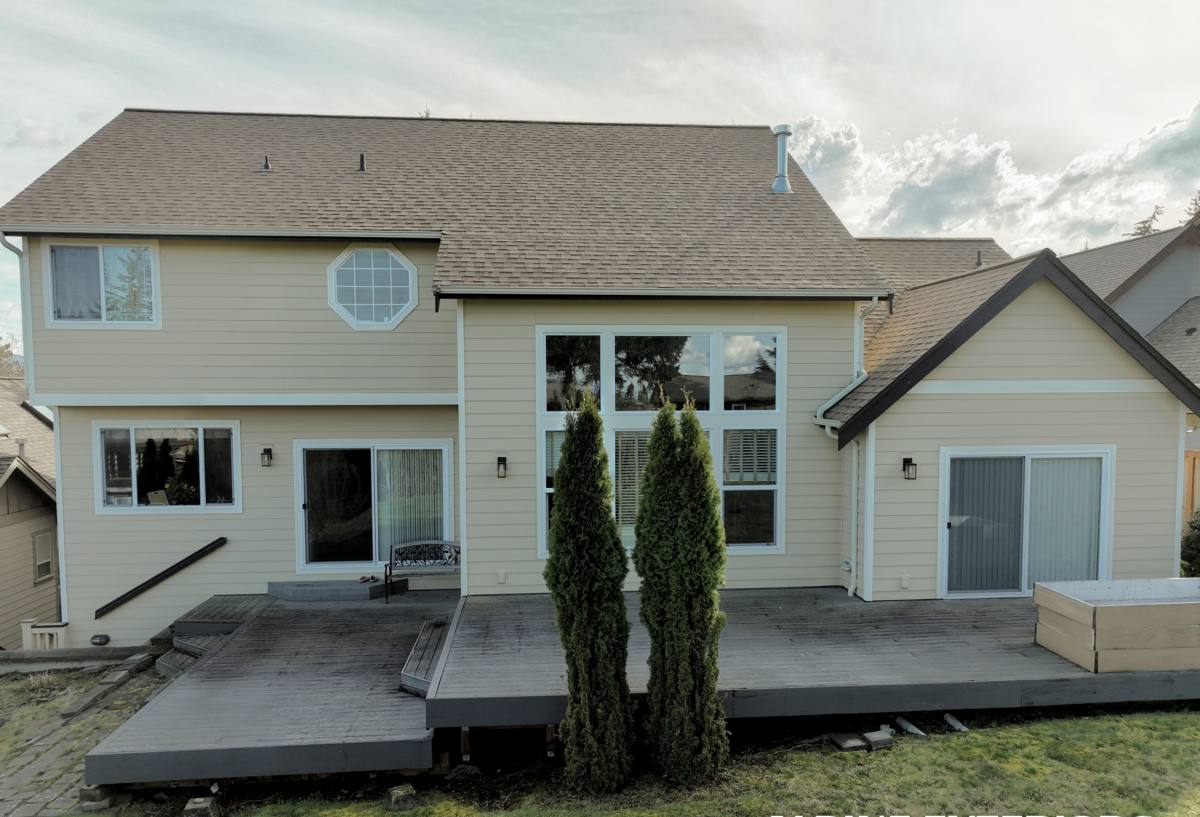
What "Custom" Actually Means Here
"Custom" doesn't have to mean unusual shapes or high-end architecture, though we do that too. On most Point Roberts jobs it means the window is built and installed to fit your specific opening, wall assembly, and exposure — not pulled off a shelf and forced to fit. That matters more on this peninsula than in a lot of places, because:
- Older homes here often have out-of-square or settled openings that a stock-size window won't seal against properly.
- Waterfront and near-waterfront lots need hardware and finishes rated for coastal/marine exposure, not standard-grade components.
- Shaded, moss-prone walls need flashing and drainage details that actively move water away from the frame, not just a bead of caulk.
- Some homes are seasonal or lightly occupied for stretches, so a window that's forgiving of infrequent operation and inspection is worth paying for up front.
Custom work also covers replacing a window with something a manufacturer doesn't make in a stock size — bays, arch-tops, oversized picture units — but on Point Roberts the more common driver is simply matching a proven marine-grade product to an opening that's been exposed to salt air for twenty or thirty years.
Signs Your Windows Are Losing the Fight
Salt air and moisture damage windows slowly, so a lot of homeowners live with early warning signs for years before calling anyone. Worth checking for:
- Fogging or a haze between panes on double- or triple-glazed units — the seal has failed and the gas fill is gone.
- Soft or discolored wood at the sill or bottom corners of the frame, especially on the side that takes the weather.
- Visible corrosion or pitting on hardware, hinges, or latches — a common early sign of salt exposure on lower-grade metal.
- Green or black growth building up in the frame corners or on the exterior trim faster than you can keep it cleaned off.
- Drafts or a cold radiating feel near the glass even with the window fully latched.
- Paint or finish that's blistering or peeling on the frame itself, not just the surrounding trim.
- Difficulty opening, closing, or latching — swelling from moisture intrusion is a common cause.
Any one of these on its own might just mean a repair or a re-caulk. Several at once on the same window, or on multiple windows on the same exposed wall, usually means it's time to talk replacement before the damage spreads into the surrounding wall framing.
What Happens If You Wait
The risk with coastal window failure isn't usually the glass — it's what's happening behind it. Water finding its way past a failed seal or degraded sill will track into the wall cavity, and by the time it shows up as a stain on interior trim or drywall, it's often been going on for a while. Catching window failure early keeps the job a window job instead of a window-plus-framing-repair job.
Frame and Glass Choices for This Climate
There's no single "best" window for Point Roberts — the right call depends on exposure, budget, and how the house is built. Here's how the common options generally hold up in salt air and sustained wet conditions:
| Frame Material | Salt Air Performance | Maintenance | Notes |
|---|---|---|---|
| Vinyl (quality, marine-rated) | Very good — won't corrode or rot | Low | Budget-friendly; check UV and impact rating for exposed walls |
| Fiberglass | Excellent — dimensionally stable, resists salt and moisture | Low | Higher upfront cost, long service life on exposed elevations |
| Aluminum-clad wood | Good if properly flashed and sealed | Moderate | Interior warmth of wood, exterior protection — but installation detail matters a lot |
| Bare wood | Poor to fair without diligent upkeep | High | We generally steer clients away from unclad wood on directly exposed walls out here — it's a maintenance commitment, not a flaw in the wood itself |
| Standard aluminum (uncoated) | Poor — prone to pitting and corrosion | High | Not something we recommend for direct salt exposure on this peninsula |
Glazing matters as much as the frame. For most Point Roberts homes we spec dual- or triple-pane units with a low-E coating and warm-edge spacers — the spacer is often the first thing to fail in a cheaper unit, since it's what the seal depends on to keep moisture out from between the panes. Argon or krypton gas fill adds performance but only pays off if the seal itself is a quality one; there's no point paying for gas fill in a window whose spacer will fail in eight years.
Our Installation Process
The install is where most window problems actually start, regardless of how good the product is. Our process on Point Roberts jobs:
- On-site assessment. We look at the specific wall, exposure direction, existing damage, and how water has historically moved around that opening — not just the window itself.
- Accurate measurement and product selection. Custom sizing where the opening calls for it, and a frame/glass spec matched to that wall's actual exposure rather than a one-size answer for the whole house.
- Removal and inspection of the opening. Once the old unit is out, we check the sheathing and framing underneath for hidden moisture damage before anything new goes in.
- Flashing and drainage detail. Proper flashing tape, sill pan, and weep path so any water that does get past the exterior sealant has somewhere to go besides your wall cavity.
- Setting, shimming, and sealing. The window gets set plumb and square, shimmed correctly, and sealed with a sealant rated for the exposure — not just whatever's fastest.
- Interior and exterior trim. Finished to match the home, with attention to keeping trim details from becoming moss and moisture traps themselves.
- Final check. Operation, latch function, and a walk-through so you know what to watch for going forward.
Why Local Experience on This Peninsula Matters
Point Roberts is geographically part of Whatcom County but physically disconnected from it — the only land route in and out crosses the Canadian border. That's not a trivia point, it's a real logistics factor for any construction work here. Material deliveries, scheduling, and lead times all need to account for the border crossing, and a crew that hasn't worked out here before can underestimate how that affects timelines. We plan Point Roberts jobs with that reality built in from the start, so a scheduled install date actually holds.
More importantly, a crew that's done multiple jobs on this peninsula has seen how its specific mix of salt exposure, tree cover, and marine weather actually plays out on real homes — which walls fail first, which older window brands and installation styles are common out here, and what a proper fix looks like versus a patch that'll need redoing in five years. That's the kind of judgment that only comes from doing the work in this specific place, not from a general knowledge of coastal Washington.
What Drives the Cost
Every job is different, but the main cost factors on a Point Roberts window project are consistent:
| Factor | Why It Matters |
|---|---|
| Frame material | Vinyl is the entry point; fiberglass and clad-wood cost more but last longer under salt exposure |
| Glass package | Low-E coatings, gas fill, and pane count all add cost and performance |
| Opening condition | Hidden rot or framing damage found during removal adds scope — this is common on older exposed walls out here |
| Custom sizing | Non-standard openings or shapes cost more than stock sizes |
| Number of exposed elevations | Windows on the weather side of the house often justify a higher-grade spec than sheltered walls |
| Access and logistics | Delivery timing across the border and site access can factor into scheduling and cost on some jobs |
We'd rather walk you through these trade-offs honestly than quote a number with no explanation behind it. On a lot of Point Roberts homes, spending more on frame and glass quality for the two or three most exposed windows — and going with a more standard spec on the sheltered side — is the most sensible way to control cost without cutting corners where it counts.
Keeping New Windows Performing
Even the right product installed correctly benefits from basic upkeep in this climate:
- Rinse salt residue off frames and glass periodically, especially after storms — it's abrasive and corrosive left to sit.
- Check and clean weep holes so drainage paths don't clog with debris or moss.
- Keep gutters and nearby vegetation trimmed back so water and shade don't concentrate on one wall.
- Inspect exterior caulking annually and have gaps resealed before they become a moisture path.
- Operate windows periodically even if you're not on-site full time — hardware that sits unused is more prone to sticking or corroding.
If you're weighing whether your current windows are worth repairing or replacing, or you're planning a new install for a home on Point Roberts, we're happy to take a look and give you a straight answer. Reach out for a free, no-pressure estimate using the form below.