 Birch Bay Exterior
 Window Replacement in Custer, Washington
Custer sits just inland from the Birch Bay shoreline, in the same stretch of Whatcom County that takes the full brunt of Pacific storms rolling off the Salish Sea. Homes here don't have quite the direct salt spray of a beachfront lot, but they still sit inside the same marine air belt — humid, salt-tinged, and wet for most of the year. If your windows are original to the house or pushing past their expected lifespan, this climate will find every weak point in the frame, the seal, and the flashing long before a drier region would.
We work Custer and the surrounding Birch Bay area regularly, which matters more than it sounds like it should. Window replacement isn't just a product swap — it's a job that lives or dies on how well the new unit is integrated into the wall, and that integration has to account for exactly the kind of weather this part of the county gets.
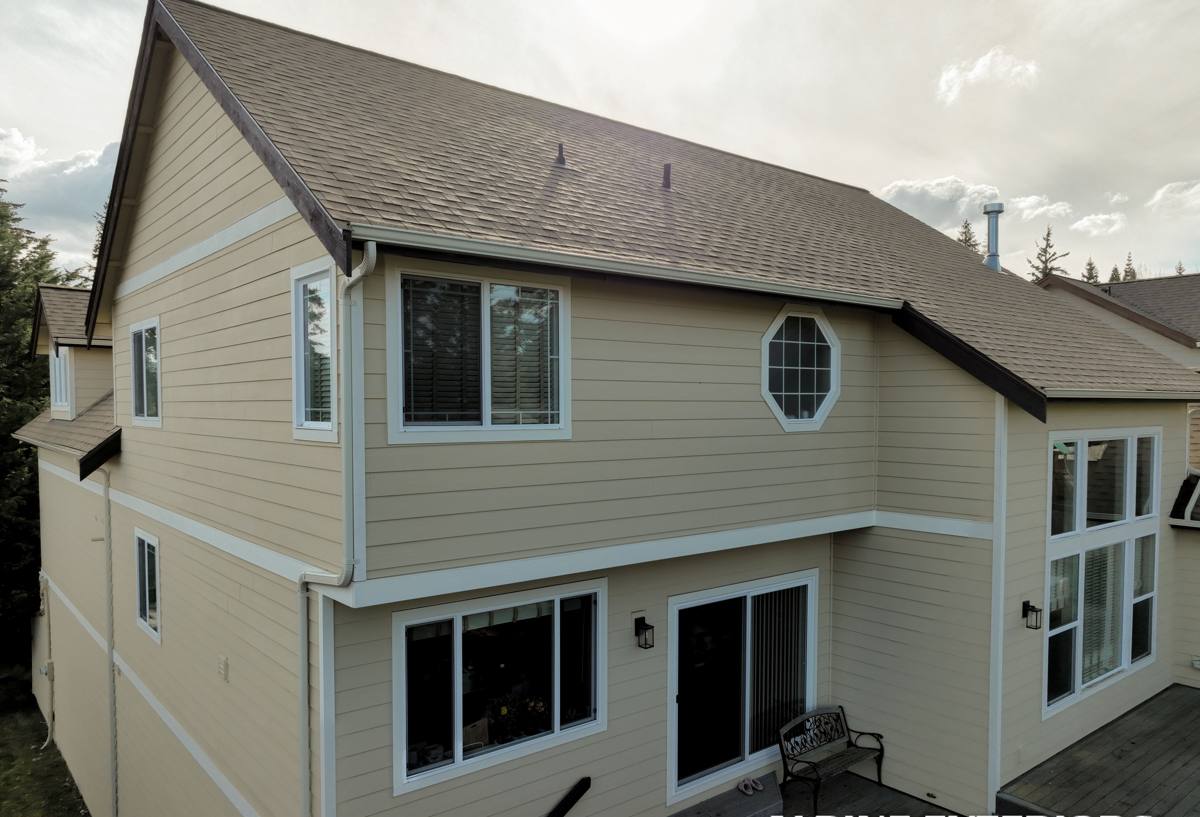
What This Climate Does to Windows
Three things wear windows out faster here than in most of the country, and they compound each other:
Salt-Laden Moisture
Even a few miles inland from Birch Bay, onshore air carries enough salt to accelerate corrosion on hardware, fasteners, and aluminum components. Locks stiffen, cranks seize, and unprotected metal pits over a few seasons. It's slow, but it's constant.
Driving Rain
Whatcom County storms rarely fall straight down — wind-driven rain hits window walls at an angle, which puts real pressure on flashing, sill pans, and sealant joints. A window that would be fine in a calmer climate can leak here simply because the installation didn't account for wind-driven water intrusion.
Moss and Shade
Tree cover and long wet seasons keep trim, sills, and the wood framing around older windows damp for weeks at a stretch. Moss and algae hold moisture against wood and vinyl surfaces, which is exactly the condition that causes rot in cheap or poorly sealed sills.
None of this means Custer is a uniquely brutal place to own a house. It means the margin for error on materials and installation technique is smaller than it is in a drier climate, and that's the standard we build every job to.
Signs Your Windows Need Replacing, Not Just Repair
Not every problem window needs full replacement. Here's what usually tips it from "repair" to "replace":
- Visible fogging or moisture between the panes — the seal has failed and the insulated glass unit can't be fixed, only replaced
- Soft, spongy, or discolored wood at the sill or lower frame corners
- Drafts you can feel with a hand near the frame on a windy day
- Windows that are difficult to open, close, or lock — often a sign the frame has shifted or swollen
- Visible daylight or gaps between the frame and the siding or trim
- Paint or finish that keeps failing in the same spot no matter how often it's redone
- Noticeably higher heating bills with no other explanation
If you're only seeing one of these on an otherwise sound window, a repair or re-seal may be enough. If you're seeing several, or if the sill is soft, replacement is usually the more honest recommendation.
What a Correct Installation Actually Involves
The window itself is only part of the job. In a climate that drives rain sideways, how the window is set into the wall determines whether it stays dry for the next twenty years or starts leaking in three.
Removal and Inspection
Once the old window is out, we check the rough opening for hidden rot or water damage before anything new goes in. Covering up a wet or compromised opening with a new window is one of the most common shortcuts in this trade, and it guarantees a repeat problem.
Flashing and Sill Pan
A proper sill pan directs any water that gets past the window back outside instead of into the wall cavity. Flashing tape at the head, jambs, and sill has to overlap correctly — shingle-style, top layer over bottom — so water always sheds downward and outward. This detail matters more here than almost anywhere else in the build.
Sealing and Insulation
Low-expansion foam or backer rod and sealant around the frame stops air infiltration without bowing the frame out of square. Exterior caulking gets matched to the siding material and given time to cure properly before the job is called done.
Trim and Weather Barrier Tie-In
The new window's flashing has to integrate with the existing weather-resistant barrier on the wall, not just sit on top of it. This is the step that gets skipped most often on lower-bid jobs, and it's the one that causes leaks two or three winters down the road.
Choosing the Right Window for a Custer Home
There's no single "best" window — the right choice depends on your budget, your home's exposure, and how much upkeep you want to do. Here's how the common options stack up for this climate:
| Frame Material | Moisture Resistance | Maintenance | Typical Cost Position |
|---|---|---|---|
| Vinyl | Good — won't rot, some UV wear over decades | Low — occasional cleaning | Most affordable |
| Fiberglass | Very good — dimensionally stable, resists warping in wet-dry cycles | Low | Mid to upper range |
| Aluminum | Fair — durable but prone to condensation and corrosion near salt air unless thermally broken | Moderate | Mid range |
| Wood, clad exterior | Good on the exterior face; interior wood still needs protection from humidity | Higher — finish upkeep over time | Highest |
For most Custer and Birch Bay homes, we steer clients toward vinyl or fiberglass for the exterior-facing performance in a wet, salt-touched climate, and reserve solid wood or standard aluminum for specific situations where the homeowner understands and accepts the added upkeep. That's a maintenance and moisture-behavior judgment call on our end, not a knock on any manufacturer — every material has a place, it just needs to be matched to the exposure it'll actually face.
Glass Package Matters Too
Double-pane, low-E glass is the practical baseline for this climate — it cuts heat loss and reduces condensation on the interior glass during cold, damp mornings. Triple-pane is worth discussing for north- or west-facing rooms that take the worst of the weather, but it's not a blanket necessity for every window in the house. We'll tell you where it earns its cost and where it doesn't.
Our Process, Start to Finish
- Site visit and assessment — we look at every window being considered, check sills and framing for existing damage, and note exposure (sun, wind, shade, drainage) window by window.
- Written estimate — clear pricing by window, with material and glass options explained in plain terms, no pressure to upgrade beyond what your home needs.
- Scheduling around weather — we plan installation for a stretch of manageable weather where possible, since an open wall in a downpour is bad for everyone.
- Removal, inspection, and repair — old units come out, any hidden rot or damage gets addressed before the new window goes in, not hidden behind it.
- Installation with proper flashing and sealing — sill pan, flashing tape, insulation, and sealant done in the correct order, every time.
- Final walkthrough — we check operation, sealing, and finish work with you before we consider the job done.
Why a Local Crew Matters for This Job
Window replacement done wrong doesn't usually fail on day one — it fails two or three winters later, when the flashing detail that got skipped finally lets water into the wall. A crew that works Whatcom County's marine climate regularly has already seen what generic installation practices miss here: the sideways rain, the salt air's effect on hardware, the way shaded sills hold moisture longer than they would in a drier region.
We also know the practical side — permitting expectations in the county, what inspectors here are looking for, and how to sequence work so your home isn't sitting open to the weather longer than it needs to be. That local familiarity isn't marketing — it's the difference between a window that's still tight in fifteen years and one that needs attention again in five.
Caring for New Windows in a Wet Climate
A correctly installed window in a good material needs very little from you, but a few habits extend its life:
- Rinse hardware and tracks periodically to clear salt residue and grit before it works into moving parts
- Keep gutters and downspouts clear so roof runoff isn't sheeting down over window heads
- Trim back vegetation that's shading sills and keeping them damp longer than the rest of the wall
- Check exterior caulking lines once a year and flag any cracking early, before water gets behind it
- Wipe down interior sills after cold snaps if you notice condensation forming
If you're dealing with drafty, foggy, or hard-to-operate windows anywhere in the Custer or Birch Bay area, we're happy to take a look and give you a straight assessment — no pressure, no inflated scope. Use the form below to request a free estimate and we'll get back to you with next steps.