 Birch Bay Exterior
 Siding That Has to Work Against Salt Air, Not Just Weather
Custer sits close enough to Birch Bay and the Strait of Georgia that homes here deal with a combination most siding products were never engineered for: airborne salt, near-constant winter moisture, and long stretches of shade that keep north- and west-facing walls damp for weeks at a time. That combination is harder on exterior materials than straight rain alone. Salt accelerates corrosion on fasteners and trim hardware, and it also breaks down cheaper paint films and coatings faster than fresh water does. Add Whatcom County's moss season — which for many Custer properties runs a good six months of the year on shaded elevations — and you have an environment that punishes any siding product with weak moisture management or a thin factory finish.
This page is specifically about installing James Hardie fiber cement siding on Custer homes. We only install James Hardie. We don't carry vinyl, LP SmartSide, Cemplank, Allura, or wood siding, and we're upfront about why: in a climate like this one, the difference between products shows up in year eight or year twelve, not year one. We'd rather explain that up front than have a homeowner find out the hard way.
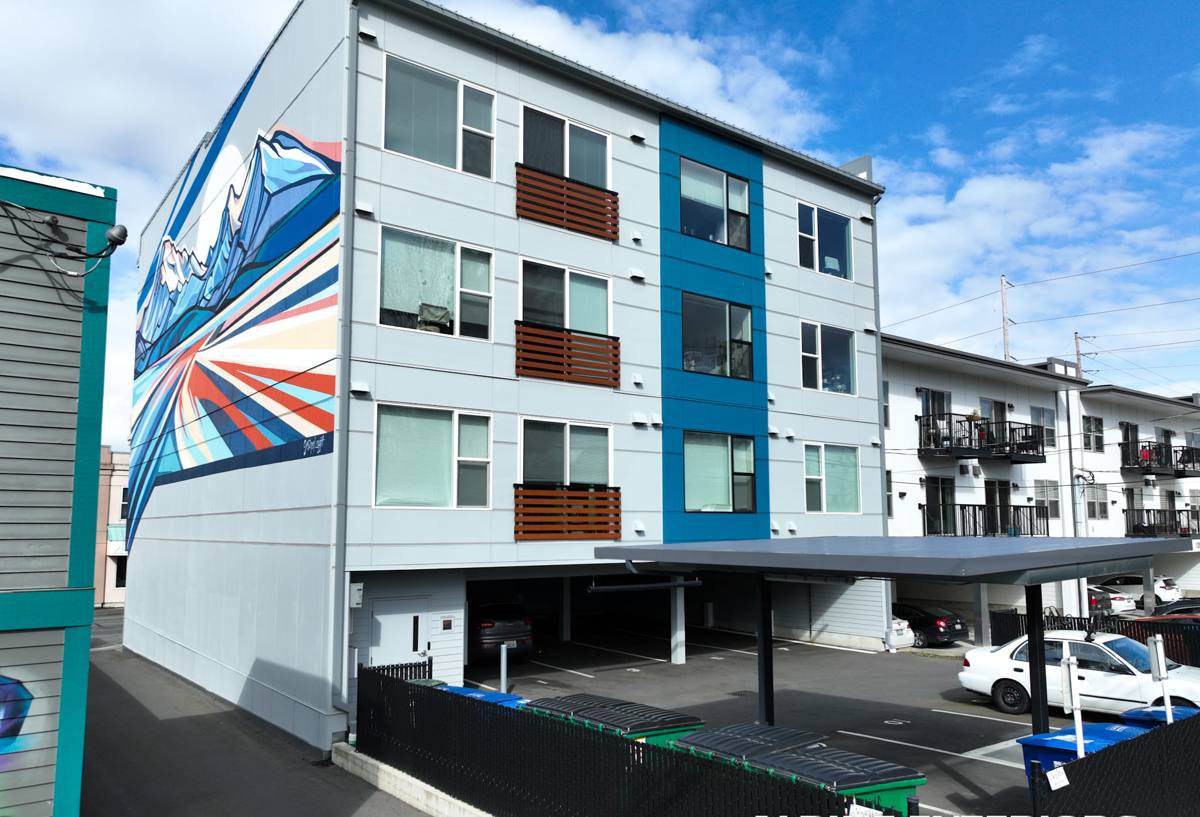
What Custer's Climate Actually Does to a House
Three things drive nearly every siding failure we see in this area, and they're worth understanding before you pick a product:
- Salt-laden air — corrodes uncoated or poorly coated fasteners, pits metal trim, and degrades paint adhesion on wood and composite products over time.
- Driving rain — wind off the water pushes moisture sideways into laps, seams, and butt joints, not just straight down the wall face.
- Extended damp/shade periods — moss and algae take hold wherever siding stays wet and doesn't get enough sun to dry out, which accelerates rot in wood-based products and staining on any surface with an inferior finish.
None of this means Custer is an unusually harsh place to own a home. It means the materials and installation details matter more here than they would somewhere drier and further from the water.
Why This Pushes Us Toward Fiber Cement
James Hardie siding is fiber cement — a mix of cellulose fiber, sand, and Portland cement. It doesn't rot, it isn't a food source for moss or mildew the way wood is, and it doesn't absorb water and swell the way engineered wood products can if a seam opens up. The ColorPlus factory finish is also baked on and cured under controlled conditions, which holds up to salt air and UV exposure noticeably longer than field-applied paint. That's the core of why we standardized on it — not because other products can't be installed well, but because this specific climate profile rewards the specific strengths fiber cement has.
What a Correct James Hardie Install Actually Involves
Fiber cement siding is only as good as the install behind it. A rushed or generic installation — treating Hardie board like any other lap siding — is how you end up with problems that have nothing to do with the material itself. For Custer homes specifically, we pay close attention to:
Water Management Behind the Siding
A weather-resistant barrier and properly flashed openings matter more here than in a drier climate, because wind-driven rain will find any gap in the drainage plane. We install a code-compliant water-resistive barrier, flash all windows, doors, and penetrations correctly, and maintain proper rainscreen or drainage clearance where the wall assembly calls for it.
Fastening and Clearances
James Hardie publishes specific fastener, nailing pattern, and clearance requirements — including minimum clearance from grade, roof lines, and decks — and those specs exist for a reason. In a salt-air environment, using the right fastener material and spacing isn't optional; it's the difference between trim that holds paint for decades and fastener heads that bleed rust through the finish in a few years.
Joint and Seam Treatment
Butt joints, corners, and panel seams are where driving rain gets pushed into a wall assembly. We follow James Hardie's caulking and joint-treatment specifications exactly, rather than treating them as a cosmetic afterthought.
Product Line Matched to Exposure
James Hardie makes climate-specific HZ product lines engineered for different moisture and temperature profiles. For a Custer property, we specify and install the products designed for this region's exposure rather than a one-size-fits-all approach.
HardiePlank, HardieShingle, and Trim — What Fits a Custer Home
Most homes in this area use HardiePlank lap siding as the primary field material, sometimes paired with HardieShingle for accent gables or dormers, and HardieTrim around windows, corners, and fascia for a finished look. The right mix depends on the home's architecture and how much of it faces prevailing wind and rain. We'll walk through the actual options — plank profile, exposure width, ColorPlus color, and trim details — during an in-person assessment rather than guessing over the phone.
| Consideration | What It Means for a Custer Home |
|---|---|
| Wall orientation | North/west walls facing the water need the most attention to drainage and finish durability |
| Existing moss/algae staining | Signals a wall that stays damp — worth addressing drainage, not just re-siding over the same conditions |
| Fastener corrosion on current siding | A sign of salt exposure; informs what fastener spec we use going forward |
| Trim and window flashing condition | Often the actual source of water intrusion, even when siding looks fine |
| Sun exposure per elevation | Shaded elevations dry slower and need finish and drainage details that account for that |
Why Choosing a Crew That Works Around Birch Bay Matters
Fiber cement siding is a forgiving product when it's installed correctly and an unforgiving one when it isn't — poor flashing or the wrong fastener spec won't show up as a problem on day one, it shows up years later as trim staining, seam failure, or moisture behind the wall. A crew that regularly works Custer and the surrounding Whatcom County coastline already knows which elevations of a typical local home take the worst of the wind-driven rain, how much moss buildup is normal versus a sign of a drainage problem, and how salt exposure changes fastener and hardware choices compared to an inland job. That local pattern recognition is hard to replace with a generic install crew that hasn't worked this specific stretch of coastline.
Our Process for a Custer Siding Project
- On-site assessment of the home's current siding, trim, flashing, and any moisture or moss patterns specific to each elevation
- Product and profile recommendation — plank exposure, ColorPlus color, trim package — matched to the home's architecture and exposure
- Written scope covering water-resistive barrier, flashing details, fastener spec, and clearances before any work starts
- Installation to James Hardie's published specifications, including joint treatment and drainage clearances appropriate to a coastal Whatcom County property
- Final walkthrough covering warranty registration and basic maintenance expectations for this climate
What We Won't Do
We don't install vinyl, LP SmartSide, Cemplank, Allura, or wood siding on Custer homes, even when a homeowner asks for one specifically, because we don't think those products hold up as well against this area's combination of salt air and sustained moisture — and we'd rather turn down work than install something we don't stand behind in this climate. If a homeowner wants to understand the specific trade-offs of a product we don't carry, we're glad to walk through the reasoning; it's not a knock on the product in every setting, it's about what performs best right here.
Simple Checklist: Signs Your Custer Home's Siding Needs Attention
- Visible moss or algae staining on north- or west-facing walls that returns shortly after cleaning
- Rust streaking below nail heads or trim fasteners
- Caulking that's cracked, shrunk, or pulled away from joints and trim edges
- Soft or discolored siding near ground level, decks, or roof-to-wall intersections
- Paint or finish that's chalking, peeling, or noticeably duller than the rest of the house
- Visible gaps at butt joints or corner boards
If several of these apply, it's worth having someone look at what's happening behind the siding, not just the surface finish.
Warranty and Longevity
James Hardie backs its siding products with a transferable limited warranty, and the ColorPlus finish carries its own separate finish warranty — both of which depend on the product being installed to James Hardie's specifications. That installation-dependency is exactly why we're careful about fastener spec, flashing, and clearances on every Custer project: a warranty is only as good as the install behind it, and we'd rather get the details right the first time than have a homeowner deal with a claim later.
If you're weighing a siding project on a Custer home and want a straight answer about what your walls actually need, we're happy to take a look. Request a free, no-pressure estimate below — we'll assess your home's exposure, walk through the right James Hardie product mix, and give you a clear scope before any work begins.