 Birch Bay Exterior
 Windows Built for a Cottonwood Beach Address
Cottonwood Beach sits close enough to the water that the air itself works against your windows year-round. Salt-laden wind off the bay settles into frame seams and hardware, driving rain gets pushed sideways into gaps that would stay dry a few miles inland, and the long stretch of gray, wet months each year gives moss and mildew plenty of time to take hold on sills and trim. Windows in this pocket of Birch Bay simply age differently than windows in a dry inland neighborhood, and replacing them correctly means accounting for that from the first measurement to the final bead of sealant.
We work in Cottonwood Beach regularly, and the pattern we see is consistent: original or early-replacement windows that looked fine for years, then failed quickly once seals broke down and moisture started getting behind the frame. Catching that transition early, and replacing windows with the right materials and installation detail for a coastal Whatcom County property, is what this page is about.
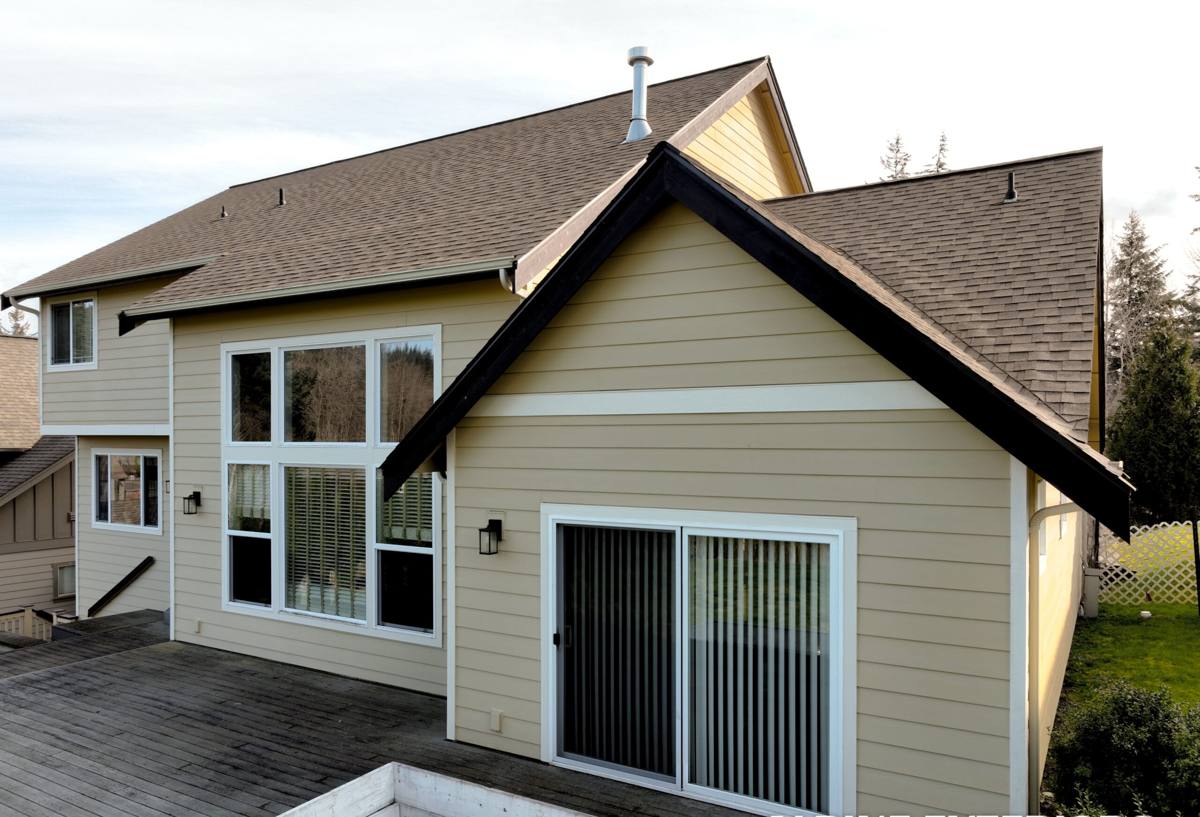
What Salt Air, Rain, and Moss Actually Do to Windows
Salt Air and Hardware
Airborne salt is corrosive to unprotected metal. Cheaper aluminum cranks, hinges, and locks can start pitting or seizing years before a homeowner expects, and steel fasteners hidden inside a frame can rust from the inside out where you'd never see it until the frame itself is compromised. This is why hardware finish and fastener quality matter more here than they would on a home set back from the water.
Driving Rain and Wind-Driven Water
Wind off the water doesn't just blow rain against the glass — it pushes water sideways and upward into joints that a vertical rain would never reach. A window that's properly flashed and sealed handles this without issue. A window with a marginal install, or one where the sealant has simply aged out, will start letting water track behind the trim, often long before it's visible as a leak inside the house.
Moss, Mildew, and Prolonged Dampness
Western Washington's wet season runs long, and a shaded or north-facing wall in Cottonwood Beach can stay damp for weeks at a stretch. Wood sills and trim that hold moisture become a growth surface for moss and mildew, and once organic growth is established it holds even more water against the wood, accelerating rot. Vinyl and fiberglass frames don't feed moss the way wood does, but even those need clean drainage paths so water isn't sitting against the frame or sill.
Signs Cottonwood Beach Homeowners Should Watch For
- Fogging or condensation between panes — the seal has failed and the insulating gas is gone
- Soft, discolored, or spongy wood at the sill or bottom corners of the frame
- Visible moss or dark streaking on the exterior trim below or beside the window
- Drafts you can feel with a hand near the frame on a windy day
- Cranks, locks, or sliders that stick, feel gritty, or have visible corrosion
- Paint or finish that's bubbling or peeling specifically around the window opening, not the whole wall
- A noticeable jump in heating costs without any other explanation
Any one of these on its own isn't an emergency, but a window showing two or three of them at once is usually past the point where caulking and minor repair will hold. In our experience, homes this close to the water tend to reach that point faster than homeowners expect, simply because of how much more moisture and salt exposure the windows are absorbing compared to an inland home of the same age.
What a Correct Replacement Involves
Replacing a window is straightforward in concept — old unit out, new unit in — but the details that determine whether it lasts fifteen years or fails in five all happen in the parts you don't see once the trim goes back on.
Removal and Opening Inspection
Once the old window is out, we check the rough opening for hidden water damage, soft framing, or rot that wasn't visible from outside. In a coastal neighborhood like Cottonwood Beach, this step matters more than it might elsewhere — if water has been getting behind an old frame for years, the sheathing or framing underneath may need attention before a new window goes in, not after.
Flashing and Weather Barrier
Proper flashing directs any water that gets past the exterior cladding back out, rather than letting it pool at the sill or track down into the wall cavity. Given how much wind-driven rain this area sees, we don't treat flashing as optional or "good enough" — it's installed to shed water downward and outward at every layer, integrated with the house's existing weather-resistive barrier rather than just caulked over it.
Sealing and Insulation
The gap between the new frame and the rough opening gets insulated and air-sealed, not just stuffed with material. Gaps that are left loose become a path for both drafts and moisture. Exterior sealant is applied at the joints most exposed to wind-driven rain, using a sealant rated for the movement and exposure a coastal wall actually sees.
Hardware and Finish Selection
Given the corrosion risk from salt air, we lean toward corrosion-resistant hardware and fasteners rather than the cheapest available option, and we're upfront when a particular finish or frame material is a poor long-term fit for a home this close to the water — not because a product is bad in general, but because certain finishes and metals simply don't hold up as well under sustained salt exposure, and we'd rather tell you that before installation than have you find out in five years.
Choosing a Frame Material for This Location
| Frame Material | How It Handles This Climate | Maintenance |
|---|---|---|
| Vinyl | Doesn't rot or corrode; handles salt air and moisture well; good value | Low — occasional cleaning |
| Fiberglass | Very stable in temperature swings and moisture, strong resistance to warping | Low |
| Wood (clad exterior) | Attractive, but exposed wood is vulnerable to moss and rot in this climate | Higher — regular inspection and refinishing |
| Aluminum | Prone to corrosion and pitting from salt air unless heavily treated | Moderate to high |
There's no single "best" material for every home — a clad-wood window on a covered, sheltered wall can perform fine for decades, while the same window on an exposed, wind-facing wall in Cottonwood Beach will age much faster. Part of our job during the estimate is looking at your home's specific exposure — which walls take the worst of the wind and rain — and recommending materials accordingly, rather than applying one answer to the whole house.
Glass and Energy Performance
Double-pane, low-E glass is the standard for this region, and for good reason: it cuts heat loss during Whatcom County's long heating season and helps control condensation on the interior glass surface, which is a common complaint in homes with older single-pane windows. Argon-filled units add a bit more insulating performance for a modest cost difference. We'll walk through the glass package options relevant to your home's orientation and exposure rather than pushing a single default.
Our Process, Start to Finish
- On-site assessment — we look at your current windows, note which walls take the most weather exposure, and measure openings
- Straightforward estimate — written pricing with material options explained, no pressure to decide on the spot
- Scheduling — we plan around weather where possible, since a dry install window matters for sealant cure and opening protection
- Removal and opening check — old windows out, framing inspected before anything new goes in
- Installation — proper flashing, insulation, air sealing, and hardware installation
- Walkthrough — we show you the finished work and how the new hardware operates before we consider the job done
Why Local Experience in Birch Bay Matters
A crew that mainly works inland doesn't see the same failure patterns we see routinely in Birch Bay and Cottonwood Beach — salt-corroded hardware, wind-driven water intrusion at marginal flashing details, moss establishing itself on north-facing trim within a couple of seasons. That's not a knock on any particular installer; it's just a different set of conditions than most of Whatcom County's inland homes deal with. Working this specific stretch of coastline regularly means we've adjusted flashing details, sealant choices, and hardware recommendations based on what actually holds up here, not just what a manufacturer's general spec sheet says.
It also means we're a known, reachable crew if a question comes up after the job — not a company that did one project in the area and moved on.
Get a Straight Answer About Your Windows
If you're noticing drafts, fogged glass, or trim that's staying damp longer than it should, it's worth having someone look before the problem spreads into the framing. We offer free, no-pressure estimates for Cottonwood Beach and the rest of Birch Bay — use the form below to get one scheduled.