 Birch Bay Exterior
 Windows Built for the Cottonwood Beach Environment
Cottonwood Beach sits close enough to the water that homes here take a different kind of weathering than houses even a few miles inland. Salt-laden air, wind-driven rain off the Strait, and a long stretch of wet, mossy months put steady pressure on every window opening in a house. A window that would hold up fine in a dry inland climate can start failing years early out here if it isn't installed with this specific environment in mind.
We install windows throughout Birch Bay and Whatcom County, and Cottonwood Beach homes get a specific set of considerations from us — not because the windows themselves are different, but because the way we flash, seal, and finish the opening has to account for what this stretch of coastline throws at a house year-round.
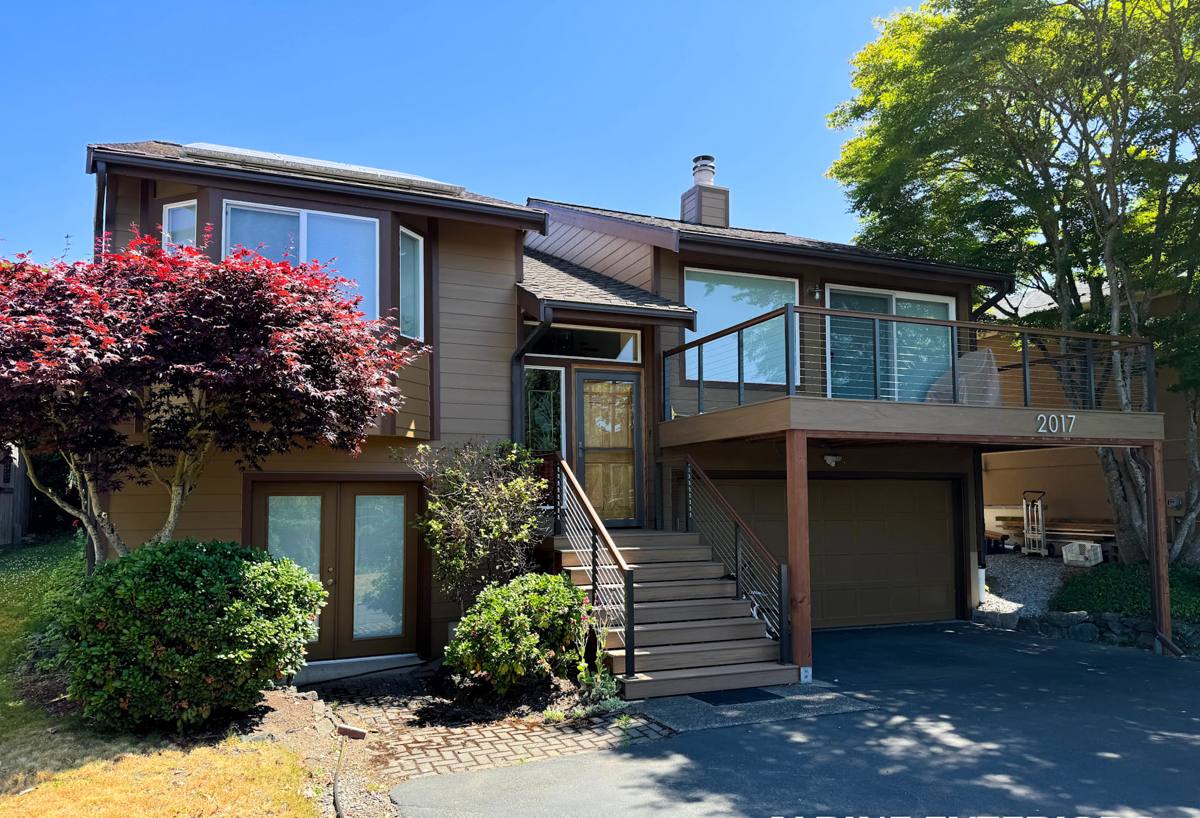
What Salt Air, Driving Rain, and Moss Season Do to Windows Over Time
Understanding the damage pattern is the first step to preventing it. Three things work against windows here, often at the same time:
Salt Air and Corrosion
Airborne salt settles on and around window frames, hardware, and fasteners. Over years, it accelerates corrosion on lower-quality hardware, pits metal components, and can degrade certain finishes faster than a manufacturer's warranty assumes. This is a slow process — it's rarely the reason a window fails outright — but it's part of why hardware quality and finish selection matter more here than in a typical inland install.
Wind-Driven Rain
Rain that comes in sideways behaves differently than rain that falls straight down. It gets pushed up under trim, into seams, and against flashing details that would never see water in a calmer climate. Most window leaks we find in this area aren't from a bad window — they're from water finding a path through flashing or sealant that wasn't built to handle horizontal wind pressure.
Moss and Sustained Moisture
Whatcom County's long wet season keeps north-facing and shaded exterior surfaces damp for months at a time. Moss and algae growth around window trim and sills isn't just cosmetic — sustained dampness against wood trim or poorly sealed sill pans is exactly the condition that leads to slow rot, which often isn't visible until the damage has already spread into the framing.
Signs Your Cottonwood Beach Home's Windows Are Ready for Replacement
Because coastal deterioration is gradual, a lot of homeowners live with early warning signs for years before addressing them. Worth checking for:
- Soft or discolored trim or sill wood around the window frame
- Visible moss, algae, or persistent black staining on or near the window exterior
- Fogging or condensation between panes on dual-pane windows — a sign the seal has failed
- Drafts you can feel with a hand near the frame on a windy day
- Difficulty opening, closing, or locking a window that used to operate smoothly
- Visible corrosion or stiffness in hardware, hinges, or locks
- Paint or finish that's bubbling, peeling, or chalking faster than the rest of the house
Any one of these on its own might just need minor attention. Several at once, or any sign of soft framing, usually means it's time to look at replacement before the damage spreads further into the wall.
What a Correct Window Installation Actually Involves
The window unit itself is only part of the job. In a marine climate, the installation details around the window are what determine whether it performs for twenty-plus years or starts leaking in five.
Flashing and Water Management
Every opening needs a water management path that assumes some moisture will reach the wall behind the window — because eventually it will. That means properly lapped flashing tape, a correctly formed sill pan that directs any intrusion back out rather than into the wall cavity, and head flashing that sheds wind-driven rain instead of channeling it toward the seams. This is the single most common place we find shortcuts on prior installs.
Air Sealing and Insulation
Gaps around the window frame need to be sealed with an appropriate low-expansion foam or backer rod and sealant — not just caulked on the surface. Done right, this stops both drafts and the kind of hidden moisture intrusion that leads to mold inside the wall cavity, which is a bigger concern in a consistently damp climate than in a drier one.
Frame, Sill, and Fastening
The window has to be set plumb, level, and square, shimmed correctly so it isn't relying on the fasteners to hold its shape, and fastened per the manufacturer's spec — not a generalized approach. An out-of-square frame stresses the sash over time and can cause premature seal failure, hardware wear, or operational problems well before the glass itself would ever need attention.
Choosing Window Materials and Glass for a Marine Climate
There's no single "best" window material — the right choice depends on budget, maintenance tolerance, and how exposed a given wall of the house is to wind and salt spray. Here's how the common options generally compare in a coastal Whatcom County setting:
| Material | Coastal Performance | Maintenance | Typical Trade-off |
|---|---|---|---|
| Vinyl | Good — resists corrosion, doesn't need painting | Low | Fewer color/finish options; performance varies by manufacturer quality |
| Fiberglass | Very good — stable in temperature swings, holds paint well | Low to moderate | Higher upfront cost than vinyl |
| Aluminum | Fair — can corrode near salt air unless properly coated | Moderate | We're selective about where and how we use it in this environment |
| Wood / Wood-Clad | Fair to good depending on cladding and upkeep | High | Best appearance for some homes, but needs consistent maintenance in a wet climate |
On glass, dual-pane with a Low-E coating and argon fill is the standard baseline we recommend for this area — it manages both the temperature swings and the condensation risk that comes with a consistently damp climate. Triple-pane is worth discussing for homes with heavy wind exposure or where sound dampening from coastal weather is a priority, though it adds cost and weight that not every frame or budget needs.
Cost Factors for a Cottonwood Beach Window Project
Every home is different, so we don't quote broad numbers without seeing the openings, but the main variables that drive cost on a project like this are:
- Window count and size — larger or custom-shaped openings cost more than standard sizes
- Material — vinyl generally costs less upfront than fiberglass or wood-clad options
- Condition behind the existing window — any rot or framing repair discovered during removal adds labor
- Exposure — walls that take direct wind and salt spray may warrant upgraded flashing details or hardware
- Glass package — Low-E coatings, argon fill, and triple-pane options each add incrementally to cost
- Access — second-story or hard-to-reach openings add labor time
We walk through these factors with you during the estimate so there aren't surprises once work starts.
Our Process, Start to Finish
We keep the process straightforward and predictable:
- On-site assessment — we inspect each opening, check for hidden moisture or framing issues, and measure precisely
- Written estimate — clear scope, material options, and pricing, no pressure to decide on the spot
- Removal and prep — old windows come out carefully, and we inspect the framing and sill before anything new goes in
- Flashing and installation — proper sill pan, flashing, shimming, and fastening per manufacturer spec
- Air sealing and finish work — interior and exterior trim sealed and finished to match the home
- Final walkthrough — we test operation on every window and walk you through it before we consider the job done
Timelines vary with window count and any framing repairs, but most Cottonwood Beach home projects are scheduled around tide-friendly weather windows so installation happens during a stretch of manageable weather rather than in the middle of a storm cycle.
Why Hiring a Crew That Already Works Cottonwood Beach Matters
A window installer who mostly works dry, inland neighborhoods may never have had to think hard about wind-driven rain intrusion or salt-air hardware corrosion — because their jobs rarely test for it. A crew that regularly works the Birch Bay shoreline and Cottonwood Beach specifically has already seen what fails here and adjusts for it as a default, not as an afterthought.
That shows up in small decisions: which flashing tape actually holds up in this humidity, how much attention a north-facing wall needs versus a south-facing one, and which hardware finishes are worth the extra cost given the salt exposure. None of that is guesswork when you've done the work in this specific area repeatedly.
Get a Free, No-Pressure Estimate
If your Cottonwood Beach home has windows showing wear, drafts, or moisture issues, we're happy to take a look and give you a straightforward assessment — no pressure, no upsell. Use the form below to request a free estimate and we'll get back to you to schedule a time to come out.