 Birch Bay Exterior
 Siding Replacement for Cottonwood Beach Homes
Cottonwood Beach is one of the shoreline communities that make up the broader Birch Bay area of Whatcom County, and homes here take on a version of the coastal climate that's a step harder on exterior materials than what a typical inland property deals with. Salt-laden marine air, rain that gets pushed sideways into walls by onshore wind, and a moss season that runs long on shaded and north-facing siding all add up over the years. Siding that looked fine at ten years can be hiding real moisture damage by year fifteen if it wasn't built or installed for this specific exposure.
This page is about one job, done right, for this one area: full siding replacement on Cottonwood Beach homes. We install James Hardie fiber cement exclusively, and we've built our replacement process around what actually holds up on a shoreline property in this part of Whatcom County — not around what's fastest or cheapest to install.
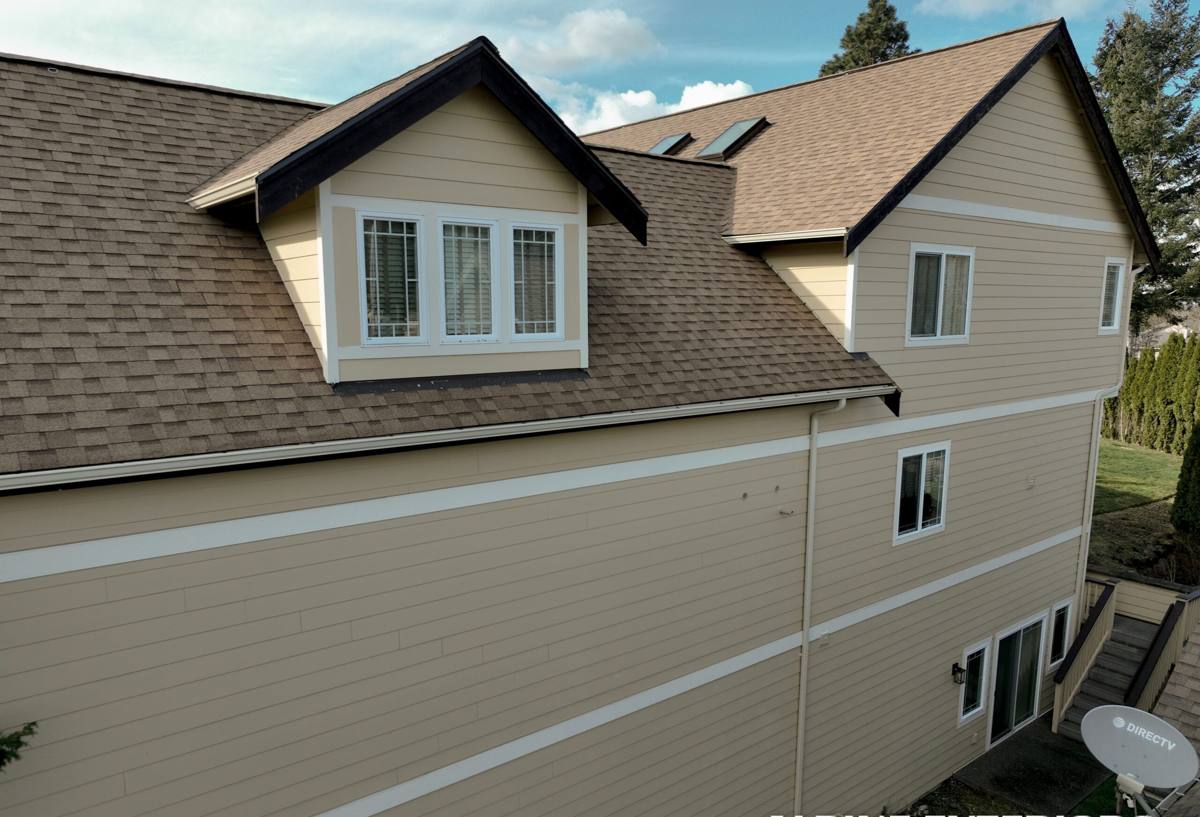
What the Cottonwood Beach Climate Does to Siding
Salt Air and Corrosion
Being close to saltwater means Cottonwood Beach homes get more airborne salt exposure than properties set back from the shoreline. Salt accelerates corrosion in fasteners, flashing, and any exposed metal trim, and it can break down lower-grade paint and finishes faster than a drier inland environment would. That matters for siding replacement because the fastener grade and finish quality chosen for the job need to account for that corrosion risk from day one — not get upgraded later after rust stains start showing up on the wall.
Driving Rain and Wind-Driven Water
Shoreline exposure also brings more wind, and wind-driven rain behaves differently than a straight vertical downpour. It gets forced sideways into siding seams, corner boards, and window and door trim, which means the parts of a siding system that only need to shed water falling straight down aren't good enough here. Correct lapping, sealed joints, and proper flashing integration matter more on a property like this than they would on a calmer, more sheltered inland lot.
A Long Moss and Mildew Season
Mild temperatures combined with near-constant coastal moisture give moss and mildew a long window to take hold across much of the year in this part of Whatcom County. It shows up first on shaded and north-facing walls, and it's not just a cosmetic issue — sustained organic growth holds moisture directly against the siding surface, which is exactly the condition that leads to hidden rot in a porous or poorly sealed material over time.
Signs a Cottonwood Beach Home May Need Siding Replacement
Not every siding issue on a shoreline home calls for a full tear-off, but there are warning signs that usually mean the existing siding has reached the end of what it can reasonably protect. Look for these before deciding whether you're facing a repair or a full replacement:
- Soft, spongy, or crumbling spots when you press on the siding, especially near the bottom courses
- Paint that's peeling, bubbling, or failing repeatedly in the same spots year after year
- Visible warping, cupping, or separation at seams and corner boards
- Persistent moss, algae, or dark staining on shaded walls that returns soon after cleaning
- Rust streaking below fasteners or trim, a sign the hardware underneath is corroding
- Rising interior humidity, musty smells, or peeling interior paint near exterior walls
- Visible daylight, gaps, or separation where siding meets window and door trim
One or two of these on their own might point to a localized repair. Several of them together, especially combined with siding that's already older or was never rated for this kind of coastal exposure, usually mean it's time to talk about full replacement rather than another round of patching.
Why We Install Only James Hardie Fiber Cement
We used to install a broader range of siding products before narrowing to one system. That change didn't come from a supplier relationship — it came from years of service calls and tear-offs across this exact kind of salt-air, high-moisture climate, watching which materials actually held up and which ones quietly turned into maintenance problems for the homeowner.
- Non-combustible core: Fiber cement doesn't feed a fire the way wood-based siding can, which matters for household safety and can matter for insurance as well.
- Factory-applied ColorPlus finish: Color is baked on under controlled factory conditions rather than brushed on in the field, so it resists fading, chalking, and moisture intrusion far longer than site-applied paint holds up in salt air.
- Climate-engineered HZ product lines: Hardie builds specific formulations for regions with heavy moisture exposure, which describes coastal Whatcom County well.
- Dimensional stability: Fiber cement doesn't swell, cup, or warp the way engineered wood products can after repeated wet-season moisture cycles.
- Strong transferable warranty: Hardie backs its products with a solid warranty structure when installation follows spec, giving homeowners real protection instead of a marketing claim.
We don't install LP SmartSide, vinyl siding, Cemplank, Allura, primed spruce, or cedar. Each has a legitimate place in the market, and plenty of homeowners elsewhere are happy with them. But for a shoreline property in Cottonwood Beach, we've made a professional call: we'd rather stand fully behind one system than offer a cheaper option that quietly shifts long-term maintenance risk back onto the homeowner.
What a Correct Siding Replacement Job Involves
Tear-Off and Substrate Inspection
A full replacement starts with removing the old siding entirely, which is also the point where hidden problems get found. On a shoreline home, we're checking sheathing and framing for rot, soft spots, and any signs that moisture has been getting behind the old siding for years without anyone knowing. Skipping this step, or covering over damaged sheathing instead of repairing it, is one of the most common ways a siding job fails early regardless of what material goes on top.
Weather-Resistive Barrier and Drainage
Behind the new siding, a properly installed weather-resistive barrier and drainage plane give any water that does get past the surface a way to escape instead of sitting against the wall. On a property that takes this much wind-driven rain, that drainage detail is doing real work, not just meeting a minimum code requirement.
Fastening and Flashing
Fastener type, spacing, and corrosion resistance all need to account for salt air exposure specifically. Flashing at windows, doors, and any roof-to-wall transitions has to be lapped correctly so water is directed out and away from the wall assembly rather than trapped behind trim. This is the detail work that separates a siding job that lasts decades from one that starts leaking within a few wet seasons.
Finish and Trim
Joints get sealed or factory-mitered rather than simply butted together, corner boards and trim are installed with the same moisture-management standard as the field siding, and clearance from grade and roof lines follows Hardie's published specifications. A quality product installed loosely will still develop problems in this climate — the material is only as good as the installation behind it.
Choosing the Right Hardie Product for a Cottonwood Beach Home
| Product Line | Best Use | Why It Fits This Area |
|---|---|---|
| HardiePlank lap siding | Most standard single-family homes | Traditional lap profile sheds wind-driven rain well when installed with proper overlap and flashing |
| HardiePanel vertical siding | Accent walls, gables, modern designs | Clean lines that hold up to salt air with minimal seams for water to work into |
| HardieShingle siding | Craftsman-style homes and accent sections | Textured look without the moisture absorption and upkeep of real wood shingle |
| HardieTrim boards | Corners, window and door casing, fascia | Factory-finished trim resists the same salt exposure and moisture cycling as the field siding |
The right profile and color come down to the home and the homeowner's preference, but the underlying product family and installation standard stay the same — we spec what actually fits a shoreline property's exposure rather than defaulting to whatever's fastest to install.
Cost Factors for Siding Replacement in Cottonwood Beach
| Factor | What It Affects | Why It Matters Here |
|---|---|---|
| Substrate condition | Repair costs before new siding goes on | Shoreline homes are more likely to have hidden moisture damage behind older, lower-grade siding |
| Wall square footage and complexity | Material and labor time | Homes with more corners, dormers, or trim detail take longer to flash and finish correctly |
| Fastener and hardware grade | Material cost | Salt-air exposure calls for corrosion-resistant fasteners rather than standard-grade hardware |
| Site access | Labor time and staging | Waterfront and shoreline lots can have tighter access than a standard in-town property |
| Trim and finish scope | Overall project cost | Full trim replacement alongside siding gives a more consistent, longer-lasting result than reusing old trim |
Exact pricing depends on the specific home and what we find once the old siding comes off, which is why we walk the property in person and give a real, written number instead of quoting off a generic price sheet.
Our Process
- An on-site walk-through of the existing siding, trim, and any visible moisture or rot damage
- An honest read on whether the home needs a full replacement, a partial re-side, or targeted repairs
- A written scope of work and timeline before any work begins
- Tear-off with a full substrate inspection, addressing any rot or sheathing damage before new siding goes on
- Installation of James Hardie siding and trim to manufacturer specification, including fastening and flashing detail built for this exposure
- A final walk-through so you know exactly what was done and why
We treat siding as part of a connected exterior system rather than an isolated cosmetic job. Roofing, window flashing, and deck ledger connections all interact with the wall assembly, and on a shoreline property those connections are often where water actually gets in even when the siding itself looks fine on the surface.
Why a Local Crew Matters in Cottonwood Beach
A crew that regularly works this stretch of the Whatcom County coastline already knows how salt air, wind exposure, and sustained moisture behave differently here than they do a few miles inland. That familiarity shows up in the details that actually determine how long a siding job lasts: which fastener grade to use, where extra flashing attention pays off, and which wall orientations on a typical Cottonwood Beach lot stay damp the longest. Those are judgment calls built from experience on homes like yours, not something a crew unfamiliar with shoreline exposure gets right by default.
Before hiring anyone for siding work on a Cottonwood Beach home, it's worth asking a few direct questions: what material they install and why, whether they carry current Washington contractor licensing and insurance, how they detail flashing for wind-driven rain specifically, and whether they'll put the scope of work in writing before any contract is signed. A contractor confident in their process will answer all of that without hesitation.
If your Cottonwood Beach home needs new siding, or you just want an honest read on whether what you have is holding up, we're glad to take a look. Reach out below for a free, no-pressure estimate.