 Birch Bay Exterior
 Decking That Has to Hold Up to a Whatcom County Winter
Lynden sits inland from the water, in the Nooksack River valley, which changes what a deck actually has to survive compared to a deck right on Birch Bay. You get less direct salt exposure out here, but you trade it for something just as hard on a deck over time: heavy valley fog, long stretches of standing humidity, and a moss season that can run from late fall through early spring. Add in the driving rain that moves through the whole region and the freeze-thaw cycles that show up on cold, clear valley nights, and you have a climate that punishes any deck built with shortcuts.
Composite decking has become the go-to choice for Lynden homeowners for good reason — it doesn't absorb water the way wood does, it doesn't need annual staining, and it resists the rot that eventually catches up with even well-maintained cedar or pressure-treated lumber. But composite is not maintenance-free, and it is not forgiving of a bad install. The board itself is only part of the story. What's underneath it — the framing, the drainage, the fasteners, the airflow — is what determines whether a composite deck looks and performs well in year twelve, not just year one.
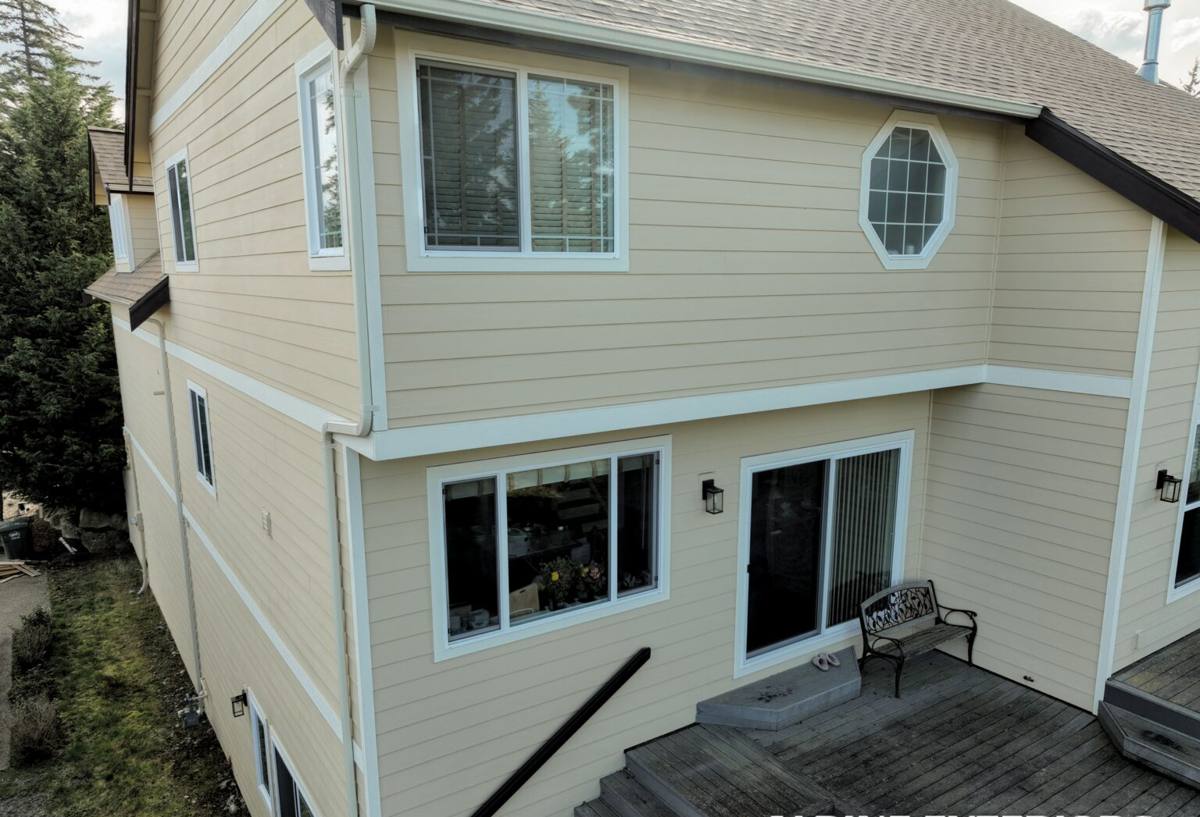
What Lynden's Moisture Cycle Does to a Deck Over Time
Extended Damp Periods
Whatcom County doesn't get dramatic downpours as often as it gets long, low-intensity rain and fog that keeps surfaces damp for days at a stretch. That kind of sustained moisture is exactly what moss and algae need to establish on a deck surface, especially in shaded areas near fences, tall hedges, or the north side of a house where the sun doesn't reach in winter.
Freeze-Thaw at the Valley Floor
Lynden's low elevation means cold air settles and frost forms more readily on clear winter nights than it does closer to the water. Water that's trapped in a board's fastener holes, end cuts, or a poorly ventilated substructure can freeze, expand, and stress the material — and it will find any weak point in the installation, whether that's an unsealed cut edge or a joist that was never properly protected.
Humidity Without Direct Salt Exposure
Because Lynden isn't beachfront, we don't see the same rapid corrosion of exposed metal fasteners that we do on Birch Bay waterfront jobs. That's a real advantage — but it doesn't mean fastener choice stops mattering. Standard hardware still corrodes faster than it should in a valley climate that stays damp for months at a time, and corroded fasteners are one of the most common causes of squeaking, loosening, and staining on decks that are otherwise in good shape.
What a Correctly Built Composite Deck Requires
The composite board manufacturers get the attention, but the framing underneath is what actually determines the deck's lifespan in this climate. A correct build for Lynden's conditions includes:
- Joist spacing that matches the specific composite product's engineering requirements — many composites need tighter spacing than traditional wood decking, especially at angles or on stairs
- A ventilated substructure so damp air can move underneath the deck instead of sitting stagnant against joists and beams
- Proper board gapping to allow for the expansion and contraction composite material goes through with temperature swings
- Corrosion-resistant fasteners and hidden fastening systems rated for the specific board profile being installed
- Flashing at any ledger board attachment to the house, so water is directed away from the structure rather than trapped against it
- Footings set to local frost depth and soil conditions, not just "deep enough to look right"
Skip any one of these and the board itself — even a premium composite — won't perform the way it's supposed to. We've seen composite decks with visible sagging, staining, or fastener pop-through within a few years, and in almost every case the board wasn't the problem. The install was.
Composite, Wood, and PVC — An Honest Comparison for This Climate
| Material | Moisture Behavior in a Damp Climate | Moss & Algae Resistance | Upkeep |
|---|---|---|---|
| Wood (cedar, pressure-treated) | Absorbs moisture, swells and shrinks seasonally, prone to rot at fasteners and end grain | Low — porous surface holds moss spores | Annual cleaning, periodic staining or sealing |
| Composite decking | Doesn't absorb water into the core; performance depends heavily on install quality | Moderate to good — capped boards resist growth better than uncapped | Periodic washing, no staining or sealing needed |
| PVC decking | Fully water-resistant core, least affected by moisture cycling | Good, though still needs cleaning in shaded, damp spots | Lowest maintenance, generally higher upfront cost |
For most Lynden homeowners, capped composite decking is the practical middle ground — real wood-look aesthetics, strong moisture resistance, and a manageable maintenance routine. We'll walk you through where PVC might make sense for a particularly shaded or damp section of your property, but we won't tell you it's necessary everywhere. That's a decision based on your yard's specific sun and drainage conditions, not a blanket sales pitch.
Our Installation Process
1. Site and Drainage Assessment
We start by looking at how water actually moves across your property — where runoff collects, how much shade the deck area gets through the year, and whether the ground beneath will drain or hold water against the substructure.
2. Framing Built to the Board Manufacturer's Spec
We build the substructure to match the exact composite product going down on top, not a generic framing layout. Joist spacing, blocking at board ends, and ledger attachment are all set to that product's engineering requirements.
3. Fastening and Board Installation
Boards are installed with the gapping and hidden fastening system specified for that product line, using corrosion-resistant hardware suited to a persistently damp climate.
4. Finish Details
Fascia, stair treads, and edge trim are finished to shed water rather than trap it, and any cut ends are treated according to manufacturer guidance so moisture can't wick into an exposed core.
5. Walkthrough
Before we consider the job done, we walk the deck with you, explain what maintenance it actually needs — and doesn't — and make sure you know what a healthy deck should look like season to season.
Living With Lynden's Moss Season
Composite decking resists moss far better than untreated wood, but "resists" isn't "immune." Shaded, north-facing sections and areas near overhanging trees still need attention, especially through the wetter months. A short seasonal routine goes a long way:
- Sweep debris off the deck regularly through fall so leaves and needles don't trap moisture against the boards
- Rinse the surface periodically in winter, focusing on shaded corners where moss is most likely to establish
- Check that gaps between boards stay clear so water can drain through rather than pool on the surface
- Trim back overhanging branches or shrubs that keep sections of the deck shaded and damp longer than the rest
- Inspect fastener points and railing posts once a year for any early signs of movement or staining
None of this requires the sanding, staining, or sealing that wood decks demand — but skipping it entirely, especially in shaded spots, is how moss gets a foothold even on a well-built composite deck.
What Drives Cost on a Lynden Composite Deck
| Factor | Why It Matters |
|---|---|
| Deck size and shape | Complex angles, multiple levels, or curved sections increase framing and board labor |
| Board tier (capped vs. uncapped, composite vs. PVC) | Higher-tier boards cost more upfront but generally need less long-term upkeep |
| Substructure condition | Replacing or upgrading existing framing adds cost but is often necessary for a proper composite install |
| Height and railing requirements | Elevated decks need additional structural support and code-compliant railing systems |
| Site access and drainage work | Poor drainage or difficult access may require grading or additional prep before framing starts |
Composite decking generally costs more per square foot than wood upfront, but the gap narrows — and often reverses — once you factor in years of staining, sealing, and board replacement that wood decking requires. We'll give you real numbers for your specific project rather than a generic per-square-foot estimate that doesn't account for your site.
Why It Matters That We Already Work in Lynden
A contractor who mainly builds decks in drier inland climates, or who's used to coastal salt-air jobs right on the water, isn't necessarily thinking about the specific combination Lynden presents — extended valley humidity, moss-friendly shade patterns, and frost at the ground level on clear winter nights. We work across Whatcom County, including Lynden and the surrounding valley communities, so we're building to the conditions your deck will actually face, not a textbook version of "Pacific Northwest weather."
That local familiarity shows up in the decisions that don't make it onto a spec sheet: how deep to set footings on valley soil, which sections of a yard are worth flagging for extra drainage work, and where moss is likely to become a recurring problem based on how the property sits relative to sun and shade through the year.
Get a Straight Answer for Your Property
If you're planning a new composite deck or replacing an aging wood one, we're happy to walk your property, talk through what your specific site needs, and give you a clear, no-pressure estimate. Use the form below to get started.