 Birch Bay Exterior
 Storm Damage Roofing for the Cherry Point Area
Cherry Point sits out on the water, exposed to whatever the Strait of Georgia sends ashore. Homes here take a different kind of beating than roofs a few miles inland in downtown Birch Bay or Blaine. Wind comes off open water with less to slow it down, salt spray settles on shingles and metal year-round, and the long wet season keeps roofs damp for months at a stretch. When a storm rolls through, the damage it leaves behind is rarely as simple as "a few missing shingles." Birch Bay Exterior Co has spent years working roofs in this exact stretch of Whatcom County, and we've learned that a storm repair done right here has to account for what happens to the roof in the weeks and months after the wind dies down, not just what's visibly broken the day after.
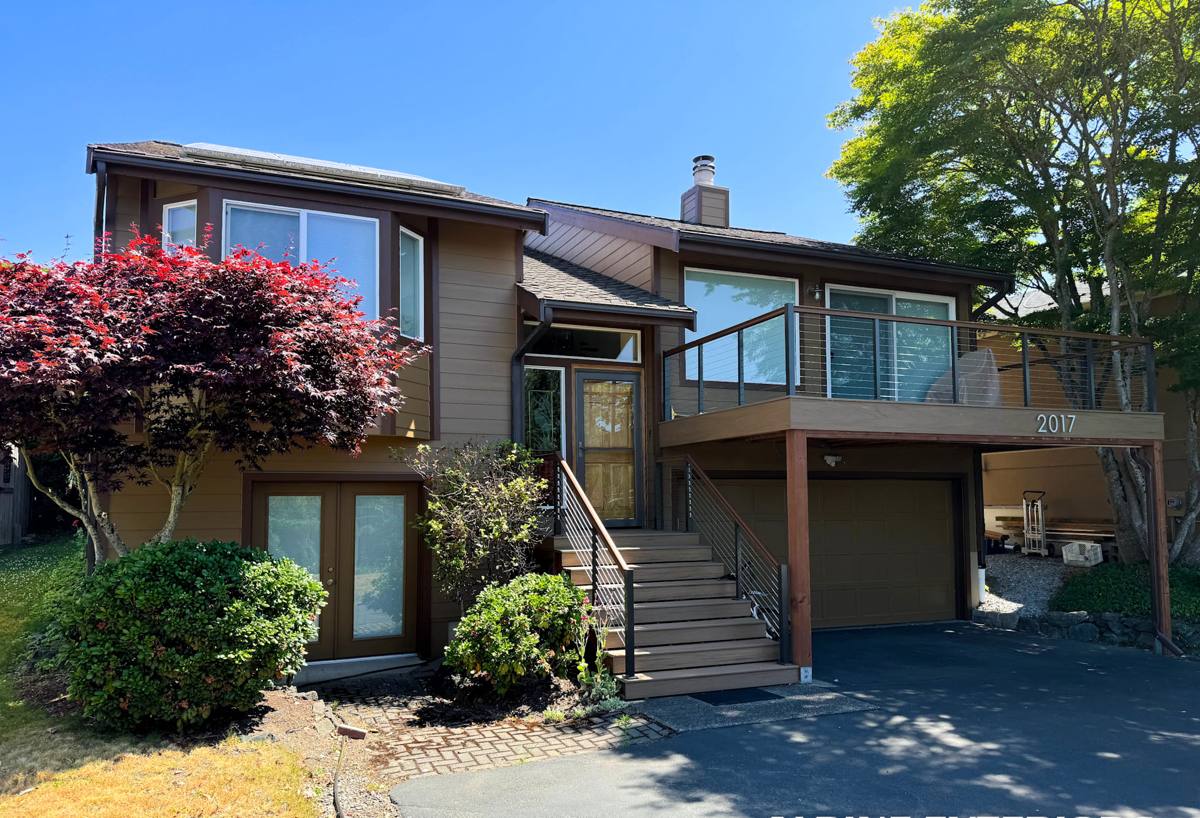
What Coastal Storms Actually Do to a Cherry Point Roof
Most storm damage isn't dramatic. It's not always a tree through the roof or a sheet of metal peeled back — though we do see that too. More often it's the quiet stuff that homeowners miss until a leak shows up weeks later.
Wind and Driving Rain
Sustained wind off the water lifts shingle tabs and works sealant strips loose even when nothing tears free. Once a shingle edge is lifted, wind-driven rain gets pushed up and under it instead of running off — something a normal rainstorm without wind never does. That's how a roof can pass a casual visual check and still leak during the next storm.
Salt Air
Being this close to the water means airborne salt settles on every roofing surface. On metal roofing and flashing, salt accelerates corrosion at fastener heads, seams, and cut edges. On asphalt shingles, it contributes to faster granule loss over time, which shortens the shingle's protective life. A storm doesn't cause this on its own, but storm damage on a roof that's already salt-weakened tends to be worse than the same damage on a roof further inland.
Moss and Prolonged Moisture
Whatcom County's long wet season gives moss plenty of time to establish itself, especially on north-facing slopes and anywhere debris collects. Moss holds moisture against the roofing material long after a storm has passed, and it can wedge under shingle edges and lift them — which then gives wind and rain a foothold. A lot of what looks like "storm damage" on an older Cherry Point roof is really storm damage finding a weak spot that moss created months earlier.
Signs Your Roof Needs a Storm Damage Inspection
After any significant wind or rain event, it's worth doing a quick check from the ground and inside the attic if you can access it. Call for an inspection if you notice any of the following:
- Shingles that look curled, lifted at the edge, or missing entirely
- Granules collecting in gutters or at downspout outlets
- Metal flashing around chimneys, vents, or roof valleys that looks bent, separated, or rusted at the edges
- Water stains or discoloration on ceilings, especially near exterior walls or around fireplaces
- Daylight visible through the roof deck when viewed from the attic
- A musty smell in the attic, which often shows up before a visible stain does
- Debris — branches, needles, moss clumps — built up in valleys or against roof-to-wall transitions
None of these guarantee a major problem, but they're all reasons to get eyes on the roof before the next storm rather than after.
What a Correct Storm Damage Repair Involves
A storm repair that actually holds up out here does more than patch the spot that's visibly damaged. We look at the whole roof plane, because wind damage rarely stays confined to one shingle or one section.
Inspection Before Repair
We check the full roof, not just the area you called about — decking, flashing, ventilation, and the condition of surrounding shingles. A repair done on a bad deck or over compromised underlayment fails again in the next storm, so we're honest with you if we find that the "small fix" is actually a symptom of something bigger.
Matching Materials, Not Just Covering the Hole
Wherever possible we match existing shingle type, color, and exposure so a repair doesn't stand out as a patch. For flashing repairs near the water, we favor corrosion-resistant fasteners and flashing materials suited to salt exposure over standard inland-grade hardware — a small upfront choice that avoids a repeat repair in a few years.
Sealing Against Wind-Driven Rain, Not Just Standing Water
Because rain here often arrives sideways, we pay close attention to how water moves under wind pressure — not just how it drains under gravity. That affects how we lap and seal shingles, valleys, and flashing transitions.
Moss and Debris Removal as Part of the Job
If moss or debris contributed to the damage, we clear it as part of the repair rather than leaving it to undermine the fix. Repairing a leak without addressing the moss that caused it is a short-term fix.
Repair or Replace? How We Help You Decide
Not every storm-damaged roof needs a full replacement, and not every roof that "just needs a patch" should stop there. The right call depends on the roof's age, how widespread the damage is, and what condition the rest of the roofing system is in.
| Factor | Points Toward Repair | Points Toward Replacement |
|---|---|---|
| Roof age | Under roughly 12-15 years | Approaching or past manufacturer's expected lifespan |
| Extent of damage | Isolated to one section or slope | Spread across multiple roof planes |
| Granule loss | Minimal, localized | Widespread, shingles look bald or brittle |
| Decking condition | Solid, no soft spots | Soft, spongy, or visibly rotted decking found |
| History of repairs | First or second repair on this roof | Repeated repairs to the same areas over the years |
| Salt/moss exposure history | Roof has been reasonably maintained | Long-term neglect visible in shingle and flashing condition |
We'll walk you through where your roof lands on this before recommending anything. If a repair is the honest answer, that's what we'll propose — we don't push replacement on a roof that doesn't need it.
Our Process for Cherry Point Storm Repairs
- Inspection and documentation. We assess the damage, photograph what we find, and note anything relevant for an insurance claim.
- Clear, written scope. You get a plain-English explanation of what's damaged, what needs repair, and what it will cost before any work starts.
- Temporary protection if needed. If a roof is actively leaking or exposed, we can tarp or otherwise protect it while repair materials are sourced.
- Repair work. Matched materials, correct flashing detail, and attention to how wind-driven rain moves across the repaired area.
- Final walkthrough. We show you what was done and what to keep an eye on going forward, including any moss or drainage issues worth monitoring.
Documenting Damage for Insurance
Storm damage claims move faster and more smoothly when there's clear documentation from the start. When we inspect a Cherry Point roof after a storm, we photograph the damage and note conditions that support a claim — wind speed context, the pattern of shingle loss, and any related damage to flashing or gutters. We're not an insurance company and won't promise a claim outcome, but a thorough, well-documented inspection report gives you a stronger starting point when you're working with your adjuster.
Why It Matters to Hire a Crew That Already Works This Area
Roofing work in Cherry Point isn't identical to roofing work in a sheltered inland neighborhood, and a crew that mostly works elsewhere in Whatcom County may not think twice about the differences. Knowing how far salt air travels inland from this stretch of coastline, which roof orientations collect moss fastest given local tree cover and shade patterns, and how wind actually moves across a property near open water all shape decisions that don't show up on a basic repair estimate. We're not saying every roofer without that experience will do a bad job — but a crew that's already repaired roofs a street or two away has already seen how this specific coastline treats a roof over time, and that experience shows up in how the repair holds up two winters later.
We also know that a fast response matters after a storm. A roof with lifted shingles or exposed decking gets worse every day it sits, especially with more rain in the forecast. Being local means we can typically get out to assess damage and, if needed, get temporary protection in place without a long wait.
Get a Free, No-Pressure Estimate
If your Cherry Point home took damage in a recent storm — or you just want a professional set of eyes on your roof before the next one hits — we're happy to take a look. The estimate is free, there's no pressure to move forward, and you'll get a straight answer about what your roof actually needs. Use the form below to get in touch.