 Birch Bay Exterior
 Metal Roofing for Cherry Point Homes
Cherry Point sits close enough to the water that its roofs live a different life than roofs ten miles inland. Salt-laden air drifts in off the Strait, wind-driven rain comes sideways during winter storms, and the shaded, damp stretches of the year give moss more time to take hold than almost anywhere else in Whatcom County. A roof here isn't just shedding water — it's standing up to corrosion, wind uplift, and constant moisture cycling, year after year. Metal roofing, installed correctly for this specific exposure, handles all three better than most alternatives. Installed poorly, it can fail in ways that are expensive to fix. This page is about what a correct metal roof installation looks like for a home in the Cherry Point area, and why the details matter more here than they would somewhere drier and further from the shoreline.
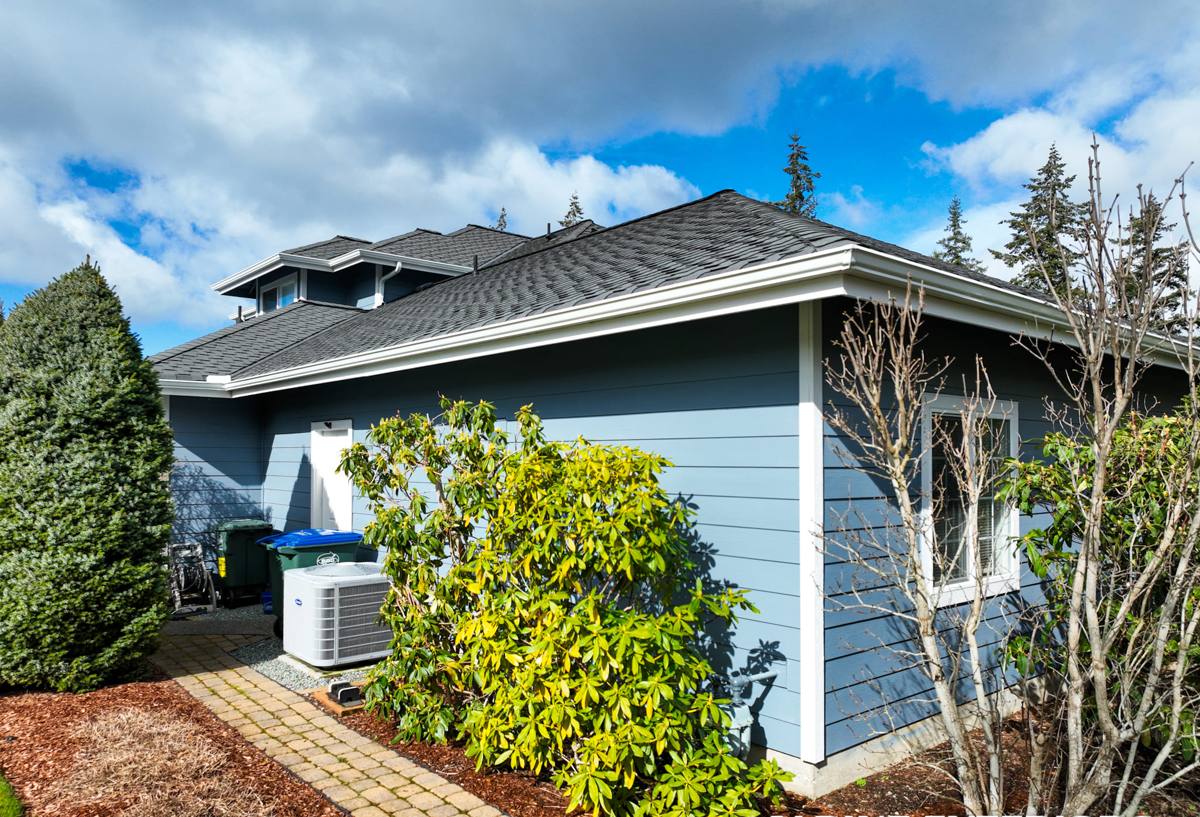
Why Cherry Point's Climate Changes the Job
Three things define roofing conditions in this part of Birch Bay, and each one shapes a decision we make on a metal roof install.
Salt Air and Corrosion
Airborne salt accelerates corrosion on any exposed metal — fasteners, flashing, cut edges, and panel finishes all age faster near the water than they do a few miles inland. This doesn't mean metal roofing is a bad fit for Cherry Point; it means fastener grade, flashing metal, and finish coating all need to be chosen with the shoreline in mind rather than defaulted to whatever's cheapest or standard for an inland job.
Driving Rain
Storms off the water tend to push rain horizontally, not just straight down. That means water finds its way under laps, around penetrations, and behind flashing that would stay dry in a calmer, more sheltered location. Underlayment choice, seam design, and flashing detail all have to assume wind-driven rain as a normal condition, not a rare event.
Moss Season
Shaded roof areas, tree cover, and long damp stretches from fall through spring give moss and algae plenty of time to establish. Metal sheds this growth far better than most roofing materials because there's no porous surface for spores to root into, but valleys, low-slope sections, and areas that stay shaded still need attention so debris and moisture don't sit against the panels.
What a Correct Metal Roof Needs Here
Not every metal roofing job is built the same way, and in a shoreline-exposed area like Cherry Point, a few choices matter more than they would elsewhere.
- Fasteners and exposed hardware rated for coastal/corrosive exposure, not standard-grade
- Flashing metal that matches or exceeds the panel's corrosion resistance, especially at valleys and wall transitions
- A high-quality underlayment layer that performs as a real secondary water barrier, not just a slip sheet
- Panel seams and laps engineered for wind-driven rain, not just gravity drainage
- Attention to any low-slope or shaded sections where moisture and debris linger longest
- Attachment and edge detailing rated for the wind exposure of an open, waterside lot
None of this is exotic. It's standard good practice for coastal metal roofing — but it only happens if the crew treats Cherry Point's exposure as the baseline, not an upgrade.
Panel Types and Fastening: What Fits Cherry Point
Metal roofing comes in a few common configurations, and the right one depends on the home's roof slope, look, and how much of the fastening is exposed to the weather.
| Panel Type | Fastening | Best Fit for Cherry Point |
|---|---|---|
| Standing seam | Concealed clips, no exposed fasteners on the field | Strong choice near the water — fewer exposed penetration points for salt air to attack |
| Exposed-fastener panel | Screws through the panel face, gasketed washers | Workable, but fastener quality and washer condition become critical maintenance points over time |
| Metal shingle/shake profile | Concealed or partially concealed | Good for matching a traditional look while keeping metal's durability |
We'll walk through which profile fits your roof's slope, structure, and the look you're after during the estimate — there's rarely a single "right" answer, but there is usually a best fit for a given home.
Underlayment and Flashing Detail
On a shoreline-exposed roof, the underlayment and flashing do a lot of the real work. A synthetic or self-adhered underlayment gives a second line of defense if wind-driven rain ever gets past a seam or lap — which happens occasionally on any roof, metal or otherwise, during a bad enough storm. Flashing at valleys, chimneys, skylights, and wall intersections gets built up in layers, not caulked as an afterthought, so it keeps working even as sealants age.
Our Installation Process
A metal roof is only as good as the sequence it was installed in. Here's how we approach it for a Cherry Point home.
- On-site assessment: we look at slope, existing decking condition, ventilation, and how exposed the roof is to wind and driving rain from the water side.
- Tear-off and deck inspection: old roofing comes off and we check the decking underneath for rot or soft spots before anything new goes down — this matters more on older Birch Bay-area homes that have had years of moisture exposure.
- Underlayment installation: a full underlayment layer goes down as the actual water barrier, sized and lapped for wind-driven rain conditions.
- Flashing and edge metal: valleys, penetrations, and roof edges get flashed first, built to shed water even under sideways rain.
- Panel installation: panels go on with fastening and seam work matched to the panel type and the home's wind exposure.
- Detail work: ridge caps, trim, and any transitions get finished so there are no shortcuts hiding under a clean-looking roofline.
- Final walkthrough: we go over the finished roof with the homeowner, including what routine maintenance (if any) looks like going forward.
Maintenance: What Actually Matters
One of the appeals of metal roofing is that it needs less upkeep than shingle roofing, but "less" isn't "none," especially this close to the water.
- Clear debris from valleys and low-slope sections a couple times a year, especially after fall leaf drop
- Check gutters and downspouts for buildup — clogged gutters back water up under roof edges
- Have shaded or moss-prone areas looked at periodically; moss on metal usually sits on the surface rather than rooting in, but buildup still holds moisture against seams
- Watch for any fastener or flashing corrosion at the coast-facing side of the roof over the years
- After major windstorms, a quick visual check for lifted panels or displaced flashing is worth the five minutes
None of this is heavy maintenance — it's the kind of periodic attention that keeps a well-installed metal roof performing for decades instead of just looking good for the first few years.
Cost Factors for a Cherry Point Metal Roof
Metal roofing costs more upfront than asphalt shingles, and the final number depends on several factors specific to the home and its exposure.
| Factor | Why It Matters Here |
|---|---|
| Panel type (standing seam vs. exposed fastener) | Concealed-fastener systems cost more but reduce long-term corrosion exposure at fastener points |
| Roof complexity (valleys, penetrations, transitions) | More flashing detail means more labor, and more places wind-driven rain can test the install |
| Decking condition | Rot or soft spots found during tear-off need repair before new roofing goes down |
| Underlayment grade | A higher-grade underlayment costs more but matters more on an exposed, rain-driven roof |
| Access and roof pitch | Steeper or harder-to-access roofs take longer and cost more to work safely |
We'll give you a clear, itemized picture of where your project's cost is coming from during the estimate — no vague lump-sum numbers.
Why a Crew That Already Works Cherry Point Matters
Coastal and near-coastal roofing isn't a different trade, but it does reward experience with the specific conditions. A crew that's worked roofs in Birch Bay and along Whatcom County's shoreline already has a feel for how far wind-driven rain can push, which fastener grades hold up over years of salt exposure, and which shaded or low-slope spots on a given roof style tend to collect moss first. That kind of familiarity shows up in the small decisions — where extra flashing goes, which underlayment gets used, how seams are lapped — that a homeowner never sees directly but absolutely feels in how the roof performs ten and twenty years down the line.
Signs Your Current Roof May Be Struggling
If you're weighing a metal roof for a Cherry Point property, it's often because the current roof is already showing its age. Common signs worth a look:
- Visible moss buildup in shaded valleys or north-facing slopes
- Rust or corrosion streaks near fasteners, flashing, or roof edges
- Water stains on interior ceilings after wind-driven storms specifically, rather than steady rain
- Granule loss or curling on an aging asphalt shingle roof nearing replacement
- Gutters that fill with debris faster than they used to, suggesting roof-level buildup
If any of that sounds familiar, or you're simply planning ahead for a home in the Cherry Point area, we're glad to walk your roof with you and talk through what a metal roofing system would actually look like for your specific house — no pressure, no hard sell, just a straight assessment and a free estimate.