 Birch Bay Exterior
 Decks Take a Different Kind of Beating in Cherry Point
If you own a deck in the Cherry Point area, you already know it doesn't age the way a deck would inland. Being this close to the water means your deck lives with salt-laden air settling into every joint and fastener, long stretches of driving rain that find their way under boards and around ledger connections, and a moss season that can run most of the year in the shaded, damp corners of Whatcom County. None of that is unusual for a shoreline property here — but it does mean a deck built or repaired without that environment in mind will fail faster than the same deck would fifty miles inland.
We repair decks throughout Birch Bay and the surrounding Cherry Point neighborhoods, and the patterns are consistent. Problems don't usually start where they're easiest to see. They start underneath — in framing, flashing, and fasteners that are quietly corroding or softening long before the surface boards show it.
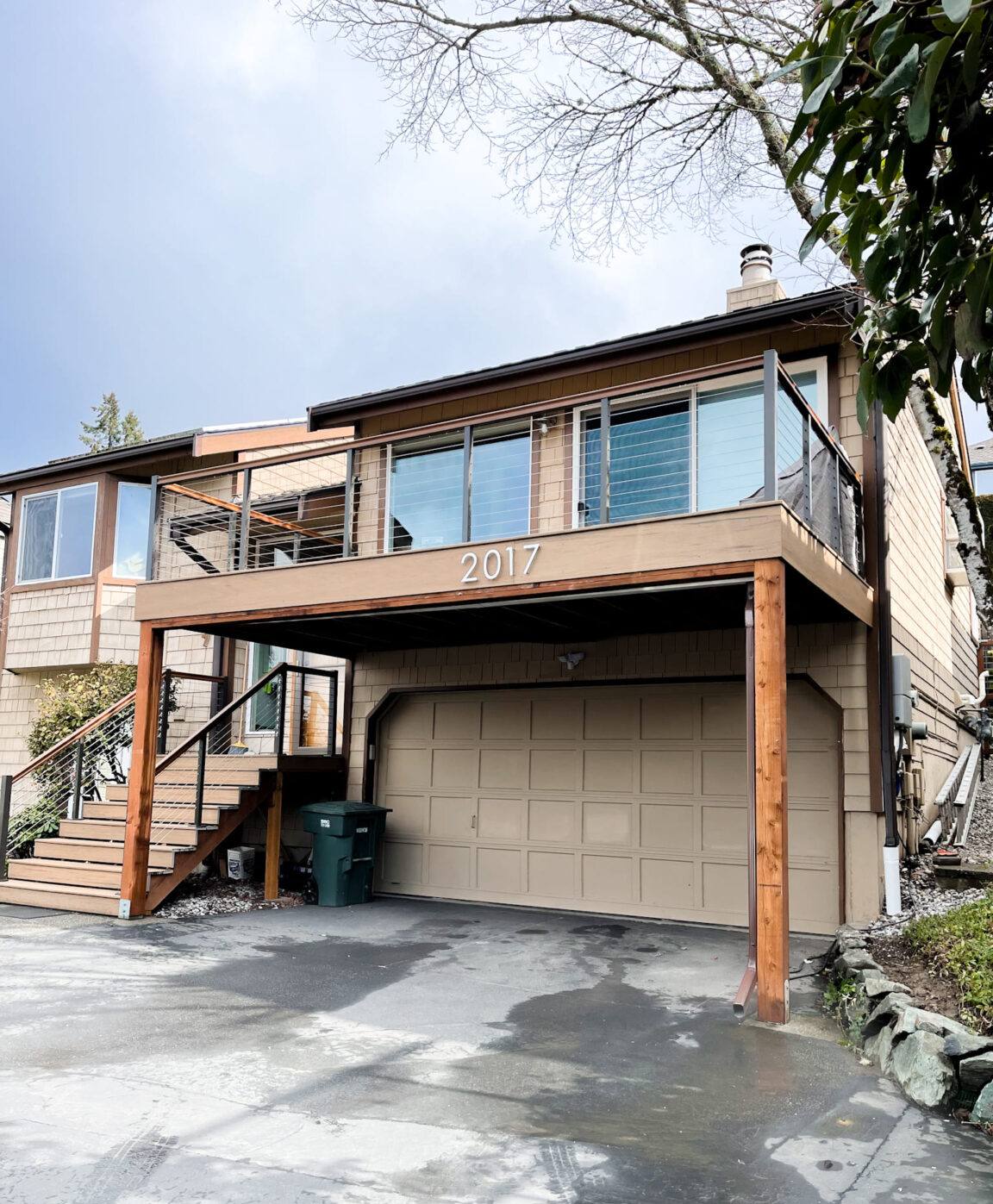
Why Local Climate Conditions Matter for Deck Repair
Salt Air and Metal Fasteners
Airborne salt accelerates corrosion on nails, screws, joist hangers, and structural connectors — even ones rated for outdoor use. Once a fastener starts to corrode, it loses holding strength gradually and invisibly, which is part of why deck failures can seem sudden when they're actually years in the making. Repairs done with the wrong-grade hardware near the water tend to fail again within a few years.
Driving Rain and Water Intrusion
Wind-driven rain off the water doesn't just fall straight down — it gets pushed sideways into gaps, under railings, and against the house where the deck ledger board attaches. That ledger connection is one of the most safety-critical parts of any deck, and it's also one of the most common places we find hidden rot, because water intrusion there often isn't visible from the top or from underneath until the damage is advanced.
Moss, Algae, and Surface Wear
Shaded, north-facing, and low-airflow areas of a deck hold moisture longer, which is exactly what moss and algae need to take hold. Beyond looking bad, a moss-covered deck surface becomes a slip hazard and traps moisture against the wood or composite decking, slowing drying and speeding up surface breakdown.
Common Deck Problems We Find in This Area
- Soft or spongy decking boards — usually a sign of trapped moisture and early rot beneath the surface finish.
- Rusted or corroding fasteners and hardware — screws that spin freely, joist hangers with visible rust bloom, or nail heads that have lifted.
- Ledger board separation or hidden rot — often found only once flashing is pulled back during inspection.
- Wobbly or leaning railings and posts — a structural issue, not just a cosmetic one, and one of the more common safety call-outs we get.
- Moss and algae buildup in shaded corners, stair treads, and areas with poor drainage or airflow.
- Delaminating or fading composite boards on older composite decking that wasn't rated for constant coastal moisture exposure.
- Stair stringer rot at the point where stairs meet grade — a frequent problem area we see on older decks in this area.
Wood Decks vs. Composite Decks: What Repair Looks Like for Each
| Deck Type | Common Failure Points Locally | Repair Approach |
|---|---|---|
| Pressure-treated wood | Surface checking, fastener corrosion, ledger and joist rot, moss on shaded runs | Board-by-board replacement where rot is confirmed, hardware upgrade, refinishing or sealing exposed wood |
| Cedar or other natural wood | Graying, splintering, softening at end grain and fastener points | Sanding and refinishing where structurally sound; selective board replacement where soft |
| Composite decking | Board delamination, fading, moisture wicking at cut ends, fastener pull-through | Board replacement using manufacturer-approved fasteners and end-cap treatment; framing inspection underneath |
| Structural framing (any surface type) | Ledger rot, joist hanger corrosion, post base rot at grade contact | Framing repair or sistering, hardware replacement, flashing correction |
Composite decking is often marketed as low-maintenance, and the surface material itself does resist rot well. But the framing underneath any composite deck is still typically wood, and it still needs the same attention to flashing, drainage, and fastener quality that a wood deck does. A repair that only addresses the composite boards and ignores the framing underneath is addressing half the problem.
What a Correct Deck Repair Actually Involves
A lot of deck "repairs" are really just board swaps — pull out what's obviously damaged, drop in a new board, done. That approach can leave the underlying cause untouched, which means the same spot fails again. A correct repair starts with finding out why that section failed in the first place.
Our Repair Process
- Full structural inspection — we check ledger attachment and flashing, joist condition, post bases, railing connections, and fastener condition, not just the visible decking surface.
- Identify the actual cause — whether it's a flashing gap, poor drainage, undersized or corroded hardware, or simple age and UV wear.
- Address the cause, then the symptom — correct flashing or drainage issues before replacing boards, so the repair actually holds.
- Match materials and hardware to the environment — corrosion-resistant fasteners and connectors appropriate for coastal exposure, not generic hardware-store-grade parts.
- Final check for level, fastening, and finish — repaired sections should be solid underfoot and blend reasonably with the surrounding structure.
Signs You Need Repair vs. Full Replacement
Not every deck problem means starting over, but some do. As a general guide:
- Isolated soft boards or surface wear on a structurally sound frame — typically a repair.
- Ledger rot, widespread joist damage, or multiple failed structural connections — often points toward partial or full rebuild.
- A deck more than 20-25 years old with no documented upgrades to flashing or hardware — worth a full structural evaluation before investing in cosmetic repair.
- Railings that flex or move under normal pressure — always worth an inspection regardless of the deck's age, since this is a safety issue.
What Repair Costs Depend On
| Factor | Why It Matters |
|---|---|
| Extent of hidden rot | Damage found once boards or flashing are opened up often changes the scope from what was visible at first look |
| Structural vs. cosmetic scope | Framing and ledger repairs involve more labor and code-relevant hardware than surface board replacement |
| Decking material | Composite board replacement costs differ from wood, and matching an older composite line can affect sourcing |
| Access and deck height | Elevated decks or limited underside access add time to inspect and repair framing properly |
| Railing and code compliance | Older railings may need updates to meet current spacing and height requirements during repair |
Small, isolated repairs — a handful of boards, a railing tighten-up, hardware replacement — are generally a modest expense. Structural repairs involving ledger, framing, or multiple posts run higher, simply because more of the deck has to be opened up and rebuilt correctly. We give straight numbers after an actual inspection rather than guessing over the phone, because guessing on a coastal deck repair is how homeowners end up paying twice.
Maintaining Your Deck After Repair
A repaired deck in this climate still needs regular attention — that's the trade-off of living this close to the water. A short seasonal routine goes a long way toward protecting the work:
- Rinse or sweep moss and organic debris off the surface regularly, especially in shaded areas.
- Check railings and stair treads for movement a couple of times a year.
- Keep gutters and downspouts clear so runoff isn't dumping extra water onto or near the deck.
- Reapply sealant or finish on wood decking on the manufacturer's recommended schedule, not just when it looks faded.
- Watch for soft spots underfoot and address them early, before they spread to adjacent boards or framing.
- Have flashing and ledger connections checked periodically — they're the part you can't see and the part that matters most.
Why It Matters to Hire a Crew That Already Works in Cherry Point
Deck repair isn't one-size-fits-all, and a crew that mostly works inland won't necessarily know to check the things that matter most on a shoreline property near Birch Bay. We already know what corrosion looks like on a two-year-old fastener here versus a ten-year-old one, which areas of a deck tend to hold moss longest given the sun angle and shade patterns typical of this part of Whatcom County, and where ledger flashing tends to get missed on decks built to older standards.
That familiarity means less time spent diagnosing and more time spent fixing the actual problem — with materials and hardware chosen because they hold up here, not because they're what's cheapest to stock.
Get an Honest Look at Your Deck
If your deck has soft boards, corroding hardware, a railing that doesn't feel as solid as it used to, or you're just not sure what shape it's really in underneath, we're happy to take a look. We'll give you a straight assessment of what's actually going on, what it will take to fix it right, and a free, no-pressure estimate — no upsell on work your deck doesn't need. The form below is the easiest way to get started.