 Birch Bay Exterior
 Board & Batten in a Place Like Cherry Point
Cherry Point sits right up against the salt air and open exposure that make Whatcom County's coastline beautiful and hard on a house at the same time. Board and batten siding has become a popular choice out here because it fits the look homeowners want — clean vertical lines, a farmhouse or modern-coastal feel, strong shadow lines that hold up visually even under our flat gray winter light. But board and batten is also one of the least forgiving siding profiles when it's installed wrong, because it depends on dozens of vertical seams doing their job for decades in wet, salty, wind-driven conditions. Get the material or the installation wrong here, and those seams become the first place trouble shows up.
This page is about doing board and batten right, specifically for homes in the Cherry Point area — what the local climate actually does to this siding style, what a correct installation requires, and why we install it exclusively in James Hardie fiber cement rather than the wood or vinyl versions of the same look.
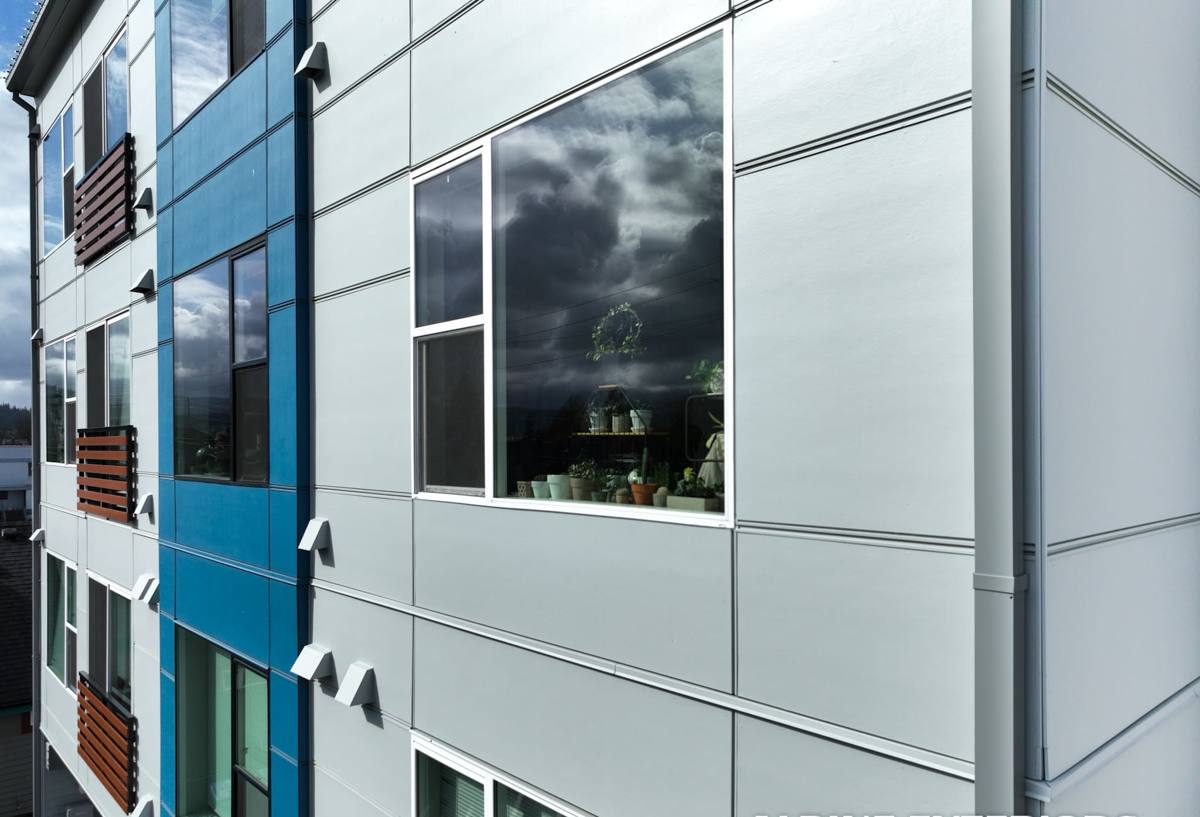
What Cherry Point's Climate Actually Does to Siding
Three things define the exposure out here, and all three hit board and batten siding harder than a flat lap profile.
Salt Air
Homes near the water take in airborne salt that settles on every exterior surface. On vertical board and batten, that salt collects in the reveals along each batten and in the horizontal trim details, where it holds moisture longer than a smooth lap surface would. Over years, that steady exposure accelerates corrosion on fasteners and finish and degrades softer materials from the surface in.
Driving Rain
Wind off the Strait pushes rain sideways, not straight down. Board and batten relies on a vertical batten covering the seam between boards to shed that water — if the water-resistive barrier underneath, the flashing details, and the gap behind the boards aren't done correctly, driving rain finds its way behind the battens instead of running off them.
A Long Moss Season
Whatcom County's damp, mild winters give moss and algae months to establish themselves on any siding that stays wet and shaded. Board and batten's vertical grooves and horizontal furring create more ledges and shadowed pockets for moss to take hold than a flat panel does, especially on north-facing walls and under eaves.
How Board and Batten Actually Works
Board and batten isn't one flat surface — it's a system, and every layer matters:
- Water-resistive barrier: a weather-resistant membrane installed over the sheathing before any siding goes on, lapped correctly so water always drains outward and down.
- Rainscreen gap: a small air space behind the boards that lets any moisture that does get in drain and dry out instead of sitting against the wall.
- Vertical boards: the flat panels that make up the wall field.
- Battens: the narrower strips fastened over each seam between boards, which is what gives board and batten its signature rhythm and, more importantly, covers the joint so water can't track straight into the wall.
- Flashing and trim: the details around windows, doors, corners, and the base of the wall where most siding failures actually start.
Every one of those layers has to be right for the system to perform. A batten that looks perfect from the sidewalk can still be failing behind the boards if the fastening pattern or the gap behind it was done wrong.
Why We Only Install This in James Hardie
Board and batten is available in vinyl, engineered wood (LP SmartSide), and primed or raw cedar, as well as James Hardie fiber cement. We don't install any of those alternatives, and it's worth explaining why, specifically for this profile in this climate.
Vinyl board and batten is thin by nature, and thin material flexes and gaps more visibly in a vertical, seam-heavy profile than it does in a horizontal lap. In driving rain and coastal wind, that flex works against the very seams the system depends on. Engineered wood siding performs well in many applications, but it's an engineered wood product at its core — it depends on an intact factory coating to keep moisture out, and any breach at a cut edge, fastener, or seam gives moisture a path into the wood substrate, which is a real liability on a profile with this many seams. Primed spruce and raw cedar board and batten can look excellent, but they require the homeowner to stay ahead of refinishing on a schedule, and in a salt-air, high-moss environment that schedule tightens up fast — miss a cycle and the wood pays for it.
James Hardie fiber cement is non-combustible, dimensionally stable in wet-dry cycling, and comes with a factory-applied ColorPlus finish engineered to hold color and resist the kind of moisture and UV exposure this coastline delivers. It doesn't rot, it doesn't feed moss the way bare wood can, and it holds its shape at the seams instead of swelling or cupping. That combination is why it's the only material we put behind a board and batten profile, and it's why we can stand behind the installation for the long haul.
Material Comparison for This Application
| Material | Behavior in Salt Air / Driving Rain | Moss Resistance | Long-Term Maintenance |
|---|---|---|---|
| James Hardie fiber cement | Dimensionally stable, factory finish resists moisture damage at seams | Dense surface resists moss establishment better than porous wood | Occasional wash, no refinishing cycle |
| Vinyl board and batten | Thin profile can flex/gap under wind-driven rain | Moderate; grooves still trap debris and moisture | Low, but seams and fasteners are hard to service if they fail |
| Engineered wood (LP SmartSide) | Performs well if coating stays intact; vulnerable at cut edges and seams | Moderate; wood substrate more vulnerable if moisture gets in | Coating touch-up needed over time, especially at seams |
| Primed spruce / cedar | Natural wood movement; performs only as well as the maintenance behind it | Lower; porous surface favors moss and algae in shaded, damp areas | Regular refinishing required, tighter cycle near salt air |
What a Correct Installation Involves
A board and batten job that's going to hold up on the Cherry Point coastline isn't just about hanging boards straight. Here's what we consider non-negotiable:
- Full water-resistive barrier installed and lapped correctly before a single board goes up
- A proper rainscreen gap behind the siding so moisture can drain and dry instead of pooling against the wall
- Correct fastener type, spacing, and embedment per manufacturer specification — critical on a profile with this many attachment points
- Flashing detailed correctly at every window, door, and roof intersection, not just caulked over
- Batten placement and reveal spacing consistent across the whole elevation, including corners and transitions
- Factory-cut and factory-primed edges used wherever possible, with field cuts sealed per spec
- Ventilation maintained at the base of the wall and around penetrations so trapped moisture has somewhere to go
Skip any one of these and the siding may still look right for a season or two — the problems that show up on a bad board and batten job usually show up behind the wall long before they show up on the surface.
Our Process From Estimate to Finished Wall
We start with a walk-around of the home to look at current siding condition, existing moisture or moss patterns, and any trouble spots around windows, roof lines, or grade level that need attention before new siding goes up. From there we put together a plan that specifies board width, batten spacing, and ColorPlus color, along with the flashing and water management details specific to that wall's exposure. Installation follows manufacturer fastening and clearance specs throughout, with particular attention to the details that matter most in this climate — the rainscreen gap, flashing at penetrations, and consistent sealing at cut edges. We walk the finished job with the homeowner before we consider it done.
Maintenance in a Salt Air, Moss-Prone Climate
Board and batten in James Hardie fiber cement doesn't need a refinishing cycle, but it isn't zero-maintenance. A yearly rinse to clear salt residue and organic buildup, especially on shaded or north-facing walls, keeps moss from getting a foothold in the reveals. Keeping gutters clear and grade sloped away from the foundation protects the base of the wall, which is where board and batten systems are most likely to take on standing moisture over time. Beyond that, an occasional look at caulking around windows and trim keeps the water management system doing its job as the house settles.
Why a Crew That Already Works Cherry Point Matters
Board and batten siding done wrong doesn't usually fail where you can see it — it fails behind the wall, in the flashing details and the rainscreen gap, months or years after the crew has moved on. A crew that already works this stretch of Whatcom County coastline has already seen where those failures start on homes with this exact exposure, and builds around them from the first day of the job rather than learning it on your house. That's the difference between board and batten that looks good in photos and board and batten that's still doing its job in twenty years of salt air and driving rain.
If you're considering board and batten siding for a home in the Cherry Point area, we're happy to walk the property and put together a straightforward, no-pressure estimate — just fill out the form below.