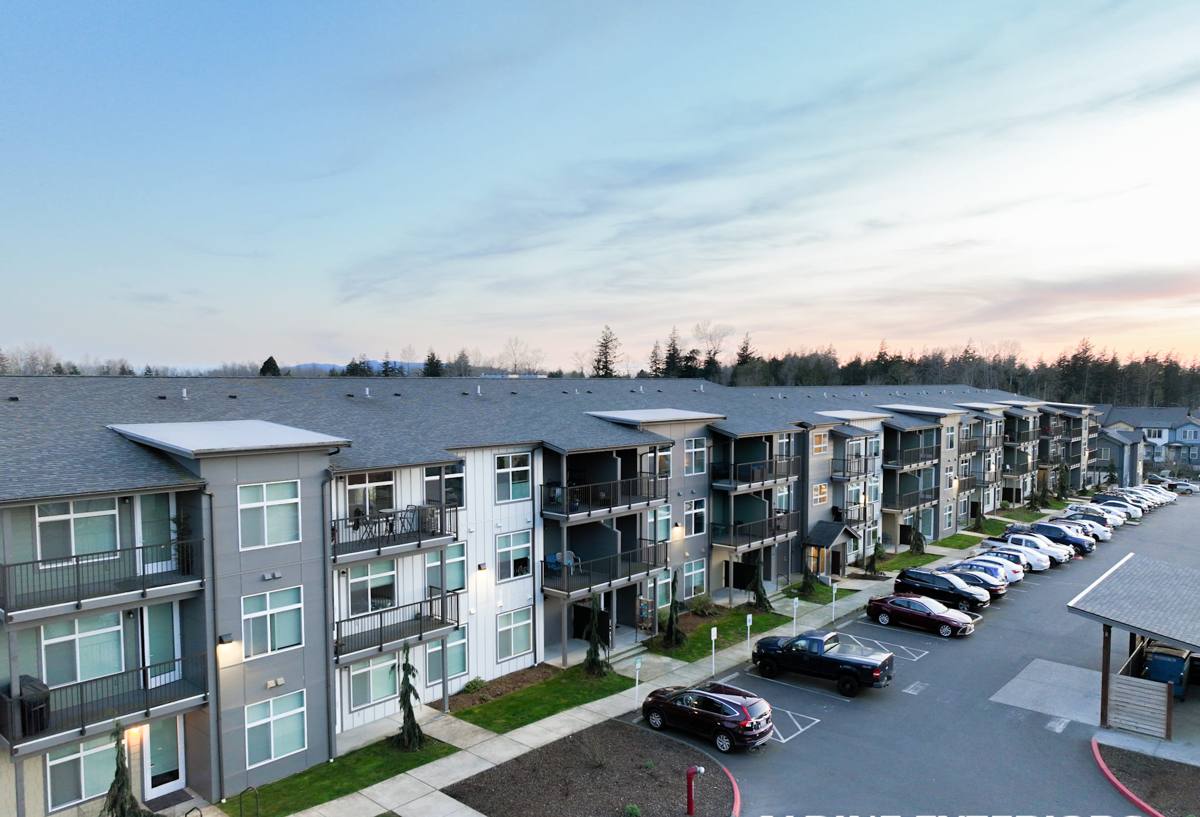
 Birch Bay Exterior
 Siding Built for California Creek's Specific Weather
California Creek sits close enough to the water that homes here deal with a different mix of punishment than siding just a few miles inland. Salt-laden air drifts off the Strait of Georgia and Semiahmoo Bay, driving rain comes in sideways off winter storms, and a long, damp moss season sets in every fall and doesn't fully let go until late spring. Siding that isn't built and installed for that combination doesn't fail all at once — it fails slowly, at the seams, the corners, and the bottom courses, in ways that aren't obvious until the sheathing behind it is already wet.
This page covers what James Hardie fiber cement siding needs to do right for a California Creek home, what a correct installation actually involves, and why we think hiring a crew that already works this specific stretch of Whatcom County matters more here than it would somewhere drier and further from the water.
Why Salt Air and Moss Season Change the Job
Salt air is corrosive to more than metal
Homeowners tend to think of salt air as a problem for fasteners and flashing — and it is — but it also accelerates the breakdown of paint films and caulk. A siding product with a weak factory finish will chalk, fade, and lose adhesion faster near the water than it would fifteen miles inland. That's a real factor in what we recommend for a California Creek exterior, not a generic talking point.
Driving rain finds the gaps
Wind-driven rain doesn't just fall on a wall — it gets pushed into any horizontal gap, under-lapped joint, or poorly sealed penetration. On a home exposed to weather coming off the water, that means the standard "good enough elsewhere" details around windows, doors, and butt joints aren't good enough here.
Moss doesn't just grow on roofs
The long wet season that makes moss a roofing problem also pushes moss and algae growth down onto siding, especially on north-facing walls, under eaves, and anywhere shade and moisture linger. Siding that holds surface moisture — or that has caulk lines and seams that trap organic debris — gives moss a foothold. Siding that sheds water and dries quickly doesn't.
What James Hardie Siding Gets Right for This Climate
James Hardie fiber cement is a cement, sand, and cellulose fiber product engineered specifically for regional climate exposure — it's sold in HardieZone HZ5 and HZ10 formulations for exactly the kind of wet, marine-influenced weather Whatcom County sees. A few specifics that matter for a California Creek home:
- It's non-combustible, which matters for insurance and for wildfire-adjacent risk in dry summer stretches, even in a generally wet region.
- It doesn't absorb and swell with moisture the way wood-based products can, so it holds its shape and paint line at butt joints and corners.
- ColorPlus factory-applied finish is baked on under controlled conditions, giving it better UV and salt-air resistance than field-applied paint, with a longer color warranty as a result.
- It doesn't rot, and it isn't attractive to the moisture-loving pests that show up in older wood siding near the water.
None of that means the material does the work by itself. Fiber cement is unforgiving of a rushed or careless install — the product performs to spec only when the gaps, flashing, and fastening are done correctly, every time, on every wall.
What a Correct Installation Actually Involves
Water management comes before the siding goes up
The siding is the last layer, not the first line of defense. A correct job starts with checking and, where needed, correcting the weather-resistive barrier, window and door flashing, and any kick-out flashing at roof-to-wall intersections — details that matter more on a home taking direct weather off the water than on a sheltered inland lot.
Gaps, clearances, and fastening
James Hardie's own installation instructions specify minimum gaps at butt joints, minimum clearance from roofing, decking, and grade, and specific fastener patterns and embedment depth. Skipping these to save time is the single most common cause of premature failure we see on fiber cement jobs that were installed by a crew unfamiliar with the product.
Caulking and touch-up paint, done sparingly and correctly
Over-caulking is a common shortcut that actually traps moisture rather than shedding it. Correct joints are designed to be either sealed with the right sealant in the right place, or left as a shadow-line gap that drains — not caulked shut everywhere out of habit.
Correct Practice vs. Common Shortcuts
| Detail | Done Correctly | Common Shortcut We See |
|---|---|---|
| Butt joints | Gapped per Hardie spec, flashed or sealed as designed | Tight-butted with caulk as the only defense |
| Bottom clearance | Minimum clearance held above grade, decks, and roofing | Siding run too close to grade, wicking moisture |
| Fasteners | Correct type, spacing, and embedment into framing | Overdriven or under-driven, missing studs |
| Corners and trim | Back-flashed, properly lapped for water shedding | Face-nailed trim with caulk as the only seal |
| Cut edges | Sealed with the manufacturer-approved product | Left raw, inviting moisture uptake at cuts |
Our Process for a California Creek Home
We treat every home near the water a little differently than one further inland, because the exposure is different.
1. On-site assessment
We look at wall exposure, roof-to-wall details, existing moisture damage, and how much of the home actually faces prevailing wind and rain. Not every wall needs the same treatment.
2. Sheathing and moisture check
Before any new siding goes up, we check what's underneath. If there's existing rot or trapped moisture from a prior installation, that gets addressed first — covering it over just moves the problem behind new siding.
3. Correct water management details
Flashing, house wrap, and gap details get corrected or installed to current best practice, not just to whatever code minimum happens to be.
4. James Hardie installation to manufacturer spec
Panels, fasteners, gaps, and joint treatment installed to the documented instructions — which is also what keeps the manufacturer's product warranty intact.
5. Final walk-through
We go over the finished job with the homeowner, including what maintenance to expect given the local climate.
Cost Factors for a California Creek Siding Job
| Factor | Why It Matters Here |
|---|---|
| Existing damage behind old siding | Moss season and driving rain make hidden sheathing rot more common on older homes |
| Wall exposure | Sides facing prevailing wind and water need more careful flashing detail, which affects labor |
| Panel style and trim complexity | Lap siding, shingle-style panels, and trim boards each price differently in labor and material |
| Color and finish | Factory ColorPlus finish costs more up front than field paint but holds up better to salt air over time |
| Access and site conditions | Tree cover, slope, and staging access around the property affect labor time |
We give straight, itemized numbers rather than a single lump figure, so a homeowner can see exactly what's driving the cost.
Maintenance Checklist for This Climate
James Hardie siding is low-maintenance, not no-maintenance. In a moss-prone, salt-air environment, a few habits go a long way:
- Rinse siding annually, especially north-facing and shaded walls where moss and algae take hold first.
- Keep gutters clear so overflow doesn't run down the face of the siding and hold moisture at seams.
- Trim back vegetation that keeps walls shaded and damp longer than they need to be.
- Check caulking at trim and penetrations every couple of years and have any failed sections redone promptly.
- Watch for any soft spots, staining, or bubbling paint near the bottom courses, a common early sign of moisture intrusion.
Why a Crew That Already Works California Creek Matters
Siding installation isn't a one-size-fits-all trade. A crew that regularly works homes in and around Birch Bay already knows which walls typically take the worst of the weather, what the older housing stock in this part of Whatcom County tends to have underneath the existing siding, and how local permitting and inspection generally goes. That familiarity shows up in fewer surprises mid-project and a tighter, more consistent install — not because the material is different, but because the details that matter get caught before they become a callback.
We only install James Hardie fiber cement siding. We don't install vinyl, LP SmartSide, Cemplank, Allura, primed spruce, or cedar, because we'd rather stand fully behind one system we trust to perform in this exact climate than split our attention and our warranty confidence across several.
Get a Straight Answer on Your Siding
If you're weighing a siding replacement or repair on a California Creek home, we're happy to take a look and give you a clear, no-pressure estimate — what your walls actually need, what it will cost, and why. Use the form below to get started.