 Birch Bay Exterior
 Board & Batten Siding for Nooksack Homes
Board and batten has become one of the most requested looks in Whatcom County — the vertical lines, the crisp shadow gaps, the way it reads as both farmhouse-traditional and modern depending on the trim and color. It's a striking style for the homes we see around Nooksack, where lots often back up to open fields, tree lines, or river-valley terrain and a home's exterior has room to make a statement. But board and batten is also one of the less forgiving siding styles to get wrong. The vertical seams, the batten spacing, and the way water is meant to shed off a flat panel face all depend on details that either get built in correctly the first time or turn into problems within a few years. In a climate like ours, those details matter more than the color chip.
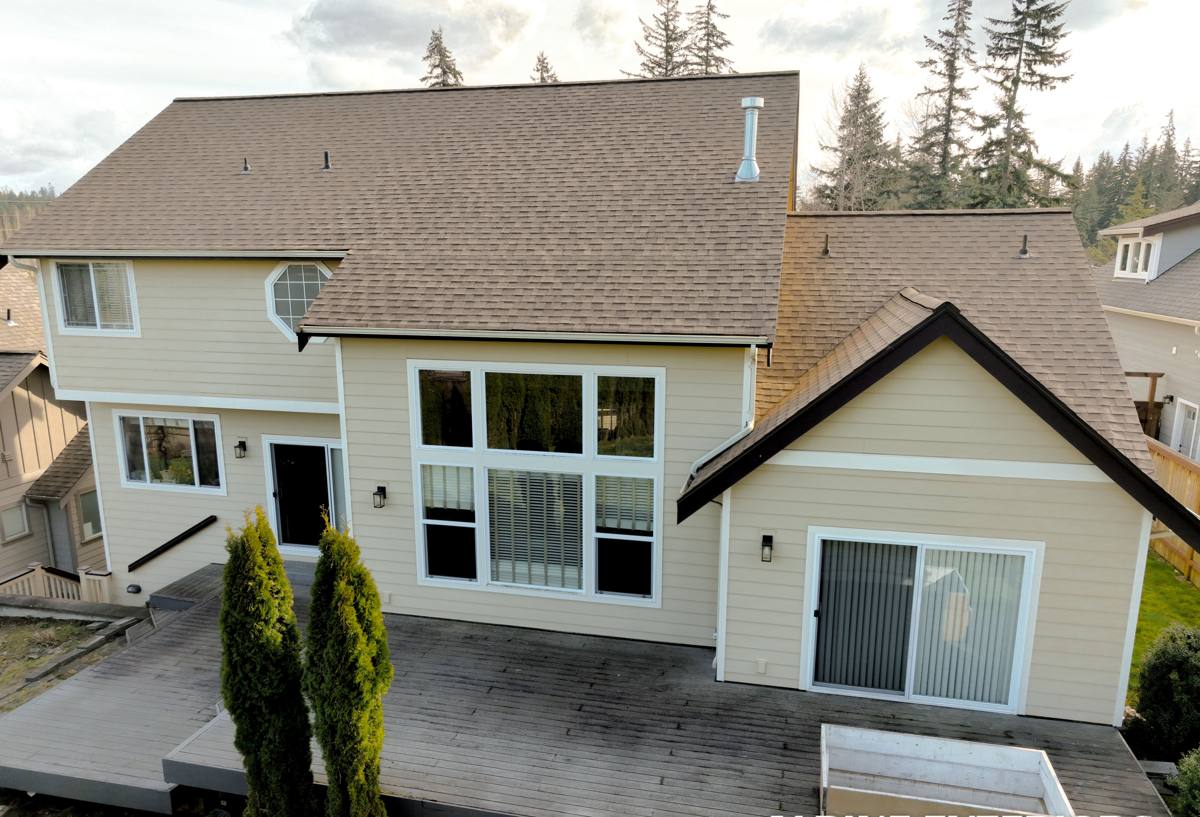
What Nooksack's Climate Actually Does to Siding
Whatcom County sits in a marine-influenced climate that stays damp for most of the year, and the Nooksack area gets its own version of that: cool, shaded pockets along the river corridor, tree cover that keeps moisture from drying off quickly, and long stretches of gray, drizzly weather that never quite qualifies as a downpour but never really lets a house dry out either. Add in the salt-tinged air that moves inland off the Salish Sea and Birch Bay to the west, and you've got a combination that's tough on any exterior material — but especially tough on siding styles like board and batten, which rely on vertical panel joints and exposed batten strips that can trap water if they're not detailed correctly.
The practical effects show up the same way every year:
- Moss and algae taking hold on north- and shade-facing walls, especially under tree cover
- Driving rain pushed sideways by storm systems, testing every seam and panel edge instead of just the roof
- Slow-drying wall cavities where moisture gets in but has no good way to escape
- Freeze-thaw cycling in colder snaps that stresses any material that's already absorbed moisture
None of this means board and batten is a bad choice for Nooksack. It means the material and the installation both have to be chosen with this climate in mind, not a catalog photo from a drier region.
Why We Only Install James Hardie for Board & Batten
Board and batten can be built out of several materials, and we've worked with, inspected, or torn off most of them over the years. We install James Hardie fiber cement exclusively — not because the alternatives are worthless, but because we've weighed the trade-offs against what Whatcom County weather does to a house over a decade or two, and Hardie is the one we're willing to put our name on.
Cedar Board & Batten
Cedar is the traditional material for this look, and it's genuinely beautiful when it's new. The trade-off is maintenance: cedar needs regular refinishing, it moves with moisture, and in a climate this damp it's a magnet for the moss and mildew that already give local homeowners headaches on decks and fences. Keeping cedar board and batten looking good here is a real, ongoing commitment — not a one-time install.
Vinyl Board & Batten
Vinyl board and batten is inexpensive and low-maintenance in the sense that it doesn't need painting, but it's a thin material that flexes with temperature swings, can crack in a hard freeze, and doesn't hold up well to the kind of wind-driven rain that comes through storm events here. It also can't match the crisp, flat panel look that makes board and batten distinctive — vinyl profiles tend to look visibly like vinyl up close.
LP SmartSide and Other Engineered Wood
Engineered wood siding uses a wood-strand core, and wood-based cores are inherently more sensitive to sustained moisture exposure than fiber cement. In a climate where walls stay damp for days at a stretch, that's a real consideration, especially at cut edges and panel joints if caulking and flashing details aren't maintained over time.
Where That Leaves Us
James Hardie fiber cement is non-combustible, dimensionally stable, and manufactured in an HZ5 formulation specifically engineered for climates like the Pacific Northwest's — freeze-thaw cycling, sustained moisture, and everything in between. It holds a factory-applied ColorPlus finish that doesn't rely on field-applied paint to do the weather-resisting work, and it comes with a strong transferable warranty. That combination is why it's the only material we put on a board and batten project.
The James Hardie Board & Batten System
"Board and batten" with James Hardie isn't one single product — it's a system. Most commonly, we build it using HardiePanel vertical siding as the flat field panel, with Hardie Trim boards installed over the panel joints to create the raised batten lines. The panel provides the weather barrier and the flat plane; the battens provide the shadow lines and cover the seams where two panels meet. Both components come in the same factory-finished ColorPlus palette, so the panel and batten age together instead of one weathering faster than the other — which is exactly the kind of mismatch that makes an aging board and batten wall look patchy.
Because the whole system is fiber cement, there's no wood core anywhere in the wall assembly to absorb moisture, and no seam where a different material's expansion rate can pull a joint open over time.
What a Correct Board & Batten Install Actually Involves
Board and batten fails, when it fails, almost always at the details — not the material itself. A correct install in a climate like ours means:
Drainage Behind the Panel
A rain screen or properly detailed water-resistive barrier behind the panel gives any moisture that does get past the surface a path to drain and dry out, instead of sitting against the sheathing. This matters more here than almost anywhere else in the state.
Correct Fastening and Panel Gaps
Fiber cement panels need to be fastened per manufacturer spec, with the correct gap at panel joints and around penetrations to allow for seasonal movement. Battens are then set to a consistent, level spacing — both for the look and to make sure each batten is actually doing its job of covering a seam, not just decorating the wall.
Flashing at Every Transition
Windows, doors, roof lines, and the base of the wall all need proper flashing and kick-out details. Board and batten's vertical lines draw the eye straight down the wall to grade, so a poorly flashed bottom edge is both a performance problem and a visible one.
Factory-Sealed Cut Edges
Any field cut on a fiber cement panel needs to be sealed per Hardie's installation guidelines before it goes on the wall. Skipping this step is one of the most common corner-cutting mistakes we see on other contractors' work, and it's invisible until moisture finds it.
Board & Batten Material Comparison
| Factor | James Hardie Fiber Cement | Cedar | Vinyl | LP SmartSide |
|---|---|---|---|---|
| Moisture resistance | Non-combustible, engineered for wet climates | Absorbs moisture, needs sealing | Doesn't absorb, but seams can trap water | Wood-strand core, moisture-sensitive |
| Finish durability | Factory ColorPlus, 15-year finish warranty | Needs repainting/staining every few years | Color molded in, can fade or chalk | Factory-primed, needs field paint upkeep |
| Moss/algae resistance | Resists growth; cleanable surface | Prone to moss in shaded, damp areas | Resists growth but can trap moisture behind panels | Prone to growth if finish is compromised |
| Impact/fire resistance | Non-combustible, dent-resistant | Combustible, dents and splits | Combustible, can crack in cold | Combustible, wood-based core |
| Long-term upkeep | Occasional wash; no refinishing | Regular refinishing required | Low upkeep but limited repair options | Paint maintenance and joint monitoring |
Our Process for a Nooksack Project
- On-site assessment — we walk the home, check current siding and sheathing condition, and look specifically at shaded and low-drainage areas where moisture and moss tend to concentrate.
- Moisture and substrate check — before any panel goes up, we confirm the wall assembly underneath is sound. Covering a damp or damaged substrate with new siding just hides a problem.
- Tear-off and drainage plane install — old siding comes off, and we install a proper water-resistive barrier and drainage plane suited to our climate before any Hardie product touches the wall.
- Panel and batten installation — HardiePanel and Hardie Trim go up to manufacturer spec, with correct fastening, gapping, and flashing at every window, door, and transition.
- Final inspection and walkthrough — we check seams, caulking, and flashing details before calling the job finished, and walk the homeowner through what maintenance (minimal as it is) looks like going forward.
Signs Your Current Siding May Need Replacing
- Persistent moss or algae staining that comes back within weeks of cleaning
- Soft, spongy, or discolored spots near the base of walls or under windows
- Visible gaps, warping, or separation at panel or board seams
- Paint that's peeling or bubbling rather than just fading
- Musty smell or visible staining on interior walls that share an exterior wall
- Siding that's original to a home built more than 20-25 years ago with wood or early composite materials
Why Hiring a Crew That Already Works Nooksack Matters
Board and batten's clean lines make it unforgiving of sloppy work — a wavy batten line or an inconsistent shadow gap is obvious from the street in a way that lap siding can hide. A crew that already works this part of Whatcom County knows how local moisture patterns, tree cover, and wind exposure tend to hit a given lot, and builds the drainage and flashing details accordingly instead of applying a one-size-fits-all install. That local familiarity, paired with a single-material specialty in James Hardie fiber cement, is what lets us stand behind the work years after the crew has moved on to the next project.
If you're considering board and batten siding for a home in or around Nooksack, we're happy to take a look and talk through what it would take for your specific house — no pressure, no obligation. Reach out using the form below for a free estimate.