 Birch Bay Exterior
 Siding Built for Birch Bay Village's Coastal Exposure
Birch Bay Village sits close enough to the water that homes here take a different kind of weathering than siding a few miles inland. Salt-laden air off the bay works on fasteners, caulk joints, and painted wood surfaces year-round. Wind-driven rain off Whatcom County's marine storms pushes moisture sideways into laps and trim rather than letting it simply run down and off. And the long, damp shoulder seasons that define this stretch of the Pacific Northwest coast keep north- and west-facing walls shaded and wet long enough for moss and algae to take hold. None of that is unusual for the area — it's just what siding here has to survive, and it's why we treat a Birch Bay Village siding job differently than a job in a drier, more sheltered part of the county.
We install one product on every home: James Hardie fiber cement siding. This page covers what that looks like specifically for a Birch Bay Village property — what the climate demands, what correct installation involves, and how our process works from first estimate to final walkthrough.
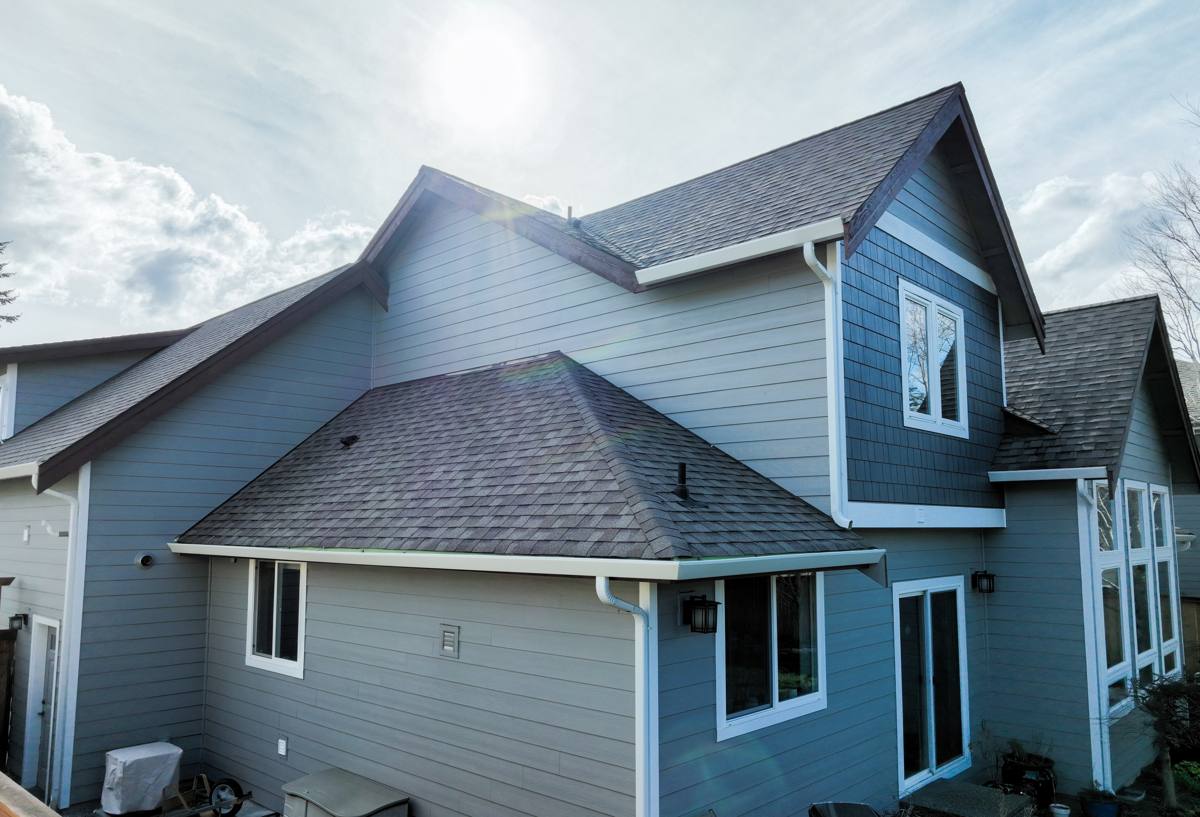
What Salt Air, Driving Rain, and Moss Actually Do to Siding
Salt Air
Airborne salt is corrosive to exposed metal and slowly breaks down lower-grade paint films and caulks faster than the same materials would fail further inland. Fasteners, flashing, and trim hardware all take more abuse near the water, which is why fastener choice and flashing detail matter more here than in a landlocked neighborhood.
Driving Rain
Storms coming off the water don't just fall on a house — they hit it sideways. That kind of wind-driven rain finds its way into any gap at a lap joint, a butt seam, or a poorly sealed trim intersection. A siding system that's only designed to shed water straight down will eventually let moisture behind the cladding on an exposed Birch Bay Village elevation.
Moss and Algae
Shaded, north-facing walls and anything under tree cover stay damp longer here than they would in a sunnier part of the state. Moss and algae don't just look bad — sustained moisture at the siding surface is what eventually finds its way into seams, fastener holes, and any spot where the finish has started to wear thin.
Why We Install James Hardie — Not Vinyl, Not Wood, Not LP
Every siding product on the market gets something right, and we're not going to pretend otherwise. Vinyl is inexpensive and low-maintenance in mild climates. Cedar and primed wood look great when new. LP SmartSide is a real engineered-wood product with a legitimate following. But we standardized our company on James Hardie fiber cement because of how it performs specifically in conditions like Birch Bay Village's — and we don't install the alternatives, even when a homeowner asks for them.
- Vinyl can warp, buckle, or become brittle with temperature swings, and its seams and J-channels give wind-driven coastal rain more paths behind the cladding than a properly lapped fiber cement system.
- Cedar and primed wood require an ongoing paint and caulk maintenance cycle to stay ahead of moisture — a cycle that's harder to keep up with in a damp, moss-prone microclimate like this one.
- LP SmartSide is an engineered wood product, meaning its long-term performance still depends on keeping cut edges sealed and moisture managed — a maintenance sensitivity we'd rather not build a coastal installation around.
Fiber cement doesn't rot, doesn't attract wood-boring insects, and is non-combustible. Combined with a factory-applied finish that isn't relying on a field-painted coat to hold up against salt air and driving rain, it's the product we're willing to put our name behind on a Birch Bay Village home.
The Right Hardie System for This Location
James Hardie engineers its siding in climate-specific "HZ" formulations. For a coastal Whatcom County property, that means specifying the HZ5 line, built for wetter, more moisture-exposed regions, rather than a formulation intended for drier inland climates. The panel or plank profile itself — lap siding, board-and-batten panels, or shingle-style panels — is a design choice, but the underlying substrate and finish need to match the exposure the house actually faces.
ColorPlus Factory Finish
We specify ColorPlus finish on Birch Bay Village jobs whenever possible. It's baked on at the factory in multiple coats under controlled conditions, which gives it more consistent coverage and better resistance to fading and moisture intrusion at the surface than a field-applied paint job — an advantage that matters more in a salt-air environment where painted finishes are under constant low-grade attack.
Trim and Accessories
Corner boards, fascia, and window trim get the same fiber cement treatment as the field siding. Mixing fiber cement panels with wood or composite trim just reintroduces the moisture and maintenance problems we're trying to avoid in the first place.
What a Correct Installation Involves
Fiber cement siding is only as good as the assembly it's installed into. A rushed or generic install can leave a technically-correct product performing poorly on an exposed coastal wall. On every Birch Bay Village project, our crews follow the same non-negotiables:
- A properly lapped weather-resistive barrier behind the siding, with all seams and penetrations taped or sealed before a single course goes up.
- Correct minimum clearance between the bottom of the siding and grade, decks, patios, and roof lines, so splash-back and ponding water aren't sitting against the material.
- Rain-screen or drainage gap detailing on elevations that take the most direct weather, giving any moisture that does get behind the cladding a path to drain and dry out.
- Manufacturer-specified fastener spacing, type, and embedment — corrosion-resistant fasteners matter more here than in a low-salt-exposure area.
- Properly flashed and kicked-out window and door openings, so water is directed out and away rather than down into the wall assembly.
- Tight, consistent butt joints and caulk lines at trim intersections, sealed with a product rated for the movement and moisture this climate puts on a joint.
Skipping any one of these doesn't usually show up as a problem in year one. It shows up two, five, or ten years later, as moisture damage behind the siding that's expensive to trace and repair — which is exactly the failure mode a coastal installation needs to be built to avoid from day one.
Our Process, Start to Finish
1. On-Site Assessment
We walk the exterior with you, looking at current siding condition, existing moisture or moss issues, trim and flashing details, and which elevations take the most direct wind and rain.
2. Scope and Product Selection
We recommend the Hardie profile, HZ formulation, and finish that fit the house and its exposure, and we walk through what a full tear-off versus a more limited replacement would each involve.
3. Written Estimate
You get a clear, itemized estimate — materials, labor, and scope — with no pressure to sign on the spot.
4. Installation
Our crews follow manufacturer installation specs to the letter, including the weather barrier, flashing, and fastening details above, not just the visible surface work.
5. Final Walkthrough
We inspect the finished work with you before calling the job complete, checking joints, trim lines, and clearances against what was scoped.
Cost Factors on a Birch Bay Village Home
Every house is different, and we won't quote a number without seeing the property, but the factors that most often move the price on a coastal Whatcom County siding job are the same handful every time:
| Factor | Why It Affects Cost |
|---|---|
| Tear-off vs. overlay | Full removal of existing siding costs more up front but lets us properly inspect and repair the sheathing and weather barrier underneath — often necessary if there's existing moisture damage. |
| Wall height and stories | Multi-story or steep-site homes require more staging and safety setup, which affects labor time. |
| Trim and architectural detail | Homes with more corners, dormers, and window trim take more cutting, fitting, and flashing work than a simple rectangular elevation. |
| Exposure level | Elevations facing prevailing wind and rain off the bay may warrant additional rain-screen detailing, adding labor but reducing long-term moisture risk. |
| Existing damage | Rot or moisture damage found once old siding comes off adds sheathing and framing repair costs that can't be fully scoped until the wall is open. |
Living With Fiber Cement in This Climate
Correctly installed Hardie siding is genuinely low-maintenance, but "low-maintenance" isn't "no-maintenance" — especially with the moss and algae pressure a shaded or coastal Birch Bay Village lot can see. A short seasonal checklist keeps a good installation performing the way it's supposed to:
- Rinse siding gently once or twice a year, focusing on north-facing and shaded walls where moss and algae take hold first.
- Keep gutters clear so overflow isn't running down the siding face or pooling at the base of a wall.
- Trim back vegetation and tree cover that's keeping any wall shaded and damp longer than it needs to be.
- Walk the exterior once a year and check caulk lines at trim and window intersections for cracking or gaps.
- Address any impact damage or chipped finish promptly rather than letting bare substrate sit exposed to salt air and rain.
Why a Crew That Already Works Birch Bay Village Matters
Fiber cement installation specs don't change by neighborhood, but the judgment calls do — where rain-screen detailing is worth the extra labor, how much clearance a given lot's drainage actually needs, which elevations on a coastal property take the brunt of the weather. A crew that's already worked this stretch of Whatcom County has seen how houses here actually hold up over time, not just how a spec sheet says they should. That's the difference between a technically correct install and one that's actually built for where it's going.
If you're weighing a siding replacement on a Birch Bay Village home, we're happy to take a look and walk you through what we'd recommend — no pressure, no obligation. Use the form below to request a free estimate.