 Birch Bay Exterior
 Decks Built for How Birch Bay Village Actually Weathers
Birch Bay Village sits close enough to the water that every exterior structure on the property deals with salt-laden air, wind off the Strait of Georgia, and a rainy season that runs longer than most of Whatcom County ever really dries out. A deck built with generic, one-size-fits-all methods will show it within a few seasons — soft spots at the ledger, rusted-through fastener heads, and a green film that never fully scrubs off. A deck built for this specific neighborhood, with the right materials and details from day one, doesn't have those problems. This page covers what that actually looks like: the climate factors, the build details, the material trade-offs, and what our process looks like when we take on a deck project in Birch Bay Village.
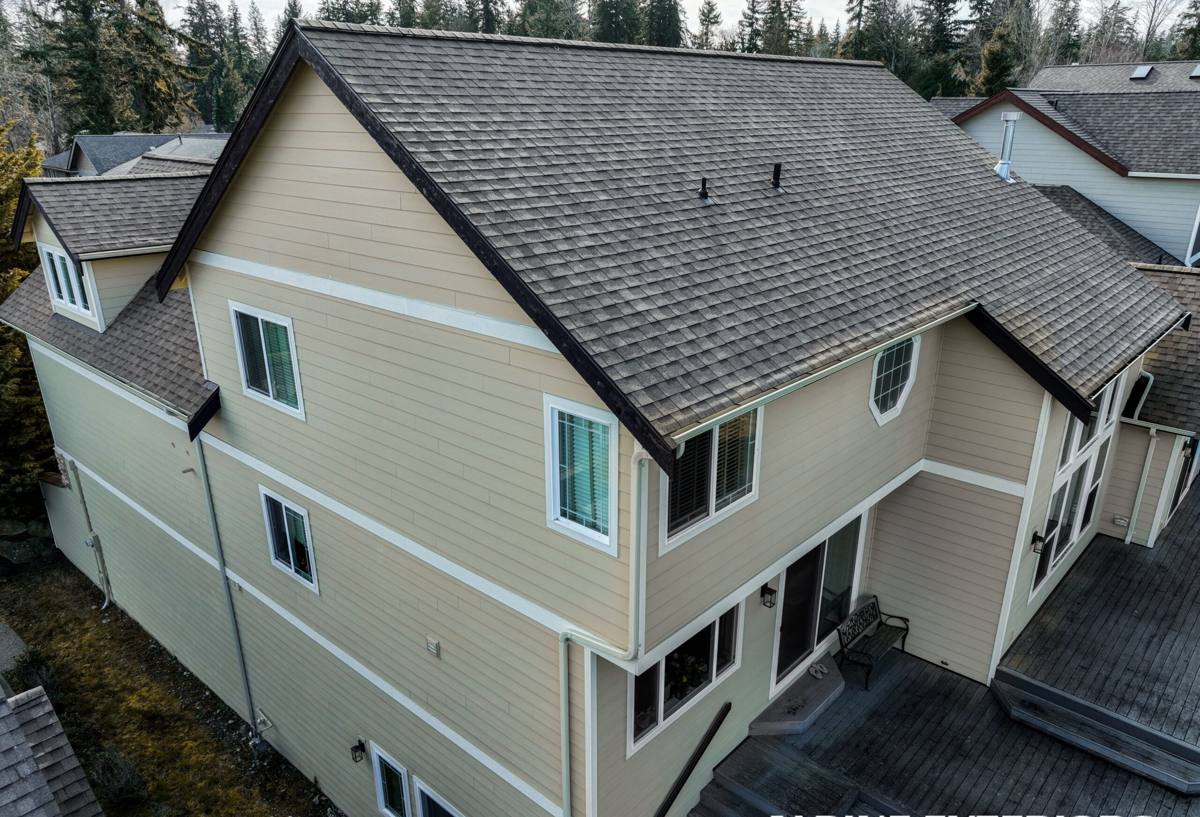
What Birch Bay's Climate Does to a Deck
Every coastal community in Whatcom County deals with moisture, but Birch Bay Village gets a specific combination that's worth understanding before you plan a build.
Salt Air and Metal Fasteners
Airborne salt from the bay accelerates corrosion on anything metal — nails, screws, joist hangers, structural screws, even the coating on some hardware. Fasteners rated for general outdoor use inland can start rusting within a couple of years this close to the water. That rust doesn't stay cosmetic; once a fastener head corrodes, it loses holding strength, and a deck board or joist connection that depends on it weakens quietly, often long before anyone notices from the surface.
Moss, Algae, and Standing Water
Whatcom County's wet season stretches from fall into spring, and Birch Bay's marine air keeps humidity high even between rain events. Deck surfaces that don't shed water fast — because of poor slope, tight board spacing, or a shaded, low-airflow layout — grow moss and algae readily. Beyond looking bad, that growth holds moisture against the wood or composite surface, which is exactly the condition that leads to rot, board cupping, and a slick, unsafe walking surface in wet weather.
Wind Exposure Near the Water
Open exposure toward the water means decks, railings, and any attached structures take more direct wind load than a comparable build a few miles inland. Railing posts, guard connections, and any pergola or cover tied into the deck need to be fastened with that in mind, not just to minimum code.
Choosing the Right Decking Material for This Neighborhood
There's no single "best" decking material — there's a best material for a given budget, maintenance appetite, and exposure level. In a salt-air, high-moisture setting like Birch Bay Village, the trade-offs shift compared to a drier, inland lot.
| Material | Moisture / Salt-Air Behavior | Moss & Algae Resistance | Maintenance | Typical Lifespan |
|---|---|---|---|---|
| Pressure-treated fir/hem-fir | Treated core resists rot, but cut ends and fastener holes need field treatment or they become entry points | Low — porous surface holds moisture and grows moss without regular cleaning | Annual cleaning, periodic sealing or staining | 10–15 years with upkeep |
| Cedar | Naturally rot-resistant, but softer surface weathers and grays faster in driving rain | Moderate — needs cleaning and oiling to stay ahead of growth | Regular oiling/sealing to hold color and resist checking | 15–20 years with consistent maintenance |
| Wood-plastic composite | Good moisture resistance; quality varies a lot by product line and cap type | Better than wood, but uncapped or older composite boards can still stain and green in shaded, damp spots | Occasional washing, no staining or sealing | 20–25 years |
| PVC / fully capped composite | Best moisture and salt-air performance — non-porous surface doesn't absorb water | Best — smooth cap sheds moss and algae with simple washing | Lowest — periodic washing only | 25+ years |
We'll walk through this table against your budget and how the deck will actually be used. A shaded, low-airflow deck under trees pushes the decision toward a capped composite or PVC product regardless of budget, because wood and uncapped composite simply won't keep up with the moss cycle in that kind of spot.
What a Correctly Built Deck Involves Here
The decking surface gets all the attention, but the structure underneath is what determines whether the deck is still solid in fifteen years. In Birch Bay's conditions, a few details matter more than they would elsewhere.
Footings and Framing
Footings need to be sized and set to Whatcom County's frost depth and soil-bearing requirements, not just poured to a guess. Many Birch Bay lots have sandy or fill soil near the shoreline, which changes how footings bear load compared to firmer inland ground — this is something we check on site, not assume from a plan set.
Ledger Board and Flashing
The ledger — where the deck attaches to the house — is the single most common failure point on decks in wet coastal climates. Correct flashing (metal flashing plus a compatible waterproof membrane behind it, not caulk alone) keeps driving rain from working its way behind the siding and rotting the house's rim joist from the inside out. This detail is invisible once the deck is finished, which is exactly why it's worth confirming before it's covered up.
Fasteners and Hardware
For a build this close to salt air, we specify stainless steel or heavy hot-dip galvanized fasteners and connectors rated for coastal exposure, not the standard exterior-grade hardware that's fine forty miles inland. It costs more up front and saves the deck's structural connections from failing early.
Drainage and Slope
Decking should be laid with a slight slope away from the house and enough gap between boards for water to drain and air to move underneath. Framing below grade or partially enclosed decks need ventilation planned in, not added as an afterthought once mildew shows up.
Permits and Code for Birch Bay Village
Birch Bay Village is unincorporated and falls under Whatcom County's building permit process. Most new deck construction and many substantial repairs or replacements require a permit and inspection, particularly for anything attached to the house or built above a certain height. Requirements can vary by specific situation — deck height, attachment method, and lot conditions all factor in. We handle the permit application and coordinate inspections as part of the job, so you're not the one tracking down county requirements on your own.
Our Process for a Birch Bay Village Deck
Every deck project follows the same basic sequence, but the details at each step are shaped by what we know about this specific area.
- On-site assessment. We look at sun and wind exposure, existing drainage, soil conditions, and how the house's siding and structure meet the proposed ledger location.
- Material and layout discussion. We go over decking, railing, and hardware options against your budget and how much upkeep you actually want to do, using the trade-offs above as a starting point, not a script.
- Permit and design. We prepare what Whatcom County needs for the permit application and handle the submission and scheduling of required inspections.
- Footings, framing, and flashing. This is the part of the job that determines the deck's lifespan, and it's the part we don't rush — footings set correctly, ledger flashed properly, hardware rated for salt-air exposure.
- Decking, railing, and finish work. Boards laid with proper spacing and slope, railing fastened for real wind exposure, and any finish work completed to spec.
- Final walkthrough. We go over the finished deck with you, including what maintenance it actually needs going forward based on the material you chose.
Maintenance Checklist for a Salt-Air, Moss-Prone Deck
Whatever material you choose, a little seasonal attention goes a long way in this climate. A homeowner can handle most of this without hiring anyone back out:
- Sweep debris and standing leaves off the deck surface regularly through fall — trapped organic matter is what feeds moss growth fastest.
- Rinse or wash the deck surface at least once or twice a year to break the moss and algae cycle before it takes hold.
- Check railing posts and any structural connections for rust streaks or loose fasteners once a year, especially after winter storms.
- Keep gutters and downspouts near the deck clear so runoff isn't dumping extra water onto or under the deck surface.
- For wood or uncapped composite, reapply sealant or stain on the manufacturer's recommended schedule — don't wait until it's visibly failing.
- Confirm under-deck airflow isn't blocked by stored items or overgrown landscaping, which traps moisture against the framing.
Why a Crew That Already Works Birch Bay Village Matters
A lot of what's covered above — footing behavior in shoreline soil, which fastener grade actually holds up, how fast moss takes over a shaded deck near the water — isn't something you learn from a general contracting license. It's learned by building and maintaining decks in this specific stretch of coastline, season after season, and seeing what holds up and what doesn't. A crew that already works Birch Bay Village isn't guessing at how the local climate will treat a given material or detail; they've already seen the failure points on other decks nearby and build to avoid them from the start. That's the difference between a deck that needs real repair work in year six and one that's still solid at year twenty.
If you're planning a new deck or need to replace one that hasn't held up to Birch Bay's weather, we're happy to take a look and put together a free, no-pressure estimate. Use the form below to get started.