 Birch Bay Exterior
 Bellingham Roofs Work Harder Than Most
A roof in Bellingham deals with a different set of stresses than a roof fifty miles inland. Sitting close to Bellingham Bay and the Salish Sea, homes here take on a steady dose of salt-laced air that accelerates corrosion on fasteners, flashing, and any exposed metal. Add in long stretches of driving, wind-pushed rain off the water and the deep shade many Whatcom County lots have from mature evergreens, and you get a moss season that can run nine months out of the year in some neighborhoods. None of this means a roof can't last its full service life here — it means the installation has to account for these conditions from the first nail, not patch around them later.
This page covers what a correct new roof installation looks like for a Bellingham home specifically: the signs that point to replacement rather than repair, what a properly built roof system includes layer by layer, how moss and moisture should be handled at the design stage, and what our process looks like from first call to final walk-through.
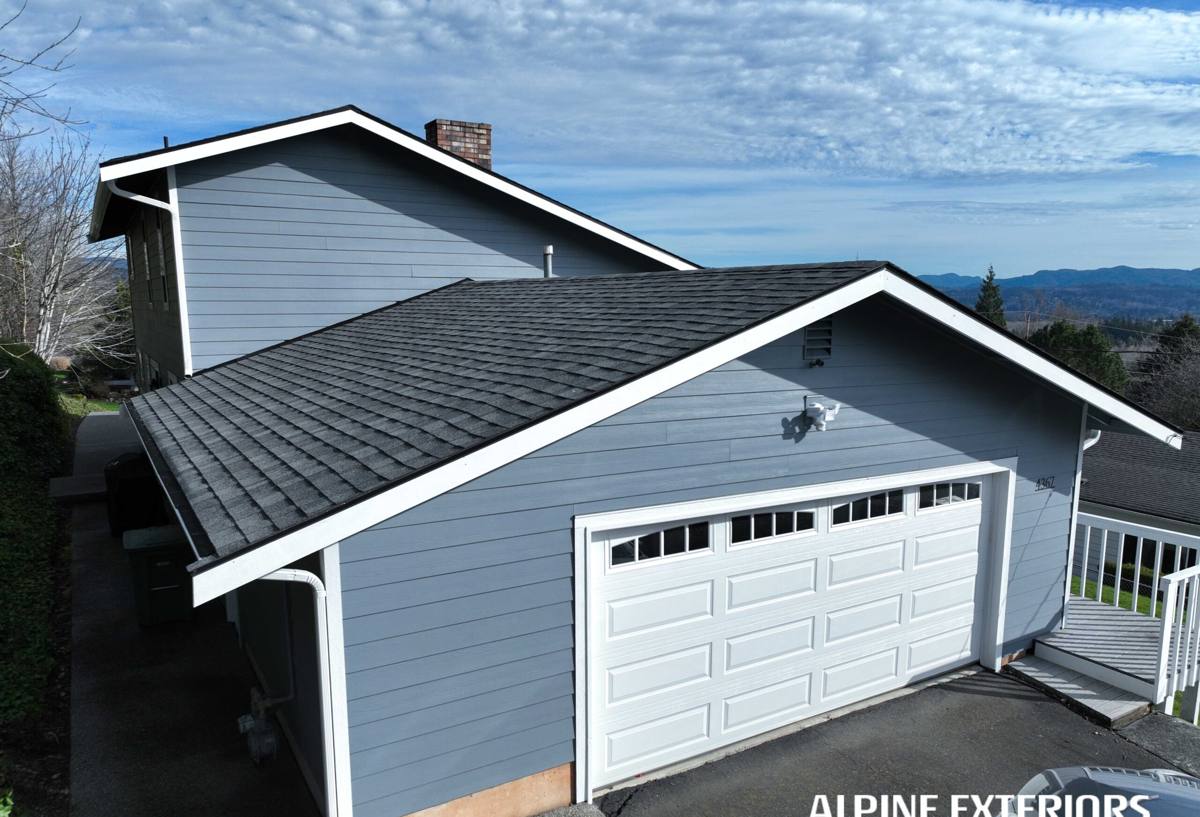
How to Tell You Need a New Roof, Not Another Repair
Roof repairs make sense when a problem is isolated — a cracked flashing, a handful of lifted shingles from a windstorm, a localized leak. A full replacement becomes the honest recommendation when the damage is spread across the roof or the underlying materials have reached the end of their service life. In this climate, the signs we look for include:
- Shingles that are cupping, curling, or losing granules across large sections, not just one slope
- Persistent moss growth that keeps returning within a season or two of cleaning
- Soft or spongy decking felt underfoot, especially near valleys and eaves
- Daylight visible through the attic sheathing, or staining on attic rafters
- A roof that's 20+ years old with no record of underlayment or flashing replacement
- Recurring interior leaks that show up in different spots after rain, suggesting the underlayment has failed broadly rather than at one point
If a roof is only showing one or two of these in a limited area, a targeted repair is usually the right call and the more honest one. We'll tell you that directly rather than pushing a replacement a home doesn't need yet.
What a Correct Roof Installation Actually Involves
A new roof is a system, not a single product. Skipping or shortcutting any layer is where roofs in this region fail early — usually from trapped moisture, not from the shingles themselves wearing out.
Tear-Off and Deck Inspection
We remove the existing roofing down to the deck rather than installing over old layers. That's the only way to actually see the plywood or plank sheathing underneath. In a wet climate, hidden rot at eaves, valleys, and around old vent penetrations is common, and it has to be found and replaced before anything new goes down. Installing over a compromised deck just locks the problem in.
Underlayment and Water Protection
This is the layer that matters most once wind-driven rain gets involved. We use synthetic underlayment across the field of the roof for its tear resistance and consistent water-shedding, with self-adhering ice-and-water barrier at eaves, valleys, and any low-slope transitions where water can back up or linger. Given how much horizontal rain this region gets during winter storms, valley and eave protection isn't an upgrade here — it's baseline.
Flashing at Every Penetration
Chimneys, skylights, plumbing vents, and wall-to-roof transitions are where most leaks actually originate, not the open field of shingles. Flashing has to be step-flashed and counter-flashed correctly, and given the salt air near the water, we favor corrosion-resistant materials over bare galvanized steel wherever budget allows.
Ventilation That Matches the Deck
Balanced intake and exhaust ventilation keeps the underside of the deck dry and keeps attic moisture from condensing against cold sheathing during our damp winters. A roof can be installed perfectly on top and still fail from underneath if the attic can't breathe properly. We calculate net free ventilation area for each roof rather than reusing whatever vents were already there.
Choosing a Roofing Material for a Bellingham Home
There's no single "best" roofing material for every house — it depends on the roof's pitch, the home's exposure to wind and salt air, and what the homeowner wants to maintain long-term. Here's how the common options stack up for this specific climate:
| Material | Typical Lifespan | Moss & Moisture Behavior | Maintenance | Best Fit |
|---|---|---|---|---|
| Architectural asphalt shingle | 25–30 years | Good with proper underlayment and periodic moss treatment | Low to moderate | Most homes; best value |
| Standing seam metal | 40–50+ years | Sheds moss well; smooth surface resists buildup | Low | Homes prioritizing longevity, steeper pitches |
| Synthetic/composite shake or slate | 30–50 years | Resists rot; behaves more like asphalt with moss | Low to moderate | Homes wanting a shake or slate look without the upkeep |
| Natural cedar shake | 20–30 years with upkeep | Absorbs moisture; needs active moss and rot management | High | Homeowners committed to ongoing maintenance |
We install cedar shake when a homeowner specifically wants that look and understands the maintenance commitment, but we're upfront that in a shaded, moisture-heavy lot it will demand more attention than asphalt or metal to avoid moss taking hold in the wood grain itself. That's a maintenance trade-off, not a defect — it's just how the material behaves in this climate.
Designing Against Moss From the Start
Moss doesn't just sit on top of a roof — it holds moisture against the surface, works into shingle laps, and over years can lift edges and shorten the roof's life. Rather than treating moss as an annual chore to fight after the fact, we build a few things into the installation itself:
- Zinc or copper strips installed near the ridge, which release trace metal ions with each rain that inhibit new moss growth down-slope
- Correct fastening and shingle exposure so there are no low spots where water and debris can collect
- Gutter and downspout sizing that matches actual rainfall volume, so water isn't backing up under the eaves
- A recommendation, where trees overhang the roof, to trim back branches so the surface gets more sun and airflow
None of this makes a roof moss-proof forever — nothing is, under a Whatcom County tree canopy — but it meaningfully extends the time between moss treatments and reduces the moisture load the roof deck has to deal with year-round.
Our Installation Process, Start to Finish
- On-site inspection and estimate — we walk the roof and attic, measure, and identify problem areas before quoting anything.
- Material selection — we go over the options above against your budget, roof pitch, and how much upkeep you want to take on.
- Scheduling around weather — in this region we plan installs with realistic rain-day buffers rather than assuming a clean weather window.
- Tear-off and deck repair — old roofing removed, deck inspected, any soft or rotted sheathing replaced before moving forward.
- Underlayment, flashing, and ventilation install — the layers that determine whether the roof stays dry underneath.
- Roofing material installation — installed to manufacturer specification, which is also what keeps the material warranty valid.
- Final walk-through — we review the finished roof with you, including gutter tie-ins and any ventilation or moss-prevention details installed.
Permits, Codes, and Local Wind & Rain Requirements
Roof replacements in Whatcom County typically require a permit, and inspections check things like flashing details, ventilation, and fastening schedules — not just that shingles are on straight. Homes closer to the water also need to account for higher wind-uplift ratings on shingles and fasteners than an inland home might. We handle the permit process and make sure the installed system meets the fastening and material specs required for local wind exposure, so it's not something you have to track down yourself.
What a Thorough Estimate Should Cover
- A physical inspection of the roof and attic, not just a satellite measurement
- A clear breakdown of tear-off, deck repair contingency, underlayment, flashing, and material costs
- The specific underlayment and ice-and-water barrier products being used, not just "standard felt"
- Ventilation calculations, not just a promise that vents will be "added"
- Manufacturer warranty terms and what voids them
- A written timeline that accounts for weather delays rather than a single fixed date
Why Bellingham Experience Matters for This Job
Roofing crews who mostly work drier, inland climates sometimes underbuild for what this stretch of Whatcom County actually throws at a roof — lighter ice-and-water coverage, standard fasteners instead of corrosion-resistant ones, ventilation sized for a different climate zone. A crew that installs roofs around Bellingham regularly already knows which valleys catch the worst wind-driven rain, how much moss pressure a shaded north-facing slope will see, and what inspectors here actually check. That local pattern recognition is what keeps a roof performing at year 15 the way it did at year one, not just on installation day.
Get a Straight Answer on Your Roof
If your roof is showing its age or you're just not sure whether you're looking at a repair or a full replacement, we're happy to take a look and give you an honest read — no pressure, no inflated urgency. Use the form below to request a free estimate, and we'll walk the roof with you and lay out exactly what we'd recommend and why.