 Birch Bay Exterior
 Building New in Bellingham? The Windows Have to Match the Climate
If you're framing a new home or an addition in the Bellingham area, the window package is one of the few decisions that quietly determines how the house performs for the next 20-30 years. Whatcom County sits right on the water, which means new construction here deals with salt-laden air, wind-driven rain that comes in sideways off the Strait, and long stretches of gray, damp weather where a house barely gets a chance to dry out between storms. Windows installed correctly during framing handle all of that without a second thought. Windows installed with a shortcut in the flashing or a gap in the sill pan become the reason a wall assembly rots from the inside out, often years before anyone notices a stain.
New-construction windows are not the same product or the same install as a replacement window dropped into an existing opening. They're built with a nail fin that ties directly into the house wrap and flashing system, and they only work correctly if that sequence is done in the right order, by someone who has actually done it on homes exposed to this kind of weather.
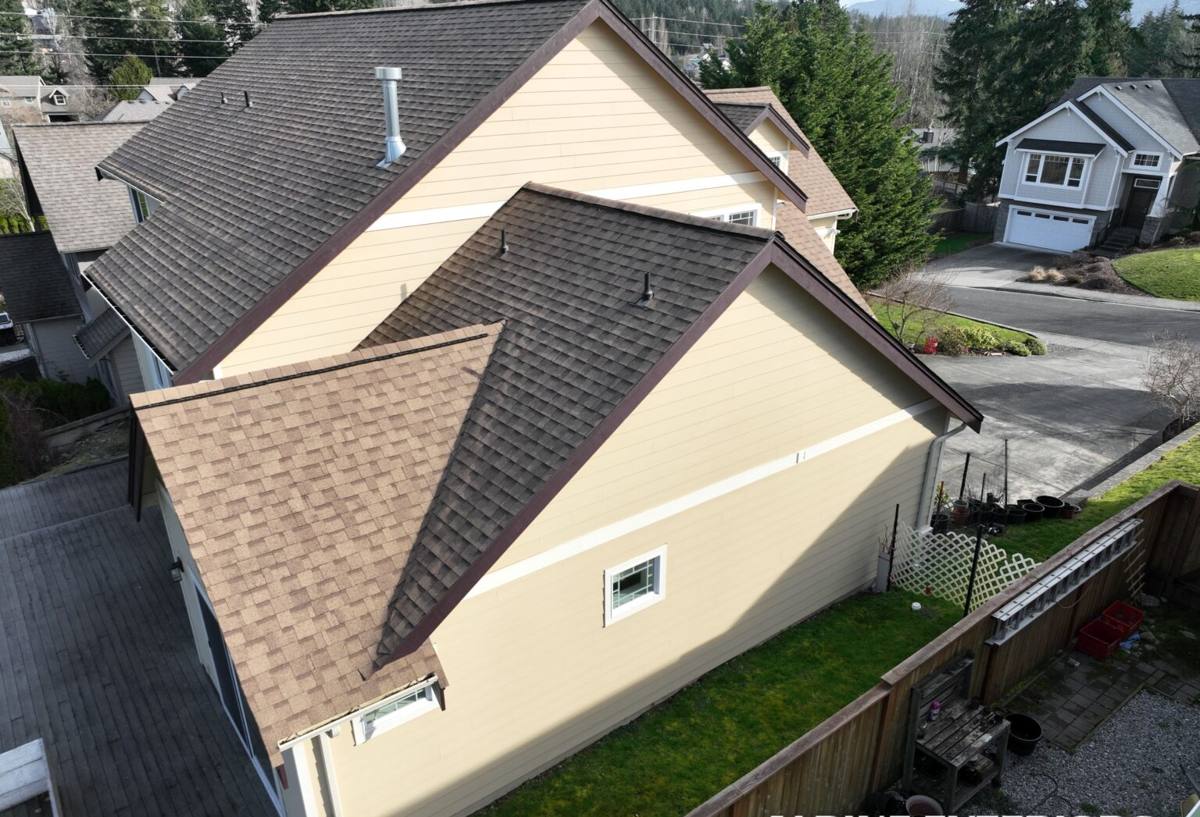
What Bellingham's Marine Climate Actually Does to a Window Opening
Salt Air and Corrosion
Proximity to the water means airborne salt settles on everything, including window hardware, fasteners, and metal flashing. Over time, salt exposure accelerates corrosion on lower-grade fasteners and hinges, which is why the small details — stainless or coated fasteners, corrosion-resistant flashing — matter more here than they would on a build 50 miles inland.
Driving Rain
Storms coming off the Strait of Georgia and the Salish Sea don't just fall straight down — they drive horizontally into west- and north-facing walls. A window opening that isn't flashed to shed water outward and downward, with a sloped sill pan and properly lapped house wrap, will take on water during exactly the kind of storm this region gets every winter.
Moss and Prolonged Moisture
Whatcom County's long moss season isn't just a roof problem. Sustained dampness around window trim and sills feeds moss and algae growth on exterior surfaces, which holds moisture against the wall longer and accelerates wood rot on trim and sills that aren't detailed or finished correctly from day one.
New-Construction Windows vs. Replacement Windows: Why the Distinction Matters
These are genuinely different products with different installation logic, and mixing them up on a new build is one of the more common — and expensive — mistakes we see corrected later.
Nail-Fin Installation
A true new-construction window has a nail fin (sometimes called a flange) around the perimeter that fastens directly to the sheathing before siding goes on. This fin becomes part of the water-shedding layer, integrated with the house wrap in a specific shingle-lap order — flashing tape or sill pan first, then the window, then house wrap lapped over the top and sides so water always drains outward over the next layer down, never behind it.
Flashing Sequence Is Not Optional
The order of operations is what makes or breaks a new-construction install: sloped sill pan first, window set and fastened, jamb flashing next, then head flashing last, lapped over the top of the house wrap. Skip a step or do it out of order and you've built a path for water to get behind the cladding — invisible for years, expensive once it shows up as a soft spot in the wall.
Why This Isn't a Retrofit Job
A replacement window installer works within an existing, already-clad opening and typically isn't touching the house wrap or structural flashing at all. New-construction work happens before the walls are closed up, which means the crew doing it needs to understand the whole wall assembly, not just how to set a sash in a frame.
What a Correct New-Construction Window Install Actually Involves
- Rough opening checked for square, level, and correct dimensions before any window arrives on site
- Sill pan flashing installed with a slight outward slope, so any water that gets past the window drains back outside
- Window set, shimmed plumb and square, and fastened through the nail fin per the manufacturer's fastening schedule
- Jamb flashing applied over the side fins
- Head flashing installed last, lapped correctly over the house wrap above the window — this order is what actually sheds water
- Interior air-sealing with low-expansion foam or backer rod and sealant, so conditioned air isn't leaking out around the frame
- Exterior caulking and trim work sized and detailed to shed rain, not trap it
Every one of those steps matters on its own, but the sequence between them is what determines whether the assembly actually works. A window can be a good product and still leak if step five happens before step four.
Choosing Materials and Glazing for Whatcom County Weather
Framing material, glazing package, and hardware all affect how a window holds up to salt air, wind, and constant damp. There's no single "best" choice — it depends on budget, exposure, and how the house is oriented relative to the water and prevailing weather.
| Frame Material | Moisture/Salt Air Behavior | Maintenance | Typical Fit |
|---|---|---|---|
| Vinyl | Won't rot or corrode; performs well in coastal exposure | Low — occasional cleaning | Most budget-conscious new builds |
| Fiberglass | Very stable in temperature swings and moisture; strong long-term option near water | Low | Homes prioritizing longevity over lowest upfront cost |
| Wood-clad (exterior clad) | Good performance if the cladding and flashing details are done correctly; interior wood adds warmth | Moderate — clad exterior reduces but doesn't eliminate upkeep | Higher-end builds wanting a wood interior look |
| Aluminum | Prone to corrosion in salt air unless marine-grade and properly finished | Higher — watch for pitting near the water | Specific architectural applications only |
Glazing matters just as much as frame material. For this region, we typically recommend double- or triple-pane units with a low-E coating tuned for our cooler, cloudier climate, and we always confirm the window's design pressure (DP) rating is appropriate for the home's wind exposure — a home closer to open water needs a higher DP rating than one tucked inland.
Our Process on a New-Construction Job
Every new build is a little different, but the framework stays consistent because it's what actually prevents callbacks:
- Review the window schedule and rough openings against the plans before anything is ordered
- Confirm product selection matches the home's orientation and exposure — a west-facing wall gets more scrutiny than a sheltered north wall
- Coordinate timing with the framer and siding crew so windows go in at the right point in the sequence, not rushed or delayed
- Install sill pan flashing, set the window, and flash in the correct shingle-lap order
- Air-seal the interior and detail the exterior trim to shed water
- Walk every opening before siding closes it up — this is the last point where a flashing mistake is cheap to fix instead of a wall repair later
Timing With the Rest of the Build
Window installation on a new build has to happen at a specific point — after sheathing and house wrap, before siding. Scheduling this correctly with the rest of your build team avoids the two most common timing problems: windows sitting exposed too long before siding closes up the wall, or siding crews working around openings that weren't ready, which invites shortcuts.
Mistakes We See on Jobs We Get Called to Fix
Most of the repair calls we get on "new" windows trace back to a handful of avoidable errors:
- Flashing installed out of shingle-lap order, so water is directed behind the house wrap instead of over it
- No sill pan, or a flat sill pan with no outward slope to drain water
- Fasteners that aren't corrosion-resistant, leading to rust streaks and eventual fastener failure in salt air
- Exterior caulk used as the primary water barrier instead of proper flashing — caulk fails; flashing shouldn't be the backup plan
- Windows set out of square, which stresses the frame, affects operation, and can compromise the seal over time
None of these are hard to avoid. They happen when a crew treats a new-construction window like a quick drop-in instead of a flashing detail that has to be right the first time, because it gets covered up by siding within days.
What Affects Cost on a New-Construction Window Package
| Factor | Why It Moves the Price |
|---|---|
| Frame material | Vinyl is typically the most economical; fiberglass and wood-clad cost more upfront |
| Number and size of openings | More openings and larger units mean more material and labor |
| Glazing package | Triple-pane and higher-performance low-E coatings add cost but improve comfort and energy use |
| Design pressure rating | Higher-DP units built for greater wind/water exposure cost more than standard-rated units |
| Site exposure | Homes with more direct exposure to wind-driven rain warrant more robust flashing detail, which adds labor time |
| Coordination complexity | Tighter build schedules or multiple trades on site can affect labor efficiency |
We give straightforward, itemized estimates so you can see where the cost is actually going rather than a single lump number — that way you can make informed trade-offs between budget and long-term performance.
Why Hiring a Crew That Already Works in This Area Matters
A window installer who mostly works inland doesn't have daily experience with what wind-driven rain off the water actually does to a wall assembly, or how fast moss and prolonged dampness set in on exterior trim here. A crew that regularly works new construction around Bellingham and the rest of Whatcom County already knows which details to over-build rather than treat as optional — the sill pan slope, the fastener spec, the flashing lap order — because we've seen what happens when those get skipped on a house exposed to this climate.
We also work directly with builders and framers on scheduling, so windows go in at the right point in the build sequence instead of being rushed to keep a schedule moving. That coordination is a big part of what separates a clean install from one that needs attention a few years down the road.
Maintaining New-Construction Windows After the Build
A correctly installed window still needs basic upkeep, especially in a salt-air, high-moisture climate:
- Rinse accumulated salt residue off frames and hardware periodically, especially on wind-exposed elevations
- Check exterior caulk lines annually for cracking or separation and re-seal as needed — caulk is a maintenance item, not the primary water barrier
- Keep gutters and downspouts clear so water isn't sheeting down across window openings
- Watch for moss or algae buildup on sills and trim and clean it off before it holds moisture against the wood or finish long-term
- Operate and lubricate hardware seasonally so mechanisms don't seize from disuse or corrosion
None of this is heavy maintenance — it's the kind of seasonal check that keeps a correctly installed window performing the way it's supposed to for decades.
Let's Talk About Your Build
If you're framing a new home, addition, or major remodel in the Bellingham area and want a window package installed right the first time, we're happy to walk through your plans and rough openings with you. Reach out for a free, no-pressure estimate — the form below gets you started.