 Birch Bay Exterior
 Custom Decks Built for Bellingham's Coastal Conditions
A deck in Bellingham has to earn its keep differently than a deck in a drier inland climate. Between the salt-laden air off Bellingham Bay, the long stretch of wet months, and the moss that colonizes anything that stays damp for more than a few days, this is one of the tougher environments in Washington to build outdoor structures in well. We build custom decks specifically for this area, and the choices we make on framing, fasteners, decking material, and drainage all trace back to what actually holds up here versus what just looks good on install day.
This page covers what a properly built deck for a Bellingham property needs to account for, what separates a correct build from a shortcut build, and how we approach the work from first estimate to final walkthrough.
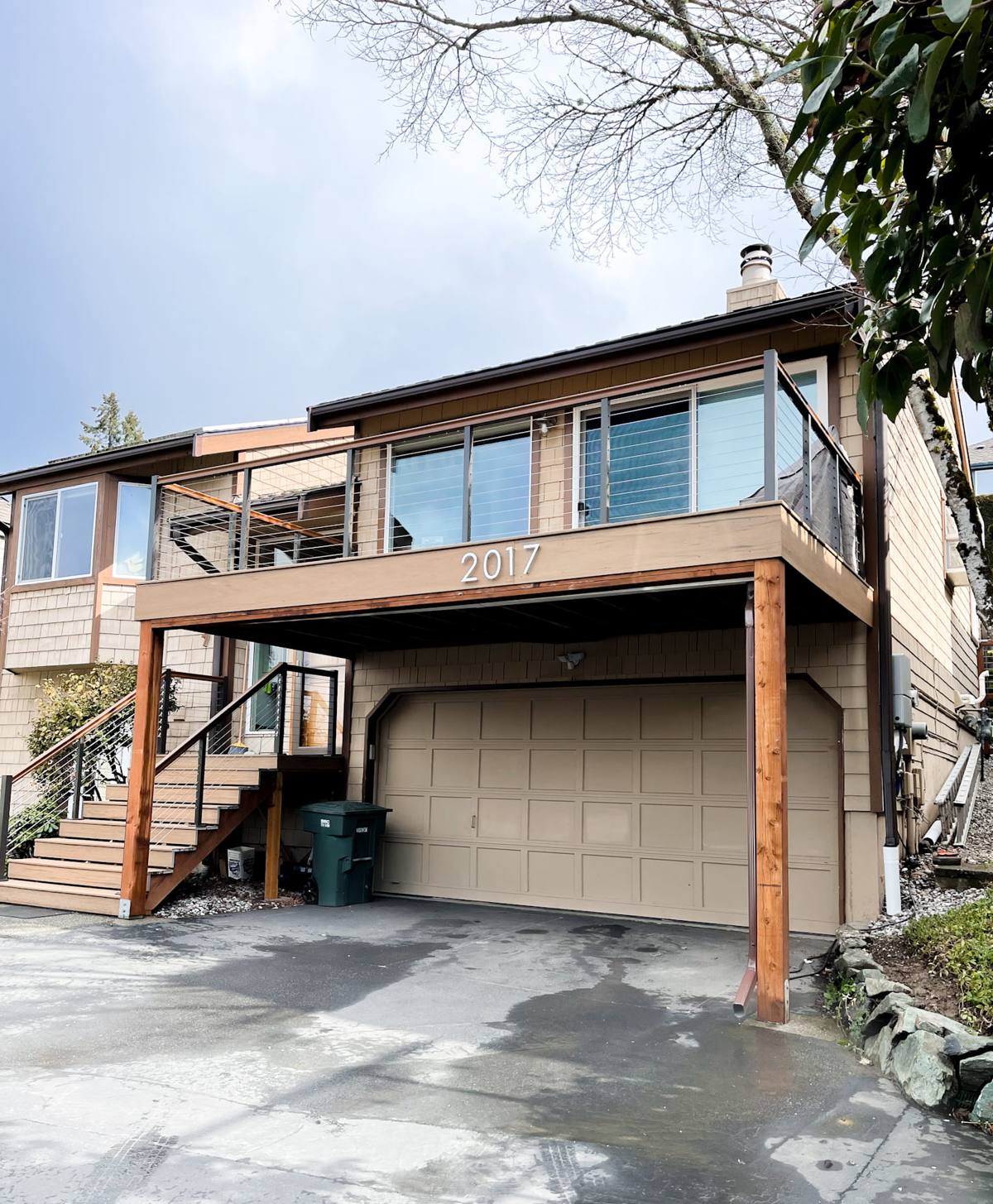
What Salt Air, Rain, and Moss Actually Do to a Deck
Salt Air and Metal Fasteners
Proximity to Bellingham Bay means airborne salt is a constant, low-level factor even a few miles inland, more so the closer you are to the water. Standard fasteners and hardware corrode faster in this environment than they would elsewhere in Whatcom County. Structural connectors, joist hangers, and screws that aren't rated for coastal exposure can start showing rust within a couple of seasons, and once corrosion starts on a structural connector, it doesn't stop — it just gets more expensive to deal with later.
Sustained Moisture
Whatcom County gets a lot of steady, low-intensity rain over many months rather than short, hard storms. That pattern matters for deck-building because it's less about shedding a downpour and more about how quickly a structure dries out between rain events. Wood that stays damp for days at a stretch is far more prone to rot at joints, under fasteners, and anywhere two boards sit tight against each other without airflow.
Moss and Algae
Anything horizontal that holds moisture and gets partial shade will grow moss here, often within the first year. Beyond being unsightly, moss holds water against the decking surface and becomes slippery and genuinely hazardous underfoot, especially on stairs. A deck design that ignores drainage and airflow is signing up for a moss problem no matter what material sits on top.
Choosing the Right Decking Material for This Area
There's no single "best" decking material — there's a best material for a given budget, look, and how much upkeep the homeowner actually wants to do. Here's how the common options perform under Bellingham's specific conditions.
| Material | Moisture & Salt Air Behavior | Moss Susceptibility | Maintenance | Typical Lifespan Here |
|---|---|---|---|---|
| Pressure-Treated Wood | Resists rot well when detailed correctly, but end cuts and fastener holes need sealing | Higher — porous surface holds moisture | Annual cleaning, periodic staining or sealing | 15-20 years with upkeep |
| Cedar | Naturally rot-resistant, but softer and more vulnerable to surface weathering | Moderate to high without regular cleaning | Regular cleaning, sealing every 1-2 years | 15-20 years with upkeep |
| Composite Decking | Doesn't absorb moisture the way wood does; core resists rot | Lower, but can still grow on the surface if never cleaned | Periodic washing, no staining or sealing | 25-30+ years, manufacturer-dependent |
| Hardware & Fasteners | Needs coastal-rated stainless or coated hardware regardless of decking choice | N/A | Visual inspection yearly | Matched to structural lifespan |
Composite decking has become the more common choice for homeowners in this area who want to spend less time on upkeep, since it doesn't need staining or sealing and handles sustained damp better than any wood species. That said, plenty of homeowners still prefer the look and feel of real wood, and a well-built, well-maintained wood deck can absolutely hold up here — it just asks more of the owner over time. We'll walk through the honest trade-offs for your specific situation rather than push one material across the board.
What a Correctly Built Deck Involves in This Climate
Footings and Framing
Footings need to be set below frost depth and sized for the local soil, which in parts of Whatcom County can hold more moisture than inland soils and shift more with seasonal saturation. Framing lumber should be rated for ground contact where it's within a few inches of soil or in a spot that stays damp, not just standard pressure-treated stock used everywhere out of habit.
Ledger Board Flashing
The ledger board — where the deck attaches to the house — is the single most common failure point on decks in wet climates. Without proper flashing that directs water away from the house band joist, moisture works its way behind the ledger and rots the structure from the inside, often invisibly for years. This is not a spot to cut corners, and it's one of the first things we check on any deck we didn't build ourselves.
Gapping and Airflow
Board spacing has to account for wood movement and, more importantly, drainage. Decking laid too tight traps moisture and debris between boards, which is exactly what moss needs to take hold. Proper gapping, along with keeping the space under the deck ventilated rather than boxed in, cuts down significantly on how fast moss and mildew show up.
Hardware Selection
Every structural connector, screw, and bolt on a coastal-area deck should be rated for the exposure — typically stainless steel or a coating specifically rated for coastal or ACQ-treated lumber contact. Mixing incompatible metals accelerates corrosion through galvanic reaction, which is a detail that's easy to get wrong if it's not something a crew deals with regularly.
Our Process, Start to Finish
- On-site assessment — we look at drainage, sun exposure, soil, and how the deck will attach to your home before talking materials.
- Honest material walkthrough — we lay out the real trade-offs between wood and composite options for your budget and maintenance preference.
- Design and permitting — we handle the plan details and permit submission required for your project and location within Whatcom County.
- Build — footings, framing, flashing, and decking installed in the sequence that actually holds up to this climate, not just the fastest sequence.
- Final walkthrough — we go over the finished deck with you, including what maintenance it needs and roughly when.
Permits and Code Considerations in Whatcom County
Most custom decks above a certain height or attached to the home require a building permit, and inspections typically check footing depth, ledger attachment, and guardrail height and spacing at a minimum. Requirements can vary depending on your specific jurisdiction within Whatcom County, so we confirm what applies to your property rather than assuming one set of rules covers everyone. Skipping permitting on a deck that requires one isn't just a compliance issue — it can also affect your homeowner's insurance and complicate things if you sell the house later.
Maintenance: What a Bellingham Deck Actually Needs
Whatever material you choose, a little regular maintenance goes a long way in this climate. Here's the realistic baseline:
- Sweep debris off the deck regularly, especially in fall when leaves and needles pile up and hold moisture against the surface
- Clean the full deck surface at least once a year to knock back moss and algae before they establish
- Check and clear the gaps between boards so water and debris aren't trapped
- Inspect the ledger board area and any visible hardware yearly for early signs of rust or moisture staining
- For wood decks, reseal or restain on the schedule the product calls for — usually every 1-2 years in this climate, not the 3+ years that drier regions can get away with
- Keep gutters and downspouts near the deck clear so runoff isn't draining directly onto or under it
Composite decking cuts a couple of these steps out, but cleaning and gap maintenance still apply regardless of material.
Why a Crew That Already Works This Area Matters
A lot of deck problems we get called out to fix weren't caused by bad materials — they were caused by a build that didn't account for this specific climate. A contractor who mostly builds in drier parts of the state may not default to coastal-rated hardware, may under-detail the ledger flashing, or may not think about drainage and airflow the way a deck here actually needs. Working regularly in Bellingham and the surrounding Whatcom County coastline means we're not guessing at what holds up — we're building the same details we've seen succeed and fail on decks in this exact environment for years.
If you're planning a new deck or replacing one that's showing its age, we're happy to take a look and give you a straightforward, no-pressure estimate — no invented urgency, just what your project actually needs. Fill out the form below to get started.