 Birch Bay Exterior
 Why Bellingham Decks Need to Be Built Differently Than Decks Inland
Bellingham sits close enough to the water that salt-laden air, driving rain off the Strait, and a long wet season each play a role in how a deck ages. Add in the shade from mature evergreens on many Whatcom County lots, and you get a recipe for moss and algae that can hang around most of the year. A deck built the same way you'd build one in a dry inland climate will show problems here faster — soft spots, staining, slick walking surfaces, and hardware that corrodes ahead of schedule.
Composite decking was designed to handle exactly this kind of exposure better than wood, but "composite" isn't a single product with one set of rules. Board quality, the substructure underneath it, and how the whole system handles moisture and airflow matter just as much as the decking material itself. This page covers what a Bellingham composite deck actually needs, what correct installation looks like, and how we approach the work.
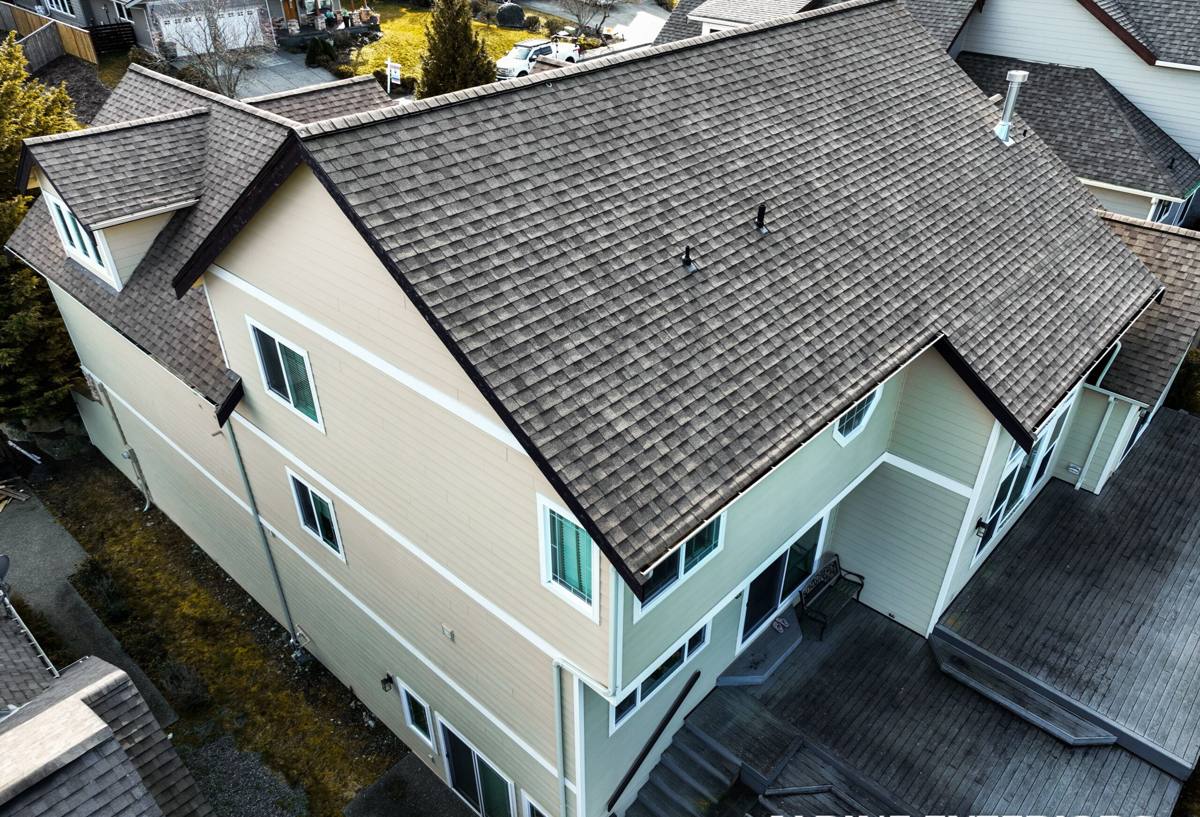
What Composite Decking Solves — and What It Doesn't
Composite boards are made from a blend of wood fibers and plastic, usually with a protective cap layer on modern products. Compared to natural wood, that construction resists rot, doesn't need annual staining, and holds up better to the freeze-thaw and constant dampness that Whatcom County winters bring. For a lot of homeowners in this area, that's the whole appeal: less maintenance, more consistent appearance, longer service life.
What composite decking does not do is eliminate the need for good building practices underneath it. The board itself can be nearly maintenance-free and still fail early if the frame beneath it can't drain, if fasteners aren't rated for coastal exposure, or if the deck sits too close to grade with no airflow. We've seen composite decks installed correctly last decades, and we've seen them installed poorly develop the same moisture problems people install composite to avoid.
Why We Don't Cut Corners on Substructure
It's tempting to treat the substructure as an afterthought since it's hidden once the boards go down. We treat it as the part of the job that determines whether the deck is still solid in fifteen years. A cheap or poorly ventilated frame is the single most common reason a composite deck underperforms in a marine climate like this one.
What a Correct Composite Deck Installation Involves in This Climate
A deck built for Birch Bay and Bellingham conditions needs a few things dialed in that matter less in a drier region:
- Pressure-treated or coated framing lumber rated for ground contact and constant moisture exposure, not just standard treated stock.
- Joist tape or a moisture barrier on top of the framing to keep water from wicking into cut ends and fastener holes.
- Corrosion-resistant fasteners and hardware — stainless or coated hardware rated for coastal/salt-air exposure, since standard galvanized hardware can start rusting noticeably sooner near the water.
- Proper joist spacing for the specific composite board being used — composite often has different span requirements than wood, and manufacturers publish minimum spacing for a reason.
- Airflow underneath the deck so moisture doesn't sit trapped against the frame, especially on lower decks close to grade or decks in shaded, tree-covered yards common around here.
- Ledger flashing done correctly where the deck attaches to the house, since a poor ledger connection is one of the most common sources of hidden water intrusion into the home itself.
Moss, Algae, and Slip Resistance
A long moss season is one of the more underrated challenges of building outdoor structures in this part of Washington. Shaded, north-facing, or tree-covered areas of a property can stay damp for months, and any horizontal surface — deck boards included — will grow algae or moss if it never fully dries out.
Capped composite boards resist moss growth better than wood because they don't have exposed wood fiber for spores to take hold in, but they aren't immune, especially in deep shade with poor airflow. Board texture also matters: a highly textured, low-sheen board tends to stay more walkable when damp than a smooth, glossy one. Deck orientation and how much direct sun and wind a surface gets over the course of the day make a real difference in how much upkeep it needs, and we factor that into how we lay out a deck rather than treating every layout the same.
Composite vs. Wood vs. PVC — An Honest Comparison
There's no single "best" decking material for every situation — each comes with real trade-offs, especially in a wet, salt-exposed climate. Here's how they generally compare for a Bellingham application:
| Material | Moisture & Moss Resistance | Maintenance | Upfront Cost | Typical Lifespan |
|---|---|---|---|---|
| Natural wood (cedar, pressure-treated) | Fair — needs sealing/staining to hold up | Annual cleaning, staining, and inspection for soft spots | Lowest | 10–15 years before major repair/replacement |
| Composite (capped) | Good — resists rot, better moss resistance with a cap layer | Periodic washing, no staining or sealing needed | Mid to upper-mid | 25–30+ years with proper substructure |
| PVC/vinyl decking | Very good — fully synthetic, no wood fiber to absorb moisture | Lowest ongoing maintenance | Highest | 25–30+ years |
We install composite most often for Bellingham clients because it strikes a practical balance: strong moisture and moss resistance for the price, a wood-like look many homeowners want, and manufacturer warranties that reflect real confidence in the product. We're happy to walk through PVC as an option too — it's a legitimate choice for some budgets and priorities, just at a different price point.
How Our Process Works
1. On-Site Assessment
We look at the existing structure (if there is one), grade and drainage around the area, sun/shade exposure, and how the new deck will attach to the house. This is also when we flag anything unusual — a slope that needs footings adjusted, an older ledger connection that needs redoing, that kind of thing.
2. Product Selection
We walk through board options based on your budget, the amount of shade the deck will get, and how much upkeep you want to do. Not every composite board performs the same in a shaded, damp yard, and we'll tell you honestly if a board you're drawn to isn't a great fit for where it's going.
3. Permitting
Depending on the deck's size, height, and attachment to the home, a permit through the applicable local jurisdiction may be required. We handle that paperwork rather than leaving it to you to figure out.
4. Substructure Build
This is where the framing, flashing, joist protection, and fastener choices described above all come together. We don't shortcut this step even though it's the part that ends up hidden.
5. Decking Installation
Boards are installed per manufacturer spacing and fastening specs, with attention to expansion gaps (composite expands and contracts with temperature more than people expect) and clean, consistent board lines.
6. Final Walkthrough
We go over the finished deck with you, explain basic care, and note anything specific to your site — shaded corners that may need occasional attention, drainage points to keep clear, and so on.
What Drives the Cost of a Composite Deck
Composite decking costs more upfront than wood, and the total for any project depends on several factors beyond just square footage:
| Cost Factor | Why It Matters |
|---|---|
| Board tier (base composite vs. premium capped) | Higher-tier boards cost more but generally resist moss, fading, and staining better long-term |
| Substructure condition | Replacing failing framing adds cost but is not optional if the existing structure is compromised |
| Deck height and railing requirements | Taller decks need code-compliant guardrails, which add material and labor |
| Site access and grade | Sloped or hard-to-access yards take longer to build safely |
| Ledger and flashing work | Correcting an old or improperly flashed ledger connection is worth doing right, not skipping |
We give straightforward, itemized estimates so you can see where the money goes rather than a single lump number.
Permits, Code, and Doing It the Right Way
Deck permitting in Whatcom County depends on the size, height, and structural attachment of the project — some smaller, low-to-grade decks may not require one, while raised decks attached to the home generally do. Guardrail height, baluster spacing, and stair requirements are all governed by code, and skipping that step isn't a shortcut worth taking, both for safety and for resale purposes if the home is ever inspected or sold. We pull the appropriate permits and build to code as a matter of course, not as an upsell.
A Practical Checklist Before You Hire Anyone for a Composite Deck
- Ask what fastener and hardware grade they use, and whether it's rated for coastal/salt-air exposure.
- Ask how they handle ledger flashing where the deck meets the house.
- Ask about joist spacing and whether it matches the manufacturer's spec for the specific board you're choosing.
- Ask whether they pull permits themselves or leave that to you.
- Ask how they'd design airflow underneath a low or shaded deck.
- Ask for the manufacturer warranty terms in writing, not just verbally.
Why Local Experience in Bellingham and Birch Bay Matters
A crew that regularly works this stretch of Whatcom County has already seen how the local combination of salt air, sustained rain, and shaded, moss-prone yards plays out on real decks over time. That's different from general decking experience gained somewhere drier or further from the coast. We size framing, choose hardware, and plan drainage based on what actually holds up here — not based on manufacturer literature written for a national audience. That local pattern-recognition is part of what you're paying for when you hire a crew that already works this area, not just a general contractor picking up a deck job between other work.
If you're weighing composite decking for a Bellingham property, we're glad to come take a look, talk through board options and what your specific site will demand, and put together a straightforward, no-pressure estimate. There's a form below — reach out and we'll get you scheduled.