 Birch Bay Exterior
 Why Lummi Island Roofs Wear Differently
Lummi Island sits out in the marine waters off Whatcom County, reachable only by ferry, and that setting shapes how a roof needs to be built. Homes here take on salt-laden air coming off the water, get hit with rain that blows in sideways during winter storms, and often sit under heavy tree cover that keeps the roof deck damp and shaded for long stretches of the year. Add in a mix of older cabins that have been converted into full-time homes and newer builds meant to go years between maintenance visits, and you end up with a roof that has to be done right the first time. There isn't a quick same-day fix when something goes wrong on an island that runs on a ferry schedule.
An asphalt shingle roof can absolutely hold up to those conditions — it's still one of the most practical, cost-effective roofing systems for this part of Washington. But it has to be specified and installed with the local exposure in mind, not treated like a standard mainland job.
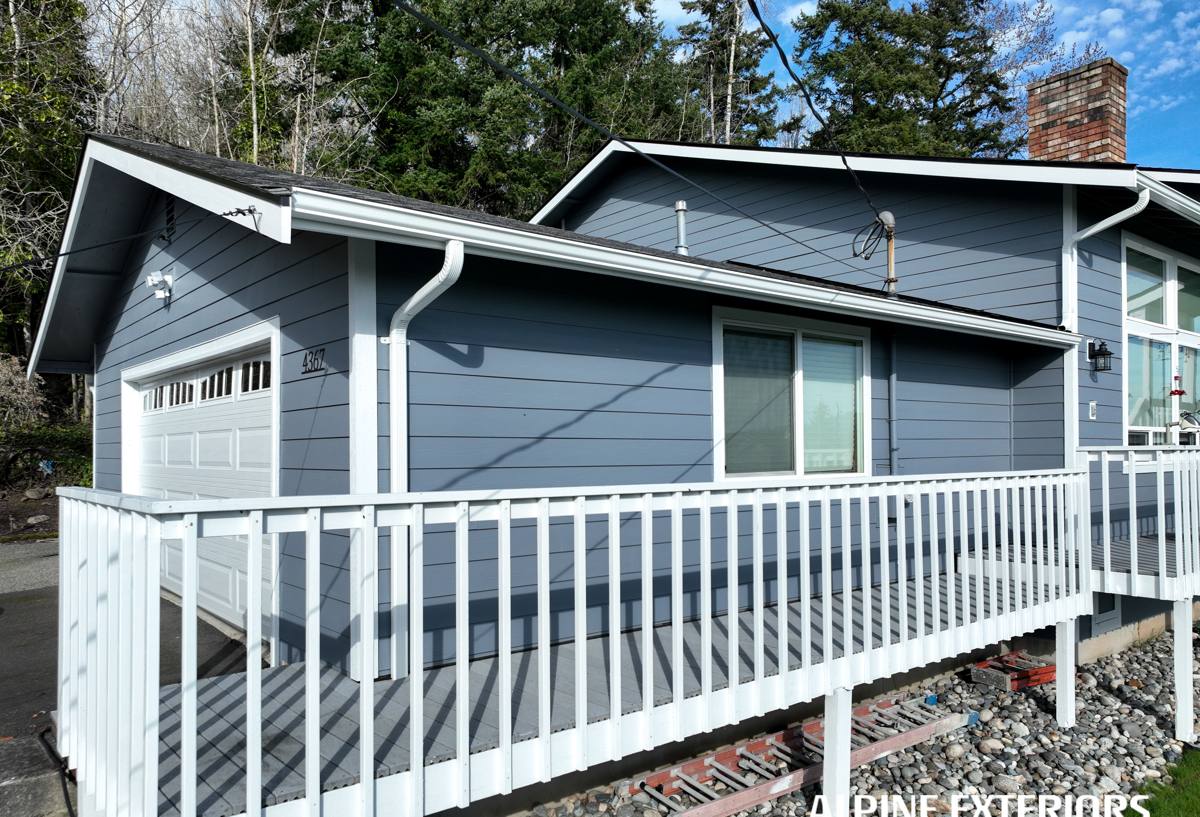
How Salt, Rain, and Moss Attack a Shingle Roof
Salt Air and Corrosion
Airborne salt speeds up corrosion on anything metal on the roof — nails, flashing, vent stacks, and drip edge. A standard galvanized fastener that would last for decades inland can start rusting years earlier this close to salt water. Once fasteners weaken, shingles lift, and lifted shingles are the fastest route to a leak.
Wind-Driven Rain
Rain that comes straight down is easy for a roof to shed. Rain that comes in sideways during a winter storm is a different problem — it can get pushed up and under shingle edges, at laps, valleys, and anywhere two roof planes meet. A roof that looks fine from the ground can still be taking on water at these seams if the underlayment and flashing weren't detailed for wind-driven conditions.
Moss, Algae, and Organic Growth
Shade and moisture are what moss needs, and a lot of Lummi Island lots have plenty of both. Moss doesn't just look bad — it holds water against the shingle surface and roof deck, works its way under shingle tabs as it grows, and can shorten the life of an otherwise sound roof if it's never addressed. Algae staining is a related but separate issue: it's mostly cosmetic, but left alone for years it can affect resale appeal.
Building a Shingle Roof Made for This Climate
Shingle Selection
Architectural (laminate) shingles are the right starting point for most homes here — they're heavier, rated for higher wind speeds than basic three-tab shingles, and hold up better to the gusts that come off the water. We also favor shingles with algae-resistant granules, which slow down the streaking and growth that shaded, damp roofs are prone to.
Underlayment and Water Barrier
Underlayment is what protects the deck if wind-driven rain gets past the shingles, and it matters more here than on a typical inland roof. We use synthetic underlayment across the field of the roof and self-adhered membrane at the eaves, valleys, and around every penetration — the spots where wind-driven rain is most likely to find a way in.
Ventilation
A roof deck that can't breathe stays damp longer, and a damp deck under a shaded, humid roof is exactly what invites rot and moss. Balanced intake and exhaust ventilation keeps air moving under the roof surface, which helps the deck dry out between rain events instead of staying wet all winter.
What a Correct Installation Involves
A roof that's going to hold up on Lummi Island needs every one of these done correctly — skipping any one of them is usually where future leaks start:
- Full tear-off to bare deck, not a layover — you can't inspect or fix a deck you can't see
- Inspection of the sheathing and replacement of any soft, rotted, or delaminated sections
- Corrosion-resistant drip edge along all eaves and rakes
- Self-adhered ice-and-water membrane at eaves, valleys, and roof-to-wall transitions
- Synthetic underlayment across the full roof field
- Correct nailing pattern and nail count for the wind exposure — under-nailed shingles are a common cause of blow-offs
- New flashing at every chimney, skylight, and wall intersection — reused flashing is a frequent source of hidden leaks
- Balanced ridge and soffit ventilation sized to the attic space
- Ridge cap shingles installed to manufacturer spec, not just cut from field shingles
- Magnetic sweep and full site cleanup once the job is done
Getting Materials and Crews to an Island Job
Working on Lummi Island means working around the ferry, and that's a logistics problem before it's ever a roofing problem. Materials have to be ordered with enough lead time to make a scheduled sailing, crews and equipment need to be loaded efficiently so a missed ferry doesn't stall a whole day, and the job itself needs to be planned so the roof isn't left partially open if weather or a schedule change pushes the crew off-island overnight.
A crew that already works out here has that rhythm figured out — staging materials in advance, building the day around sailing times, and having a plan if the weather turns while a roof is mid-tear-off. A crew doing its first island job is learning that logistics on your dime, usually at the cost of a slower timeline.
Comparing Shingle Options for Coastal Exposure
| Shingle Type | Wind Rating | Algae Resistance | Typical Lifespan | Best Fit |
|---|---|---|---|---|
| Three-tab | Lower | Limited unless upgraded | Shorter end of the range | Budget projects, low wind exposure areas |
| Architectural / Laminate | Higher, rated for gusty coastal conditions | Available with AR granules | Mid-to-long range | Most Lummi Island homes |
| Premium / Designer | Highest tier available | Standard on most premium lines | Long end of the range | Homes prioritizing appearance and maximum durability |
For most homes on the island, an architectural shingle with algae-resistant granules is the sweet spot — it's built for the wind exposure, resists the moss-and-algae cycle better than a basic shingle, and doesn't carry the added cost of a designer product most homes don't need.
Cost Factors for Lummi Island Roofing Projects
Every roof is different, so we'd rather walk your specific roof than quote a number sight unseen. Broadly, installed asphalt shingle roofing runs in the range most Whatcom County homeowners expect for quality materials and correct installation, with these factors moving the number up or down:
| Factor | Why It Matters |
|---|---|
| Roof size and pitch | More surface area and steeper pitches take more material and labor time |
| Number of existing layers | Tearing off multiple old layers adds disposal cost and labor |
| Deck condition | Rotted or soft sheathing found during tear-off needs replacement before shingles go on |
| Shingle tier | Three-tab, architectural, and premium lines carry different material costs |
| Ventilation upgrades | Adding or correcting ridge and soffit venting is often worth doing while the roof is open |
| Ferry and logistics | Island jobs factor in scheduling around sailings and material transport |
Keeping Moss and Growth Under Control After Installation
A well-built roof still needs some upkeep in a climate this damp and shaded. None of this is complicated, but it makes a real difference in how long the roof performs:
- Skip the pressure washer — it drives water under shingle tabs and strips granules; use a soft brush or low-pressure rinse instead
- Keep gutters and valleys clear of needles and leaf litter, which hold moisture against the roof edge
- Trim back overhanging branches where practical, to cut down on shade and debris buildup
- Have the roof looked at after major windstorms, not just on a fixed annual schedule
- Address moss early — a light growth is a quick fix, but left for a few seasons it can lift shingles and shorten their life
Why a Crew That Knows Lummi Island Matters
Roofing on an island isn't just roofing with an extra ferry ride tacked on. It means understanding how salt air and shaded, damp lots wear on a roof differently than a mainland home in the same county, planning material orders and crew schedules around sailings instead of around them, and building in the flashing, underlayment, and ventilation details that this specific exposure calls for. A crew that already does this work regularly on the island isn't guessing at any of it.
If you'd like an honest look at your roof — what shape it's in, what a correct replacement or repair would involve, and what it would cost — we're glad to come out and give you a free, no-pressure estimate using the form below.