 Birch Bay Exterior
 Asphalt Shingle Roofing for California Creek Homes
California Creek sits close enough to the water that homes here take a different kind of weathering than roofs just a few miles inland. Salt-laden air off Birch Bay and the Strait, wind-driven rain that gets pushed sideways under poorly flashed edges, and long stretches of gray, damp weather that never quite dry out a north-facing slope all add up over the life of a roof. Asphalt shingle roofing remains the right choice for most homes in this neighborhood — it's proven, repairable, and cost-effective — but only when it's specified and installed with this exact climate in mind. A shingle roof built the same way you'd build one in a dry inland county will underperform here, sometimes badly, within the first five to ten years.
This page covers what a correctly built asphalt shingle roof looks like for a California Creek property, what tends to go wrong with roofs that weren't built for this microclimate, and how we approach the work.
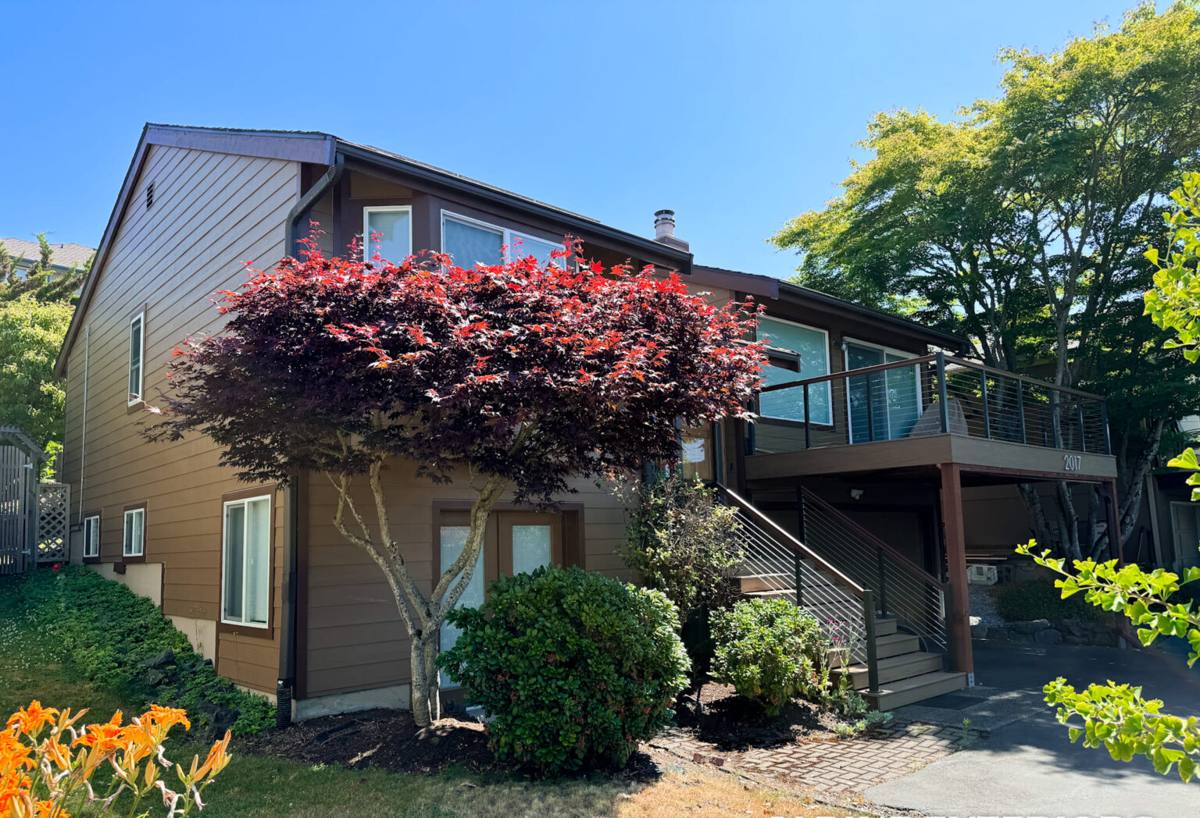
What This Climate Actually Does to a Shingle Roof
Whatcom County's marine climate is mild compared to a lot of the country, which is part of why people underestimate it. The damage here isn't dramatic — it's slow and cumulative.
Salt Air and Metal Components
Homes within reach of salt spray see accelerated corrosion on exposed fasteners, flashing, and any galvanized metal that isn't rated for coastal exposure. Standard electro-galvanized nails and flashing can start showing rust streaks and pinholing years before the shingles themselves are due for replacement. Once flashing corrodes and perforates, water gets behind it — and that's usually when a homeowner notices a ceiling stain and assumes the shingles failed, when the real culprit was the metal underneath.
Wind-Driven, Sideways Rain
Birch Bay-area storms frequently push rain horizontally rather than straight down. That matters because a lot of roofing details that work fine in calm-rain climates — minimal underlayment overlap, light nailing patterns, undersized ice-and-water coverage at eaves and valleys — depend on water falling mostly vertically. When wind drives rain uphill under a shingle tab or sideways into a wall-to-roof transition, marginal details leak. This is the single most common cause of "mystery leaks" we get called out for in this area.
Moss and Sustained Moisture
North and west-facing slopes shaded by trees stay damp for extended stretches during the fall-through-spring moss season. Moss holds moisture against the shingle mat, lifts tabs as it grows under the edges, and channels water sideways instead of letting it shed downhill. Left unaddressed for a couple of seasons, moss growth alone can knock several years off a shingle roof's service life — not because the shingles were defective, but because they were kept wet far longer than they were designed to be.
What a Correctly Built Roof Looks Like Here
The shingles themselves matter less than what's underneath and around them. For California Creek, our baseline goes beyond a standard inland install:
- Ice-and-water shield (self-adhered membrane) at all eaves, valleys, and roof-to-wall transitions, not just the code-minimum eave strip
- Synthetic underlayment across the full field, lapped and fastened for wind exposure rather than the lightest code-allowed pattern
- Stainless steel or heavy hot-dip galvanized flashing at chimneys, skylights, and sidewalls — not the thin mill-galvanized stock that corrodes fastest in salt air
- Correct nail count and placement per shingle (six nails in high-wind zones, not four) so tabs don't work loose under sustained gusts
- Proper starter course and hip/ridge detailing so wind can't get a purchase under the first course
- Balanced intake and exhaust ventilation, sized to the attic, so moisture from inside the house isn't adding to what the climate is already doing from outside
None of this is exotic. It's standard good roofing practice — but it's the difference between a roof that's built for a mild-but-relentless coastal climate and one that's built to a generic spec sheet.
Shingle Selection for This Area
Most California Creek homes do well with a standard architectural (laminate) asphalt shingle rather than a 3-tab. Architectural shingles are heavier, lie flatter, and resist wind uplift better — a real consideration given how often this area sees sustained wind alongside rain. Algae-resistant (AR) shingles, which include copper granules to slow streaking and biological growth, are worth the modest upcharge on shaded or north-facing roofs where moss and moss-adjacent algae staining are a recurring problem.
| Factor | 3-Tab Shingle | Architectural (Laminate) Shingle |
|---|---|---|
| Wind resistance | Lower — more prone to tab lift in gusts | Higher — heavier, better sealant contact |
| Typical lifespan in this climate | Shorter, especially on exposed slopes | Longer, more consistent across slopes |
| Algae/moss resistance (with AR granules) | Available but less common | Widely available, worth specifying |
| Upfront cost | Lower | Moderate |
| Appearance | Flat, uniform | Dimensional, heavier shadow line |
We don't push a specific shingle brand as the "only" option — reputable manufacturers all make a serviceable product. What we do insist on is matching the shingle class and installation details to how exposed a given slope actually is, since a roof that's shaded and salt-exposed needs a different approach than a sunny, wind-sheltered one on the same house.
Repair, Re-Roof, or Replace?
Not every roof in California Creek needs full replacement, and we'd rather tell you that up front than sell a job that isn't needed yet.
When Repair Makes Sense
Isolated leaks from a single failed flashing detail, a handful of wind-lifted or cracked shingles, or moss buildup that hasn't yet caused granule loss or tab damage are usually repairable. A targeted repair — reflashing a chimney, replacing a section of valley metal, clearing and treating moss — can add years of service life for a fraction of a full re-roof.
When Full Replacement Is the Honest Answer
Widespread granule loss, shingles that are curling or cupping across multiple slopes, repeated leaks in different locations, or a roof that's simply reached the end of its rated life all point toward replacement rather than another round of patching. Chasing leaks on a roof that's fundamentally worn out costs more over time than doing the job once, correctly.
A straightforward roof inspection can usually tell you which category your roof falls into. We'll always give you that assessment plainly rather than defaulting to the more expensive answer.
Our Process
For California Creek jobs specifically, our process looks like this:
- On-site inspection — we walk the roof, check attic ventilation and any visible moisture staining, and note slope exposure to prevailing wind, shade, and salt-air drift
- Written scope and estimate — what's being replaced, what underlayment and flashing materials are specified, and why, so you know exactly what you're paying for
- Tear-off and deck inspection — we don't roof over rot; any soft or damaged decking is identified and addressed before new material goes down
- Install to the coastal spec — full underlayment coverage, upgraded flashing, correct nailing and ventilation as outlined above
- Final walkthrough — we go over the finished roof and cleanup with you before calling the job done
Maintenance That Actually Extends Roof Life Here
A well-built shingle roof in this climate still benefits from periodic attention — more than it would inland.
- Have moss growth removed and treated before it lifts shingle tabs, not after
- Keep gutters clear so water isn't backing up under the eave edge during heavy rain
- After any major windstorm, a quick visual check (or a call to us) for lifted or missing shingles can prevent a small problem from becoming a leak
- Have flashing and fasteners checked periodically if your home is within direct salt-spray range of the water
- Don't ignore small interior stains — they're almost always cheaper to trace and fix early than after they've spread
Why a Crew That Already Works This Area Matters
A lot of roofing problems we get called to fix in California Creek weren't caused by bad shingles — they were caused by a roof built to a generic spec by a crew that doesn't normally work this close to the water. Underlayment coverage, flashing material choice, and nailing pattern all need to account for salt exposure and wind-driven rain, and that's easy to shortcut if it's not part of your regular routine. Working Birch Bay and the surrounding Whatcom County coastline day in and day out means we're not guessing at how a given slope, orientation, or tree cover will hold up — we've seen the failure patterns and we build to avoid them the first time.
If you're dealing with a leak, aging shingles, or just want an honest read on how much life your current roof has left, we're glad to take a look. Reach out for a free, no-pressure estimate using the form below.