 Birch Bay Exterior
 Deck Repair Built for the Terrell Creek Microclimate
Homes around Terrell Creek sit close enough to Birch Bay's shoreline that the air itself works against a deck year-round. Salt-laden wind off the bay accelerates corrosion on fasteners and hardware, driving rain off the Strait pushes moisture into joints and seams that inland Whatcom County decks rarely see, and the shaded, damp winters here grow moss and algae on decking boards faster than most homeowners expect. A deck that would hold up fine forty miles inland can develop soft spots, rusted connectors, and slick, decaying surfaces well before its time in this pocket of the county.
That's the environment we build our deck repair process around. We're not guessing at what coastal exposure does to lumber, fasteners, and finishes — it's what we see on every visit to this neighborhood.
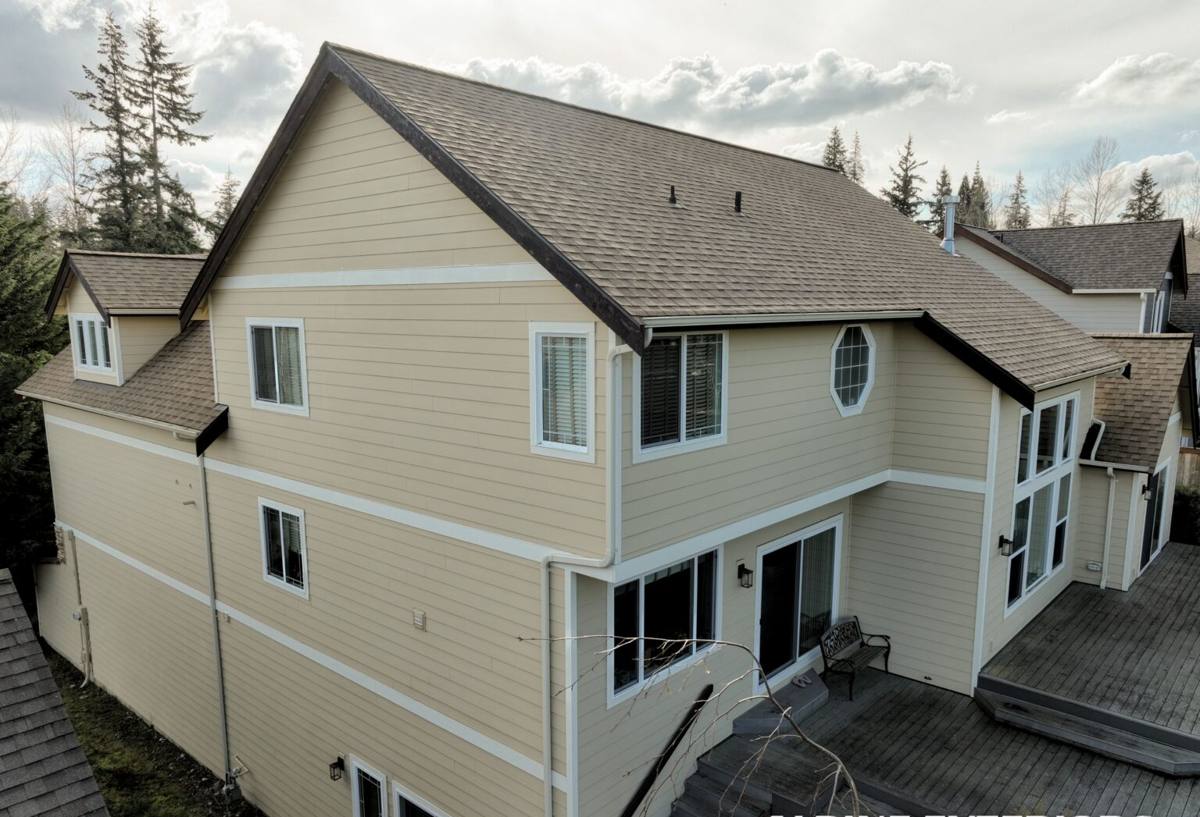
Why Terrell Creek Decks Age Differently
A few conditions specific to this area compound faster than homeowners realize:
- Salt air corrosion — nails, screws, and joist hangers not rated for coastal exposure can rust and lose holding strength years before the wood around them fails.
- Driving rain — wind-driven storms push water sideways into ledger boards, stair stringers, and railing post connections, not just straight down onto the decking surface.
- Extended moss season — shaded areas near trees or the north side of a house stay damp long after the rain stops, which speeds up rot in decking boards and framing underneath.
- Freeze-thaw cycling — even Birch Bay's relatively mild winters bring enough freeze-thaw swings to widen small cracks in wood and concrete footings over a few seasons.
None of this means a deck near Terrell Creek is doomed to fail early. It means the repair work has to account for moisture and corrosion in ways a generic patch job doesn't.
Signs Your Deck Needs Repair — Not Just a Cosmetic Fix
Surface-Level Warning Signs
Graying, splintering, or moss-covered boards are usually the first thing homeowners notice, but they're rarely the whole story. Surface wear tells you moisture is getting into the wood — it doesn't tell you how deep the damage goes.
Signs That Point to Structural Concerns
- Deck feels bouncy or springy when you walk across it, especially near the middle
- Railings wobble or flex when leaned on
- Visible gaps or dark staining where the deck ledger meets the house
- Stair stringers that feel uneven or spongy underfoot
- Rust streaks running down from screws, nails, or metal connectors
- Soft wood you can press a screwdriver into with light pressure
Any of these warrant a closer look before the next wet season, not after.
What a Correct Deck Repair Actually Involves
A repair that only replaces the boards you can see often leaves the real problem in place. A correct repair works from the structure outward:
1. Ledger Board and House Connection
This is where the deck attaches to the house, and it's the single most important — and most commonly under-flashed — connection on the whole structure. Water that gets behind the ledger without proper flashing can rot both the deck framing and the house's rim joist behind it. We check this connection on every repair, even when the visible problem is somewhere else on the deck.
2. Framing and Joists
Joists, beams, and posts get inspected for soft spots, splitting, and corrosion at every fastener. Isolated rot can often be sistered or reinforced; widespread rot in the framing usually means that section needs to come out rather than be patched over.
3. Fasteners and Hardware
Coastal air is hard on standard fasteners. Repairs near Terrell Creek get corrosion-resistant hardware rated for exterior and coastal use, not whatever matches what's already there if what's already there is part of the problem.
4. Decking Surface
Individual board replacement, resurfacing, or full deck-surface replacement depending on how far the damage has spread and what the framing underneath can support.
5. Railings and Stairs
Railing posts take a lot of lateral stress, and loose or rotted post connections are a safety issue, not just a cosmetic one. Stair stringers get the same structural check as the main deck frame.
Repair or Replace: What Actually Decides It
Homeowners often assume any visible damage means a full deck replacement. In most cases we see near Terrell Creek, that's not true — but the right call depends on where the damage is and how far it's spread.
| Component | What We Check | Usually Repairable | Usually Needs Replacement |
|---|---|---|---|
| Decking boards | Soft spots, splintering, moss staining | A handful of scattered boards | Widespread soft or rotted boards across most of the surface |
| Ledger board | Flashing condition, moisture behind the connection | Localized rot caught early | Long-term water intrusion into the house rim joist |
| Framing/joists | Structural soundness, fastener corrosion | One or two damaged joists | Rot affecting multiple structural members |
| Railings | Post connection strength, wobble under load | Loose hardware, minor rot at the base | Widespread rot through multiple posts |
| Footings/posts | Settling, cracking, ground contact rot | Minor settling, isolated post | Multiple failed or undersized footings |
We give you an honest read on which column your deck falls into before any work starts — not an automatic push toward full replacement.
Our Deck Repair Process
Assessment
We walk the entire deck — surface, framing underneath where accessible, ledger connection, railings, and stairs — and flag every issue we find, not just the one that prompted the call.
Scope and Plan
You get a clear explanation of what's structural versus cosmetic, what needs to happen now versus what can wait, and a straightforward plan before any work begins.
Repair Work
Framing and connection repairs happen first, since surface work over a compromised structure doesn't hold. Corrosion-resistant fasteners and hardware go in throughout, and flashing gets corrected or added anywhere it's missing.
Finish and Protection
Depending on the deck's material and condition, this may mean sealing, staining, or a protective coating suited to coastal exposure — matched to what the existing deck can actually support long-term, not a one-size-fits-all product.
Material and Fastener Choices for This Environment
What goes back into a repair matters as much as the repair itself. For fasteners and structural hardware, we favor stainless steel or hot-dip galvanized products rated for coastal and exterior exposure — standard interior-rated hardware corrodes noticeably faster this close to the bay. For decking material, both quality wood and composite boards can perform well here; the right choice comes down to the homeowner's maintenance preferences and budget, not a one-size-fits-all recommendation. Wood requires more regular sealing and cleaning to fight moss and moisture but is easier to spot-repair board by board. Composite decking needs less routine maintenance but can be more sensitive to how it's installed and ventilated underneath, since trapped moisture behaves differently under composite boards than under wood. We'll walk you through the honest trade-offs for your specific deck rather than pushing one material across the board.
Maintenance Checklist for Terrell Creek Decks
A few habits go a long way toward stretching the life of a repair in this climate:
- Sweep debris and standing leaves off the deck regularly, especially in shaded corners where moss takes hold first
- Check for slick, mossy patches after extended wet stretches and clean them before they become a slip hazard
- Inspect the ledger board connection once a year for staining or gaps that suggest water intrusion
- Look at railing posts for wobble or give, particularly after windy storms off the bay
- Reseal or restain wood decking on the schedule recommended for the product used, not just when it visibly grays
- Keep gutters and downspouts near the deck clear so runoff isn't draining directly onto or under it
Why a Crew That Already Works Terrell Creek Matters
Deck repair done right in this neighborhood isn't just general carpentry — it's carpentry that accounts for what salt air, driving rain, and a long moss season actually do to a structure over time. A crew that regularly works Birch Bay and the Terrell Creek area already knows which connections tend to fail first in this exposure, which fasteners hold up and which don't, and how to spot moisture problems before they turn into structural ones. That local pattern recognition is the difference between a repair that lasts and one that needs redoing in a couple of wet seasons.
If your deck near Terrell Creek is showing soft spots, wobble, rust streaks, or just doesn't feel as solid as it used to, we're happy to take a look and give you a straight assessment. Reach out for a free, no-pressure estimate using the form below — we'll tell you honestly what needs fixing and what doesn't.