 Birch Bay Exterior
 Decking That Has to Work in a Marine Climate, Not Just Look Good on Day One
Terrell Creek sits close enough to Birch Bay and the Strait of Georgia that homes here deal with a specific combination of conditions most decking products were never really tested against: salty, moisture-laden air moving in off the water, long stretches of driving rain through fall and winter, and short, low-angle winter sun that lets moss and algae get a foothold and never really dry out. A deck built without that in mind might look fine for a season or two. Then boards start to cup, fasteners weep rust, and the north-facing corner turns green by February.
Composite decking, installed correctly, holds up well against all of that — but "installed correctly" is doing a lot of work in that sentence. A composite deck is still a wood-framed structure underneath a composite surface, and the substructure, drainage, and fastening details matter just as much as the boards themselves. This page covers what a Terrell Creek home actually needs from a composite deck, what a correct job looks like, and what our process is when we build one.
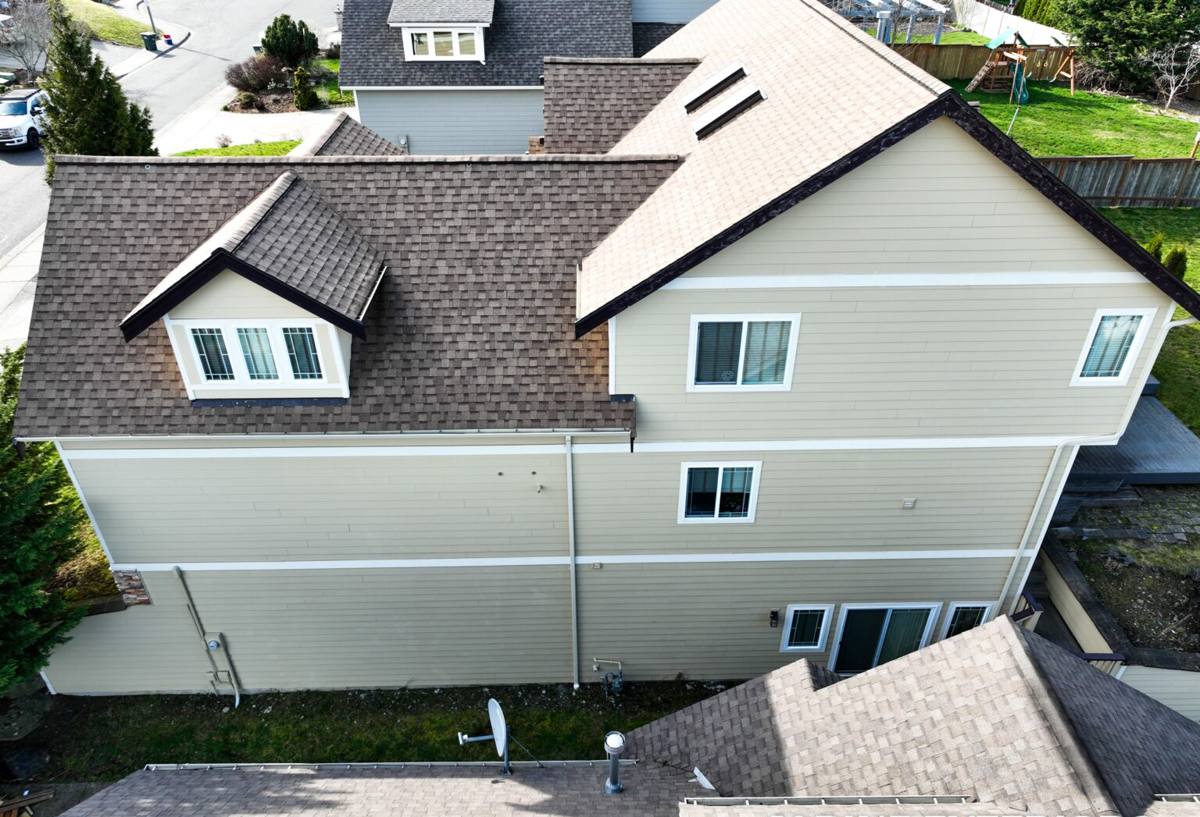
What Salt Air, Rain, and Moss Season Actually Do to a Deck
Salt Air
Proximity to Birch Bay and the open water means airborne salt settles on every exterior surface, including deck hardware. Standard zinc-coated screws and brackets corrode faster here than they would twenty miles inland. Over a few winters, corroding fasteners can loosen boards, stain the decking around the screw heads, and eventually compromise structural connections you can't see from the surface.
Driving Rain
Whatcom County's rain doesn't just fall — a lot of it comes in sideways during winter storms, driven by wind off the water. That means rain gets up under railings, into end grain, and behind ledger boards in ways that a calmer climate wouldn't produce. Any gap in flashing or drainage detailing becomes a slow, ongoing water intrusion problem rather than an occasional nuisance.
Moss and Algae Season
Low winter sun angles mean shaded portions of a deck — under overhangs, on the north side of the house, near fence lines — can stay damp for weeks at a time. That's exactly the environment moss and algae need. On wood decking this leads to slick, rotting surfaces. On composite decking it's mostly a surface-cleaning issue rather than a structural one, but the wrong composite product or a poor board-gapping job can trap moisture at the edges and shorten that advantage significantly.
Why Composite Makes Sense for This Location
We don't push composite decking as a universal answer — for some homes and budgets, a well-detailed wood deck is still the right call. But for Terrell Creek's combination of salt exposure, near-constant winter moisture, and moss pressure, composite decking has real, practical advantages:
- No annual staining or sealing to keep up with as salt air and rain cycle through the seasons
- Consistent color and texture that doesn't gray or streak the way exposed wood does near the water
- Resistance to splintering and rot in the shaded, damp zones where moss tends to establish
- Manufacturer warranties that typically cover fading, staining, and structural integrity for 25 years or more, depending on the product line
The trade-off is a higher upfront material cost than pressure-treated wood, and composite still requires periodic cleaning — it resists moss and mildew, it doesn't refuse to host it. Homeowners who go composite expecting zero maintenance are usually disappointed; homeowners who go composite expecting dramatically less maintenance than wood are usually happy.
Capped vs. Uncapped Composite — Why It Matters More Here
Not all composite decking is built the same way, and the difference matters more in a marine climate than it would somewhere dry. Uncapped composite boards have exposed wood-plastic material on all sides, which can absorb moisture at the surface over time and is more prone to staining and mold in a climate this wet. Capped composite boards have a polymer shell wrapped around the core, which handles standing moisture, salt residue, and organic growth (moss, algae, mildew) noticeably better.
| Feature | Uncapped Composite | Capped Composite |
|---|---|---|
| Moisture resistance | Moderate — core can absorb moisture over years | High — polymer shell sheds water |
| Moss/algae resistance | Fair — porous surface gives organic growth a foothold | Good — smoother, sealed surface resists staining |
| Fade resistance | Moderate | Better, especially with UV-stabilized caps |
| Upfront cost | Lower | Higher |
| Typical warranty | 10–25 years | 25–50 years, varies by manufacturer |
For a Terrell Creek property, we generally recommend fully capped boards, especially for any decking within a couple hundred feet of open water or in a shaded, north-facing layout. It costs more per square foot, but it's the detail that actually earns its keep in this climate.
What a Correct Installation Actually Involves
The composite boards get the attention, but most of the problems we get called to fix on other people's decks trace back to what's underneath and around them. A correct install in this climate includes:
Substructure and Framing
Pressure-treated or naturally durable framing lumber, properly spaced joists rated for the board span and expected load, and a ledger board that's flashed and sealed against the house — not just bolted on. Ledger flashing is one of the most common failure points we see on older decks near the water, because it's invisible until water has already been getting behind the siding for years.
Joist Tape
A waterproof membrane tape over the top of every joist protects the wood framing from the rain that inevitably gets between the composite boards, especially during driving winter storms. This is a step that's easy to skip and impossible to see once the decking is down — it's also one of the cheapest ways to add years of life to the substructure.
Fasteners and Hardware
Stainless steel or high-grade coated fasteners and structural hardware, sized correctly for the board and framing system. Given how much faster standard fasteners corrode in salt air here, this isn't an upsell — it's the difference between hardware that lasts and hardware that starts staining and loosening within a few winters.
Drainage and Slope
A very slight slope away from the house, correctly gapped boards, and — where the deck sits over living space or a patio below — a proper under-deck drainage system so water doesn't pool or sheet down onto whatever's underneath.
Ventilation
Adequate airflow under the deck keeps the framing dry between rain events instead of sitting damp for days, which matters a lot more here than in a drier climate.
Our Process for a Terrell Creek Composite Deck
- Site evaluation — we look at sun exposure, drainage, proximity to the water, existing structure (if replacing a deck), and any moss or moisture issues already present.
- Design and product selection — board style, color, and capped vs. uncapped recommendation based on the site conditions, plus railing and fastener choices matched to salt-air exposure.
- Permitting — we handle the local permit process where required, including structural details for anything attached to the house.
- Demolition (if applicable) — removal of the old deck, with an honest look at the framing underneath before we build on top of it. We don't cover up rot or undersized framing with new boards.
- Framing and waterproofing — substructure, ledger flashing, and joist tape installed before a single composite board goes down.
- Decking installation — boards, fasteners, and railing installed to manufacturer spec, which matters for keeping the warranty valid.
- Final walkthrough — we go over care and cleaning specific to the product installed, so you know what "maintenance" actually means for your deck.
Living With a Composite Deck Through a Whatcom County Winter
Composite decking cuts down on maintenance, it doesn't eliminate it. In this climate, the realistic upkeep looks like:
- A seasonal rinse or light scrub (soft brush, mild soap, no pressure-washer held too close) to clear moss spores and organic debris before they set in
- Keeping gutters and downspouts clear so runoff isn't dumping extra water directly onto the deck surface
- Sweeping fall leaves and debris out of board gaps so they don't hold moisture against the surface through winter
- An annual check of railing connections and fastener heads, especially after a hard winter storm season
- Trimming back vegetation that's shading a section of the deck and keeping it perpetually damp
None of this is heavy labor — it's closer to what you'd already do for the rest of the exterior of the house. The point is that "low maintenance" in a marine climate still means some maintenance.
What Affects the Cost of a Composite Deck Here
| Factor | Why It Matters Locally |
|---|---|
| Board tier (capped vs. uncapped) | Capped boards cost more but hold up better against salt air and moisture |
| Deck size and layout | Complex shapes, multiple levels, or stairs add labor and material |
| Substructure condition | Replacing rotted or undersized framing adds cost but is not optional for a safe deck |
| Fastener and hardware grade | Stainless or marine-grade hardware costs more upfront, saves on future repairs |
| Railing style | Composite, cable, or glass railing systems vary significantly in price |
| Under-deck drainage | Needed if the deck covers usable space below; adds material and labor |
| Site access | Water-adjacent or sloped lots can affect equipment access and labor time |
We give a firm, itemized quote after seeing the site — general online price ranges don't account for framing condition or site access, and we'd rather give you an honest number than a low one that changes later.
Why It Matters That We Already Work in This Area
A deck contractor who mostly works inland doesn't necessarily think about ledger flashing, fastener grade, or joist tape as non-negotiable — because in a drier climate, cutting those corners doesn't show up as fast. Working regularly around Birch Bay and the surrounding Whatcom County waterfront means we've seen what actually fails out here: the corroded screws, the moss that took over a shaded corner within a year, the ledger that was never properly flashed and let water into the house framing behind it. That experience shapes how we build, not just what materials we recommend.
Questions Worth Asking Before You Sign a Contract
- Is the composite board capped or uncapped, and what warranty does that specific product carry?
- What fastener and hardware grade is included, and is it rated for a marine or coastal environment?
- Will joist tape and proper ledger flashing be part of the base scope, or are they an add-on?
- What's the framing material, and how is it protected from moisture over the long term?
- Does the quote include permitting, and who's responsible for pulling it?
- What does routine cleaning and maintenance look like for the specific product being installed?
If you're planning a new deck or replacing an aging one near Terrell Creek, we're happy to walk the site, look at what you're working with, and give you a straightforward, no-pressure estimate. There's no cost or obligation to have us take a look — just use the form below to get started.