 Birch Bay Exterior
 Board & Batten in a Salt Air, Driving Rain Climate
Terrell Creek sits close enough to the water that homes here take a different kind of weather beating than siding a few miles inland ever sees. Salt-laden air corrodes fasteners and trim faster, driving rain off the Strait finds every gap in a wall assembly, and the shaded, damp stretches of the year keep moss and algae going almost year-round. Board and batten siding is a striking look for the kind of coastal and semi-rural homes common around Birch Bay, but it is also one of the least forgiving styles to get wrong in this exact climate. The vertical seams, the battens, and the wide flat panels between them either shed water the way they're supposed to, or they trap it against the wall for months at a time.
We install board and batten siding for homes in Terrell Creek using James Hardie fiber cement exclusively. That is a deliberate standard, not a sales pitch, and this page explains what the style needs to hold up here and how we build it so it does.
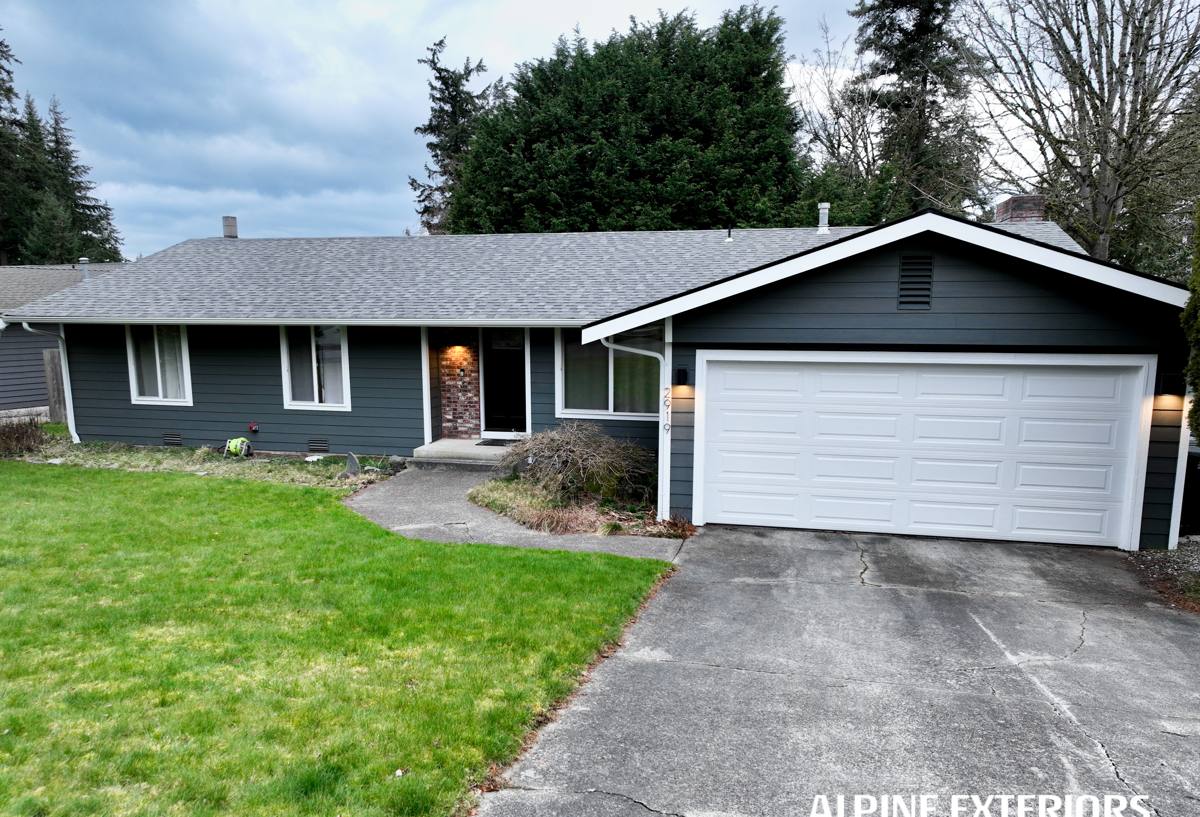
What Whatcom County's Coastal Weather Does to This Style Specifically
Salt Air and Fasteners
Board and batten relies on a lot of exposed fastener points — battens are face-nailed or blind-nailed over the panel seams, and every one of those penetrations is a spot where water and salt-carrying moisture can work in over time. Standard fasteners corrode faster this close to the water, which is why fastener selection and placement matter more here than they would on a drier, inland lot.
Driving Rain and Vertical Seams
Unlike horizontal lap siding, where each course overlaps the one below it by design, board and batten has vertical joints running the full height of the wall. Wind-driven rain off Birch Bay doesn't fall straight down — it gets pushed sideways into these seams under pressure. If the batten spacing, panel gap, and drainage plane behind the siding aren't handled correctly, wind-driven rain finds its way behind the cladding instead of running off the face of it.
Long Moss Season
Whatcom County's wet season runs long, and shaded north- and west-facing walls in Terrell Creek's tree-covered lots can stay damp for weeks at a stretch. Moss and algae growth on siding isn't just cosmetic — it holds moisture against the surface, which is exactly what you don't want happening against wood-based or improperly sealed products.
What Board & Batten Actually Is
Board and batten is a two-layer siding system: wide flat panels installed vertically, with narrow strips called battens covering the seams between them. Historically it was built from solid boards, which is part of why it has a reputation for moisture problems — wood shrinks, swells, and cups with seasonal humidity, opening gaps right where you need a tight seal.
The version we install is different. We use James Hardie's engineered vertical siding panels with Hardie trim battens on top, all James Hardie fiber cement — not wood, not a wood-composite. Fiber cement doesn't absorb and release moisture the way wood does, so the panel-to-batten relationship stays dimensionally stable across our wet winters and drier summers. For this region, we specify Hardie's HZ10 formulation, which James Hardie engineers specifically for the Pacific Northwest's wetter, more humid climate zone rather than the general-purpose HZ5 formulation used across most of the country.
What a Correct Installation Involves
Board and batten looks simple from the street — flat panels, evenly spaced strips — but the assembly behind that clean look is where the siding either performs for decades or starts failing within a few wet seasons. On a Terrell Creek job, we treat every one of the following as non-negotiable:
- A drainage gap behind the panel. A rainscreen furring strip or drainage wrap creates a gap between the siding and the wall sheathing so any moisture that does get past the surface can drain and dry out instead of sitting against the wall.
- Correct panel gaps, not tight-butted joints. James Hardie specifies a gap at panel joints that gets sealed with the right sealant and flashed — not caulked tight and hoped for.
- Fastener placement per the batten, not through open seams. Battens are fastened at spacing that avoids stress points and keeps fasteners away from panel edges, where splitting and water entry are most likely.
- Corrosion-resistant fasteners. Given the salt air this close to Birch Bay, we don't use fastener grades that are only rated for inland exposure.
- Flashing at every horizontal transition. Window heads, roof-to-wall intersections, and deck ledgers all need proper flashing details — board and batten's vertical lines make it easy to overlook these transitions if the crew is focused on keeping the reveal lines straight.
- Factory-applied ColorPlus finish. Field-painted fiber cement relies on the installer's paint job for weather resistance from day one; ColorPlus is baked on at the factory with a finish engineered to handle UV and moisture cycling, which matters when a wall spends half the year damp.
Doing It Right vs. Where Board & Batten Jobs Go Wrong
| Detail | Correct Approach for This Climate | Common Shortcut That Fails Here |
|---|---|---|
| Drainage behind panels | Furring strips or drainage wrap create an airgap so trapped moisture can dry out | Panels fastened directly to the weather barrier with no gap, trapping any water that gets in |
| Panel seams | Specified gap, properly flashed and sealed per manufacturer detail | Seams butted tight and relying on caulk alone, which cracks and fails over a few wet seasons |
| Fasteners | Corrosion-resistant fasteners at manufacturer-specified spacing | Standard fasteners chosen for cost, corroding faster in salt air |
| Finish | Factory-applied ColorPlus coating with a manufacturer warranty on the finish | Field-primed or field-painted siding depending entirely on job-site paint conditions |
| Flashing at transitions | Detailed flashing at every window head, roofline, and deck intersection | Caulk substituted for flashing at transitions to save time |
How We Approach a Terrell Creek Board & Batten Job
1. On-Site Assessment
We walk the home and look specifically at exposure — which walls take the most wind-driven rain off the bay, which stay shaded and damp longest, and where the existing siding or sheathing shows signs of moisture already having been a problem.
2. Sheathing and Moisture Barrier Check
Before any new siding goes up, we check the condition of the sheathing underneath. Board and batten only performs as well as what it's fastened over — installing new siding on compromised sheathing just hides a problem instead of fixing it.
3. Rainscreen and Flashing Install
We build in the drainage gap and install flashing at every transition point before a single panel goes up. This is the step that's invisible once the job is finished, and it's also the step that determines whether the siding lasts.
4. Panel and Batten Installation
Panels and battens go up to James Hardie's fastening and spacing specifications, using corrosion-resistant fasteners rated for this environment.
5. Final Inspection
We check reveal consistency, seal all penetrations, and walk the finished job with the homeowner before we consider it done.
Why Hiring a Crew That Already Works Terrell Creek Matters
Board and batten installation isn't a specialty most siding crews do every day, and the details that make it hold up on a home a mile from the water are different from what matters on a dry inland lot. A crew that already works Terrell Creek and the surrounding Birch Bay area knows which walls typically take the worst of the wind-driven rain, how long moss tends to run on shaded north faces here, and how salt exposure affects fastener and trim choices over time. That local pattern recognition is the difference between a crew following a generic install manual and one that's adjusting the details for the specific microclimate your house sits in.
Maintenance That Actually Matters for Board & Batten Here
- Rinse moss and algae growth off shaded walls before it builds up thick enough to hold moisture against the siding.
- Check caulking at panel seams and trim joints annually — this is the first place a wet climate finds a way in.
- Keep gutters and downspouts clear so roof runoff isn't dumping extra water directly onto wall sections.
- Look at fastener heads and trim edges periodically for early signs of corrosion or staining.
- Trim back vegetation that keeps a wall section shaded and damp longer than the rest of the house.
What This Costs to Do Right
Board and batten typically runs somewhat higher in labor than lap siding because of the extra layer of battens and the additional trim detail work, though material costs are comparable for the same product tier. The bigger cost factor is almost always what's happening behind the panels — rainscreen installation, flashing repair or upgrades, and any sheathing repair if moisture has already gotten in. We won't know your home's real number until we've looked at the walls in person, which is also why we don't quote board and batten work sight unseen.
If you're considering board and batten siding for a home in Terrell Creek, we're happy to come take a look and walk you through what your specific walls need. Reach out for a free, no-pressure estimate — there's a form right below to get started.