 Birch Bay Exterior
 Siding Installation in Lynden, From a Crew That Works This Whole Corner of Whatcom County
Lynden sits inland from the water, and homeowners there sometimes assume that distance buys them a break from the weather that hammers coastal properties. It doesn't buy much of one. Whatcom County's marine climate doesn't stop at the shoreline — the same weather system that soaks Birch Bay pushes inland across open farmland and residential lots alike, just with slightly less direct salt spray and slightly more temperature swing. We're based in Birch Bay, and we install siding on both ends of that gradient, which means we see how the same basic problems — salt-laden air, sideways-driving rain, and a moss season that barely takes a break — show up a little differently on a Lynden home than they do a few miles closer to the water.
This page is specifically about siding installation for Lynden properties: what the local climate demands from a siding system, what a correct installation actually involves, how our process runs from first visit to final inspection, and why it matters that the crew doing the work already spends time in this area rather than treating it as a one-off drive-out job. We install James Hardie fiber cement exclusively — no vinyl, no LP SmartSide, no Cemplank, no Allura, no primed spruce or cedar — and that standard shapes everything else on this page.
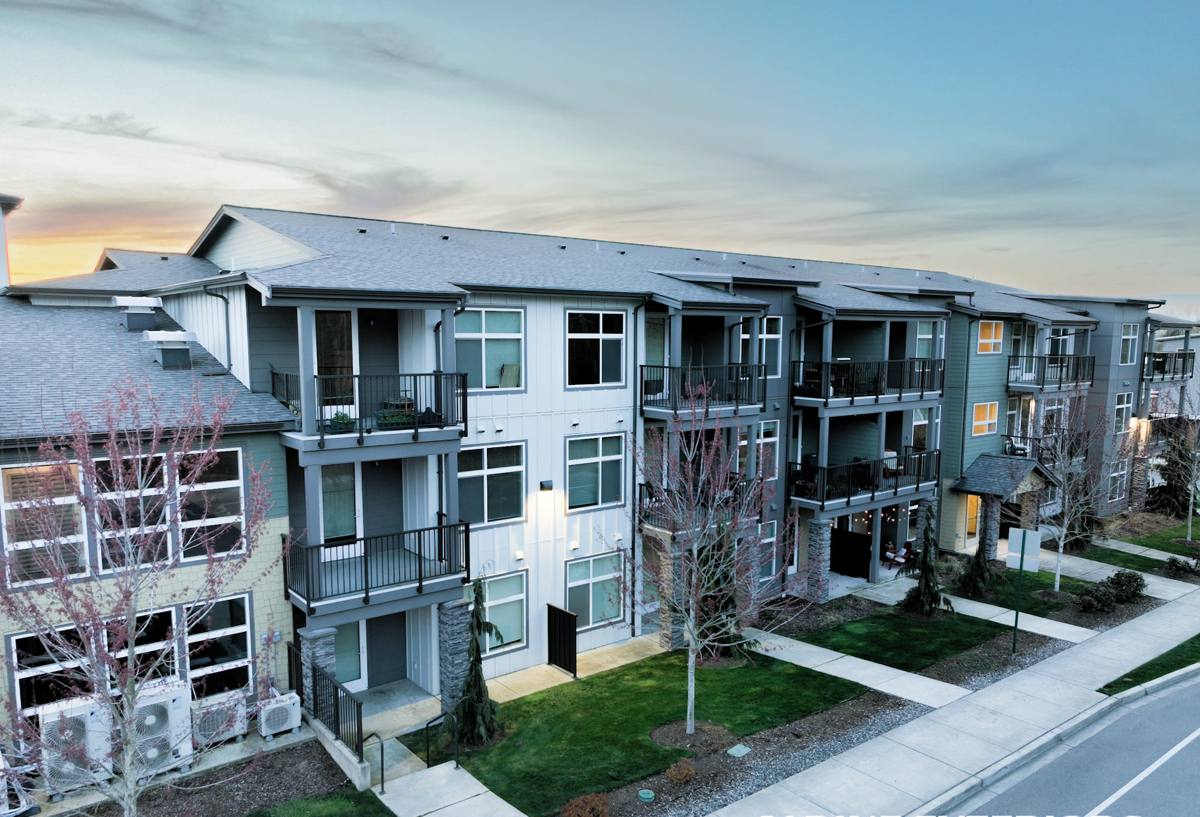
What Lynden's Climate Actually Does to Siding
Salt Air, Even Away From the Water
Lynden is far enough inland that salt exposure is lighter than it is right on Birch Bay's shoreline, but it isn't zero. Marine air moves across this whole part of Whatcom County, and over years that steady, low-grade salt exposure accelerates corrosion on fasteners, flashing, and lower-quality trim hardware. It's a slower process than what a beachfront wall deals with, but it's real, and it means hardware and fastener choices shouldn't be made as if Lynden were a dry inland climate with no corrosion risk at all.
Driving Rain
Rain through the fall and winter months in this region rarely falls straight down. Wind pushes it sideways into wall assemblies, window and door flashing, and the transitions where roof meets wall — the exact places where a marginal installation starts letting water in. That sideways load is the detail that separates a siding job that holds up for decades from one that starts showing water damage within a few wet seasons, regardless of how good the material itself is rated to be.
A Long Moss Season
Mild temperatures, shade from surrounding trees, and near-constant moisture add up to a moss and mildew season that can run close to year-round on shaded walls. Lynden's mix of open farmland and tree-lined residential lots means this plays out unevenly from house to house — a wall facing open fields dries out fast after a storm, while a shaded wall against a tree line can stay damp for days. Any siding material that's porous, or that traps moisture against the substrate instead of shedding it, becomes a growth surface over time in that kind of environment.
What a Correct Siding Installation Actually Involves
The material is only part of the equation. A huge share of siding failures we get called out to inspect trace back to installation shortcuts, not product defects. A correct job on a Lynden home involves several details that are easy to skip and expensive to fix later.
Water-Resistive Barrier and Flashing First
Before a single piece of siding goes up, the wall needs a continuous water-resistive barrier with properly lapped and sealed seams, and flashing integrated at every window, door, and penetration so water is directed out and down rather than behind the cladding. Siding is the visible layer, but the barrier system underneath it is what actually keeps a wall dry over decades of wind-driven rain.
Fastening Pattern and Clearances
Fastener type, spacing, and depth all need to match the manufacturer's published specifications — not a generalized "close enough" pattern. Ground clearance and clearance from roof lines, decks, and patios also matter more here than in a dry climate, because standing moisture at the bottom edge of a wall is one of the most common places rot starts.
Joints, Caulking, and Trim Integration
Butt joints, corner boards, and trim transitions are where a lot of long-term problems start if they're rushed. Correctly backed joints, the right sealant for the material, and trim details that actually shed water rather than collect it are what keep a siding system performing years after the crew has moved on to the next job.
Why We Install Only James Hardie Fiber Cement
We used to install a wider range of siding products. We narrowed that down to one system after years of installing, inspecting, and repairing exterior work in exactly this climate — not because of a supplier relationship or a sales incentive.
- Non-combustible core: Fiber cement doesn't feed a fire the way wood-based siding products can, which matters for both safety and insurance underwriting.
- Factory-applied ColorPlus finish: The color coat is baked on in a controlled factory process rather than field-applied, which holds adhesion and color far longer under sustained moisture and UV exposure than a job-site finish.
- Climate-engineered HZ formulation: Hardie's HZ5 product line is engineered specifically for regions with heavy moisture exposure and freeze-thaw cycling, which describes Lynden and the rest of Whatcom County well.
- Dimensional stability: Fiber cement doesn't swell, cup, or warp the way engineered wood siding can after repeated wetting and drying cycles over a wet season.
- A strong transferable warranty: Hardie backs the product with a robust warranty structure, provided the installation follows their published specifications — which is one more reason installation quality matters as much as the material choice.
We don't install LP SmartSide, vinyl, Cemplank, Allura, primed spruce, or cedar. Each of those products has a place in the broader market, and plenty of homeowners are satisfied with them elsewhere. Our decision is a professional standard, not a judgment on anyone else's home: in a climate with this much sustained moisture and salt exposure, we'd rather stand fully behind one system than offer a cheaper alternative that quietly shifts maintenance risk onto the homeowner a few years down the road.
How Common Alternatives Hold Up in This Climate
| Material | Common Trade-Off in Lynden's Climate |
|---|---|
| Vinyl siding | Can warp or become brittle with temperature swings; seams and J-channels are common moisture entry points |
| LP SmartSide (engineered wood) | Edge swelling and moisture uptake if caulking and paint maintenance lapse even briefly |
| Primed spruce or cedar | Requires ongoing repainting and moisture management; more vulnerable to the county's long moss season |
| Cemplank / Allura fiber cement | Similar base material to Hardie, but we've standardized our crews, fasteners, and warranty process on one system rather than splitting expertise across brands |
| James Hardie fiber cement (HZ5) | Non-combustible, factory-finished, engineered for this region's moisture and freeze-thaw pattern |
Signs a Lynden Home's Siding Needs Attention
Some warning signs are visible from the ground; others take a closer look. Either way, catching them early keeps a repair from turning into a full tear-off.
- Soft or spongy spots when you press on the siding, especially near the bottom courses or below windows
- Visible cracking, buckling, or gaps at butt joints and corner trim
- Persistent moss, algae, or dark streaking on shaded walls that doesn't clear up between dry spells
- Peeling or bubbling paint, particularly on wood-based or engineered wood products
- Warped or bowed panels, most noticeable on sun-exposed or west-facing walls
- Interior signs — musty smells, discolored drywall, or peeling interior paint on exterior-facing walls
How Our Installation Process Works
- On-site assessment: We walk the exterior, check for existing moisture damage, and evaluate the current water-resistive barrier and sheathing condition before quoting anything.
- Written estimate and product selection: We go over Hardie board profiles, colors, and trim options, and provide a clear, itemized estimate — no vague allowances.
- Tear-off and substrate repair: Old siding comes off, and any rotted sheathing or framing found underneath gets repaired before anything new goes up. This step is where hidden problems usually surface.
- Barrier and flashing installation: A continuous water-resistive barrier goes on first, with flashing integrated at every window, door, and penetration point.
- Hardie board installation: Panels or lap siding go up to manufacturer specifications for fastener pattern, spacing, and clearance — not a generic install.
- Trim, caulking, and final detailing: Corner boards, joints, and transitions are finished and sealed correctly, since this is where most long-term failures start if rushed.
- Final walkthrough: We inspect the completed work with the homeowner before calling the job done.
Cost Factors for a Lynden Siding Project
Every home is different, so we don't publish blanket per-square-foot pricing, but these are the factors that move a quote up or down.
| Factor | Why It Affects Cost |
|---|---|
| Existing wall condition | Hidden rot or sheathing damage found during tear-off adds repair scope beyond the original estimate |
| Home size and wall complexity | More corners, dormers, and trim transitions mean more labor per square foot of coverage |
| Siding profile chosen | Lap siding, shingle-style panels, and board-and-batten all have different material and labor costs |
| Trim and accessory scope | Corner boards, window trim, and fascia work are often priced separately from field siding |
| Access and site conditions | Steep grades, tight lot lines, or limited equipment access can add labor time |
Why Hiring a Crew That Already Works This Area Matters
Being based in Birch Bay and working regularly in Lynden means we're not learning this region's building department expectations, weather patterns, and scheduling realities on your job. We know how far in advance a job needs to be scheduled around the wetter months, how substrate damage in this climate typically presents, and what inspectors in this part of Whatcom County expect to see at each stage of the work. A crew that treats a Lynden job as a one-time drive-out from somewhere else doesn't carry that same working knowledge — and on an exterior project, that knowledge is often the difference between a smooth job and one full of surprises.
It also means accountability doesn't end when the crew packs up. If a question comes up six months or two years after installation, we're still a local business working in the same area, not a name from an out-of-town crew that's moved on to other regions.
Caring for Your Siding After Installation
James Hardie fiber cement is low-maintenance compared to wood-based alternatives, but "low-maintenance" isn't "no-maintenance." A rinse-down once or twice a year clears early moss growth before it takes hold, especially on shaded, north-facing walls. Keep an eye on caulked joints and repaint trim if the finish starts to look chalky or worn — catching that early is far cheaper than dealing with a moisture problem that's already gotten behind the siding. Trim back vegetation and tree growth that keeps a wall shaded and damp longer than it needs to be.
If your Lynden home's siding is showing wear, or you're planning ahead for a full replacement, we're happy to walk the property and give you a straight, no-pressure estimate. Use the form below to get in touch and we'll set up a time to take a look.