 Birch Bay Exterior
 Why Semiahmoo's Waterfront Climate Wears Out Siding Faster
Homes along the Semiahmoo area near Birch Bay sit in one of the more demanding exposure zones in Whatcom County. You've got salt-laden air coming off the water, wind-driven rain that hits siding sideways instead of falling straight down, and a moss season that runs long on the north side of nearly every house in this part of the county. None of these things are dramatic on their own. What they do is compound, year after year, on whatever material is covering your exterior walls.
Salt air is corrosive to exposed metal fasteners and hardware, and it accelerates the breakdown of coatings and finishes that weren't formulated to handle it. Driving rain finds every seam, lap joint, and nail penetration that wasn't sealed or flashed correctly the first time. And moss — which needs shade, moisture, and time to establish — gets all three on north- and west-facing walls that stay damp for days after a storm rolls through. Siding that's marginal on installation quality in a drier inland climate can fail outright here in a fraction of the time.
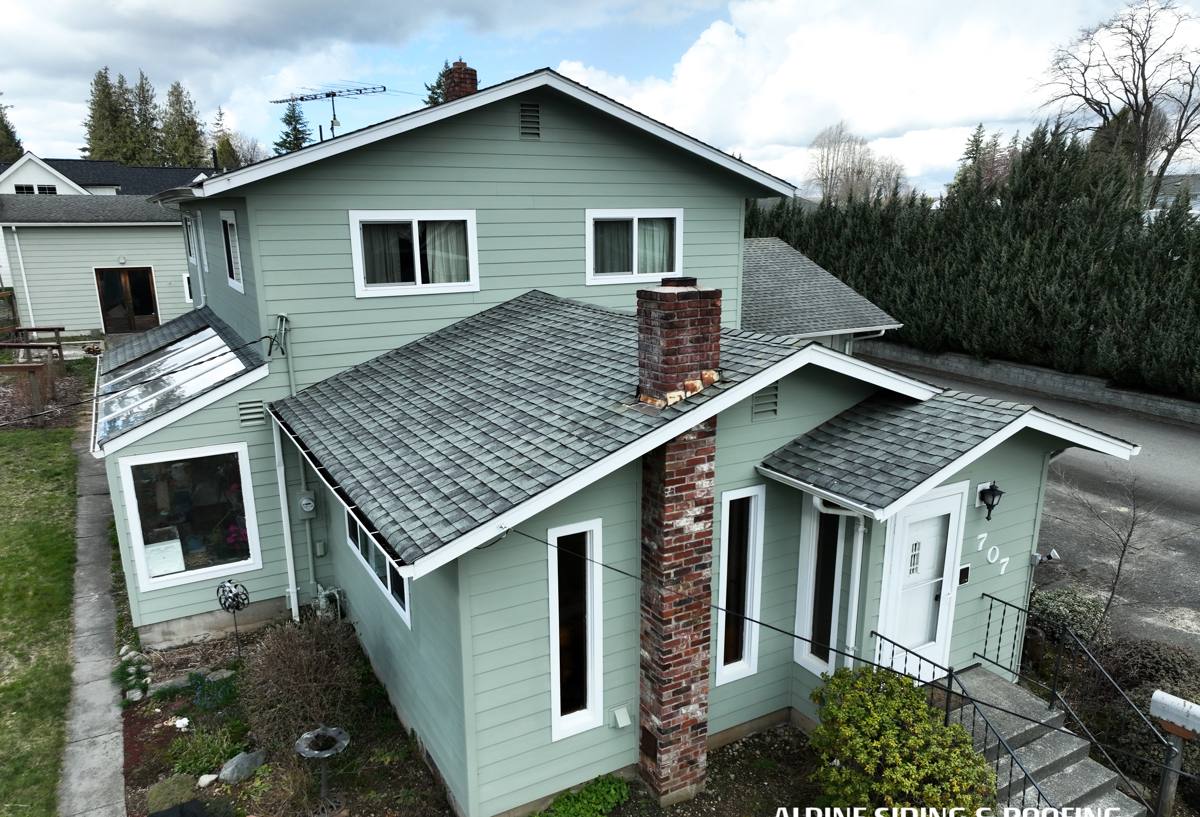
Signs a Semiahmoo Home Needs Replacement, Not Repair
Not every siding problem calls for a full tear-off. But there's a point where patching becomes false economy, and homes in this area tend to hit that point sooner than homes further from the water. Here's what tells us replacement is the right call rather than another round of repairs:
- Soft or spongy spots when you press on the siding, especially near the bottom courses and around window and door trim
- Paint that won't hold no matter how often it's redone — usually a sign moisture is already inside the wall assembly
- Persistent moss or algae growth that comes back within a season of cleaning
- Visible warping, cupping, or delamination on wood-based or engineered wood siding
- Cracked or missing caulking at seams and trim joints that keeps reopening after re-caulking
- Interior signs — musty smell, staining on interior walls, or bubbling paint near exterior corners
- Siding that's original to a home built more than 25-30 years ago, particularly if it's never been fully replaced
If you're seeing two or more of these, it's worth getting a real assessment rather than guessing. A five-minute look often tells us whether we're dealing with a cosmetic issue or a wall assembly that's been absorbing water for years.
Why We Only Install James Hardie Fiber Cement
Birch Bay Exterior Co installs one siding system: James Hardie fiber cement. We don't carry vinyl, LP SmartSide, Cemplank, Allura, primed spruce, or cedar, and that's a deliberate call, not a limitation of what we're capable of installing. In a climate like this one, the differences between materials aren't cosmetic — they show up in how the house performs ten and twenty years down the road.
Fiber cement is dimensionally stable in a way wood-based and engineered wood products aren't. It doesn't swell, split, or lose its edge integrity when it absorbs moisture the way OSB-core products can if a seam or cut edge gets exposed. It's also non-combustible, which matters more every year as wildfire smoke and dry summer stretches become a regular part of Pacific Northwest summers, even on the wet side of the state. James Hardie factory-applies its ColorPlus finish under controlled conditions, which holds color and resists the chalking and fading that field-applied paint struggles with in a marine climate. And Hardie backs its products with a strong, transferable limited warranty — something that matters to buyers if you sell the home down the road.
What About Vinyl or LP SmartSide?
Both are legitimate, widely used products, and we're not going to tell you they don't work anywhere. Vinyl is inexpensive and low-maintenance in mild, dry climates, but it becomes brittle in cold snaps and can visibly warp or buckle where it gets consistent direct sun and heat cycling — and it's a poor match for a coastal wind exposure. LP SmartSide is an engineered wood product with a resin-treated strand core; it performs well when installation is flawless, but it's more sensitive to cut-edge sealing, caulking maintenance, and moisture intrusion than fiber cement, and those are exactly the conditions Semiahmoo throws at a house. We'd rather install one product correctly, every time, than juggle trade-offs on a house that's going to take a beating from salt air and rain for the next few decades.
Material Comparison for a Salt-Air, High-Rain Climate
| Factor | James Hardie Fiber Cement | Vinyl | LP SmartSide / Engineered Wood | Cedar |
|---|---|---|---|---|
| Moisture resistance | Excellent — non-organic core | Good, but seams can trap water | Sensitive at cut edges and joints | Requires ongoing sealing/staining |
| Salt air / coastal performance | Strong, engineered for the region | Can become brittle with UV/temp cycling | Moderate, install-dependent | Weathers unevenly near salt spray |
| Fire resistance | Non-combustible | Melts/deforms under heat | Combustible | Combustible |
| Maintenance | Low — factory finish, occasional wash | Low, but repairs are visible | Moderate — caulk and paint upkeep | High — regular refinishing |
| Typical lifespan (installed to spec) | 30-50+ years | 20-30 years | 20-30 years | 15-25 years with upkeep |
What Correct Installation Involves in This Climate
Fiber cement is only as good as the installation behind it, and in a wind-driven-rain environment, the details most homeowners never see are what determine whether siding lasts 15 years or 40.
Weather Barrier and Flashing
Every seam, window, and door opening needs a properly lapped weather-resistant barrier and correctly integrated flashing, installed so water sheds outward at every layer rather than getting trapped behind the cladding. This is the single most common failure point we find when we tear off older siding on waterfront-exposed homes.
Fastening and Clearances
Corrosion-resistant fasteners, correct nailing patterns, and proper clearance from grade, roofing, and decking surfaces all matter more here than in a drier climate — any gap that lets water sit against the bottom edge of a board becomes a long-term problem in a hurry.
Caulking, Painting, and Finish Work
Joints and trim need caulk rated for exterior, marine-adjacent conditions, and any field-cut edges need to be primed and sealed before installation, not after. This is a step that gets skipped on rushed jobs and is almost invisible until it fails.
Ventilation
Where the wall assembly allows for it, proper rainscreen or ventilation gaps behind the siding help walls dry out between storms instead of staying damp — which is directly tied to how much moss and mildew pressure the exterior wall sees over time.
Our Siding Replacement Process
- On-site assessment — we check current siding, sheathing, and any signs of trapped moisture before quoting anything
- Tear-off — full removal of the old siding down to the sheathing
- Sheathing repair — any water-damaged sheathing gets replaced, never covered over
- Weather barrier and flashing — installed fresh, properly lapped and integrated at every penetration
- James Hardie installation — installed to manufacturer spec for fastening, clearances, and joint treatment
- Trim, caulking, and finish — sealed and finished to hold up against wind-driven rain
- Cleanup and walkthrough — site cleared, and we walk the finished job with you
What Affects the Cost
| Cost Factor | Why It Matters |
|---|---|
| Home size and wall complexity | More corners, gables, and cutouts mean more labor and material waste |
| Condition of existing sheathing | Water-damaged sheathing found during tear-off adds repair scope |
| Siding profile chosen | Lap width, panel style, and trim detail affect material and labor |
| Color and finish | Factory ColorPlus finishes vs. field-painted options price differently |
| Site accessibility | Waterfront lots, tight setbacks, or steep grades can affect staging and labor time |
We give straightforward, itemized quotes after an in-person look — not a ballpark over the phone. There's no useful way to price siding replacement without seeing the actual condition of the walls underneath.
Why Hiring a Crew That Already Works This Area Matters
A crew that's worked Semiahmoo and the surrounding Birch Bay coastline knows what to expect before the tear-off even starts: where moisture tends to accumulate on waterfront-exposed walls, how much wind loading to plan for on exposed elevations, and what a Whatcom County inspector is going to want to see on flashing and weather barrier work. That familiarity shows up in fewer surprises mid-project and a finished job that's actually built for the exposure it's going to face, not just built to a generic spec sheet.
It also means we're not guessing at how a product performs here — we've seen how James Hardie holds up on homes a few miles from the ones we're standing in front of, through multiple wet winters and moss seasons.
Keeping New Siding Looking Right Through Moss Season
Once new Hardie siding is installed correctly, upkeep is genuinely low, but a little seasonal attention goes a long way in this climate:
- Rinse siding annually, focusing on north- and shade-facing walls where moss and algae take hold first
- Trim back vegetation and tree cover that keeps walls shaded and damp
- Check gutters before the fall rains — overflow against siding is a common source of avoidable staining
- Keep an eye on caulking at trim joints and touch up promptly if it starts to crack or pull away
If you're weighing whether your current siding has another few years in it or whether it's time to replace, we're happy to take a look and give you an honest read — no pressure, no upsell. Reach out for a free estimate and we'll walk the exterior with you and tell you what we'd actually recommend.