 Birch Bay Exterior
 Why Sandy Point Siding Wears Differently Than Siding Ten Miles Inland
Sandy Point sits about as close to the water as a Whatcom County home can get. That waterfront position is exactly why it's a great place to live and exactly why the exterior of a house here takes more abuse than a similar home in Ferndale or Lynden. Salt-laden air moves off the Salish Sea and settles on every exterior surface, wind-driven rain hits siding at angles that shed roofs and gutters were never designed to fully manage, and the long gray stretch from fall through spring keeps north-facing and shaded walls damp for weeks at a time. None of that is a knock on the neighborhood. It's just the trade-off of waterfront living, and it means the siding decision matters more here than almost anywhere else in the county.
We work Birch Bay and the surrounding waterfront communities regularly, and Sandy Point is one of the areas where we see the clearest gap between siding that was installed to a generic standard and siding that was actually installed for this specific climate.
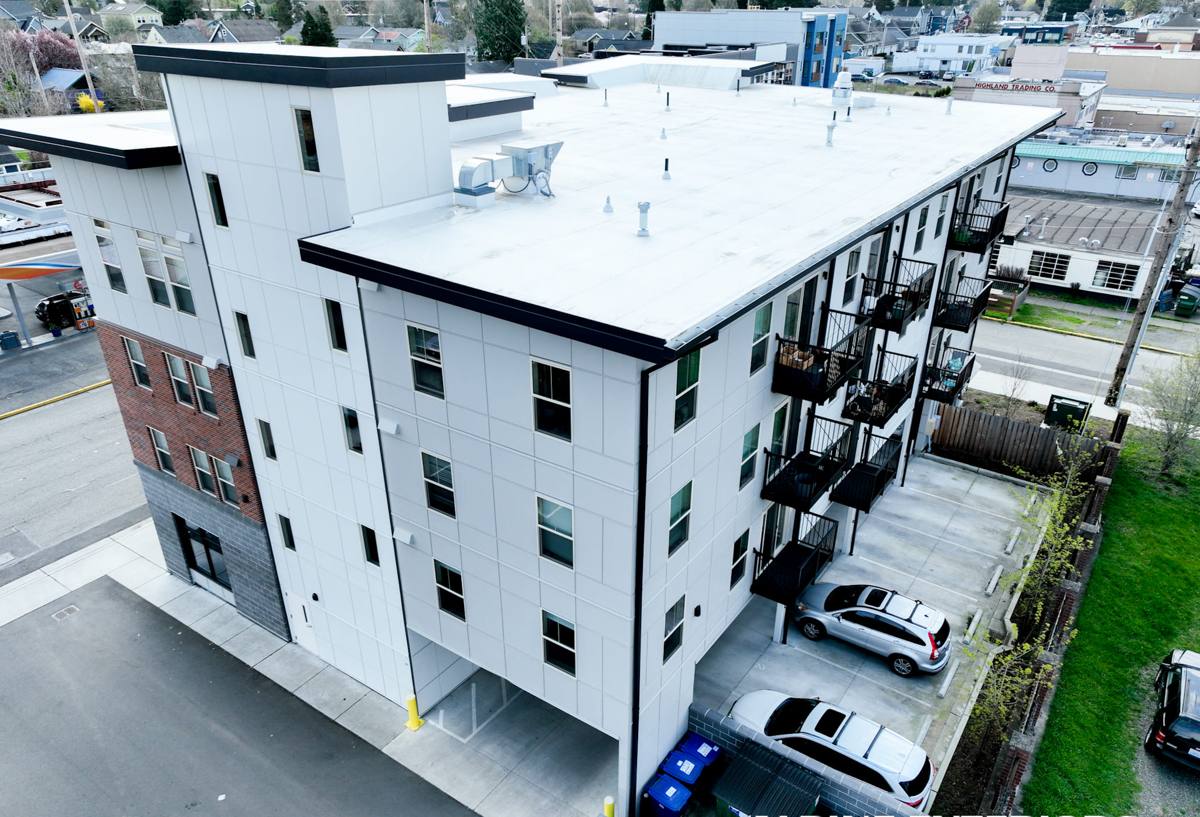
What Salt Air, Driving Rain, and Moss Actually Do Over Time
Salt Air
Airborne salt is corrosive to fasteners and hardware, and it's abrasive to painted surfaces over years of exposure. On wood-based sidings, salt-laden moisture accelerates the breakdown of paint film and the wood fibers underneath it. On lower-quality composite products, it can accelerate surface degradation at seams and cut edges where the factory coating doesn't reach.
Wind-Driven Rain
Storms off the water don't just fall on a house, they push into it. Rain gets driven sideways and upward under laps, around trim, and into any gap that a fair-weather installation would never expose. A siding system that isn't detailed for wind-driven rain — proper laps, flashing, and clearances — will eventually let moisture behind the cladding, and that's where the real damage starts.
Moss and Algae
Whatcom County's wet season is long, and shaded or north-facing walls near mature trees or close neighboring structures stay damp longer than sun-exposed walls. That's the environment moss and algae need. Left unmanaged, organic growth holds moisture against the siding surface and, on absorbent materials, can contribute to slow deterioration underneath the growth itself.
Why We Only Install James Hardie Fiber Cement Here
We don't install LP SmartSide, vinyl, Cemplank, Allura, or primed wood siding — not because those products have no merit, but because we've made a professional decision about what belongs on a home exposed to salt air and sustained wet weather, and we stand behind that decision with every installation we do.
- It's non-combustible. Fiber cement doesn't feed a fire the way wood-based products can, which matters for insurance conversations and long-term peace of mind.
- It doesn't rely on a field-applied coating to survive. James Hardie's ColorPlus finish is baked on at the factory under controlled conditions, which gives it more consistent protection against sun and salt exposure than paint applied on site.
- It's engineered for climate, not one-size-fits-all. Hardie's HZ product lines are formulated differently for different exposure zones, which is a meaningful distinction for a coastal Whatcom County property.
- The warranty is real and transferable. That matters on waterfront property, where resale value and buyer confidence are closely tied to documented exterior condition.
Vinyl siding, for comparison, can perform fine in moderate climates, but it expands and contracts more with temperature swings, its seams and J-channels give wind-driven rain more opportunities to work behind the cladding, and it doesn't offer the same fire performance. LP SmartSide and other engineered wood products can be a reasonable choice inland, but any wood-based siding is more dependent on flawless caulking, flashing, and paint maintenance to keep moisture out — a maintenance margin we don't think is worth gambling on a block from the water. We'd rather install one product correctly, every time, than juggle multiple systems and their different failure points.
Engineered for Coastal Exposure: What "HZ" Actually Means
James Hardie manufactures its siding in formulations tuned to regional climate zones — broadly, a HZ5 formulation for colder, wetter, freeze-prone climates and other formulations for hot, humid regions. Western Whatcom County, including Sandy Point, sits in the wetter, cooler category. The practical difference is in how the fiber cement is engineered to handle moisture cycling and temperature swings over decades of exposure, not just the color of the finish. When we spec a project here, the product itself is already built for what this coastline throws at it — the installation still has to match that engineering with correct technique.
What a Correct Installation Involves on a Waterfront Home
Fiber cement siding is only as good as the water management system behind it. On a Sandy Point project, that means:
- A properly lapped and taped weather-resistive barrier as the drainage plane behind the siding
- Correct flashing at every window, door, and horizontal trim transition — not caulk used as a substitute for flashing
- A rainscreen gap or furring where wall assembly and exposure justify it, so moisture that does get behind the cladding can drain and dry
- Fastener spacing, lap length, and clearance from grade and roof lines set to Hardie's published specifications, not "close enough"
- Factory-cut and factory-primed edges wherever possible, with any field cuts properly sealed per manufacturer instructions
- Careful attention to inside and outside corners, which take disproportionate wind and rain exposure on an open, waterfront lot
Skip any one of those steps and you can still end up with a wall that looks right for a few years before the moisture problems show up. That's the gap between siding that's installed and siding that's installed correctly.
Our Process for Sandy Point Projects
1. On-Site Assessment
We walk the exterior, check the condition of the current siding and the wall assembly behind it where accessible, and note exposure-specific factors — which walls take the most wind-driven rain, where shade keeps a wall damp longer, and where moss or algae growth points to a moisture pattern worth addressing.
2. Product and Detailing Plan
We spec the appropriate James Hardie plank or panel profile and ColorPlus finish for the home, and we plan flashing and drainage details specific to that structure — not a generic install sheet.
3. Removal and Prep
Old siding comes off, the sheathing and framing get inspected for any hidden moisture damage, and any repairs happen before new material goes up. Installing new siding over an already-compromised wall just hides the problem.
4. Installation to Manufacturer Spec
Weather barrier, flashing, fastening, and lap details are done to James Hardie's published installation requirements, which is also what keeps the manufacturer's warranty intact.
5. Final Walkthrough
We review the finished work with the homeowner and go over any care and maintenance points specific to the home's exposure.
Living With Moss Season: What Homeowners Can Control
No siding is maintenance-free in this climate, but correct material and installation dramatically reduce what maintenance is required. ColorPlus finish resists the surface staining that bare or field-painted materials pick up faster, and a properly drained wall assembly means occasional surface growth stays a cosmetic issue rather than a moisture problem. Simple habits help too: keeping vegetation trimmed back from walls so air can move and walls can dry, keeping gutters clear so overflow doesn't run down the siding face, and rinsing visibly mossy or algae-affected areas periodically rather than letting growth sit for years.
Cost Factors for Sandy Point Fiber Cement Projects
| Factor | Why It Matters Here |
|---|---|
| Home size and wall complexity | More corners, dormers, and trim transitions mean more flashing detail work |
| Current wall condition | Hidden moisture damage from age or a prior undersized water-management system may need repair before new siding goes on |
| Siding profile and finish | Lap width, panel style, and ColorPlus color affect material cost |
| Site access | Waterfront and canal-adjacent lots can have tighter access or staging constraints than inland properties |
| Drainage detailing | Rainscreen or furring adds labor but pays off in long-term performance for exposed walls |
We don't quote broad numbers without seeing the actual home, since wall condition and complexity vary a lot even between neighboring properties. A site visit gives homeowners a real, specific number instead of a guess.
Why Hiring a Crew That Already Works This Coastline Matters
Fiber cement installation isn't hard to do wrong. It's the kind of work where a crew that mostly installs vinyl, or that treats every job the same regardless of exposure, can produce a wall that looks fine at handoff and starts showing problems in a few winters. A crew that regularly works Birch Bay and Sandy Point already knows which walls on a waterfront lot take the worst of the wind-driven rain, understands why moss shows up where it does, and installs the drainage details that matter here as a default, not an upsell. That local pattern recognition is worth as much as the product itself.
If you're weighing a siding replacement or repair in Sandy Point, we're happy to take a look and walk you through what your home specifically needs — no pressure, no generic sales pitch. Reach out using the form below to schedule a free estimate.