 Birch Bay Exterior
 Point Roberts Roofs Take a Different Kind of Beating
Point Roberts sits out on its own peninsula, surrounded by saltwater on three sides, which means every roof out there deals with a heavier dose of what already makes Whatcom County roofing tough. Salt-laden air moves in off the water and settles on shingles, flashing, and fasteners year-round, speeding up corrosion in ways that inland roofs never see. Add driving, wind-blown rain that doesn't fall straight down but gets pushed sideways under laps and around penetrations, and you've got a roof that's working harder than most to keep water out.
Then there's moss. The Pacific Northwest's mild, wet winters and shaded, slow-drying roof slopes give moss a long growing season here — often eight months or more depending on sun exposure and tree cover. None of this means a Point Roberts roof is doomed. It means repairs have to account for salt exposure, wind-driven water, and moss growth specifically, not just patch the obvious hole and move on.
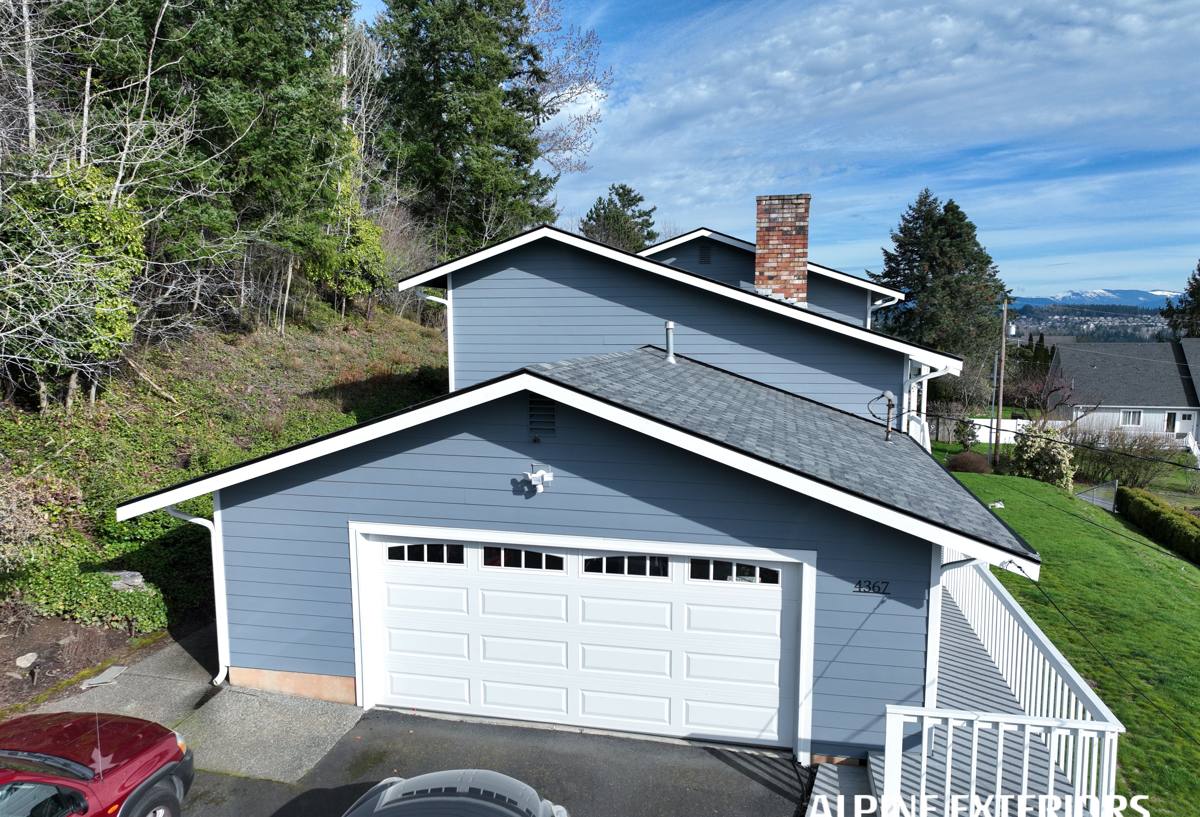
What Roof Repair Actually Covers
Roof repair is targeted work — fixing what's actually broken or failing, not tearing off and replacing the whole roof. Done right, it should extend the roof's working life for years without the cost of a full replacement. In this area, the repairs we see most often fall into a few categories:
Flashing and Penetration Failures
Metal flashing around chimneys, vent pipes, and skylights is usually the first thing to fail near saltwater. The metal itself corrodes faster, sealant dries and cracks faster, and wind-driven rain finds any gap that opens up. Flashing repair or replacement is one of the most common calls we get in this area, and it's often the difference between a small fix now and a rotted deck later.
Wind-Lifted or Missing Shingles
Storms off the water bring gusty, shifting wind that lifts shingle edges and breaks seals, especially on exposed slopes facing open water. A handful of lifted or missing shingles is a straightforward repair if it's caught before repeated soaking damages the underlayment or decking underneath.
Valley and Gutter-Line Leaks
Valleys collect more water than any other part of the roof, and when they're combined with moss buildup or undersized gutters, water backs up and finds its way under the shingles instead of off the edge. This is one of the more common sources of interior leaks that homeowners initially blame on "the roof" generally, when it's really one specific detail that needs attention.
The Long Moss Season and What It Does to a Roof
Moss doesn't just look bad — it actively damages roofing material. It holds moisture against the shingle surface long after the rest of the roof has dried, which speeds up granule loss and shortens the shingle's life. As moss mats grow thicker, they physically lift shingle edges, creating gaps that wind-driven rain can get under.
North-Facing and Shaded Slopes
Roof sections shaded by trees or facing away from the sun stay damp the longest, which is exactly where moss establishes first and grows thickest. These are the areas we check most closely on any repair visit, even if the reported leak is somewhere else.
Moss Removal Versus Moss Prevention
Scraping moss off without addressing why it's growing there just buys a season or two before it's back. A proper repair visit looks at trim and overhang, gutter condition, and whether zinc or copper control strips make sense for that particular roof, rather than just clearing what's visible and calling it done.
Signs Your Point Roberts Roof Needs Repair Now
Some problems are obvious from the ground. Others only show up once you know what to look for. If you're seeing any of the following, it's worth having it looked at before the next round of coastal storms:
- Moss mats thicker than about a half-inch, especially in valleys or along shaded eaves
- Granules collecting in gutters or at downspout outlets
- Shingle edges that look curled, cupped, or lifted at the corners
- Rust streaks or gaps at chimney, vent, or skylight flashing
- Water stains on interior ceilings, especially after a windy rainstorm rather than a calm one
- Sagging or soft-feeling spots when walked on carefully, which can mean deck rot underneath
- Daylight visible through the roof deck from inside an attic or crawlspace
Repair Approaches We Use for Coastal Conditions
Not every fix is the same, and matching the repair to the actual cause matters more than doing the fastest patch. Here's how the common approaches compare:
| Repair Approach | Best For | Trade-Off |
|---|---|---|
| Localized shingle replacement | Isolated wind or storm damage | Must closely match existing shingle color and profile for a clean look |
| Flashing replacement (not just re-sealing) | Recurring leaks at chimneys, vents, skylights | Costs a bit more up front than caulking, but caulk alone fails fast in salt air |
| Moss treatment plus mechanical removal | Shaded or north-facing slopes with heavy moss | Needs to be paired with a plan to reduce shade or improve drying, or moss returns |
| Valley and underlayment repair | Leaks tied to water backing up rather than wind | Requires opening up shingles around the valley, more labor than a surface patch |
| Full roof replacement | Widespread granule loss, multiple failure points, roof past its expected service life | Larger cost, but resets the clock instead of chasing recurring repairs |
Our Repair Process, Start to Finish
We keep the process straightforward because a homeowner shouldn't have to guess what's happening on their own roof.
- Inspection. We get on the roof, not just look from the ground, and check the reported problem area along with the spots that typically fail first in this climate — flashing, valleys, and shaded slopes.
- Diagnosis and explanation. We tell you what's actually causing the issue, not just what's visible. A stain on the ceiling doesn't always mean the leak is directly above it.
- Written estimate. You get a clear scope of work and price before anything is touched, including whether repair makes sense or replacement would serve you better long-term.
- The repair itself. Matching materials where possible, using corrosion-resistant fasteners and flashing given the salt exposure, and sealing details the way they should be sealed rather than the fastest way.
- Cleanup and walkthrough. Debris and old material removed, and we show you what was done and what to keep an eye on going forward.
Why a Crew That Already Works Point Roberts Matters
Point Roberts is geographically cut off from the rest of Whatcom County — to reach it by road, you cross into Canada and back out, since it sits on a peninsula attached to the mainland only through British Columbia. That's not a small detail when it comes to roofing. A contractor who doesn't regularly work out there has to factor in that crossing for every visit, every material run, and every follow-up, which can turn a same-week repair into a much longer wait.
A crew that already works this area on a regular basis has that logistics figured out, keeps common flashing and shingle-matching materials on hand, and isn't seeing Point Roberts' particular mix of salt exposure, wind direction, and moss growth for the first time. That familiarity matters just as much as the actual repair work — it's the difference between a contractor solving a problem they've seen many times and one solving it for the first time on your roof.
What Roof Repairs Typically Cost
Repair costs vary a lot depending on scope, so we won't pretend there's one number that fits every job. What we can tell you honestly is what tends to drive the price up or down:
| Factor | Effect on Cost |
|---|---|
| Extent of damage | A few lifted shingles costs far less than a valley or deck repair |
| Roof access and pitch | Steep or hard-to-reach roofs take longer and require more safety setup |
| Material matching | Older or discontinued shingle lines can be harder and pricier to match cleanly |
| Underlying deck condition | Rotted decking found during the repair adds cost, but skipping it isn't a real fix |
| How long the problem went unaddressed | Small leaks caught early cost far less than repairs after months of hidden water damage |
As a rough guide, straightforward flashing or shingle repairs are typically a few hundred dollars, while more involved valley, deck, or multi-area repairs can run into the low thousands. We'll always give you a firm number in writing before we start, not a guess after the fact.
After the Repair: Keeping a Coastal Roof Healthy
A repair holds up longer with a little basic upkeep, especially in this climate. Keep gutters clear so water isn't backing up under shingle edges, particularly during the wetter months. Trim back tree limbs that shade roof sections and keep them from drying out between rains — that alone can meaningfully shorten the moss season on your roof. Have the roof checked after major windstorms rather than waiting for a leak to show up inside, since flashing and shingle damage is far cheaper to fix before water gets underneath. And if moss has been treated, expect to reapply prevention measures periodically rather than treating it as a one-time fix.
If you're dealing with a leak, lifted shingles, or a moss buildup that's gotten out of hand on a Point Roberts roof, we're happy to take a look and give you a straight answer about what it needs. Reach out for a free, no-pressure estimate using the form below.