 Birch Bay Exterior
 Siding Repair Built for Point Whitehorn's Exposure
Point Whitehorn sits right up against the water, and that location shapes everything about how siding ages here. Homes in this stretch of Birch Bay take a steady diet of salt-laden air, wind-driven rain coming off the Strait, and a moss season that can run most of the year in the shaded, damp pockets common to this part of Whatcom County. Siding repair out here isn't a generic fix — it has to account for what's actually attacking the wall, or the same problem comes back in a season or two.
We've done repair work throughout Birch Bay and the surrounding waterfront communities, and Point Whitehorn has its own personality: tighter tree cover in places, more direct salt exposure on the water-facing sides of homes, and driveways and lots that aren't always simple to stage a repair crew on. Knowing that going in changes how we plan the job, not just how we swing a hammer.
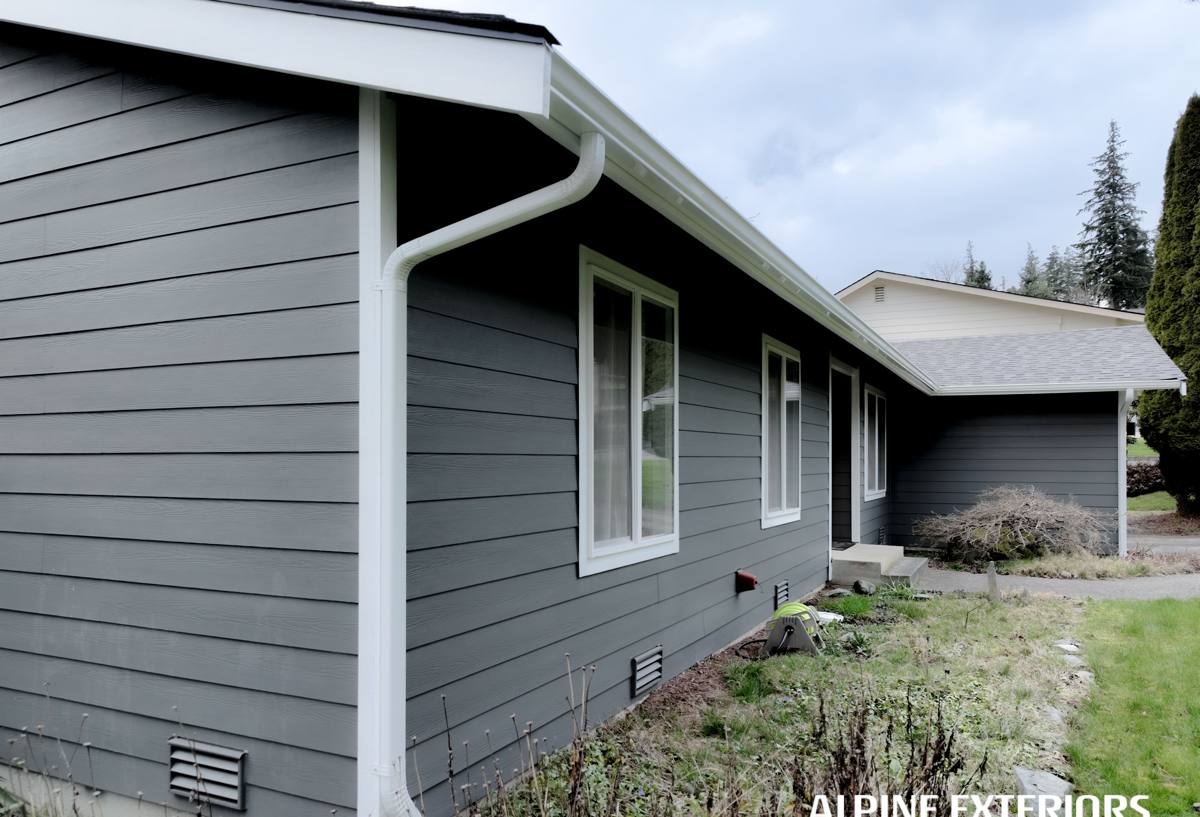
Why Siding Fails Faster Near the Water
Salt Air and Fasteners
Airborne salt doesn't just sit on the surface of your siding — it works into fastener heads, trim joints, and any spot where metal is exposed. Over years, that accelerates corrosion in nails, screws, and flashing that wouldn't wear nearly as fast a few miles inland. Corroded fasteners lose their grip, siding panels loosen, and once a panel is loose, water gets behind it. That's usually when a small cosmetic issue turns into a rot problem.
Driving Rain and Wind
Birch Bay gets its share of storms pushing rain sideways off the water, and siding systems are only as good as their weakest joint when rain is hitting horizontally instead of falling straight down. Lap joints, butt seams, and anything around windows or doors are the first places wind-driven rain finds a way in. Once water gets behind the cladding, the sheathing and framing underneath take the damage — even if the siding itself still looks fine from the driveway.
Moss, Algae, and Trapped Moisture
The long moss season here isn't just an appearance issue. Moss and algae hold moisture against the siding surface for extended periods, which keeps wood-based products wet far longer than they're designed to handle and can quietly break down paint film and substrate underneath. North-facing walls and anything shaded by trees or neighboring structures are usually the first places we find it during an inspection.
Signs Your Point Whitehorn Home Needs Siding Repair
Most siding damage starts small and stays hidden until it isn't. Here's what we tell homeowners to watch for between inspections:
- Soft or spongy spots when you press on the siding, especially near the bottom courses or around windows
- Visible cracking, splitting, or buckled panels
- Paint that's peeling, bubbling, or chalking heavily in one area but not others
- Persistent moss or dark streaking that keeps coming back after cleaning
- Gaps opening up at seams, corners, or trim joints
- Rust streaks below fastener heads or flashing
- Musty smell or discoloration on interior walls that share an exterior wall with a suspect area
- Siding that flexes or feels loose when pushed by hand
Any one of these on its own might be minor. Several together, or anything paired with interior signs like musty smells or staining, usually means water has already gotten past the surface.
What a Correct Repair Actually Involves
A repair that just swaps a damaged board for a new one and calls it done is a repair that's likely to fail again. The board is rarely the actual problem — it's usually a symptom of something behind it. Here's what we check before any repair work happens:
Assessment First
We pull back the damaged area far enough to see the sheathing, framing, and water-resistive barrier underneath. In a salt-air, high-rain environment like Point Whitehorn, we're specifically looking for fastener corrosion, sheathing softness, and any sign that water has been tracking sideways or downward from the original entry point — damage is often bigger than what shows on the surface.
Fixing the Water Path, Not Just the Panel
If flashing is missing, undersized, or installed wrong, we correct it before new siding goes back on. If the water-resistive barrier is torn or improperly lapped, we repair that layer too. Replacing siding over a broken water management system just resets the clock on the same failure.
Matching Materials Correctly
Patchwork siding repair only looks right and performs right when the replacement material matches the existing product's dimensions, profile, and fastening pattern. When we're doing repair work on Hardie fiber cement siding, we use Hardie boards and Hardie-compatible fasteners and flashing details, matched to the existing ColorPlus finish or field-painted to match, so the repair blends in and behaves the same way structurally as the rest of the wall.
Sealing and Finish Work
Correct caulking at joints that require it, correct fastener placement, and a finish that matches the surrounding siding — not a patch that's obviously a patch. In a wet climate, sloppy sealant work is one of the most common causes of repeat leaks.
Repair vs. Replacement: How to Tell Which You Need
Not every problem area needs a full re-side, but there's a point where repair stops making financial sense. Here's how we walk homeowners through that decision:
| Factor | Points Toward Repair | Points Toward Replacement |
|---|---|---|
| Extent of damage | Isolated to one or two areas | Recurring or spread across multiple walls |
| Sheathing condition | Sound, dry, intact | Soft, delaminating, or rotted in multiple spots |
| Siding material | Still manufactured or reasonably matched | Discontinued profile, poor match available |
| Age of existing siding | Well within expected service life | Nearing or past its practical lifespan |
| Underlying cause | One-time event (impact, isolated flashing failure) | Systemic issue (original install defects, chronic moisture) |
We'll always tell you honestly which side of that table your home falls on. A repair that's cheaper today but ignores a systemic problem usually costs more once you count the second and third repairs.
Why We Only Work with James Hardie Fiber Cement
When repair work calls for new material — whether it's a patch, a full wall section, or a decision to move toward replacement — we only install James Hardie fiber cement siding. We don't install vinyl, LP SmartSide, Cemplank, Allura, or primed wood siding, and that's a deliberate standard, not a limitation of what we're capable of installing.
Fiber cement is non-combustible and doesn't feed moss or algae growth the way wood-based siding can, which matters directly in a climate with the moss pressure Birch Bay sees. Hardie's HZ5 product line is engineered for the kind of wet, coastal-adjacent conditions Point Whitehorn deals with, and the factory-applied ColorPlus finish holds up to salt air and UV exposure better than field-applied paint, which means repair patches finished to match hold their color longer too. It also carries a strong transferable warranty when installed to Hardie's specifications — something that matters if you ever sell the home.
We're not going to tell you every other product on the market is worthless — vinyl and engineered wood sidings have their place and their price point. But for the exposure profile out here, we've made the call that Hardie is the only product we're willing to put our name behind, and that standard applies to repair work just as much as full installations.
Our Repair Process
- Inspection. We look at the visible damage and check surrounding areas, fasteners, flashing, and trim for related issues before quoting anything.
- Diagnosis. We identify the actual cause — moisture path, fastener failure, impact damage, or original installation defect — not just the symptom.
- Written scope. You get a clear explanation of what's being repaired, what it involves, and why, along with an honest repair-vs-replace recommendation if the damage warrants that conversation.
- The repair. Damaged material removed, underlying sheathing and water barrier addressed as needed, correct materials installed and finished to match.
- Cleanup and walk-through. We clear debris and walk the repair with you before we consider the job done.
Why It Matters to Hire a Crew That Already Works Point Whitehorn
Point Whitehorn isn't a large service area, but it has real quirks — narrower access on some lots, homes set close to the bluff or shoreline where wind exposure is more severe, and building patterns from different eras that call for different repair approaches. A crew that's already worked this specific stretch of Birch Bay isn't guessing at how salt air, moss, and driving rain interact with a particular home's siding — we've seen the pattern before on the house down the road.
Local familiarity also means we're not learning Whatcom County permitting and code requirements on your project. Repairs that involve structural sheathing or larger sections of wall can trigger requirements that a crew unfamiliar with the county might miss, which can turn into delays or issues down the line if it's not handled correctly the first time.
After the Repair: Keeping It From Happening Again
A good repair should reduce your maintenance burden, not just patch the immediate issue. A few habits make a real difference in this climate:
- Rinse siding periodically to keep salt residue and organic buildup from accumulating, especially on water-facing walls
- Keep gutters clear so overflow isn't running down the siding face
- Trim back vegetation that's shading a wall and keeping it damp longer than it should be
- Do a quick visual check after major storms, particularly around trim, corners, and window flashing
- Address small issues — a loose piece of trim, a hairline gap at a seam — before the next wet season, not after
If you're seeing signs of trouble on your siding, or you just want a second opinion on something you've noticed, we're happy to take a look. We'll give you a straight assessment, a clear explanation of what's causing it, and a free, no-pressure estimate for fixing it right — the form below gets that started.