 Birch Bay Exterior
 Building a Deck That Can Handle Point Roberts
Point Roberts sits out on its own — a peninsula community surrounded by the Salish Sea, reachable only by crossing an international border or coming in by water. That geography is part of what makes it a great place to build outdoor living space. It's also exactly why a deck built here has to work harder than one built twenty miles inland. Salt-laden air off the water, driving rain that comes in sideways during winter storms, and a moss season that seems to stretch longer every year all put steady pressure on wood, fasteners, and finishes.
We build decks throughout Whatcom County, and the decks we build for Point Roberts homeowners get built differently than decks going up in a dry, sheltered yard. This page walks through what that actually means — the materials, the framing details, and the maintenance realities — so you know what to expect and what to ask for.
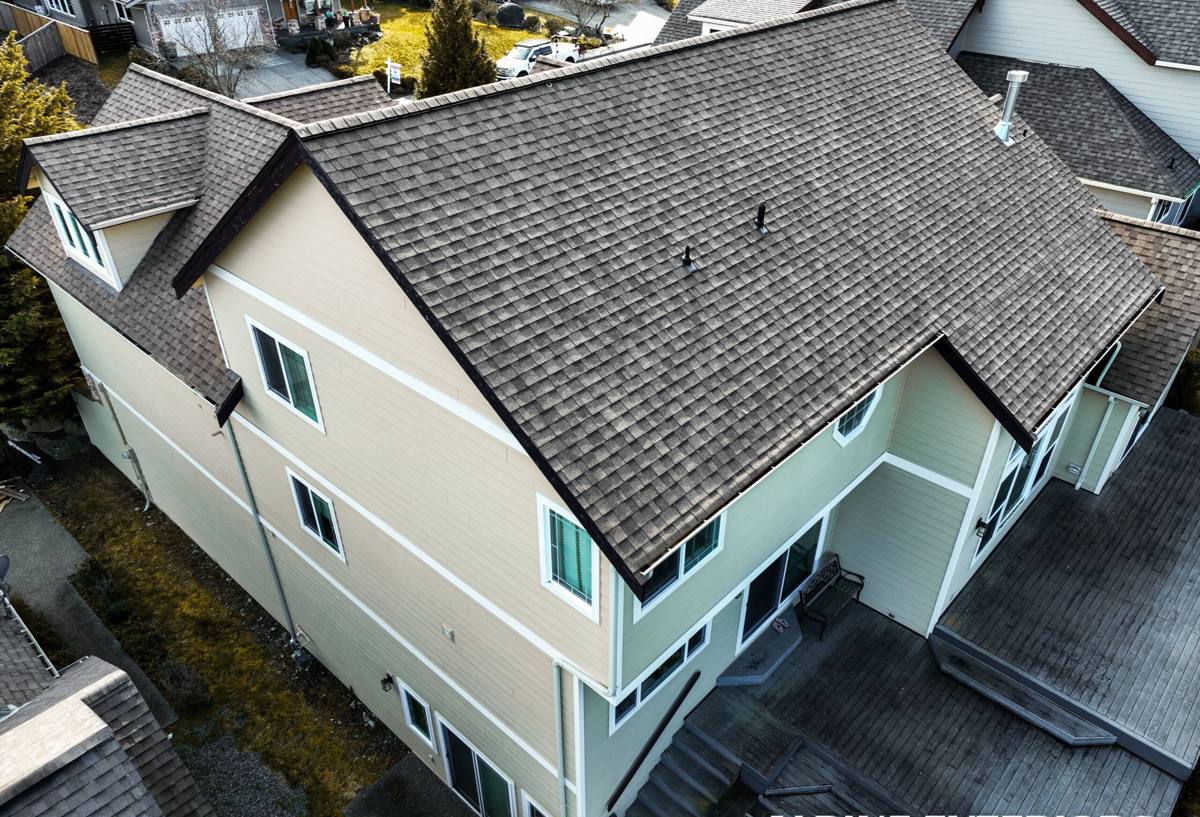
What the Local Climate Does to a Deck Over Time
Salt air is corrosive to anything metal, and it doesn't take a waterfront lot to feel it — moisture carried on the wind reaches decks well back from the shoreline too. Combine that with the region's long stretches of rain and short windows of full sun, and you get surfaces that stay damp longer than they should, wood that never fully dries between storms, and moss and algae that get a head start every fall and don't let go until late spring.
None of this means a deck can't last decades in Point Roberts. It means the deck has to be designed and built assuming those conditions from day one, rather than treated like an afterthought once problems show up.
What "Built Right" Actually Involves
Footings and Framing for Wet Ground
Footings need to be sized and set to local frost depth and soil conditions, not just poured to the minimum a plan set allows. On lots with poor drainage or heavy clay, we pay close attention to how water moves around and under the structure — standing water at the base of a post is one of the fastest ways to shorten a deck's life, long before the decking boards themselves show any wear.
Ledger Attachment and Flashing
The ledger board — where the deck attaches to the house — is the single most common failure point on decks in wet climates, and it's almost always a flashing problem, not a lumber problem. Water finds its way behind an improperly flashed ledger and rots the rim joist or sheathing from the inside, often for years before it's visible. We flash this connection to shed water completely away from the house, every time, regardless of what the original framing looked like.
Joist Protection
Every cut end and every top edge of a joist is a place water can enter untreated wood. We tape or seal joist tops and treat cut ends before decking goes down, which matters a lot more here than it would in a dry climate where lumber gets a chance to dry out between rains.
Choosing a Decking Material for Salt Air and Moss
There's no single "best" decking material — there's a best fit for your budget, your maintenance appetite, and how exposed your lot is to wind and moisture off the water. Here's how the common options actually compare in this climate:
| Material | How it handles salt air & moisture | Moss & algae behavior | Maintenance |
|---|---|---|---|
| Pressure-treated wood | Good if properly sealed and re-sealed on schedule | Prone to moss in shaded, damp areas without upkeep | Annual cleaning and re-sealing |
| Cedar | Naturally rot-resistant but still needs sealing near the water | Similar to pressure-treated; darkens if neglected | Sealing every 1-2 years, periodic cleaning |
| Composite | Handles moisture well; no rot risk in the board itself | Still grows moss/algae on the surface in shade — needs cleaning | Periodic washing, no sealing required |
| PVC / capped polymer | Fully moisture-resistant, best option directly on the water | Surface growth still possible but cleans off easily | Occasional washing only |
We don't push one product on every job. A shaded, tree-covered lot with heavy moss pressure is a different decision than an open, wind-exposed lot near the water. We'll walk your specific site with you and explain the real trade-offs — cost, upkeep, and how each material actually behaves once winter sets in — rather than just recommending whatever's easiest to install.
Fasteners and Hardware: The Detail That Fails First
On a lot of decks that "fail early," it's not the decking or the framing that goes first — it's the hardware. Standard fasteners and connectors corrode faster in salt-laden air, and once a fastener starts to go, it stains the surrounding wood and weakens the connection long before the board itself is a problem. We use fasteners and structural connectors rated for coastal or treated-lumber exposure throughout the frame, not just at a few visible points, because the hardware you can't see is the hardware most likely to let you down first.
Railings, Stairs, and Code Considerations
Railing height, baluster spacing, and stair geometry are governed by the same building code standards across Whatcom County, and we build to those requirements as a baseline, not a ceiling. Beyond code minimums, railing posts and connections near the water benefit from the same corrosion-resistant hardware approach as the deck frame — a railing post is a structural element people lean and push on, and it's not a place to cut corners on fastener quality to save a few dollars.
If your property has any waterfront setback or shoreline-adjacent considerations, that's something we review with you before design work goes final, since it can affect where a deck can sit on the lot.
How the Process Works, Start to Finish
- An on-site visit where we look at grade, drainage, sun/shade exposure, and how the deck will connect to the house.
- A straightforward proposal covering material options, structural approach, and a clear price — no vague allowances buried in the fine print.
- Permitting and engineering as required, handled before framing starts, not worked around after the fact.
- Framing with attention to ledger flashing, footing depth, and joist protection as described above.
- Decking, railing, and stair installation, followed by a final walkthrough with you before we consider the job done.
Because we already work regularly in Point Roberts, we plan around the realities of getting crews and materials there efficiently, so scheduling doesn't turn into a moving target partway through the job.
Living With the Deck: Moss and Ongoing Maintenance
Even a well-built deck needs some seasonal attention in this climate — the goal of good construction is to reduce that burden, not eliminate it entirely. A simple annual routine goes a long way:
- Clear leaves and debris from between boards and along the edges before fall rains set in, so moisture doesn't sit trapped.
- Rinse or gently scrub shaded, north-facing areas where moss and algae take hold first.
- Check railing posts and stair connections for movement or corrosion staining once a year.
- Re-seal wood decking on the schedule appropriate to the product — don't wait until it's visibly gray and dry.
- Confirm gutters and downspouts near the deck aren't dumping extra water onto or under the structure.
Skipping this routine doesn't cause sudden failure, but it does compress a 20-plus-year deck into something closer to 10, especially on shaded lots or those closest to the water.
Cost Factors Worth Understanding Up Front
Every deck project is different, but a few factors consistently move the price more than homeowners expect:
| Factor | Why it matters here |
|---|---|
| Decking material choice | Composite and PVC cost more up front but reduce long-term upkeep in this climate |
| Height and footing depth | Sloped or uneven Point Roberts lots often need more substantial footings and framing |
| Ledger and flashing detail | Doing this correctly takes more time than a quick reattachment, but it's the single biggest factor in long-term durability |
| Hardware and fastener grade | Coastal-rated fasteners cost more per piece but are cheap insurance against early corrosion |
| Railing and stair complexity | Multiple levels, custom railing styles, or steep grade changes add labor |
Why Hire a Crew That Already Works in Point Roberts
Point Roberts' geography makes it easy for outside contractors to underbid a job without fully accounting for what it actually takes to work there consistently — travel, scheduling, and material logistics all look different than a job five minutes off the highway. A crew that already builds in this community has already worked through those logistics, and more importantly, already understands how salt air, driving rain, and moss actually behave on decks in this specific location, not just in general Pacific Northwest terms.
That local track record shows up in the details: where we flash a ledger, which fasteners we spec by default, and how we talk you through material choices for your specific lot. It's the difference between a deck built to a generic spec sheet and one built for the place it actually sits.
If you're planning a new deck or replacing one that hasn't held up the way it should, we're happy to walk the site with you and put together a clear, honest estimate — no pressure, no obligation. Use the form below to get started.