 Birch Bay Exterior
 Siding Replacement Built for Nooksack's Climate
Nooksack sits in the Nooksack River valley in Whatcom County, surrounded by farmland, timber, and a lot of standing moisture. Homes here don't get hit with ocean surf, but they do sit inside a genuinely wet, marine-influenced climate that moves inland off the Salish Sea and settles into the valley for days at a time. Add tree cover, low winter sun angles, and long stretches where siding simply doesn't dry out between storms, and you get a specific set of problems: swelling at the bottom courses, moss and algae staining on north- and west-facing walls, and paint that fails years before it should on lower-grade materials.
Siding replacement in this area isn't just a cosmetic upgrade. It's a chance to fix whatever let moisture in the first time, and to put a product on the wall that's actually engineered for a wet, moss-prone climate instead of one that's just priced to sell.
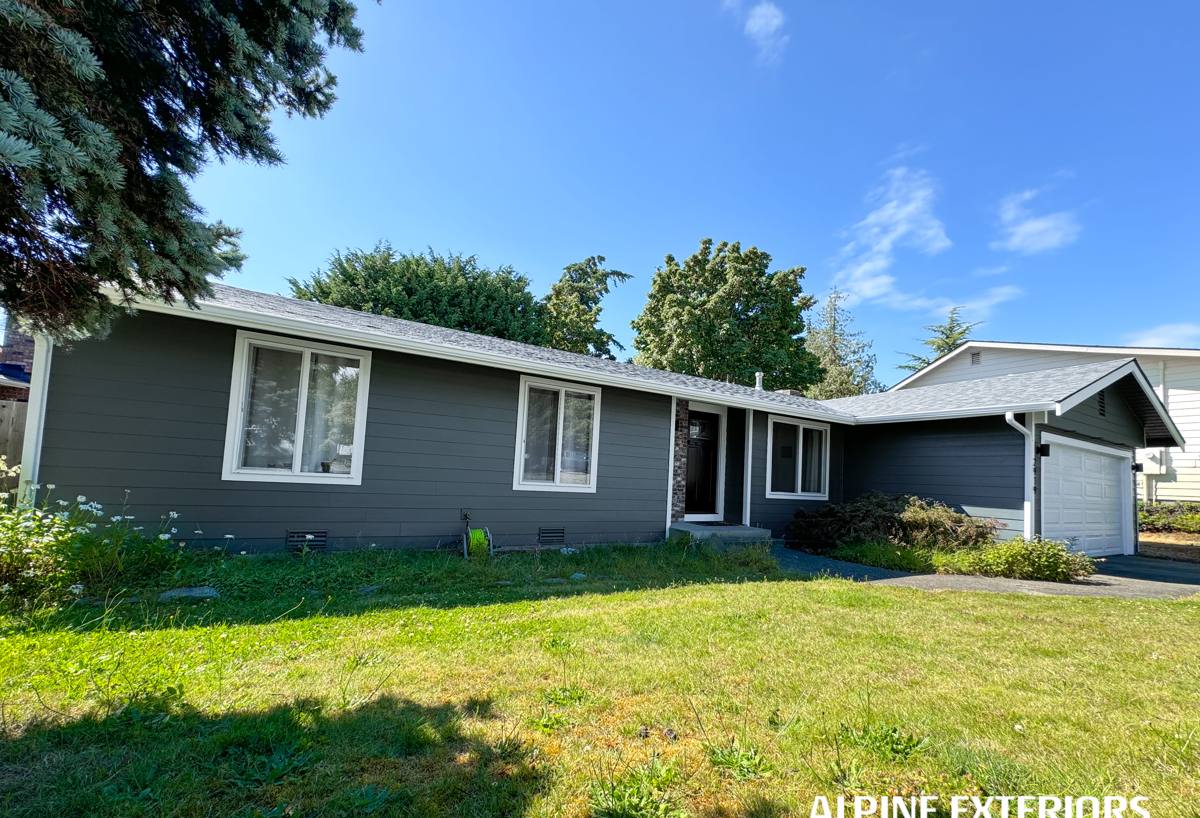
Signs a Nooksack Home Needs Siding Replaced, Not Patched
Not every siding problem calls for a full tear-off. But a few signs mean patching is just delaying the real fix:
- Soft or spongy spots when you press on the siding, especially near the bottom few feet of a wall
- Paint that's peeling, bubbling, or chalking heavily within just a few years of the last paint job
- Persistent green or black staining that comes right back weeks after cleaning
- Visible gaps, warping, or cupped boards, particularly on walls that get the least sun
- Siding that was installed tight to grade, a deck, or a patio with no visible drainage gap
- Interior signs like musty smells, peeling interior paint, or soft drywall on an exterior wall
- Siding older than 20-25 years that's never had a full replacement, only spot repairs
If you're seeing two or more of these at once, it's usually a sign that moisture has been getting behind the siding for a while, not just sitting on top of it.
What a Correct Siding Replacement Actually Involves
A siding replacement is only as good as what happens after the old siding comes off and before the new siding goes up. In a climate like Whatcom County's, that in-between step matters more than the finish color.
Tear-Off and Inspection
Once the old siding is off, the sheathing underneath gets inspected for rot, soft spots, or water staining — especially around old window flashing, deck ledger boards, and anywhere the original installation ran siding too close to the ground. Any damaged sheathing gets replaced before anything else happens. Skipping this step is the single most common reason a "new" siding job fails early.
Weather-Resistive Barrier and Flashing
A new weather-resistive barrier (WRB) goes over the sheathing, lapped correctly from bottom to top so water sheds outward instead of working its way in. Every window, door, and penetration gets flashed and integrated into that barrier in the right order — flashing under the WRB at the top, over it at the bottom. This is the layer that actually keeps a house dry; the siding itself is really the second line of defense, not the first.
Rainscreen Gap and Drainage
Especially with fiber cement, a drainage gap behind the siding gives bulk water somewhere to go and lets the wall assembly dry out between the rainy stretches that are routine here. Homes that skip this detail tend to hold moisture longer against the sheathing, which is exactly what feeds rot and mold in a climate that doesn't offer many dry weeks in a row.
Installation to Manufacturer Spec
Correct fastener spacing, proper clearance from grade, decks, and roof lines, and factory-specified overlaps aren't optional details — they're what the product's warranty is actually built around. A beautiful-looking install that ignores these specs can still fail behind the wall.
Why We Install Only James Hardie Fiber Cement
We get asked why we don't offer vinyl, LP SmartSide, or cedar as options. The honest answer is that we stopped installing them because we were tired of watching homeowners in this climate deal with the same problems a few years later — and we didn't want our name on that outcome.
Non-Combustible, Not Just Weather-Resistant
James Hardie fiber cement is made primarily from cement, sand, and cellulose fiber. It doesn't burn, doesn't feed pests, and doesn't swell the way wood-based products can when they take on moisture over and over.
ColorPlus Factory Finish
Hardie's ColorPlus finish is baked on at the factory under controlled conditions, which gives it better fade and chip resistance than field-applied paint. In a valley climate where UV exposure and constant damp cycles are both working against a finish, that factory-cured coating holds up longer than most site-applied paint jobs.
Climate-Engineered HZ Product Lines
Hardie builds its HZ5 product line specifically for climates with more freeze-thaw cycling and moisture exposure — which describes Whatcom County's winters reasonably well. It's not a one-size-fits-all product; it's formulated for the conditions it's actually going on.
Warranty That Transfers
Hardie backs its siding with a long, transferable non-prorated warranty on the substrate, which matters both for a homeowner planning to stay long-term and for resale value if the home ever sells.
How Hardie Compares to What We Used to Install
| Material | Moisture Behavior | Maintenance | Fire Performance | Typical Lifespan |
|---|---|---|---|---|
| James Hardie Fiber Cement | Dimensionally stable, resists swelling | Occasional wash, repaint on a long cycle | Non-combustible | 30+ years with correct install |
| Vinyl Siding | Doesn't rot, but can warp/buckle in heat and gap over time | Low, but color fades and can't be repainted easily | Melts/deforms in heat | 20-30 years, color fade earlier |
| LP SmartSide (engineered wood) | Treated but still wood-based; vulnerable at cut edges and seams | Regular caulk/paint upkeep at joints | Combustible | 25-30 years if maintained closely |
| Cedar / Primed Spruce | Natural material; absorbs and releases moisture constantly | High — regular staining/painting and sealing | Combustible | Varies widely, shorter in wet climates |
Every one of these products has a legitimate use case somewhere. In a valley climate with long wet stretches and heavy tree cover, the trade-offs on the wood-based and vinyl options are the ones we weren't willing to keep signing our name to.
What Drives the Cost of a Nooksack Siding Replacement
| Factor | Why It Matters |
|---|---|
| Home size and number of stories | More surface area and taller walls mean more material and labor, plus added scaffolding for multi-story sections |
| Condition of the sheathing underneath | Rot or water damage found during tear-off adds repair work before new siding can go on |
| Trim, corners, and architectural detail | Homes with more windows, dormers, and trim lines take more time to flash and finish correctly |
| Siding profile chosen | Lap siding, shingle-style panels, and vertical board-and-batten carry different material and labor costs |
| Access and site conditions | Landscaping, fencing, decks, and tight lot lines can slow tear-off and staging |
We don't publish flat per-square-foot pricing because these factors genuinely change the number from one house to the next. A walk-through gives a far more accurate number than any online calculator.
Our Process, Start to Finish
- On-site evaluation — we look at the existing siding, check for moisture entry points, and assess the sheathing where we can without demo.
- Written estimate — a clear scope covering tear-off, sheathing repair contingencies, WRB and flashing detail, and the Hardie product and color selected.
- Tear-off and inspection — old siding comes off, sheathing gets checked, and any rot is documented and repaired.
- Weather barrier and flashing — WRB installed and lapped correctly, with every window, door, and penetration flashed before siding goes up.
- Hardie installation — installed to manufacturer spec on fastener spacing, clearances, and overlaps, protecting the warranty.
- Final walkthrough — we go over the finished job with you before calling it done.
Why It Matters That We Already Work in Nooksack and Whatcom County
A crew that's replaced siding on homes throughout Whatcom County already knows what this valley does to a wall assembly — where moss builds up fastest, which wall orientations stay damp the longest, and how much drainage detail actually matters versus how much is overkill. That's different from a crew learning the local climate on your project. It shows up in small decisions: how tight to run clearances at grade, how much drainage gap to build in, and which trim details actually need extra flashing versus which don't.
It also means straightforward logistics — material delivery, scheduling around the region's wetter stretches, and being reachable if a question comes up after the job is done.
Caring for Hardie Siding After Installation
One advantage of switching to fiber cement is how little upkeep it actually needs compared to what came before it. A rinse with a garden hose once or twice a year keeps moss and pollen from building up, especially on shaded walls. Keep gutters clear so water isn't sheeting down the siding face, and keep an eye on the ground-level clearance if landscaping, mulch, or a deck gets added later — burying the bottom edge of any siding defeats the drainage work done during installation. Beyond that, Hardie's factory finish is built to go a long time before it needs attention again.
If your Nooksack home is showing signs of moisture damage, aging siding, or you're simply ready to stop patching and do it right, we're happy to take a look and put together a free, no-pressure estimate. There's a form below — reach out and we'll get a time on the calendar.