 Birch Bay Exterior
 Siding That Has to Work for Nooksack's Weather, Not Just Look Good on Day One
Nooksack sits inland from the open water, but that doesn't mean the house next door is dealing with a different climate than the rest of Whatcom County. Marine air still pushes through, rain still sits on the landscape for months at a time, and the combination of moisture and shade that so many Whatcom County lots have is exactly what moss, algae, and slow-rotting wood trim thrive on. Add in the salt-laden air that drifts off the Salish Sea and settles across the region, and you've got a set of conditions that will find every weakness in a siding system within a few winters.
We install fiber cement siding across this whole area, and what we've learned doing it street by street is that "good siding" and "siding that's correct for Whatcom County" aren't always the same product. A siding line that performs fine in a dry inland climate can fail early here — not catastrophically, but in the slow, expensive ways that cost homeowners repaint jobs, rot repairs, and early replacement. This page is about what actually holds up on a Nooksack home and how we approach the job so it stays looking right for decades, not just for the first few dry summers.
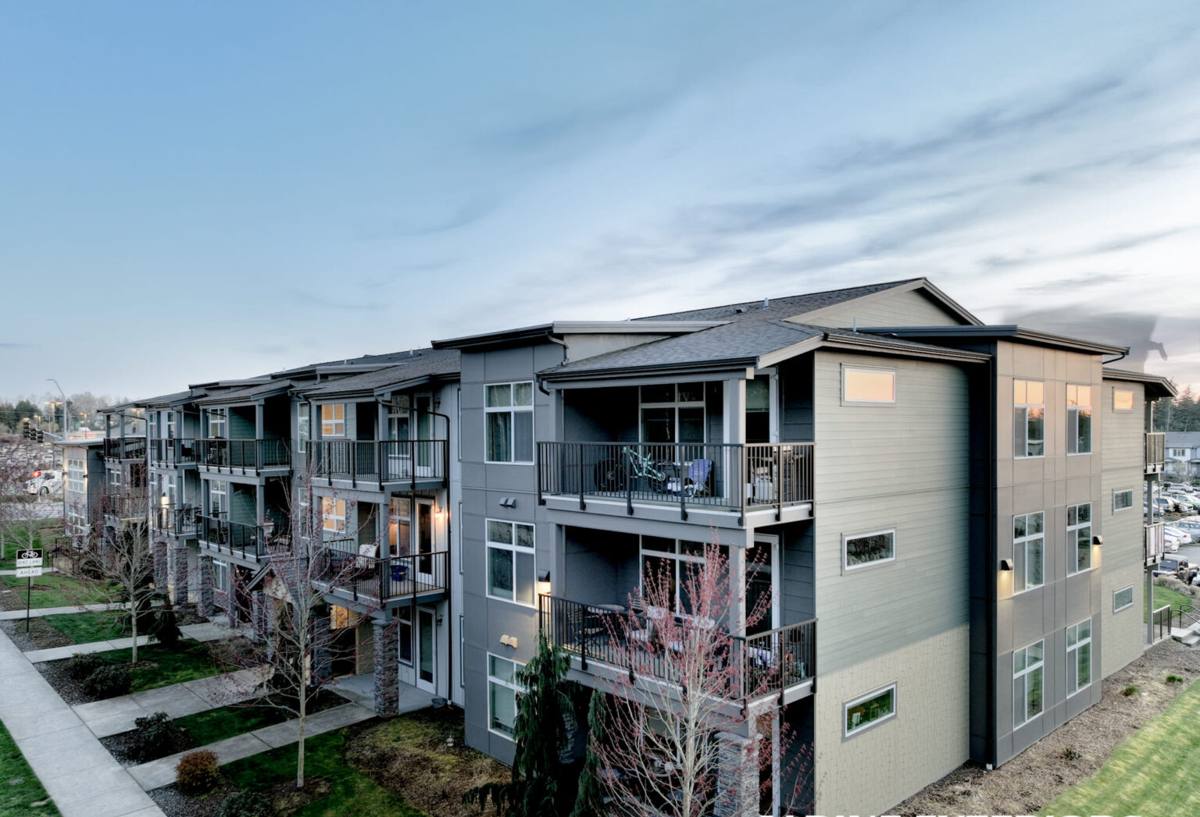
What Birch Bay-Area Homes Are Actually Up Against
Salt Air and Driving Rain
Salt-laden moisture is corrosive to metal fasteners and hard on paint films over time, and it doesn't stay confined to waterfront lots — prevailing winds carry it well inland across Whatcom County. Combine that with driving, wind-blown rain that hits siding at an angle instead of falling straight down, and you get moisture forced into seams, laps, and fastener penetrations that a calmer climate would never test.
The Long Moss Season
Whatcom County's moss season isn't a few weeks in spring — on shaded north faces and under tree canopy, it's close to year-round. Moss and algae hold moisture against the surface of siding, which accelerates paint failure on wood and composite products and can trap water against fastener heads. Siding that isn't dimensionally stable, or that swells and shrinks with moisture cycling, opens tiny gaps that moss spores exploit almost immediately.
Freeze-Thaw and Moisture Cycling
Whatcom County doesn't get brutal winters, but it does get repeated cycles of saturation, cold snaps, and thaw. Materials that absorb water are the ones that suffer — swelling, checking, and delaminating a little more with every cycle until the damage becomes visible.
Why We Standardized on James Hardie for This Climate
We only install James Hardie fiber cement siding — not LP SmartSide, not vinyl, not Cemplank or Allura, not primed spruce or cedar. That's not a marketing position; it's a decision we made after seeing how different materials actually age in this exact climate.
- Non-combustible core: Hardie's fiber cement composition doesn't feed a fire the way wood-based or engineered-wood siding can.
- Moisture-resistant by composition: Fiber cement doesn't absorb and swell the way wood-based composite sidings do, which matters directly in a climate defined by driving rain and long wet seasons.
- ColorPlus factory finish: A baked-on finish applied under controlled conditions holds color and resists fading and moisture intrusion far better than field-applied paint, especially on a home that's going to sit under salt air and shade for years between repaints.
- HZ5 engineering: Hardie's HZ product lines are engineered for specific climate zones, including the moisture and freeze-thaw conditions typical of the Pacific Northwest.
- Transferable warranty: A strong, transferable warranty backing the product matters on a coastal-influenced climate where failures tend to show up slowly, not suddenly.
We're not going to tell you every other product is junk — some of them have real strengths in the right climate. But we've made a professional call: in Whatcom County's salt air, rain, and moss conditions, the trade-offs of other materials (moisture absorption, field-finish maintenance, warranty structure) aren't worth the upfront savings. Hardie is what we put on our own reputation, project after project.
What a Correct Fiber Cement Installation Actually Involves
Fiber cement siding is only as good as its installation. Most of the failures we get called out to fix — cracking at butt joints, water staining at the bottom courses, paint peeling around fasteners — trace back to installation shortcuts, not the material itself.
Weather-Resistive Barrier and Rainscreen Detailing
Given how much wind-driven rain this region sees, we don't just staple up house wrap and call it done. Proper flashing at every window, door, and penetration, and a drainage plane that lets any moisture that does get behind the siding find its way back out, is non-negotiable here.
Fastener Placement and Clearances
Hardie specifies exact fastener spacing, minimum clearances from grade, decks, and roof lines, and correct nail penetration into framing. Skipping these is the single most common cause of early failure we see on fiber cement jobs that weren't installed by trained crews.
Caulking and Joint Treatment
Butt joints and trim transitions need the right sealant, applied correctly, or they become the first place moss gets a foothold and the first place water gets in behind the panel.
Ventilation Behind the Cladding
In a climate this damp, giving moisture a path to escape matters as much as keeping it out in the first place. Correct furring and ventilation detailing keeps humidity from being trapped against the substrate.
Our Process on a Nooksack-Area Project
- On-site assessment: We look at sun exposure, tree canopy, drainage patterns, and existing moisture damage before we quote anything.
- Tear-off and substrate check: We remove the old siding and inspect sheathing for hidden rot, especially at low corners and under old trim, since Whatcom County moisture tends to find and hide damage in these spots.
- Repair before re-cover: Any compromised sheathing or framing gets repaired — we don't cover over rot.
- Weather barrier and flashing: New house wrap, flashing, and drainage detailing installed to current best practice, not just code minimum.
- Hardie installation to spec: Fastener spacing, clearances, and joint treatment done to James Hardie's published installation requirements.
- Final inspection and walkthrough: We review the finished work with the homeowner before calling the job done.
Why It Matters That We Already Work This Area
A crew that installs siding across Whatcom County day in and day out knows what a Nooksack-area home is dealing with before they even climb the ladder — which sides of a house take the worst wind-driven rain, where moss builds up fastest, where salt-influenced air does the most damage to fasteners and trim over time. That local pattern recognition changes decisions on the job: where to add extra flashing attention, which details to double-check, which shortcuts simply don't hold up here even if they'd be fine somewhere drier.
It also means straightforward, honest conversations about your specific property — sun exposure, tree cover, how exposed the house is to wind — instead of a generic siding pitch that ignores the climate it's going into.
Comparing What Homeowners in This Climate Actually Weigh
| Factor | What It Means Locally | Why It Matters Here |
|---|---|---|
| Moisture absorption | How much a material swells or wicks water | Constant rain and humidity punish absorptive materials fastest |
| Finish durability | Factory-baked vs. field-applied paint | Salt air and moss shorten the life of field-applied paint jobs |
| Fire resistance | Combustible vs. non-combustible cladding | An added layer of protection regardless of climate |
| Warranty structure | Transferable, long-term coverage | Protects resale value on homes that will see multiple owners |
| Installation sensitivity | How much correct install matters to lifespan | Wind-driven rain exposes installation shortcuts fast |
Signs Existing Siding Is Losing the Battle
- Moss or dark streaking that returns within a season of cleaning
- Soft or spongy spots near the bottom courses or under windows
- Paint that's peeling, bubbling, or chalking faster than it should
- Visible gaps or separation at butt joints and trim
- Rust staining running down from fastener heads
- Warping, cupping, or swelling along panel edges
Any of these are worth a professional look before they turn into sheathing or framing repairs.
Ready to Talk About Your Home?
If you're weighing a siding replacement in Nooksack or anywhere else in the Birch Bay Exterior Co service area, we're happy to take a look at your specific house, its exposure, and what it actually needs — no pressure, no generic sales pitch. Request a free estimate using the form below and we'll walk the property with you.