 Birch Bay Exterior
 Why Custer Roofs Wear Differently Than Roofs Inland
Custer sits close enough to the Strait of Georgia and Birch Bay that salt-laden air is a constant, low-grade presence on every exterior surface, including the roof. Add Whatcom County's long wet season, frequent driving rain off the water, and the shaded, moisture-holding conditions that let moss take hold for much of the year, and you get a roofing environment that's genuinely harder on materials than what a roof sees twenty or thirty miles inland. A new roof installed here needs to be specified and installed with those specific stresses in mind, not just built to a generic code minimum.
This page is about one thing: installing a new roof on a home in Custer, done correctly for this climate, by a crew that works this area regularly.
What Salt Air, Rain, and Moss Actually Do to a Roof
Salt Air and Metal Components
Airborne salt accelerates corrosion on any exposed metal — flashing, fasteners, vents, and drip edge. Lower-grade fasteners or flashing that would hold up fine in a dry inland climate can start showing rust streaks and early degradation within a few years near Birch Bay and Custer. This is one of the most overlooked failure points on roofs in this area, because the shingles themselves may still look fine while the metal underneath is failing.
Driving Rain
Rain that comes in at an angle off the water tests every lap, seam, and penetration on a roof far more than rain falling straight down. Underlayment quality, proper shingle nailing patterns, and correctly lapped flashing around chimneys, skylights, and wall intersections matter more here than in calmer climates, because wind-driven rain will find any gap that a straight-down rain would never reach.
Moss and Sustained Moisture
Whatcom County's mild, wet winters and the shade from mature trees common around Custer properties create ideal conditions for moss growth on north-facing and shaded roof slopes. Moss isn't just cosmetic — it holds moisture against the roofing material, lifts shingle edges as it grows, and can work its way under tabs and flashing over time, shortening the life of an otherwise sound roof.
What a Correct New Roof Installation Involves
A new roof is more than laying shingles over a deck. Done right, it's a system where every layer supports the next one. For a Custer home, the layers that matter most are:
- A sound, properly fastened roof deck — any soft or delaminated sheathing gets replaced, not covered over
- Ice-and-water shield or a comparable self-adhering membrane at eaves, valleys, and penetrations, where wind-driven rain and moss-related moisture concentrate
- A full synthetic or felt underlayment across the whole roof, not just the vulnerable spots
- Corrosion-resistant flashing and fasteners suited to a coastal-influenced climate, not the cheapest code-minimum option
- Balanced intake and exhaust ventilation so the attic can dry out between wet stretches
- Correctly lapped step and counter-flashing at every wall intersection and chimney
- A roofing material matched to the home's slope, exposure, and shade pattern
Skipping or shortcutting any one of these is usually invisible on installation day and expensive five to ten years later.
Choosing a Roofing Material for Custer's Conditions
There's no single "best" roofing material for every home — the right choice depends on your roof's slope, how much shade it gets, and your budget. Here's an honest comparison of the main options we install, weighed specifically against Custer's salt air, rain, and moss exposure.
| Material | How It Handles This Climate | Maintenance Reality |
|---|---|---|
| Architectural asphalt shingles | Good all-around performance; algae-resistant (AR) shingles help slow moss and moisture staining on shaded slopes | Periodic moss removal on shaded sections; typical 25-30 year rated products |
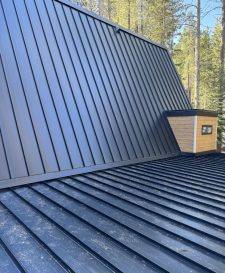
| Standing seam metal | Sheds driving rain very effectively and holds up well to moisture; needs marine-grade or coated fasteners and flashing near the coast | Low maintenance once installed correctly; installation quality matters more than with shingles |
| Composite/synthetic shingle or shake | Resists moisture absorption better than wood; performs well in shaded, damp areas | Moderate; less prone to moss than natural wood shake |
| Cedar shake | Traditional look but holds moisture and is more susceptible to moss and rot in shaded, wet conditions common around Custer | Higher maintenance; we'll walk you through the trade-offs honestly before you commit |
We don't push one product on every roof. We'll look at your home's actual exposure — how much shade it gets, which slopes face the weather, how the last roof performed — and recommend what fits.
Our Installation Process
1. On-Site Assessment
We inspect the existing roof, deck condition, ventilation, and any problem areas (moss buildup, flashing corrosion, past leak history) before quoting anything. This tells us what the roof actually needs, not just its square footage.
2. Tear-Off and Deck Inspection
Old roofing comes off down to the deck so we can see the actual condition of the sheathing. Any water-damaged or soft decking is identified and replaced — this is called out clearly, not buried in the invoice.
3. Underlayment and Flashing
Self-adhering membrane goes in at eaves, valleys, and penetrations, followed by full underlayment coverage. New flashing is installed at every wall, chimney, and vent penetration using fasteners suited to salt-air exposure.
4. Ventilation Check
We confirm intake and exhaust ventilation is balanced for the attic space. This is a small step that has an outsized effect on how long a roof lasts in a wet climate, since a poorly ventilated attic traps moisture that works against the roof from underneath.
5. Roofing Material Installation
Shingles, metal panels, or composite material are installed to manufacturer specification, with attention to nailing patterns and exposure lines that matter more under driving rain conditions.
6. Final Walkthrough
We walk the finished roof with you, review what was done, and go over any maintenance recommendations specific to your home's shade and exposure pattern.
Ventilation and Moisture: The Part Homeowners Don't See
A lot of roof problems in this region don't start with the roofing material at all — they start with trapped moisture in the attic. In a climate with as much sustained dampness as Whatcom County sees, a roof that looks fine from the ground can be failing from underneath if intake and exhaust airflow isn't balanced. Part of a correct new roof installation is making sure ridge vents, soffit vents, or other intake/exhaust points are sized and positioned correctly for your attic, not just reused from the old roof by default.
Why Hiring a Crew That Already Works in Custer Matters
A roofing crew that works Birch Bay, Custer, and the surrounding Whatcom County coastline regularly already knows which slopes on which types of homes tend to hold moss, which flashing details fail first under wind-driven rain, and which fastener and flashing grades actually hold up to salt air over time rather than just meeting minimum code. That's the kind of knowledge that doesn't come from a spec sheet — it comes from seeing how roofs in this specific area age. It also means we're a known, reachable local business if you ever have a question about your roof after installation, not a crew that drove in from out of the area for one job.
Permits, Timeline, and What to Expect
Most new roof installations in Whatcom County require a building permit, which we handle as part of the project. Timeline depends on roof size, complexity, and weather — Custer's rain patterns mean we watch forecasts closely and schedule tear-off in windows where we can get the deck covered and underlayment on before weather moves in. We'll give you a realistic timeline before work starts, and we'll communicate clearly if weather pushes the schedule, rather than leaving a roof exposed and hoping for the best.
Before we finish, here's a quick checklist of what you should expect from any new roof installation on a Custer home:
- A written scope that names the underlayment, flashing, and ventilation approach — not just "new roof" as a line item
- Deck condition disclosed and priced separately from the base roofing job
- Corrosion-resistant fasteners and flashing specified for coastal exposure
- A ventilation check as part of the scope, not an afterthought
- A clear manufacturer and workmanship warranty explanation before you sign
Ready to Talk About Your Roof?
If your roof is showing moss, aging flashing, or you're simply planning ahead for a home in Custer, we're happy to take a look and give you a straight assessment — no pressure, no upsell. Use the form below to request a free estimate.