 Birch Bay Exterior
 Why Siding Wears Out Faster in Marietta
Marietta sits close enough to the water that homes here deal with a different set of stresses than siding inland in Whatcom County. Salt-laden air off the bay works its way into seams, fasteners, and paint film over time. Driving rain off winter storms pushes water sideways into laps and trim, not just straight down. And the long, damp stretch from fall through spring gives moss and algae months to take hold on anything that stays shaded and wet. None of this is dramatic on its own, but stacked year after year, it's exactly the kind of slow attrition that ages siding well before it should be replaced.
Older siding materials — old cedar, primed spruce, early-generation vinyl — were rarely engineered with this specific combination of salt exposure and moisture load in mind. When we're called out to look at failing siding in this area, the damage almost always traces back to the same three things: water getting behind the siding at a seam or penetration, moisture sitting against wood-based material long enough to soften it, or fasteners and trim corroding faster than the siding itself.
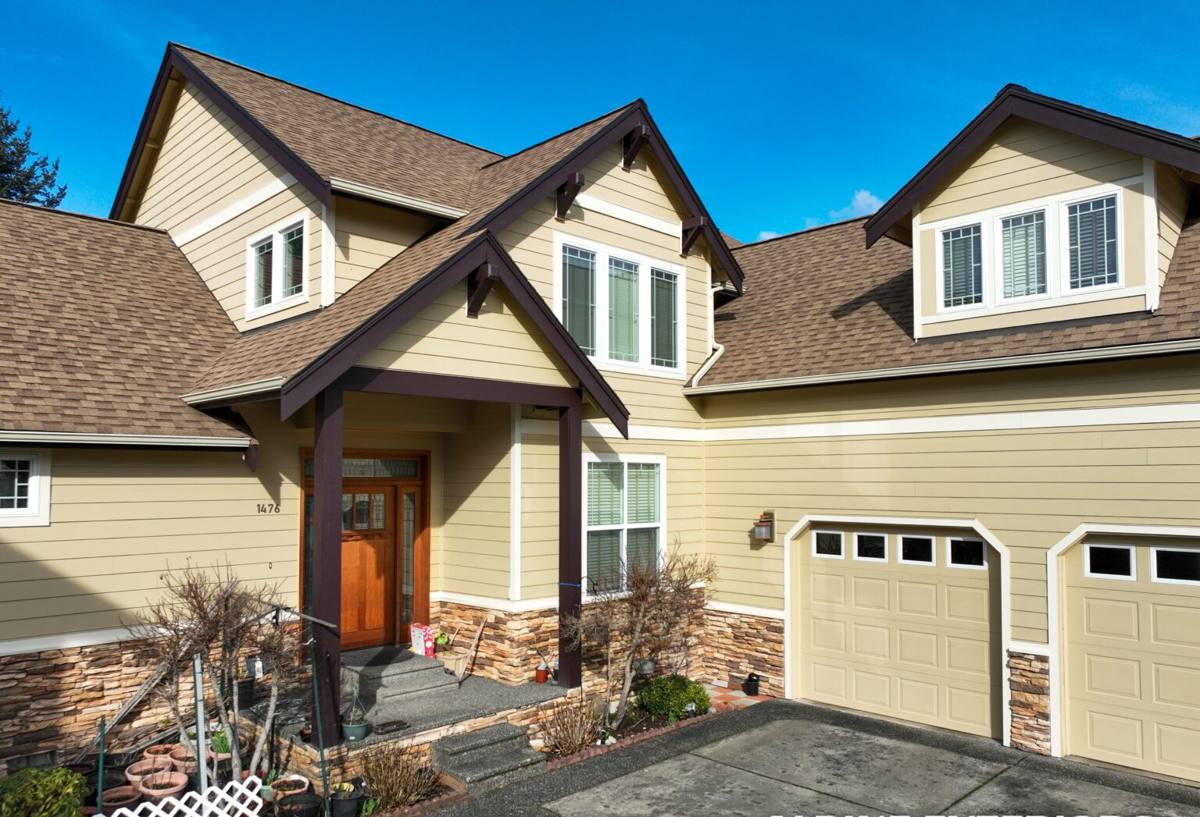
Signs a Marietta Home Needs Siding Replacement
Not every siding problem means a full replacement — sometimes it's a repair, sometimes it's a caulking and paint refresh. But certain signs point to the siding itself being past the point where patching makes sense.
- Soft, spongy, or crumbling spots when you press on the siding, especially near the bottom courses and around windows
- Paint that keeps failing within a couple years no matter how well it's prepped, often a sign moisture is trapped underneath
- Visible warping, cupping, or gaps opening up between boards
- Persistent moss or dark streaking on north- and west-facing walls that comes back soon after cleaning
- Rust staining or corroded fasteners bleeding through the paint
- Rot or discoloration in the sheathing visible when a piece of siding is removed or has already fallen away
- Rising energy bills alongside drafts near exterior walls, suggesting the water-resistive barrier behind the siding has failed
If you're seeing two or three of these at once, it's usually a sign the whole wall assembly — not just the visible siding — needs attention.
What a Correct Siding Replacement Actually Involves
Tear-Off and Inspection
The old siding comes off entirely, not just in the visibly bad spots. This is the point where we find out what's really going on underneath — soft sheathing, missing or degraded weather barrier, old flashing that was never installed correctly in the first place. Any damaged sheathing gets cut out and replaced before anything new goes up. Skipping this step is the single most common reason a "new" siding job fails again within a few years.
Weather-Resistive Barrier and Flashing
Given how much wind-driven rain this area sees, the barrier behind the siding matters as much as the siding itself. We install a continuous weather-resistive barrier and integrate flashing at every window, door, deck ledger, and penetration so water that does get past the siding has a clear path back out — not a place to collect. This is also where clearances matter: proper gaps at grade, roof lines, and decks keep splashback and standing moisture away from the bottom edge of the siding, which is the area that fails first on homes near the water.
Installation to Manufacturer Spec
Fastener type, spacing, and placement all follow the manufacturer's published requirements for this climate — not a generic pattern. Butt joints get flashed or backed properly, corners and trim are detailed to shed water rather than trap it, and factory-finished pieces are field-cut and touched up the way the manufacturer specifies so the finish holds up rather than peeling at the cut edges.
Caulking, Trim, and Finish Details
The last mile of a siding job is often where corners get cut. Correct caulk selection (matched to the siding manufacturer's recommendations, not whatever's cheapest), properly primed and sealed cut edges, and trim that's detailed to shed water rather than collect it are what separate a job that looks good at handoff from one that still looks good in ten years.
Why We Install Only James Hardie Fiber Cement
We don't install vinyl, LP SmartSide, Cemplank, Allura, primed spruce, or cedar. That's a deliberate standard, not a limitation we work around. Fiber cement from James Hardie is engineered specifically for climates like this one, and for a coastal, moss-prone stretch like Marietta, the differences aren't cosmetic.
James Hardie's HZ10 product line is formulated for wetter, more humid climates — the Pacific Northwest is squarely what it's built for. Fiber cement doesn't feed mold or rot the way wood-based products can, and it holds paint and factory finish far better than wood over the long run because it doesn't expand and contract with moisture the same way. It's also non-combustible, which matters for insurance and peace of mind regardless of climate. The factory-applied ColorPlus finish is baked on under controlled conditions and backed by its own finish warranty, so you're not relying on a field-applied coat of paint to be the only thing standing between the material and the weather.
None of this means fiber cement is maintenance-free — it still needs to be installed correctly and occasionally cleaned and recaulked like any exterior product. But it starts from a materially better position against salt air, driving rain, and moss than the alternatives, which is why it's the only product we put on homes.
Comparing Siding Options for This Climate
| Material | Moisture Behavior | Salt Air / Coastal Fit | Long-Term Finish |
|---|---|---|---|
| James Hardie fiber cement | Doesn't rot or feed mold; stable dimensionally | Engineered HZ10 line for wet coastal climates | Factory ColorPlus finish, warrantied |
| Vinyl | Doesn't rot, but can warp/crack with temperature swings | Fasteners and seams still vulnerable to salt corrosion | Color is through the material but fades and chalks over time |
| Primed spruce / cedar | Absorbs moisture; prone to rot without diligent upkeep | Salt air accelerates finish breakdown | Field-applied paint requires frequent recoating |
| LP SmartSide (engineered wood) | Treated to resist moisture, but edges are moisture-sensitive if not sealed correctly | Cut edges and seams need diligent maintenance near salt exposure | Factory finish available, but wood-based core remains moisture-sensitive |
Choosing the Right Hardie Profile
James Hardie makes several product lines, and the right one depends on the home's style and exposure, not just personal taste.
HardiePlank Lap Siding
The most common choice for traditional home styles — available in multiple textures and exposure widths. This is usually our default recommendation for straightforward replacements.
HardiePanel Vertical Siding
Used for a more modern look or as an accent alongside lap siding, often paired with board-and-batten trim.
HardieShingle
A shaped-shingle profile for homes going for a coastal or craftsman look without the maintenance burden of real wood shingles, which are especially prone to moss in a climate like this one.
HardieTrim
Matching fiber cement trim around windows, corners, and fascia so the whole exterior envelope — not just the field siding — is built from a material suited to the climate.
Our Process From Estimate to Final Walkthrough
We start with an on-site inspection, not a drive-by estimate — siding problems are often worse under the surface than they look from the street, and we want to see what we're actually dealing with before quoting the job. From there:
- Written estimate covering material, tear-off, sheathing repair allowance, and finish details, so there are no surprise change orders for problems we should have caught up front
- Tear-off and inspection of sheathing and framing, with any rot or damage addressed before new material goes up
- Weather-resistive barrier and flashing installed and integrated at every penetration
- James Hardie siding installed to manufacturer spec for this climate zone, with correct fastening, clearances, and joint treatment
- Trim, caulking, and touch-up detailing
- Final walkthrough so you can see the work up close before we call it done
What Drives Cost on a Marietta Siding Job
| Factor | Why It Matters Here |
|---|---|
| Sheathing condition | Salt air and driving rain accelerate hidden rot; more repair means more cost, but it's not optional work |
| Home size and wall complexity | Dormers, multiple gables, and cut-up wall lines take more labor and material than a simple rectangular footprint |
| Siding profile chosen | Lap, panel, and shingle profiles carry different material and labor costs |
| Trim and detail work | Full trim replacement to match new siding adds cost but avoids mismatched old trim failing early |
| Access and site conditions | Homes close to the water or on tighter lots can affect staging and scaffolding needs |
We give a firm, itemized number after the on-site inspection rather than a rough phone quote, since the sheathing condition alone can shift the scope significantly once we're actually into the walls.
Why It Matters to Hire a Crew That Already Works This Coastline
Siding installation isn't identical everywhere. A crew that mostly works drier inland climates can install siding competently and still miss the details that matter here — clearance at grade in a spot that gets more splashback than usual, flashing details that need to account for wind-driven rain instead of just vertical rainfall, or recognizing which walls are going to be moss-prone based on sun exposure and tree cover. Working this stretch of Whatcom County coastline regularly means those judgment calls become second nature rather than something learned the hard way on your house.
It also means we're not guessing at how James Hardie's HZ10 products perform locally — we're installing them in this exact climate on a regular basis and standing behind that work with a manufacturer-backed warranty and our own labor warranty on top of it.
If your siding is showing its age, we're happy to take a look and give you a straight, no-pressure assessment of what's actually going on and what it would take to fix it right. Use the form below to request a free estimate.