 Birch Bay Exterior
 Deck Building in Lynden Built for Whatcom County Weather
Lynden sits far enough inland to feel like farm country, but it still lives under the same weather system that soaks the rest of Whatcom County. The rain that rolls off Birch Bay and the Salish Sea doesn't stop at the city limits, and neither does the moss, the humidity, or the long stretch of gray months when wood structures rarely get a chance to fully dry out. A deck built here needs to handle more than sunny-day barbecues. It needs to survive eight or nine months a year of damp ground, wet leaves, and low winter sun angles that leave shaded sections of a yard perpetually moist.
We build and repair decks for homeowners throughout Lynden and the surrounding Whatcom County area, and we design every project around the reality of this climate rather than a generic spec sheet. That means paying close attention to things a lot of contractors treat as an afterthought: ledger flashing, joist protection, airflow underneath the deck, and fastener selection that won't corrode or streak the boards within a few winters.
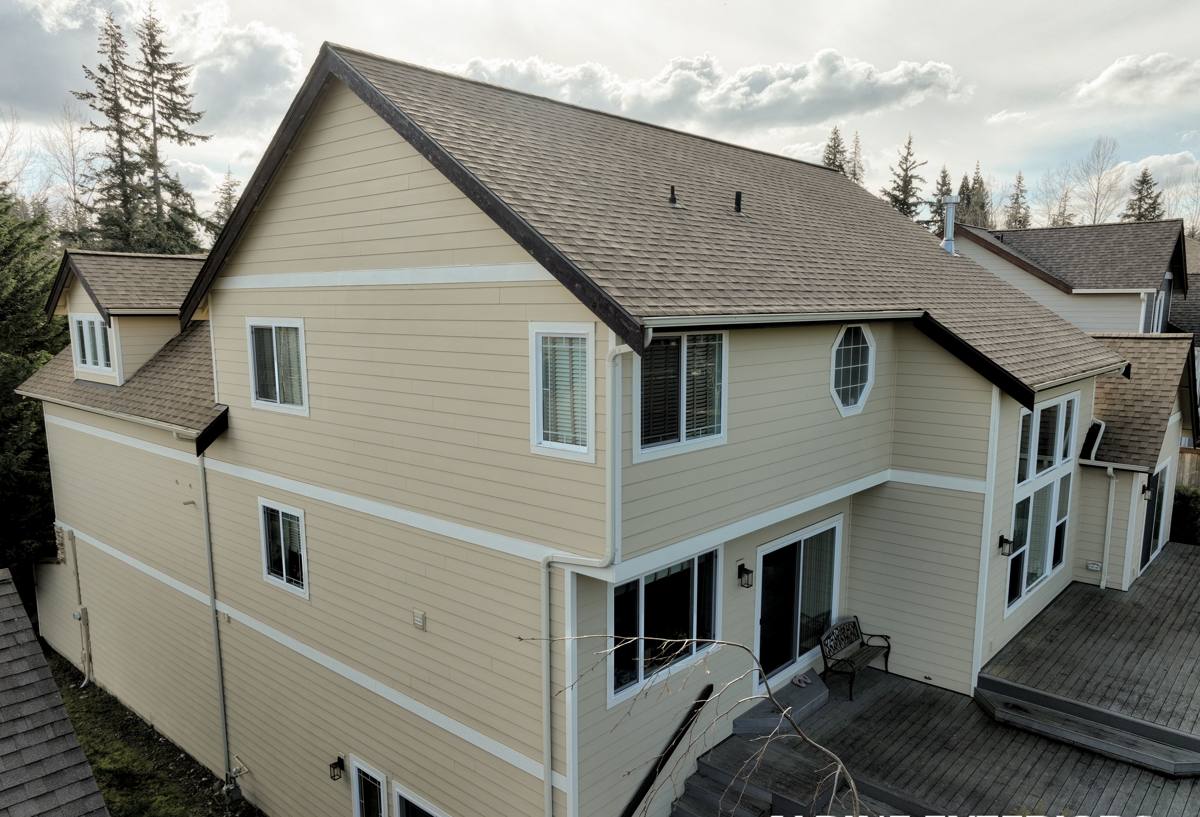
What Lynden's Climate Actually Does to a Deck
Whatcom County's driving rain doesn't fall straight down — it comes in sideways during winter storms, which means it finds its way into joints, screw holes, and any gap where end-grain wood is exposed. Over time, water that isn't given a clear path to shed and dry causes rot at the ledger board, soft spots around post bases, and cupped or splitting deck boards. Add in the salt-tinged air that carries inland from the bay, and you've got conditions that accelerate corrosion on any hardware that isn't rated for it.
Then there's moss. Lynden's tree cover and shaded yards mean a lot of decks sit under a moss season that can run from early fall through late spring. Moss holds moisture against wood and composite surfaces alike, and on stairs or ramps it turns into a slip hazard fast. A deck that isn't designed with drainage and airflow in mind becomes a moss farm within a couple of seasons, no matter what material it's built from.
The Three Things Local Decks Fight Hardest
- Standing moisture — trapped under low-clearance decks or behind poorly flashed ledger boards
- Moss and algae growth — on shaded, north-facing, or tree-covered sections of the yard
- Corrosion — on fasteners and hardware exposed to salt-carried humidity over years, not months
What a Correctly Built Deck Includes
A deck that's going to hold up here isn't just about picking good lumber. It's a system, and every part of that system has to work together to keep water moving away from the structure instead of sitting in it.
Ledger and Flashing
The ledger board — where the deck attaches to the house — is the single most common failure point we see on older decks in this region. It needs proper flashing that directs water out and away from the house sheathing, not just a bead of caulk and a prayer. We install flashing that overlaps correctly with the house's existing weather barrier, because a deck that leaks at the ledger is a deck that's quietly rotting the rim joist behind your siding.
Joist Protection and Fasteners
Every cut end and every joist top should be sealed or capped before decking goes down, not after rot has already started. We use corrosion-resistant, coated fasteners rated for treated lumber contact — cheaper uncoated screws will streak and weaken within a few wet seasons in this climate, and that's not a trade-off worth making to save a few dollars per box.
Airflow and Ground Clearance
Low decks with poor ventilation underneath trap moisture against the framing year-round. Where grading allows, we build in enough clearance and cross-ventilation to let the underside of the deck actually dry out between rain events, which matters more here than in drier climates where a deck gets weeks to recover between storms.
Surface Drainage
Board spacing and a slight slope away from the house keep water from pooling on the deck surface itself. This sounds minor until you've seen a flat, tight-spaced deck turn into a shallow pond every time Whatcom County gets a heavy rain event, which is a regular occurrence from fall through spring.
Choosing Materials for Lynden's Conditions
There's no single "best" decking material — there's a best material for your budget, your maintenance appetite, and how much sun or shade your specific yard gets. We walk every homeowner through the real trade-offs rather than pushing whatever has the best margin.
| Material | Moisture Behavior | Maintenance | Typical Lifespan Here |
|---|---|---|---|
| Pressure-treated lumber | Resists rot when sealed regularly; absorbs water if neglected | Annual cleaning, re-sealing every 2-3 years | 15-20 years with upkeep |
| Cedar | Naturally rot-resistant, but still needs sealing against driving rain | Sealing every 1-2 years, more in shaded areas | 15-25 years with upkeep |
| Composite decking | Doesn't absorb water, but board caps can trap moisture at cut ends if not finished properly | Periodic washing to prevent moss/algae film | 25-30+ years |
| PVC decking | Fully water-resistant, best moss resistance of the group | Low — occasional washing | 25-30+ years |
In a shaded, moss-prone Lynden yard, composite or PVC decking generally earns its higher upfront cost back in reduced maintenance over the years. In a sunnier, open lot, well-maintained cedar or treated lumber can still be a smart, more affordable choice. We're honest about this during the estimate — nobody needs to be sold a premium material their yard doesn't require.
Railings, Stairs, and Structural Details
Railings and stairs take more abuse from weather than the deck surface itself, mostly because they have more exposed end-grain and more joints where water collects. We pay particular attention to:
- Post base connections, which need to shed water rather than cup it against the wood or composite skirt
- Stair stringers, which are structural and need the same rot-prevention detailing as the ledger
- Baluster spacing and railing height, built to current Whatcom County building code
- Non-slip surface treatment on stairs in shaded areas where moss is most likely to establish
Local code compliance matters here beyond just passing inspection — it's what keeps your homeowner's insurance valid and your deck safe for kids and older family members navigating stairs on a wet morning.
Our Process for a Lynden Deck Project
1. On-Site Assessment
We walk the actual site — sun exposure, tree cover, drainage patterns, and how the deck will tie into your home's existing siding and roofline. This is where we catch site-specific issues like a low spot that collects runoff or an area that never fully dries out between storms.
2. Design and Material Selection
We talk through material options honestly, based on your yard's actual moisture and shade conditions rather than a one-size-fits-all recommendation. Budget matters, and so does how much maintenance you actually want to do every year.
3. Permitting
Most new decks and significant deck rebuilds in Whatcom County require a permit. We handle that process so you're not left guessing about code requirements for railings, footings, or setbacks.
4. Construction
Framing and ledger work get done first and properly flashed before any decking goes down — this is not a step that gets rushed, because it's the part that determines whether the deck lasts 15 years or 30.
5. Final Walkthrough
We walk the finished deck with you, cover basic maintenance expectations for the material you chose, and make sure every question is answered before we consider the job done.
Repair vs. Replace: What We Actually Look At
Not every aging deck needs a full teardown. We evaluate the framing and ledger connection first, since those are the structural bones. If the framing is sound and the ledger flashing can be corrected, we can often replace decking boards and railings without rebuilding the substructure — which saves real money. But if we find rot at the ledger, soft or spongy framing, or posts that have shifted, patch repairs just delay a bigger problem. We'll tell you plainly which category your deck falls into and why, with photos of what we find during the assessment.
Signs Your Deck Needs More Than a Cleaning
- Soft or spongy spots when you walk across the boards
- Visible gaps or staining at the ledger board where it meets the house
- Persistent moss or dark staining that returns within weeks of cleaning
- Rust streaks running down from screw heads or joist hangers
- Railings or posts that wobble under moderate pressure
Why Local Experience Matters
A deck built by a crew that hasn't worked in Whatcom County before can look fine on installation day and still fail early, because the failure modes here are slow and seasonal — they show up in year three or four, not week one. Knowing how far the driving rain angle changes ledger flashing needs, how much clearance a shaded Lynden lot actually requires for airflow, and which fastener coatings hold up against the salt-carried humidity coming off the bay isn't something you learn from a manufacturer's install guide. It's something you learn by building and then going back to fix decks in this specific climate over years. That's the experience we bring to every Lynden deck project, whether it's new construction or a rebuild of something that wasn't built for these conditions in the first place.
If you're planning a new deck or trying to figure out whether an existing one is worth saving, we're happy to take a look and give you a straightforward, no-pressure estimate. Use the form below to get in touch and we'll set up a time to walk the site with you.