 Birch Bay Exterior
 Lummi Island's Siding Takes a Different Kind of Beating
Lummi Island sits out in the salt water of Whatcom County, and that changes the math on exterior maintenance compared to homes even a few miles inland. Salt-laden air off the water accelerates corrosion on fasteners and trim, wind-driven rain finds every gap in a wall assembly that a calmer inland site would never expose, and the shaded, damp stretches of the year keep moss and algae active for months at a time. Siding here doesn't fail because it's old — it fails because it was never matched to this specific combination of exposure, moisture, and biological growth.
When we get called out for a siding repair on the island, the underlying cause is almost always one of three things: a material that wasn't built for sustained moisture exposure, a flashing or joint detail that let water behind the cladding instead of off of it, or years of trapped moss and organic buildup slowly breaking down a surface that was otherwise sound. Repairing the visible damage without addressing which of these caused it just buys you a few more years before the same problem resurfaces.
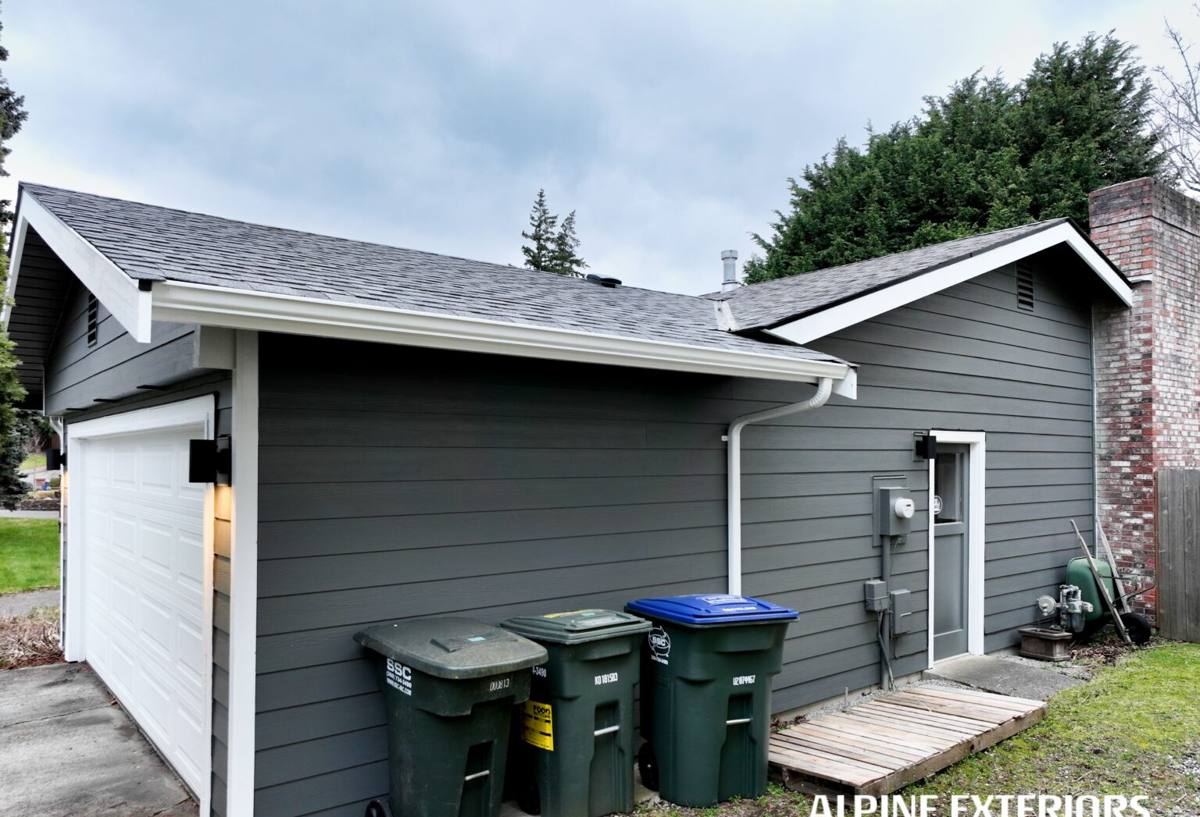
Signs Your Siding Needs Repair, Not Full Replacement
Not every damaged section means a whole-house project. Most of what we see on Lummi Island homes is localized and repairable if it's caught before moisture has spread behind the wall assembly. Look for:
- Soft, spongy, or crumbling spots when you press on a board — usually a sign of moisture intrusion behind the surface
- Persistent dark streaking or green-black growth that doesn't rinse off, especially on north- and west-facing walls
- Cracked, split, or delaminating boards, particularly near corners, window trim, and anywhere two sections butt together
- Fastener stains or rust bleed running down the face of the siding
- Gaps opening up at seams, trim boards, or caulked joints that used to be tight
- Paint or finish that's chalking, peeling, or blistering well ahead of schedule
If damage is confined to a few boards or one wall section and the sheathing underneath is still dry and sound, a targeted repair is usually the right call. If moisture has been working behind the siding for a while, what looks like a small patch job can turn into rot repair on the framing — which is why we always inspect past the visible damage before quoting anything.
Why Moss Season Matters More Here
Whatcom County's long wet season keeps moss and algae growing on shaded, north-facing walls for much of the year. Left alone, that growth holds moisture directly against the siding surface around the clock, which is a very different exposure than periodic rain. On older or moisture-sensitive siding, that constant dampness is often what turns a cosmetic staining issue into structural softening underneath. Any repair plan on this island has to account for which walls sit in that shade-and-moisture zone and treat them differently than walls that dry out normally between storms.
What a Correct Repair Actually Involves
A repair that just swaps a damaged board for a new one and calls it done is a temporary fix. Done right, siding repair on a salt-exposed, high-moisture site involves several steps most homeowners never see:
- Diagnose the moisture path. We find out how water got behind the siding in the first place — failed caulk, a flashing gap, an old fastener hole, or a material that's simply reached the end of its water-shedding life.
- Check the sheathing and framing behind the damage. Any soft or discolored wood underneath gets addressed before new siding goes back on. Covering rot with new material just hides the problem.
- Match the replacement material correctly. On a home clad in James Hardie fiber cement, that means using the correct Hardie profile, plank width, and ColorPlus factory finish so the repair blends in rather than standing out as an obvious patch.
- Rebuild the water-management details. Flashing, house wrap laps, and joint sealing get corrected — not just recaulked — so the same failure doesn't happen again in the same spot.
- Refinish to match. Factory-finished ColorPlus material holds color far better than field-painted repairs, which is one of the practical advantages of working with a pre-finished product on visible repair sections.
Repair or Replace: How We Make the Call
Homeowners often assume any visible siding damage means a full re-side. That's not usually true, but it's also not always a simple patch. Here's how we weigh it:
| Factor | Favors Repair | Favors Full Replacement |
|---|---|---|
| Extent of damage | Isolated to one or two wall sections | Spread across multiple elevations |
| Underlying sheathing | Dry, sound, no rot found | Soft framing or widespread moisture intrusion |
| Siding material | James Hardie fiber cement in otherwise good condition | Original material never suited to this exposure (untreated wood, older composite) |
| Age of siding | Well within expected service life | Near or past the material's realistic lifespan |
| Moss/algae history | Recent, surface-level growth | Years of untreated growth with staining that won't clean off |
We'll always tell you honestly which side of that table your home falls on. A repair that's going to need redoing in three years because the root cause wasn't fixed isn't a good use of your money, and we'll say so rather than sell you a patch job that won't hold.
Our Process Working on Lummi Island
Reaching Lummi Island means ferry-dependent scheduling, which is simply a fact of doing exterior work out here — it affects how we plan a job, not whether we can do it well. We batch material deliveries and crew time efficiently so a repair project isn't dragged out by unnecessary back-and-forth trips. Because we've done exterior work in this part of Whatcom County before, we already know to plan around tide and ferry timing rather than figuring it out mid-project.
On site, the process is straightforward: inspect the damaged area and the wall assembly behind it, confirm scope with you before any work starts, remove and replace only what needs it, correct the water-management details that let the problem happen, and finish with color-matched material so the repair doesn't read as an obvious patch from the street or the water.
Why a Crew Familiar With the Island Matters
Salt air, ferry logistics, and moss-prone shade patterns aren't things every siding crew accounts for. A contractor used to inland, low-exposure neighborhoods may spec the same repair approach they'd use anywhere else — and that approach often underperforms out here within a few seasons. Working this area regularly means we already know which details fail first in this exposure and build the repair to hold up against it, not against generic manufacturer specs written for a milder climate.
Why We Only Repair and Install James Hardie Fiber Cement
We don't install vinyl, LP SmartSide, primed wood, or cedar siding, and that standard applies to repair work too. In an environment with sustained salt exposure and a long wet season, the material matters as much as the workmanship. James Hardie fiber cement is non-combustible, doesn't absorb moisture the way wood-based products can, and its ColorPlus factory finish holds color and resists the kind of chalking and peeling that field-applied paint struggles with in coastal conditions. When we repair a Hardie-clad home, we're extending a system that was already built for this exposure — not patching around a material limitation.
If your current siding is a product other than James Hardie and it's failing in a way that keeps recurring, that's worth an honest conversation. Sometimes a targeted repair is still the right near-term move; sometimes the material itself is the reason the damage keeps coming back, and a longer-term plan makes more sense. We'll tell you which situation you're in rather than just quoting whatever job is in front of us.
After the Repair: Keeping It From Happening Again
A good repair should buy you years, not months. A few habits make a real difference on a salt-air, high-moisture site like this:
- Rinse shaded, moss-prone walls once or twice a year before growth gets established
- Keep gutters and downspouts clear so runoff doesn't sheet down the siding face
- Trim back vegetation that keeps a wall section shaded and damp
- Walk the exterior after major storms and check caulked joints and trim for new gaps
- Address small issues — a cracked board, a lifted piece of trim — before the next wet season, not after
What Drives the Cost of a Siding Repair
| Cost Factor | Why It Matters |
|---|---|
| Extent of hidden damage | Rot found behind the siding adds framing repair, not just cladding replacement |
| Access and scaffolding needs | Second-story or hard-to-reach wall sections take more labor time |
| Material matching | Matching an existing Hardie profile and ColorPlus color affects sourcing |
| Flashing and detail correction | Rebuilding water-management details properly takes more time than a simple board swap |
| Scope | A few boards versus a full wall section changes both material and labor significantly |
We won't quote a number without seeing the damage in person and checking what's behind it — anything else is a guess, and guesses on a repair like this tend to be wrong in the homeowner's disfavor once the real scope shows up.
Get an Honest Look Before Committing to Anything
If you're seeing soft spots, staining that won't clean off, or gaps opening up around your siding, it's worth having someone look before it gets worse through another wet season. We'll give you a straight assessment of what's actually happening, whether a repair makes sense or a larger fix is coming, and what it would take to do it right. Reach out for a free, no-pressure estimate — there's a form right below to get started.