 Birch Bay Exterior
 Roofing Built for Lummi Island's Coastal Climate
Lummi Island sits out in the marine air of Whatcom County, and that location is exactly what makes roofing here different from a typical inland job. Homes on the island take on salt-laden air off the water, long stretches of driving rain through the fall and winter, and a moss season that can run most of the year on shaded or north-facing slopes. A roof that would hold up fine forty minutes inland can wear out early here if it wasn't chosen and installed with those conditions in mind. New roof installation on Lummi Island isn't just about picking a shingle color — it's about matching materials, fasteners, ventilation, and installation details to a coastal environment that never really lets a roof dry out for long.
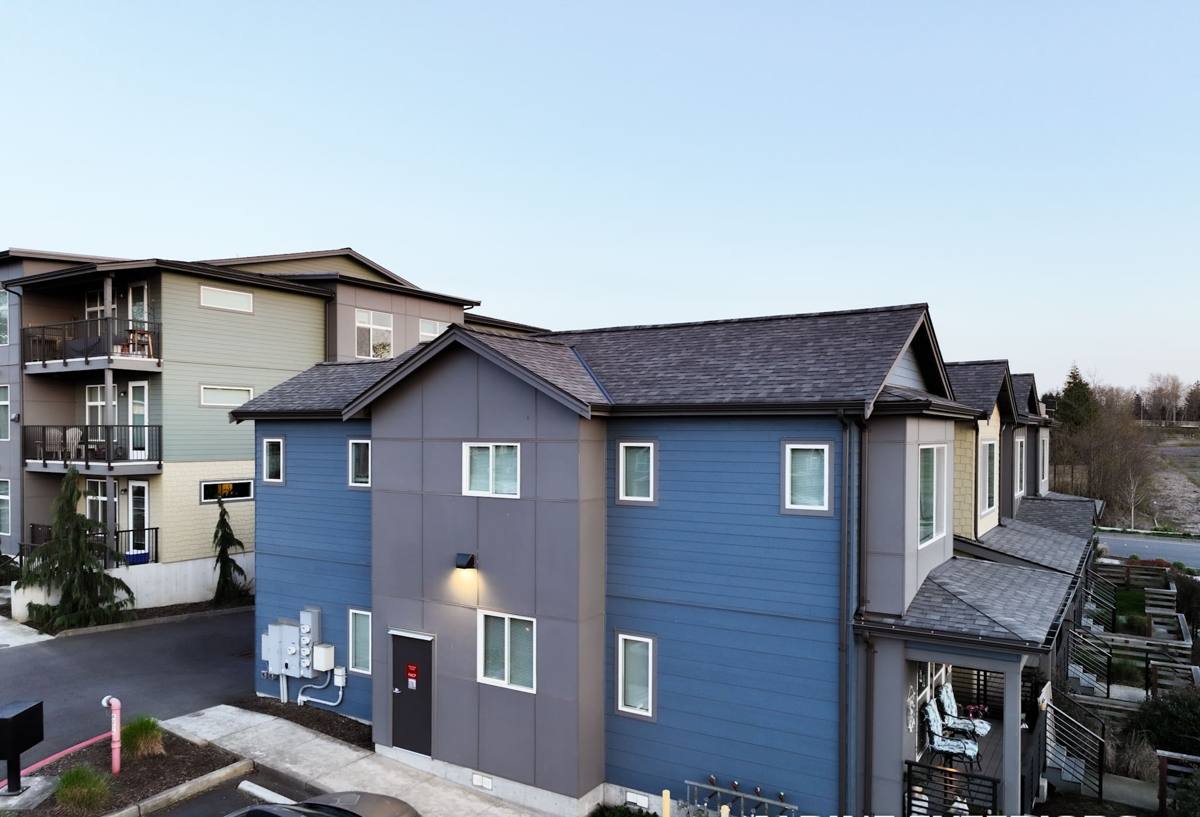
What Salt Air and Moss Actually Do to a Roof
Salt-Laden Air and Fasteners
Airborne salt accelerates corrosion on exposed metal — nail heads, flashing, gutter fasteners, and any hardware that isn't rated for coastal exposure. Over years, corroded fasteners can loosen or streak rust down the roof face, and failed flashing is one of the most common sources of hidden leaks we find on older island roofs. This is a durability issue, not a cosmetic one: once fasteners or flashing start to fail, water finds its way underneath the roofing material.
Wind-Driven Rain
Storms coming off the water don't just drop rain straight down — wind pushes it sideways and up under shingle edges, ridge caps, and anywhere flashing meets a wall or chimney. A roof system installed to a minimum-code standard may shed vertical rain fine but still let wind-driven water sneak past laps and seams that weren't sealed for that kind of exposure.
Shade, Moisture, and Moss
Tree cover and the region's long wet season keep north-facing and shaded roof slopes damp for extended stretches. Moss and algae take hold in that moisture, and once established, moss holds water against the roofing material, lifts shingle edges, and works its way under laps over time. A roof designed without moss growth in mind will need far more frequent cleaning and repair than one installed with the right underlayment, metal accents, and slope details from the start.
What a Correct New Roof Installation Includes
A roof that's actually built for this environment goes several steps beyond the minimum. The details matter more here than in a dry, inland climate because the roof gets less recovery time between wet weather events.
Underlayment and Flashing
We install a synthetic underlayment rated for extended wet exposure, with self-adhered ice-and-water membrane at the eaves, valleys, and any roof-to-wall transitions — the spots where wind-driven rain is most likely to test the system. Flashing at chimneys, skylights, and sidewalls is formed and fastened with coastal-grade corrosion resistance in mind, not just whatever ships standard with the shingle package.
Ventilation
Balanced intake and exhaust ventilation keeps the attic dry and temperature-regulated, which does two things: it protects the roof deck from the inside, and it reduces the condensation that can encourage mold and rot in a consistently damp climate. Skipping proper ventilation is one of the more common shortcuts we see on older installs, and it shortens the life of an otherwise good roof.
Fasteners and Trim
We use corrosion-resistant fasteners and flashing metals suited to salt air rather than standard-grade hardware that's fine sixty miles inland but starts showing rust streaks near the water within a few years.
Getting the Job Done on an Island
Working on Lummi Island adds a logistics layer that a mainland Birch Bay or Ferndale job doesn't have. Materials, equipment, and crews all move by ferry, which means the job has to be planned around sailing schedules rather than just driven over on a whim. That affects how we stage material deliveries, how we schedule crew days, and how we plan around weather windows so a job isn't left partially tarped waiting on the next available crossing. A crew that hasn't worked the island before often underestimates this — and either loses days to poor planning or, worse, leaves a roof exposed longer than it should be. We build island logistics into the schedule from the estimate stage, not as an afterthought once the tear-off has already started.
Our Installation Process, Step by Step
- Roof and structure inspection — we check the deck, existing ventilation, flashing points, and any signs of past moisture damage before writing a scope of work.
- Material and logistics planning — we choose materials suited to the exposure and plan delivery and crew scheduling around ferry access and the weather forecast.
- Tear-off and deck inspection — old roofing is removed and the deck is checked for soft spots or rot, which are repaired before anything new goes down.
- Underlayment and ice-and-water membrane — installed at eaves, valleys, and vulnerable transitions first.
- Flashing installation — chimneys, skylights, sidewalls, and any penetrations get formed, corrosion-resistant flashing.
- Roofing material installation — installed to manufacturer specification with fastening patterns appropriate for coastal wind exposure.
- Ventilation and ridge details — intake and exhaust ventilation is confirmed balanced before ridge caps go on.
- Final walkthrough — we inspect the completed roof, clean up the site, and go over care and warranty details with the homeowner.
Comparing Roofing Materials for Lummi Island Homes
There's no single "best" roofing material for every home — the right choice depends on the roof's slope, shade exposure, and how much long-term maintenance the homeowner wants to take on. Here's how the common options generally compare in a salt-air, high-moss environment:
| Material | Salt-Air Durability | Moss Resistance | Typical Lifespan | Maintenance Level |
|---|---|---|---|---|
| Architectural asphalt shingle | Good with coastal-grade fasteners | Moderate — benefits from zinc/copper strips | 25–30 years | Moderate |
| Standing seam metal | Very good with proper coating | High | 40–50+ years | Low |
| Cedar shake | Fair — needs regular treatment | Low without upkeep | 20–30 years with maintenance | High |
| Synthetic composite shingle | Good | Moderate to high | 30–50 years | Low to moderate |
We'll walk through these trade-offs during an estimate, factoring in your roof's actual sun and shade exposure, since a heavily shaded north slope needs a different moss strategy than a wide-open south-facing roof.
Moss Prevention and Long-Term Roof Care
No roofing material is entirely maintenance-free in this climate, but the right install and a modest care routine go a long way toward avoiding early replacement. We recommend:
- Keep overhanging branches trimmed back so roof surfaces get more sun and airflow.
- Clean gutters and valleys at least twice a year so water isn't pooling against roofing material.
- Have moss gently removed before it establishes a heavy mat — don't let it sit for years.
- Ask about zinc or copper control strips at install, which reduce moss regrowth on shaded slopes.
- Schedule a roof check after major storms to catch lifted flashing or displaced shingles early.
- Avoid pressure washing shingles directly — it can strip granules and shorten the roof's life.
Signs Your Roof Needs Replacing, Not Patching
Not every roof problem calls for a full tear-off, but there are signals that point toward replacement being the more honest recommendation:
- Granule loss heavy enough that shingles look bald or patchy in several areas
- Curling, cracking, or missing shingles across multiple sections of the roof, not just one spot
- Soft or spongy decking felt underfoot during inspection
- Repeated leaks in different locations rather than one isolated point
- Heavy, established moss growth that's lifted shingle edges over a wide area
- A roof approaching or past the upper end of its material's expected lifespan
If your roof only shows one or two of these in a limited area, a repair may still make sense — we'll tell you honestly which situation you're in rather than push a replacement you don't need yet.
Why Hire a Crew That Already Works Lummi Island
A contractor unfamiliar with the island often builds their schedule and pricing around mainland assumptions — easy same-day access, no ferry planning, and standard-grade materials that don't account for the extra salt exposure. That mismatch shows up later as scheduling delays, exposed decking during a weather delay, or a roof that ages faster than it should have. Working Whatcom County's coastal communities regularly means we already understand the ferry logistics, the moss patterns specific to this stretch of coastline, and which material and flashing details actually hold up out here — so the estimate we give you reflects the real job, not a generic mainland roof.
If your Lummi Island roof is showing its age or you're planning ahead for a replacement, we're happy to take a look and give you a straightforward, no-pressure estimate. Use the form below to get started.