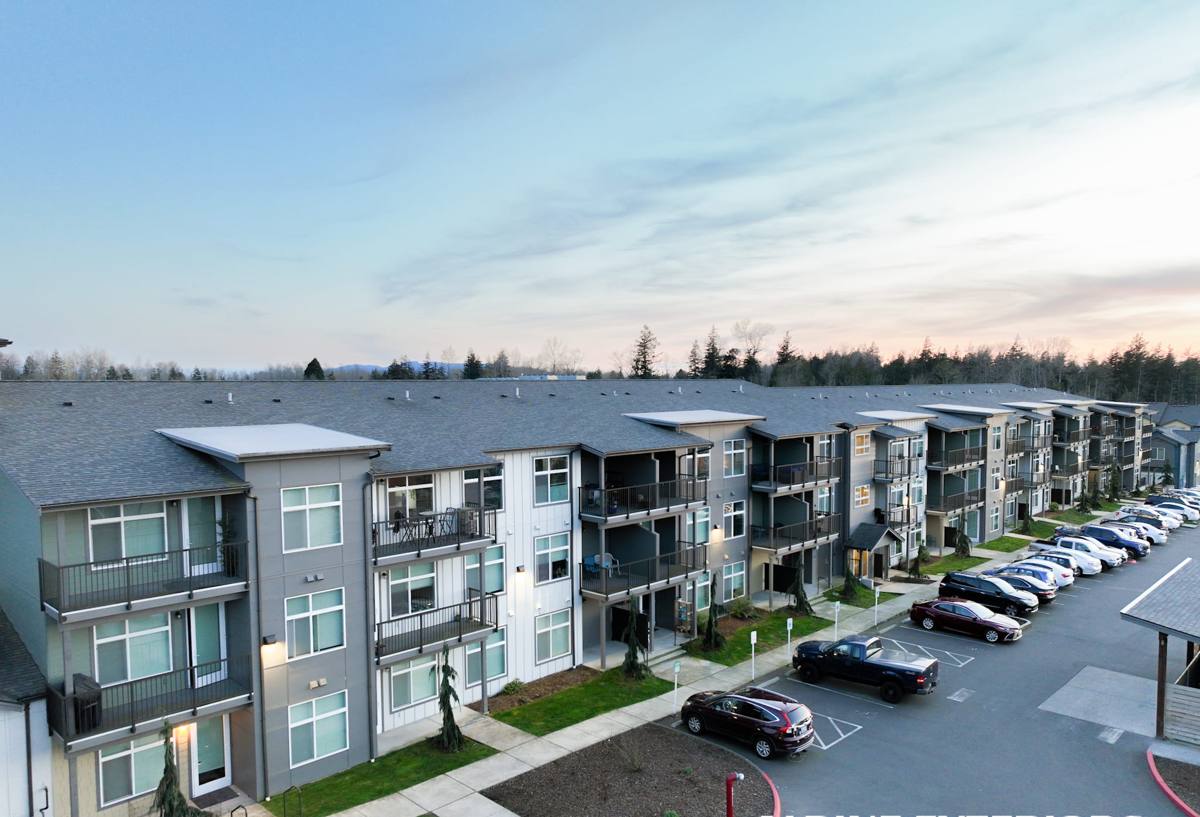
 Birch Bay Exterior
 Life on Lummi Island: A Different Kind of Weather Test
Lummi Island sits out in the Salish Sea, and that location does most of the work in deciding what a home's exterior has to survive. Homes here take on salt-laden air off the water, wind-driven rain that hits siding sideways instead of straight down, and long stretches of overcast, damp weather that never quite dries out. Add in the shade from mature evergreens on many lots and you get a near-constant moss and algae season that lasts most of the year, not just a few weeks in spring.
That combination is harder on siding than most inland Whatcom County neighborhoods ever see. Salt air accelerates corrosion on fasteners and trim. Driving rain finds every gap in flashing and caulking. And moss doesn't just look bad — it holds moisture against the surface of the siding, which is exactly the condition that rots wood-based products and delaminates poorly made composites from the inside out.
Why Fiber Cement, and Why James Hardie Specifically
Fiber cement solves the core problem wood and wood-composite sidings can't: it isn't food for rot, moss, or insects, and it doesn't swell and shrink with every wet-dry cycle the way wood fiber does. That matters enormously on a site like Lummi Island, where the wet cycle rarely fully breaks. We install James Hardie exclusively — not vinyl, not LP SmartSide, not Cemplank or Allura, not primed spruce or cedar — because Hardie is engineered specifically for exposures like this one.
Climate-Engineered Product Lines
James Hardie makes region-specific formulations under its HZ5 (moderate climate) and HZ10 (harsh, wet, freeze-prone climate) engineering standards. Western Washington's marine environment, and island exposures in particular, call for the HZ5 line, which is formulated to resist moisture intrusion and moss/mildew growth better than a one-size-fits-all product. This isn't a marketing detail — it's the difference between siding that's merely rated for the Pacific Northwest and siding that's built around it.
ColorPlus Factory Finish
Hardie's ColorPlus finish is baked on in a controlled factory environment, not brushed or sprayed on site. In a salt-air, high-moisture climate, factory-cured finish adhesion matters — field-applied paint is more prone to peeling and fading when it's fighting damp air and UV exposure from day one. ColorPlus also carries its own multi-year finish warranty separate from the product warranty, which matters when you're planning to own the home for a while.
What Correct Installation Looks Like on a Salt-Air Home
The product is only half the equation. Fiber cement siding installed poorly can still trap moisture and fail early, regardless of brand. On Lummi Island specifically, a few details matter more than they would on a sheltered inland lot.
Moisture Management at the Foundation
Every installation should start with a proper weather-resistive barrier and rainscreen or drainage gap behind the siding, not just a barrier stapled flat against the sheathing. In a driving-rain environment, water will get behind siding eventually — the question is whether it has somewhere to drain and dry out, or whether it sits against the wall assembly. Starter strips, kick-out flashing at rooflines, and proper head flashing above windows and doors are non-negotiable here, not upgrades.
Fastening and Fit
Salt air corrodes the wrong fasteners over time. Hardie's own installation specifications call for corrosion-resistant fasteners, and on a site like this we don't cut that corner. Panels also need correct nailing patterns and clearances — over-driven nails crack the board's edge and create a moisture entry point that won't show up as a problem until years later.
Joints, Caulking, and Trim
Butt joints, corners, and trim transitions are where most real-world siding failures start, on any brand. We follow Hardie's documented joint treatments and use sealants rated for the movement and moisture conditions here, rather than whatever caulk is on the truck.
Comparing Siding Options for Lummi Island Exposure
Homeowners often ask why we don't offer a lower-cost alternative alongside Hardie. Here's the honest comparison for this specific climate:
| Material | Moisture/Salt-Air Behavior | Moss & Mildew Resistance | Typical Lifespan Here | Our Take |
|---|---|---|---|---|
| Vinyl | Doesn't rot, but expands/contracts and can warp or crack in wind-driven weather | Fair — surface growth is common and hard to fully clean | 15-25 years | Not offered; seams and fastening tolerances are less forgiving in high-wind coastal exposure |
| Cedar / primed wood | Absorbs moisture; prone to swelling, checking, and rot without diligent upkeep | Poor in shaded, damp settings without frequent treatment | 10-20 years before major repair | Not offered; upkeep burden is high for this exposure specifically |
| LP SmartSide / other wood-strand composites | Engineered wood core is moisture-resistant but still wood-based at edges and cuts | Better than raw wood, but edge sealing is critical and easy to miss | 20-30 years with strict maintenance | Not offered; we standardized on non-wood-based fiber cement instead |
| James Hardie fiber cement | Inert to moisture swelling; formulated for marine/coastal exposure (HZ5) | Strong — surface doesn't feed organic growth the way wood fiber does | 30-50 years with correct install and basic upkeep | What we install, exclusively |
Our Process, Start to Finish
Assessment
We start by walking the exterior and identifying the exposures that matter most on your specific lot — which walls take the worst wind-driven rain, where moss buildup is heaviest, and where existing trim or flashing is already showing wear.
Tear-Off and Substrate Check
Old siding comes off so we can actually see the sheathing underneath. This is where hidden moisture damage from a previous installation often turns up, and it needs to be addressed before new siding goes on — covering over a wet wall assembly just hides the problem.
Water and Air Barrier
A correctly lapped weather-resistive barrier and drainage plane go on next, along with all flashing at penetrations, windows, and rooflines.
Installation and Finish Work
Hardie panels or lap siding go on to spec, with corrosion-resistant fasteners, correct clearances, and manufacturer-approved joint and caulk details throughout.
Final Walkthrough
We review the finished exterior with you, point out any maintenance items specific to your site, and make sure trim, caulking, and paint lines are clean before calling the job done.
Living With Hardie Siding: Maintenance in a Moss-Heavy Climate
Fiber cement is low-maintenance compared to wood, but "low-maintenance" isn't "no-maintenance" on an island lot with heavy shade and salt air. A periodic gentle rinse to knock down surface moss and salt film goes a long way — a garden hose or low-pressure wash, not a high-pressure setup that can force water behind panels or strip the finish. Keep an eye on caulked joints and repaint touch-ups over the years if a panel gets scratched or gouged, since exposed raw edges are the one place moisture can get a foothold. Trimming back vegetation that keeps siding shaded and damp also meaningfully slows moss regrowth.
Why Hiring a Crew That Already Works Lummi Island Matters
Lummi Island is reached by ferry, and that changes how a siding project needs to be planned — material staging, crew scheduling, and trip timing all have to account for it in a way that a mainland job doesn't. A contractor who hasn't worked the island before is learning that logistics lesson on your project. We've planned around it before, which means fewer surprises in your timeline.
Beyond logistics, the wind and moisture exposure on island lots varies a lot from one property to the next depending on tree cover, elevation, and how directly a wall faces open water. A crew with local experience recognizes which details — flashing, drainage gaps, fastener choice — need extra attention on your specific site, rather than applying a generic inland installation approach to a coastal one.
Signs Your Current Siding Is Already Losing the Battle
- Persistent dark streaking, green film, or moss that returns within weeks of cleaning
- Soft or spongy spots when you press on siding, especially near the bottom courses or under windows
- Paint that's peeling, bubbling, or chalking heavily rather than just fading evenly
- Visible gaps, warping, or separation at panel joints and corners
- Rust staining running down from fasteners or trim
- Musty smell or visible staining on interior walls that back up to exterior siding
Any one of these on its own might just be cosmetic. Several together usually mean moisture has been getting behind the siding for a while, and it's worth having someone look at the wall assembly, not just the surface.
Get an Honest Look at Your Home
If you're weighing a siding replacement on Lummi Island, we're happy to walk the property, point out what your specific exposure is doing to the current siding, and give you a straightforward estimate for a correctly installed James Hardie system — no pressure, no upsell to a product we wouldn't put on our own homes. Use the form below to request a free estimate.