 Birch Bay Exterior
 Siding for a Coastline That Doesn't Forgive Shortcuts
Semiahmoo sits right up against the water, which is exactly what makes it a beautiful place to live and exactly why siding here fails faster than it does ten miles inland. Homes on this stretch of Whatcom County coastline take a steady diet of salt-laden wind, wind-driven rain that hits walls sideways instead of falling straight down, and a wet season that runs long enough to grow moss on anything that stays damp for more than a few days. Siding that would hold up fine in a drier, more sheltered part of the county can start showing problems here in half the time.
We install James Hardie fiber cement siding exclusively, and this page is about what that means specifically for a Semiahmoo home — not siding in general, not a national overview, but the actual conditions your walls face and what a correctly installed Hardie system does about them.
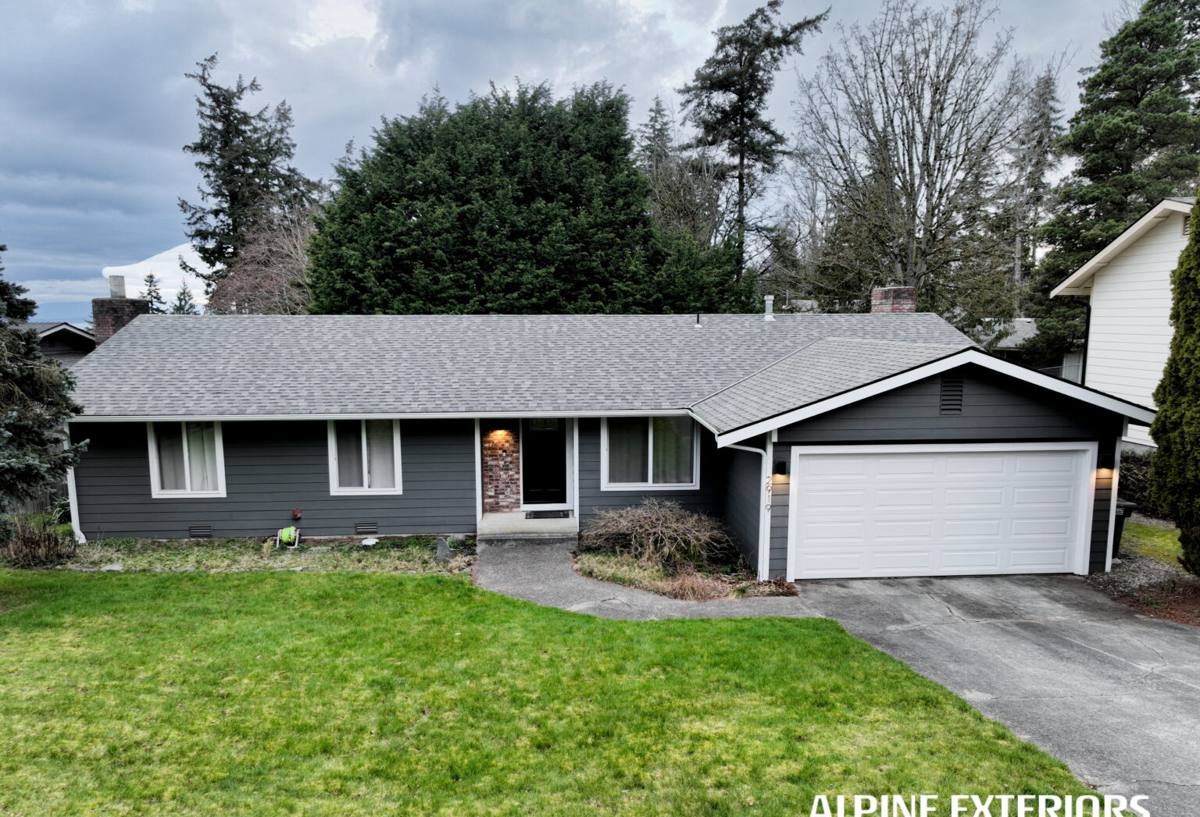
What Salt Air, Rain, and Moss Actually Do to a House
It helps to understand the specific ways coastal exposure attacks a building envelope, because it explains almost every decision we make on a Semiahmoo job.
Salt Air
Airborne salt is corrosive to metal fasteners, flashing, and trim hardware, and it accelerates the breakdown of some paint films and coatings. It also tends to hold moisture against a wall longer than dry inland air does, which keeps siding surfaces damp more often.
Wind-Driven Rain
Open water exposure means rain doesn't just fall on Semiahmoo homes — it's pushed sideways into siding laps, corner joints, and window trim by sustained wind. Any gap in flashing or caulking that would stay dry on a sheltered inland wall becomes a water entry point here.
Moss and Sustained Moisture
Whatcom County's long, mild, wet stretch of the year gives moss and algae plenty of time to establish on siding that doesn't drain and dry properly. Moss holds moisture against the surface, and on the wrong substrate that trapped moisture leads to rot, delamination, or paint failure well before the siding's expected lifespan is up.
None of this is unique to Semiahmoo — it's true anywhere on the Salish Sea shoreline — but it's more pronounced here than in sheltered neighborhoods farther from open water, which is why the installation details matter more, not less.
Why We Only Install James Hardie
We get asked fairly often why we don't offer vinyl, LP SmartSide, or cedar as options. The honest answer is that we've made a professional judgment call based on how those products perform under sustained coastal exposure, and we'd rather stand behind one system we trust completely than offer a menu of products with different failure points.
- Vinyl is affordable and low-maintenance, but it's a petroleum-based product that expands, contracts, and can become brittle over years of temperature swings and UV exposure — and it's not a fire-resistant material.
- LP SmartSide is engineered wood, which means it's still wood at its core. Wood-based siding is more sensitive to sustained moisture exposure than fiber cement, and a coastal environment with a long wet season and salt air is a tough proving ground for any wood product's edge seal and coating.
- Cedar is genuinely handsome siding, but it needs real upkeep — refinishing, sealing, and vigilance against rot and pests — to hold up long-term in a wet marine climate.
James Hardie fiber cement is non-combustible, dimensionally stable across our seasonal humidity swings, and factory-finished with the ColorPlus coating system, which holds color and resists the fading and chalking that field-applied paint is prone to. It's not the cheapest option on day one, but it's the one we're willing to warranty and put our name behind on a Semiahmoo home.
The Hardie Product Lines That Make Sense Here
James Hardie makes several siding profiles and engineers its products by climate zone (HZ5 for our wet Pacific climate). For a Semiahmoo home, the choice usually comes down to a few core products:
| Product | Best Use | Why It Fits This Location |
|---|---|---|
| HardiePlank lap siding | Primary wall siding, most home styles | Classic horizontal profile with strong water-shedding laps; most common choice on Semiahmoo rebuilds and re-sides |
| HardiePanel vertical siding | Modern builds, accent walls, gable ends | Clean vertical lines that drain well when detailed with proper battens and flashing |
| HardieTrim boards | Corners, window and door trim, fascia | Resists the moisture and salt exposure that rots wood trim fastest |
| HardieSoffit panels | Eaves and overhangs | Vented options help manage attic and wall-cavity moisture in a wet climate |
All of these come pre-finished through ColorPlus, which matters more here than in drier parts of the state: a factory-baked finish resists the fading, cracking, and peeling that field-painted siding is more prone to once it's exposed to years of salt air and marine UV.
Color and Texture Choices
ColorPlus offers a range of finishes from smooth to woodgrain-textured, in colors developed to hold up outdoors rather than fade indoors on a sample chip. We'll walk you through what tends to read well against Semiahmoo's mix of forested lots and open water views, but the final call on color and texture is yours — our job is making sure whatever you pick is installed to actually last.
What a Correct Installation Involves in This Climate
Fiber cement siding is only as good as the water management system behind it. On a coastal, wind-exposed home, the details below are not optional extras — they're the difference between siding that lasts and siding that fails from the back side while looking fine from the street.
- Weather-resistive barrier (house wrap) installed and lapped correctly, with all seams taped
- Rainscreen or drainage gap behind the siding so any moisture that gets past the surface can drain and the wall can dry
- Flashing at every window, door, and roof-to-wall intersection, integrated with the water-resistive barrier rather than just caulked over it
- Correct fastener type, spacing, and depth per Hardie's published installation instructions — this is what keeps the manufacturer's warranty valid
- Proper clearance between the bottom of the siding and grade, decks, patios, and roof lines, so splash-back and standing water can't sit against the board
- Sealed, primed-and-painted cut ends on every board, since an exposed cut edge is the fastest way for moisture to enter fiber cement
- Corrosion-resistant fasteners and flashing hardware suited to coastal, high-salt exposure
Skipping any one of these doesn't usually show up as a problem in year one. It shows up in year five or six, as a stain, a soft spot, or a section of siding that's failing while the rest of the wall looks fine — which is exactly the kind of failure that's expensive to diagnose after the fact and cheap to prevent during installation.
Our Process for a Semiahmoo Project
We run the same disciplined process on every home, but a few steps get extra attention on coastal properties:
- On-site assessment — we look at wind exposure, existing moisture damage, current flashing condition, and how water currently moves around the house before we ever talk product
- Tear-off and inspection — removing the old siding lets us check sheathing, framing, and existing house wrap for hidden rot or moisture damage, which is more common on wind-exposed coastal walls than people expect
- Repair and prep — any compromised sheathing or framing gets addressed before new siding goes up, not covered over
- Weather barrier and drainage plane installation — the unglamorous layer that does most of the actual work protecting your home
- Hardie installation to manufacturer spec — correct fastening, flashing, clearances, and sealed cut ends throughout
- Trim, caulking, and final detailing — the finish work that determines how the house actually looks day to day
- Walkthrough and cleanup — we review the finished work with you and leave the site clean
Cost Factors for a Semiahmoo Siding Project
Every home is different, so we won't quote a number without seeing your house, but these are the factors that actually move the price:
| Factor | Why It Matters |
|---|---|
| Home size and wall complexity | More corners, gables, and dormers mean more cutting, trim, and labor time |
| Current siding removal | Full tear-off costs more than a straightforward re-side, but it lets us inspect and fix what's underneath |
| Hidden repairs found during tear-off | Sheathing or framing rot from past water intrusion is common on older coastal homes and adds scope once uncovered |
| Siding profile and trim package | Lap vs. panel, standard vs. wider board reveal, and trim detailing all affect material cost |
| Access and site conditions | Wind exposure, tight lots, and elevation changes common on waterfront properties affect scaffolding and labor time |
Why Hiring a Crew That Already Works This Area Matters
Siding crews that mostly work drier, inland neighborhoods sometimes install to a generic spec because that's what's worked for them elsewhere. On a Semiahmoo property, that generic spec is often not enough. A crew that already works this coastline understands how much wind exposure to plan for, why drainage details can't be treated as optional, and what moisture-related failures actually look like when they show up in this specific climate — because we've opened up enough old walls in this area to know what happens when those details get skipped.
We're also familiar with the practical side of working in Whatcom County: permitting expectations, typical inspection requirements, and scheduling around the weather windows that actually make sense for a wet-climate install. None of that shows up on a spec sheet, but it's the difference between a project that goes smoothly and one that doesn't.
Maintaining Hardie Siding in a Coastal Whatcom County Climate
James Hardie siding is genuinely low-maintenance compared to wood or vinyl, but "low-maintenance" isn't "no-maintenance," especially this close to the water:
- Rinse the siding periodically to clear accumulated salt residue, especially on wind-facing walls
- Keep gutters and downspouts clear so water isn't overflowing directly onto siding sections
- Trim back vegetation and tree cover that keeps siding shaded and damp, which is what invites moss
- Inspect caulking at trim joints and penetrations every year or two and re-caulk before gaps open up
- Address any soft spots, stains, or bubbling paint promptly rather than waiting — early issues are cheap fixes, neglected ones aren't
Done right, that's a short list, and it's a lot less than what cedar or vinyl ask of you over the same years in this climate.
Get a Straight Answer for Your Semiahmoo Home
If you're weighing a siding replacement or dealing with a home that's already showing coastal wear, we're happy to take a look and give you an honest read on what your walls actually need — no pressure, no generic sales pitch. Use the form below to request a free estimate.