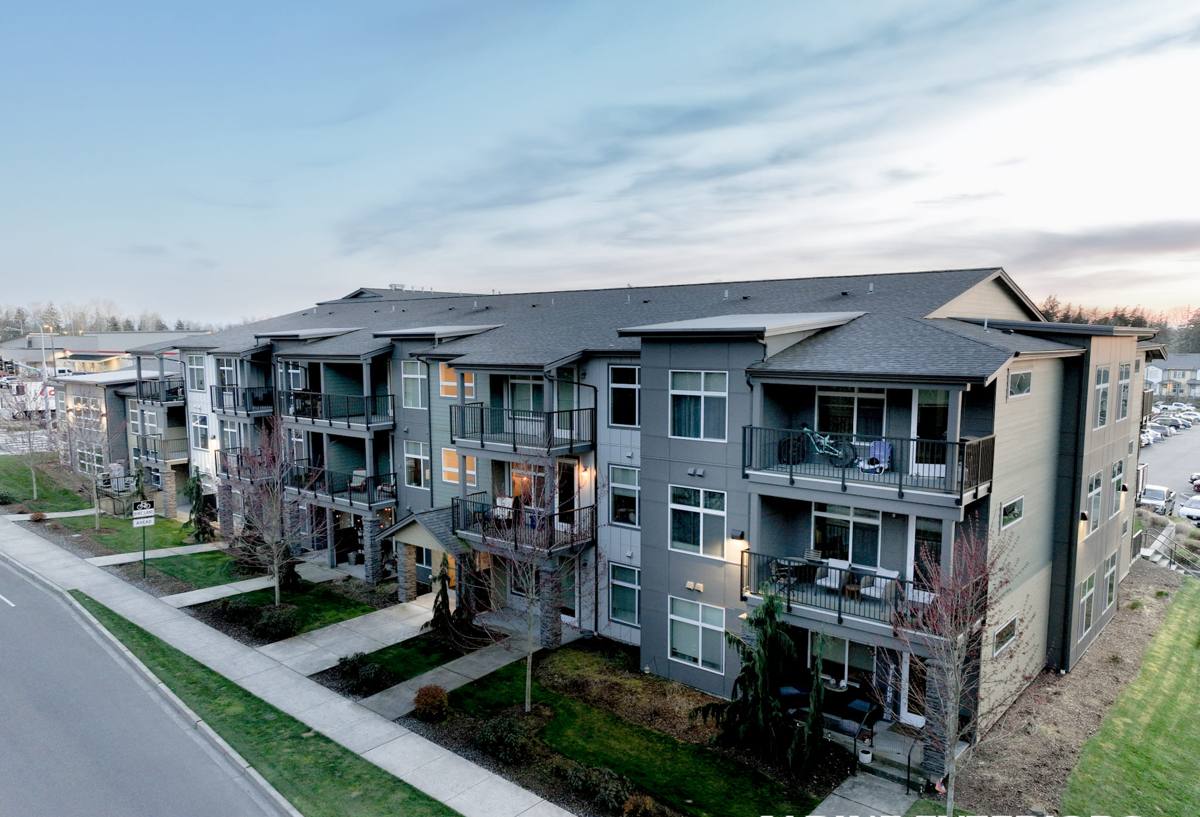
 Birch Bay Exterior
 Siding Built for the Nooksack Area's Particular Climate
Homes in the Nooksack area, part of the greater Birch Bay community in Whatcom County, sit at the intersection of two tough conditions: salt-laden air moving in off the water and a wet, low-sun climate that keeps siding damp for long stretches of the year. That combination is hard on building materials that weren't designed for it. Wood siding absorbs moisture and starts to rot from the inside out. Vinyl gets brittle and faded from years of UV and temperature swings, and it still can't stop moisture from getting behind it at the seams. We install James Hardie fiber cement siding exclusively, and on Nooksack homes specifically, that choice comes down to how the material handles water, salt, and biological growth over decades, not just how it looks on installation day.
This page covers what a correct James Hardie installation looks like for a Nooksack-area property, what the local climate demands from the product and the crew, and why hiring installers who already work in this specific part of Whatcom County matters more than it does in drier regions.
What the Local Climate Actually Does to Siding
Salt Air
Proximity to Birch Bay means airborne salt is a constant, low-level presence on exterior surfaces. Salt accelerates corrosion of fasteners and metal trim, and it can degrade certain paints and coatings faster than inland exposure would. Fiber cement itself is not vulnerable to salt corrosion the way metal siding or exposed fasteners can be, but the fastener choice, flashing, and factory finish used with it still matter a great deal in a salt-air environment.
Driving Rain
Storms coming off the water don't just fall straight down — wind-driven rain gets pushed sideways into wall assemblies, joints, and penetrations. A siding system that isn't installed with correct water management (proper flashing, weather-resistive barrier, and drainage gaps) will eventually let that water in, regardless of what the siding itself is made of. This is one of the most common failure points we see on homes that had siding installed without local wind-driven-rain conditions in mind.
The Long Moss Season
Whatcom County's mild, wet climate keeps humidity high for much of the year, which is exactly what moss, algae, and mildew need to establish themselves on north-facing walls, under eaves, and anywhere sunlight and airflow are limited. Porous or textured siding materials give these organisms more surface area to grip. A dense, factory-finished material with a tight surface resists this kind of growth far better than raw or lightly coated wood-based products.
Why We Install Only James Hardie
James Hardie fiber cement is engineered from cement, sand, and cellulose fibers, which makes it dimensionally stable, non-combustible, and resistant to moisture absorption in a way that wood-based and vinyl products aren't. Hardie also produces climate-specific HZ formulations, and the HZ5 product line is engineered for the kind of cold, wet, moisture-heavy conditions that describe Whatcom County far better than a generic national product would. Combined with the factory-applied ColorPlus finish — baked on in a controlled environment rather than field-painted — you get a surface that resists fading, chipping, and the kind of moisture intrusion that lets moss and mildew take hold.
We don't install LP SmartSide, vinyl, Cemplank, Allura, primed spruce, or cedar. Each of those products has legitimate uses elsewhere, but for this climate specifically, they carry trade-offs we're not willing to put our name behind: wood-based products need ongoing paint maintenance and are vulnerable to moisture at cut edges; vinyl can't stop wind-driven rain at the seams and becomes brittle over time; unfinished or site-primed products depend heavily on the installer getting field-applied coatings right, which is a variable we'd rather remove. Standardizing on one product line lets our crews master the details that actually determine how siding performs here — flashing details, fastener patterns, joint treatment — rather than spreading that expertise across several systems.
What a Correct Installation Involves
The siding material is only part of the equation. On a Nooksack-area home, the installation details below are what actually determine whether the system holds up:
- Weather-resistive barrier: A continuous, correctly lapped barrier behind the siding, with all penetrations sealed, so any moisture that does get past the cladding has a drainage path instead of a way into the wall cavity.
- Rainscreen or drainage gap: A small air gap between the siding and the wall assembly lets bulk water drain and lets the wall breathe, which matters enormously given how long walls here stay damp during the moss season.
- Flashing at every penetration: Windows, doors, hose bibs, light fixtures, and any other wall penetration need proper flashing integrated with the barrier — not just caulk, which fails over time.
- Correct fastener type and placement: Hardie specifies fastener types, spacing, and edge distances precisely; in a salt-air environment, using the corrosion-resistant fasteners Hardie calls for (rather than whatever is on hand) is not optional.
- Proper clearances: Siding needs to be held up off decks, patios, and grade by the manufacturer-specified clearance so it isn't sitting in standing water or constant splash-back, which is a common source of premature failure at the bottom course.
- Caulking and joint treatment per Hardie spec: Butt joints, corners, and trim intersections need to be treated exactly as Hardie's installation instructions describe, since these are the spots most exposed to driving rain.
Our Process for Nooksack-Area Projects
1. On-Site Assessment
We walk the exterior and look specifically at exposure — which walls face prevailing wind and rain, where moisture and moss have already accumulated, and where the existing water management (or lack of it) has caused problems. This is different for every lot depending on orientation and tree cover.
2. Product and Finish Selection
We help homeowners choose the right Hardie plank profile, texture, and ColorPlus finish for the home, factoring in HOA or neighborhood conventions where relevant and how the finish will hold up against salt air and UV over time.
3. Tear-Off and Substrate Inspection
Once old siding is removed, we inspect the sheathing for rot or hidden moisture damage before anything new goes up. This step gets skipped or rushed more often than it should, and it's where problems that started years ago finally get found and fixed.
4. Barrier and Flashing Installation
This is the step that matters most for long-term performance and the one that's invisible once the project is finished. We install the weather-resistive barrier, drainage gap, and flashing to spec before a single piece of Hardie plank goes up.
5. Hardie Installation to Manufacturer Spec
Fastening, joint treatment, and clearances are done to James Hardie's published installation instructions, which is also what keeps the manufacturer's warranty intact.
6. Final Walkthrough
We review the finished exterior with the homeowner, covering basic care and what to watch for seasonally.
Comparing Siding Options for This Climate
| Factor | James Hardie Fiber Cement | Vinyl | Wood / Cedar |
|---|---|---|---|
| Moisture absorption | Very low | N/A (but seams leak) | High — prone to rot |
| Moss/algae resistance | Strong (dense, factory-finished surface) | Moderate | Low without frequent treatment |
| Salt air durability | Excellent | Good, but becomes brittle over time | Poor — accelerates decay |
| Finish maintenance | Factory-baked ColorPlus, long repaint intervals | Color molded in, fades with UV over years | Repainting/staining every few years |
| Fire resistance | Non-combustible | Combustible | Combustible |
Cost Factors Homeowners Should Know
Every Nooksack-area home is different, but the same set of factors drives the cost of a proper James Hardie installation:
- Total square footage and the complexity of the home's exterior (gables, dormers, multiple stories)
- Condition of the existing sheathing once old siding is removed
- Plank profile and texture selected (traditional lap, shingle-style, board-and-batten, etc.)
- Amount of trim, corner detail, and custom flashing work required
- Access and staging conditions on the lot
We provide a detailed, itemized estimate after the on-site assessment rather than a ballpark figure over the phone, since the water-management and substrate work can vary significantly from house to house.
Why Hiring a Crew That Already Works This Area Matters
A crew that installs siding across many different climates tends to apply one standard approach everywhere. A crew that works Birch Bay and the surrounding Whatcom County area regularly has already seen what driving rain and a long moss season do to siding installed without the right drainage and flashing details — and adjusts for it as standard practice, not an upsell. That local pattern recognition is the difference between siding that looks good on installation day and siding that's still performing well after a decade of salt air and wet winters.
If you're planning a siding project on a Nooksack-area home, we're happy to walk the exterior with you, look at what your home's specific exposure is dealing with, and put together a clear, no-pressure estimate for a James Hardie installation built for this climate.