 Birch Bay Exterior
 Why Ferndale Homeowners Are Looking at Metal Roofing
Ferndale sits close enough to the water that homes take on a mix of weather most roofing materials weren't designed for. Salt-laden air drifts in off Birch Bay and the Strait, driving rain comes in sideways during fall and winter storms, and the shaded, damp stretches of the year give moss every chance it needs to take hold. Asphalt shingles handle some of that, but they wear out faster here than they would inland, and moss removal becomes a recurring chore rather than a one-time fix. Metal roofing holds up differently, and for a lot of homes in this area it's worth understanding exactly why before you decide it's the right call.
This page is specific to Ferndale and the surrounding Birch Bay area — not a general metal roofing overview. The ground conditions, wind exposure, and moisture patterns here shape how we spec and install a metal roof, and they should shape how you think about one too.
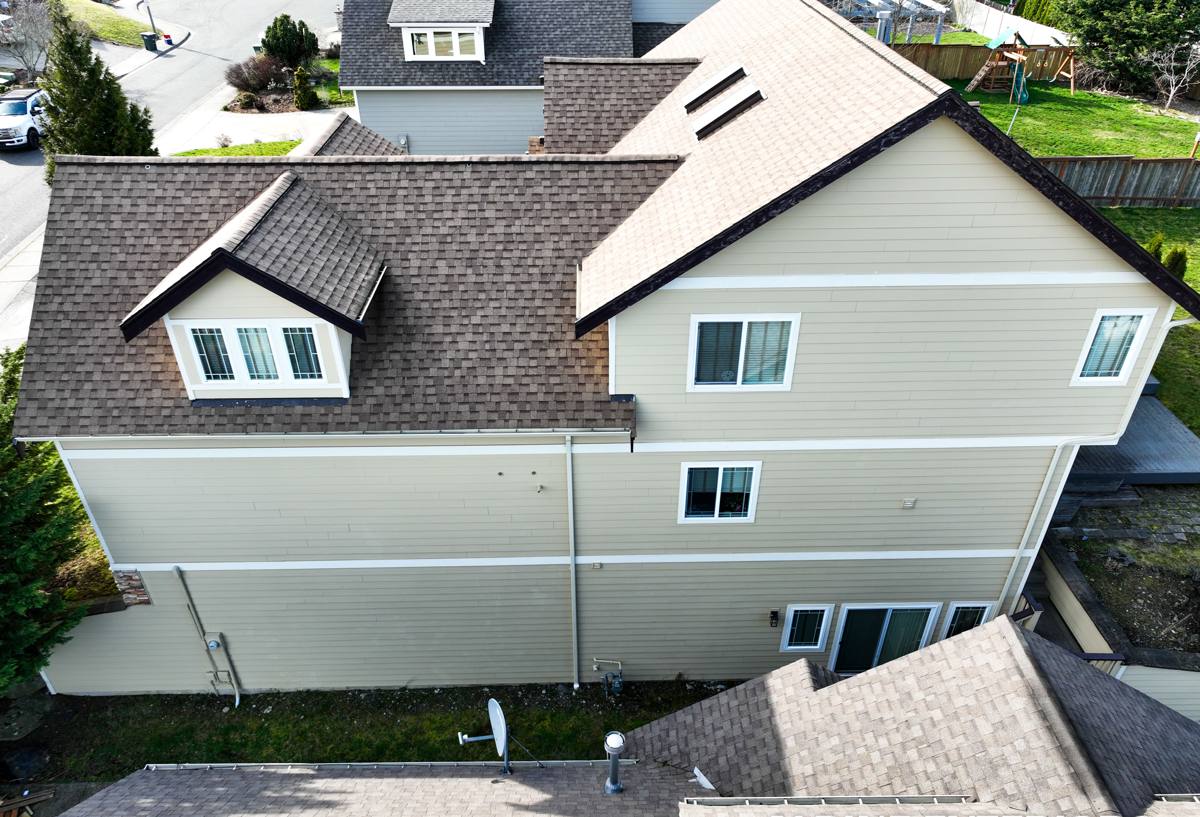
What Whatcom County Weather Actually Does to a Roof
Salt Air and Slow Corrosion
Homes within a few miles of Birch Bay or the Strait get a steady, low-level dose of salt in the air. It's not dramatic — you won't see damage after one season — but over years it accelerates corrosion on unprotected metal, fasteners, and flashing. Roofing systems that aren't rated or coated for coastal exposure can show rust streaking, fastener failure, or finish breakdown well before their expected lifespan. This is one of the main reasons material choice and fastener spec matter more here than they would for the same house sited twenty miles inland.
Driving Rain and Wind-Driven Water
Storms off the water don't just drop rain straight down — wind pushes it sideways and up under laps, flashing edges, and fastener heads. A roof that would shed water fine in a calm rain can leak here if the underlayment, seam design, or flashing details weren't built with wind-driven rain in mind. This is where installation quality matters as much as the material itself.
Moss Season and Trapped Moisture
Whatcom County's long stretch of mild, wet, low-sun months is close to ideal moss-growing weather, especially on north-facing slopes and roofs shaded by trees. Moss holds moisture against roofing material, works into seams and granules, and on asphalt shingles it shortens lifespan noticeably. On a metal roof, moss has almost nothing to grip — but roof design (slope, valleys, debris-catching details) still affects how much collects and how easily it washes off.
Why Metal Roofing Fits This Climate
Metal isn't the right fit for every home or every budget, and we'll say so plainly if that's the case for yours. But for the specific combination of conditions Ferndale deals with, it has real advantages:
- Moss resistance: smooth metal surfaces give moss and algae little to root into, cutting down on the scrubbing and treatment that asphalt roofs need.
- Water shedding: standing seam systems in particular are built around continuous seams rather than overlapping tabs, which reduces the number of places wind-driven rain can work its way in.
- Coastal-rated finishes: properly specified metal roofing uses coatings and fastener materials designed to resist salt-air corrosion for decades, not just look good on day one.
- Longevity: a correctly installed metal roof commonly outlasts two or more asphalt roof cycles, which matters when you're weighing upfront cost against how many times you'll redo the job.
Comparing Metal Roofing Options for a Ferndale Home
Not all metal roofing is the same product wearing different colors. The three options homeowners in this area typically compare each behave differently against salt air, wind-driven rain, and moss:
| System | Fastener Exposure | Best Suited For | Maintenance Notes |
|---|---|---|---|
| Standing seam | Concealed clips, no exposed fasteners on the field | Homes with direct coastal or wind exposure | Lowest long-term maintenance; seams shed water without relying on sealant |
| Exposed-fastener panel | Screws through the panel face, with washers | Budget-conscious projects, outbuildings, shops | Washers and fasteners need periodic inspection and eventual replacement |
| Stone-coated steel (tile/shake profile) | Concealed, similar to standing seam | Homeowners who want a traditional roof look with metal's durability | Coating and granule adhesion should be checked over time; still moss-resistant at the metal core |
We install standing seam most often on homes in this area specifically because of the fastener exposure difference — fewer penetrations through the roofing plane means fewer future points where salt air and wind-driven rain can find a way in.
What a Correct Metal Roof Installation Involves
Deck and Underlayment
Metal roofing is only as good as what's under it. We check the roof deck for rot or soft spots before anything goes down — a common issue on older Ferndale homes where moss and moisture have been sitting unaddressed for years. Underlayment needs to be a high-temp, self-adhering type suited to metal, not a generic felt, since metal panels heat and cool faster than shingles and that movement stresses the layer beneath.
Fastening and Panel Layout
Panel layout, clip spacing, and fastener type all get adjusted for wind exposure. A roof facing open water or sitting on a rise gets tighter clip spacing and heavier-gauge panels than one tucked into a sheltered lot — this is a judgment call that should be made on site, not off a standard spec sheet.
Flashing and Penetrations
Chimneys, vents, skylights, and valleys are where most roof leaks actually start, metal or otherwise. Flashing details here get built for wind-driven rain specifically — that means proper laps, sealant rated for the coastal environment, and design that doesn't rely on caulk alone to keep water out over time.
Ventilation
Metal roofs need proper attic and ridge ventilation to manage condensation, especially in a climate with as much sustained humidity as this one. Skipping this step is a common shortcut that shows up later as moisture damage from the inside, not the outside.
Our Process for a Ferndale Metal Roof Project
- On-site assessment: we look at slope, exposure, existing deck condition, and any moss or moisture damage already present before recommending a system.
- Tear-off or overlay decision: we'll tell you honestly whether your existing roof can be built over or needs to come off — this depends on deck condition and local code, not on what's easiest for us.
- Material and color selection: walking through panel profile, coating, and color options suited to coastal exposure.
- Installation: deck repair as needed, underlayment, panel installation, flashing, and ventilation work, done in sequence rather than rushed.
- Site cleanup and walkthrough: magnetic sweep for stray fasteners, debris removal, and a final walkthrough so you know what to expect from the roof going forward.
Maintaining a Metal Roof in This Climate
Metal roofing is lower-maintenance than asphalt, not maintenance-free. A little seasonal attention keeps it performing the way it should over a Whatcom County winter and the moss season that follows:
- Clear gutters and valleys of needles and debris before fall storms — clogged valleys are where wind-driven rain finds a way to back up under flashing.
- Rinse off accumulated organic debris on shaded, north-facing slopes once a year to keep moisture from sitting against the surface.
- Check exposed fasteners (on exposed-fastener systems) every couple of years for loosening or washer wear.
- Inspect flashing around chimneys, vents, and skylights after major storms, since these are the most common leak points regardless of roofing material.
- Trim back overhanging branches where practical — less shade means less moisture retention and less moss pressure overall.
What Affects the Cost of a Metal Roof
Metal roofing costs more upfront than asphalt, and the range varies by system, roof complexity, and current deck condition. Rather than quote a number that won't reflect your actual roof, here's what actually drives the price up or down:
| Factor | Why It Matters |
|---|---|
| Panel system chosen | Standing seam runs higher than exposed-fastener panel due to material and labor for concealed clips |
| Roof complexity | Valleys, dormers, and multiple penetrations add flashing labor and material |
| Deck condition | Rot or soft decking found during tear-off means repair costs before installation can proceed |
| Coastal-rated coatings | Corrosion-resistant finishes cost more than standard coatings but matter directly for homes near Birch Bay |
| Tear-off vs. overlay | Removing an existing roof adds labor and disposal cost but may be required by code or condition |
We'll walk through these factors specifically for your roof during an estimate rather than giving a one-size number that doesn't account for your home's exposure or condition.
Why Hiring a Crew That Already Works Ferndale Matters
A roofing crew that mostly works inland doesn't run into salt-air corrosion or wind-driven rain patterns often enough to build them into every decision by habit. Fastener choice, flashing detail, and even panel layout should reflect the fact that a Ferndale roof faces different conditions than one in a sheltered inland neighborhood. Local permitting and code requirements also come into play, and a crew that already handles projects in this area knows what inspectors here expect without extra back-and-forth. That familiarity shows up less in the sales pitch and more in the parts of the job you don't see once it's finished — the flashing under a chimney, the clip spacing on an exposed slope, the underlayment choice that holds up through a wet Whatcom County winter.
If you're weighing a metal roof for your Ferndale home, we're happy to walk the roof with you, talk through the honest trade-offs for your specific situation, and put together a free, no-pressure estimate. There's a form below to get that started.