 Birch Bay Exterior
 Why Ferndale Windows Take a Different Kind of Beating
Ferndale sits close enough to the Salish Sea and Birch Bay that salt-laden air is a daily fact of life for anything installed on the exterior of a home, and windows are no exception. Add in Whatcom County's long stretch of driving rain each fall and winter, plus the shaded, damp conditions that let moss and algae take hold on north-facing walls and trim, and you've got a climate that's genuinely harder on window systems than most manufacturers' warranty testing accounts for. This isn't a marketing angle — it's the reason we treat window replacement and custom window installation in Ferndale as a different job than the same work would be in a drier inland climate.
Salt air accelerates corrosion on hardware, fasteners, and some aluminum components. Wind-driven rain finds gaps that would never leak in calmer weather, pushing water sideways into wall assemblies rather than letting it simply run down the glass. And moss doesn't just look bad on a roof — around window openings it holds moisture against trim and sealant far longer than the surrounding wall, which is exactly the kind of slow, hidden problem that turns into rot if nobody catches it.
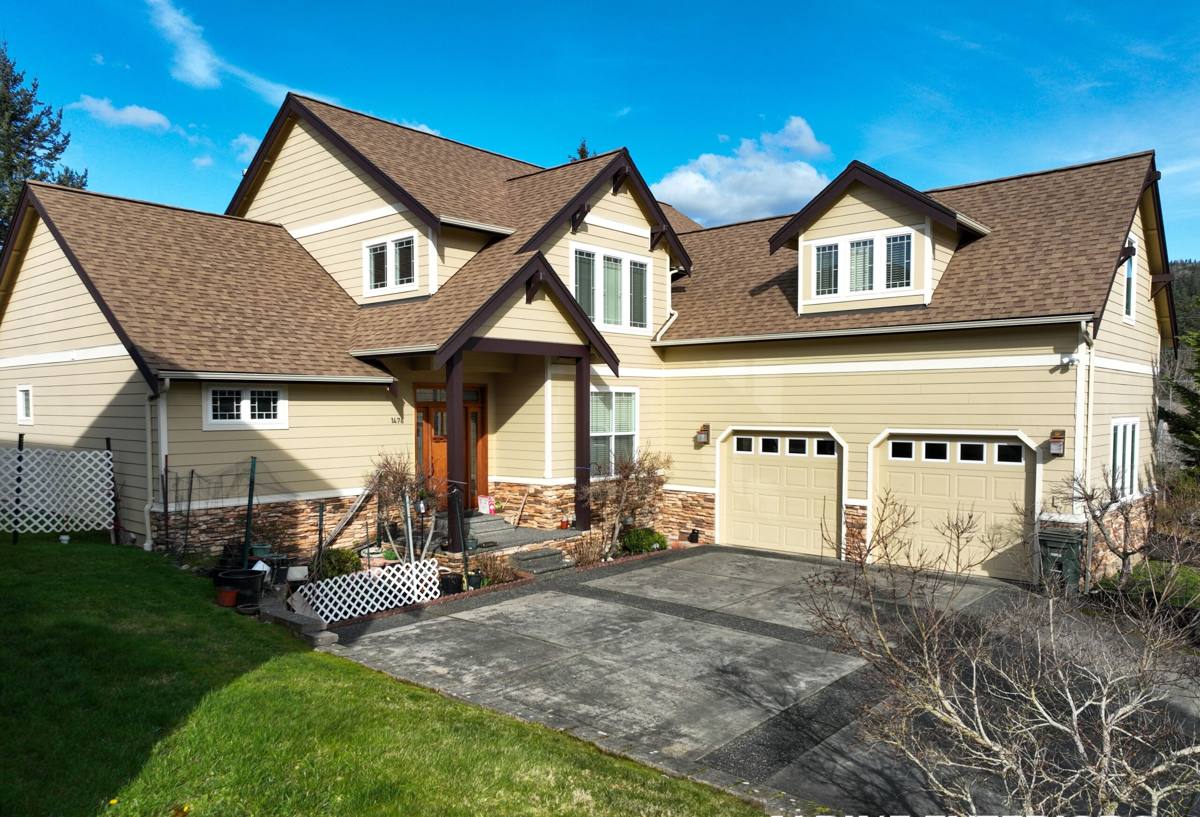
What "Correct" Window Installation Actually Involves
A window looks the same whether it's installed right or installed fast. The difference shows up two, five, or ten years later, usually as a soft spot in the sill or a stain creeping across an interior wall. Getting it right in a climate like this comes down to a handful of details that are easy to skip and expensive to fix later.
The Water Management Layer
Before a new window ever goes into the opening, the rough opening needs proper flashing — a sill pan that directs any water that gets past the window back outside rather than into the wall cavity, plus flashing tape integrated correctly with the home's weather-resistive barrier at the head, jambs, and sill. In a region with as much wind-driven rain as Whatcom County sees, this layer matters more than the window itself.
Sealing and Insulation
The gap between the window frame and the rough opening needs to be insulated and air-sealed, not just caulked around the outside trim. A bead of exterior caulk over a poorly insulated gap will look fine for a season and still let cold air and moisture in around the frame.
Level, Plumb, and Properly Fastened
A window that's slightly out of square won't operate smoothly, won't seal evenly against its own weatherstripping, and will put uneven stress on the frame over time — all of which shortens its working life regardless of how good the window itself is.
Choosing Materials That Handle Salt Air and Moisture
Frame material matters more here than in a lot of other places, because salt air and near-constant moisture exposure will find the weak point in any product over time. There's no single "best" material for every home — it depends on your budget, the home's style, and how much upkeep you want to take on.
| Frame Material | How It Handles This Climate | Maintenance |
|---|---|---|
| Vinyl | Won't corrode or rot; performs well against salt air and rain; can look less premium on higher-end homes | Low — occasional cleaning |
| Fiberglass | Very stable in temperature swings and moisture, strong resistance to warping; excellent long-term option for coastal exposure | Low |
| Wood or Wood-Clad | Best appearance for many homeowners, but bare wood and even some cladding systems need diligent sealing to resist this level of moisture and salt exposure | Higher — regular inspection and refinishing |
| Aluminum | Strong and slim sightlines, but more prone to corrosion in salt air unless it's a marine-grade or well-coated product | Moderate |
We'll walk through these trade-offs honestly during your estimate rather than steering every homeowner toward the same product. What matters is matching the material to how exposed your specific home is — a window on a wall that catches direct salt-laden wind off the bay has different needs than one on a sheltered side of the house.
Our Process for Ferndale Window Projects
- On-site assessment. We look at your existing windows, the condition of the surrounding trim and wall assembly, and how exposed each elevation of the house is to wind, rain, and salt air.
- Honest recommendations. We'll tell you which windows genuinely need replacement now, which are still doing their job, and what your realistic options are — not just the highest-margin upsell.
- Proper opening prep. Old flashing and sealant get removed and inspected; any hidden moisture damage gets addressed before a new window ever goes in.
- Installation with full flashing and air-sealing. Sill pans, integrated flashing tape, and correct insulation around the frame — the parts nobody sees once the trim goes back on.
- Finish work and walkthrough. Interior and exterior trim finished cleanly, hardware checked for smooth operation, and a walkthrough so you know how to maintain what you've got.
Signs Your Current Windows Are Losing the Fight
Because moisture problems around windows develop slowly, a lot of homeowners don't notice until the damage has spread past the window itself. Worth checking for:
- Soft or discolored wood at the sill, either inside or outside the window
- Fogging or condensation between panes of a double- or triple-pane window (a sign the seal has failed)
- Drafts you can feel with a hand near the frame on a windy day
- Difficulty opening, closing, or locking — often a sign the frame has shifted out of square
- Visible corrosion on hardware, hinges, or aluminum components
- Moss, algae, or persistent green staining building up on trim around the window
- Paint or finish that's peeling or bubbling near the frame, which usually points to moisture trapped underneath
Energy Efficiency Is Also a Moisture Question
Homeowners usually ask about energy efficiency in terms of heating bills, and that's a fair concern in a climate with a long, damp, cool season. But an efficient window is also, almost by definition, a well-sealed one — the same weatherstripping, glazing seals, and frame integration that keep heat in are what keep wind-driven rain and salt-laden humidity out. Double- and triple-pane options with quality low-E coatings help on both fronts: they cut down on heat loss and reduce the condensation that builds up on interior glass during Whatcom County's cooler, wetter months, which in turn reduces the moisture load on your window frames and sills over time.
Why a Crew That Already Works Ferndale Matters
Window installation done by the book works the same way on paper anywhere. What changes is how much margin for error you can afford, and in a climate that combines salt air, sustained wind-driven rain, and a moss season that keeps things damp for months at a time, there's very little margin. A crew that regularly works Ferndale and the surrounding Birch Bay area has already seen which details actually cause problems here — where wind-driven rain tends to concentrate on a given home orientation, how quickly moss re-establishes on shaded trim, and which materials hold up versus which ones need more attention than their spec sheet suggests. That's not something you get from a crew installing windows on a resume of dry-climate jobs.
Maintenance That Actually Matters in a Long Moss Season
New windows, correctly installed, need far less upkeep than most homeowners assume — but "far less" isn't "none," especially here. A simple annual routine goes a long way:
- Rinse frames and sills to clear salt residue and organic buildup before it can hold moisture against the surface
- Check exterior caulking and sealant for cracking or gaps once a year, typically before the wet season sets in
- Keep gutters and downspouts clear so water isn't sheeting past window openings
- Trim back vegetation or anything creating shade and dampness right around window trim, which slows moss growth
- Operate hardware periodically so hinges and locks don't seize from disuse and moisture
Get a Straight Answer for Your Home
Every Ferndale home has its own mix of exposure, age, and existing window condition, and the right answer for one house isn't automatically right for the one next door. If you're dealing with drafts, fogged glass, moss buildup around your trim, or windows that are simply past their working life, we're happy to take a look and give you a straightforward assessment — no pressure, no upsell script. Fill out the form below for a free estimate.