 Birch Bay Exterior
 Windows Built for Cottonwood Beach's Waterfront Climate
Cottonwood Beach sits close enough to the water that its houses take a different kind of weathering than homes even a few miles inland. Salt-laden air off the bay works into window frames and hardware year-round. Driving rain off Georgia Strait finds any gap in a seal or flashing detail. And the long, damp moss season that defines western Whatcom County winters keeps everything — siding, trim, window sills — wet for weeks at a stretch. Windows here aren't just an energy question, they're a durability question, and the two are more connected than most homeowners realize.
An old, leaky window doesn't just cost you on the power bill. It's usually also the entry point for the moisture that rots sill framing, fogs glass, and lets salt-air corrosion get at hardware and hinges. When we talk about energy-efficient windows in Cottonwood Beach, we're talking about a package: a window that holds heat in, keeps wind-driven rain out, and is built or finished to shrug off salt exposure for the long haul.
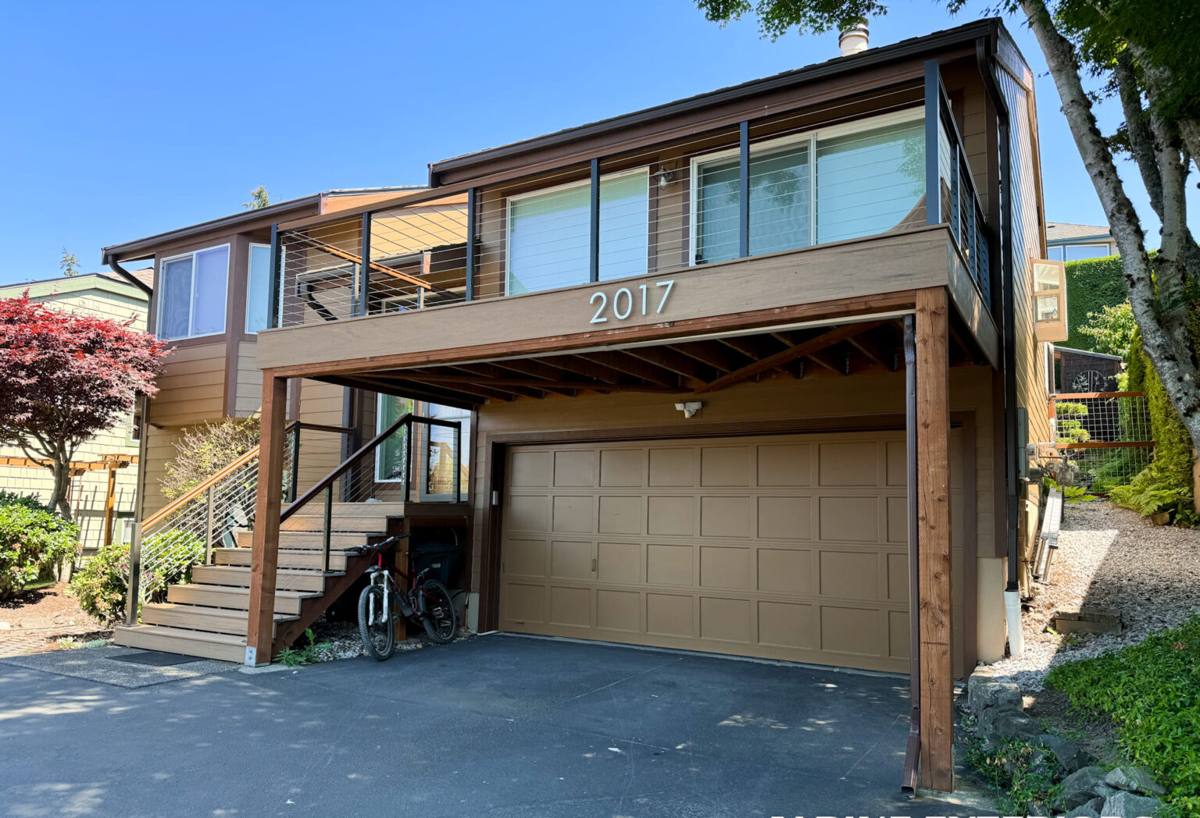
What Local Homes Are Actually Up Against
Salt Air
Airborne salt is corrosive to unprotected metal hardware — hinges, locks, balance systems, and some aluminum framing components. It also accelerates the breakdown of certain sealants and finishes faster than it would a few miles inland. This is why frame material and hardware finish matter more here than they would on a house in, say, Lynden or Sumas.
Driving Rain
Storms coming off the water push rain sideways, not straight down. That means flashing, sill pans, and the seal between the window unit and the rough opening have to work under real wind-driven pressure, not just resist a gentle drip. A window that would perform fine on a sheltered inland lot can leak on a bay-facing wall if it's not detailed correctly.
Moss Season
From roughly late fall through spring, Birch Bay stays damp enough that moss and algae find a foothold anywhere moisture lingers — including window sills, trim, and the bottom corners of frames that don't drain properly. Persistent damp at a window's edges is one of the most common ways we see wood trim and sheathing start to fail behind an otherwise fine-looking window.
What "Energy-Efficient" Actually Means for This Location
Energy efficiency in a window comes down to a handful of measurable properties, and for a Whatcom County waterfront home, we weight them a little differently than a generic efficiency checklist would.
- U-factor — measures how well the window resists heat loss. Lower is better. This is the number that matters most for our mild-but-persistently-cool winters, where the goal is holding heat in over many months rather than blocking intense summer sun.
- Solar Heat Gain Coefficient (SHGC) — measures how much solar heat passes through the glass. In this climate we generally want a moderate SHGC that lets in some free winter warmth on clear days without overheating south- or west-facing rooms in summer.
- Air leakage rating — measures how much air moves through the assembled window, not just the glass. This is directly tied to comfort and to how much wind-driven rain can find its way in around a poorly sealed unit.
- Condensation resistance — relevant in our damp climate because a window that condensates heavily on the interior is feeding moisture right back into your sills and trim.
A window can carry an efficiency label and still be a poor fit for a bay-facing wall if it isn't installed with the right flashing and sealing details underneath. We treat the product spec and the installation as one package, not two separate decisions.
Frame Material: What Holds Up Near the Water
There's no single "best" frame material for every house — it depends on your home's style, budget, and how exposed the specific wall is. Here's how the common options compare for a Cottonwood Beach setting.
| Frame Material | Salt-Air Behavior | Maintenance | Typical Fit |
|---|---|---|---|
| Vinyl | Doesn't corrode; UV-stable formulations hold color well | Low — occasional cleaning | Most homes; best value-to-performance |
| Fiberglass | Excellent — dimensionally stable, resists salt and moisture | Low | Homes wanting a slimmer profile or higher-end finish |
| Wood-clad | Good if cladding and seals stay intact; exposed wood is vulnerable | Higher — watch cladding seams and interior wood | Homes prioritizing interior wood appearance |
| Aluminum | Prone to corrosion and thermal loss unless thermally broken and properly finished | Moderate | We use this selectively and only with the right finish spec |
For most Cottonwood Beach replacements, we steer homeowners toward vinyl or fiberglass because they hold up against salt exposure with the least ongoing upkeep. Where a homeowner wants a wood interior look, we'll spec it, but we're upfront that it comes with a maintenance commitment that vinyl and fiberglass don't.
How We Approach a Window Job in Cottonwood Beach
1. Assess the Opening, Not Just the Window
Before we talk product, we look at the rough opening: is there existing rot, is the sill sloped to drain, is the flashing behind the siding doing its job. Replacing glass in a bad opening just relocates the problem.
2. Detail the Water Management
On a wind-driven-rain wall, the sill pan and flashing sequence matter as much as the window itself. We integrate flashing with the existing weather-resistive barrier so water is shed outward at every layer, not just caulked over at the surface.
3. Seal and Insulate the Gap Correctly
The gap between the window frame and rough opening gets backer rod and appropriate sealant plus low-expansion foam where called for — enough to stop air movement without bowing the frame out of square.
4. Set Hardware and Finish for Salt Exposure
Where a house is close enough to the water to see regular salt spray, we pay attention to hardware finish and, where relevant, recommend rinsing exterior hardware periodically as part of routine upkeep.
5. Final Check
Every install gets checked for square, level, smooth operation, and a clean, weathertight seal at the exterior before we call it done.
Signs Your Current Windows Are Past Their Useful Life
- Fogging or a visible film between panes — the seal on a double-pane unit has failed
- Drafts you can feel near the frame even with the window fully closed
- Soft or discolored wood at the sill or lower corners of the frame
- Difficulty opening, closing, or locking — often a sign the frame has shifted or hardware has corroded
- Visible moss or persistent green staining on the exterior sill or trim
- Noticeably higher heating costs compared to similar homes nearby
Any one of these on its own isn't necessarily urgent. Several together, especially on a wall that takes direct weather off the bay, is usually a sign it's time to plan replacement before hidden damage grows.
What Affects Cost
We don't quote prices without seeing the actual openings, but these are the factors that move a Cottonwood Beach window project up or down in cost.
| Factor | Why It Matters |
|---|---|
| Frame material | Fiberglass and higher-end vinyl typically cost more than builder-grade vinyl |
| Glass package | Triple-pane or upgraded low-E coatings add cost but improve comfort and efficiency |
| Opening condition | Rot repair or reframing at the sill adds labor beyond a straightforward swap |
| Wall exposure | Bay-facing walls may need more robust flashing and sealing detail |
| Number and size of openings | Larger or custom-sized windows cost more than standard sizes |
| Installation method | Full-frame replacement (removing down to the rough opening) costs more than an insert but is often the right call on an older or water-damaged opening |
Keeping New Windows Performing in This Climate
- Rinse exterior frames and hardware periodically to clear salt residue, especially on bay-facing walls
- Keep gutters and downspouts clear so roof runoff isn't sheeting down over window heads
- Clear moss or debris from sills before it holds moisture against the frame
- Check that weep holes (drainage openings) on vinyl and fiberglass frames stay clear
- Re-caulk visible exterior seals if you notice cracking or gaps developing over the years
Why It's Worth Hiring a Crew That Already Works This Neighborhood
A window crew that mostly works drier, inland jobs can install a perfectly good window and still get the water management wrong for a bay-facing wall, because that failure mode simply doesn't show up as often where they usually work. Working regularly in Birch Bay and Cottonwood Beach means we're used to designing for wind-driven rain and salt exposure as the default, not the exception. That shows up in the flashing details, the hardware and finish choices we recommend, and the maintenance guidance we give you afterward — not in anything you'd notice by looking at the window itself on install day.
If you're weighing whether it's time to replace windows on a Cottonwood Beach home, we're happy to take a look and give you a straight, no-pressure assessment. Use the form below to request a free estimate — there's no obligation, and no hard sell.