 Birch Bay Exterior
 Cottonwood Beach Decks Face a Different Kind of Wear
Cottonwood Beach sits close enough to the water that every deck out here is dealing with more than ordinary weather. Salt-laden air off the Strait of Georgia works into fasteners and metal connectors faster than it does even a few miles inland. Whatcom County's driving rain comes in sideways off the water during winter storms, finding gaps around ledger boards and post bases that a calmer climate would never expose. And the long, damp shoulder seasons here mean moss and algae get a real foothold on any deck surface that doesn't drain and dry quickly. None of this is unusual for a beachfront community — it's just the baseline you're working against, and it's why deck repair in this neighborhood looks different from deck repair in a dry inland subdivision.
We've repaired decks up and down this stretch of Birch Bay long enough to know which failures show up first, which ones are cosmetic, and which ones are a safety issue waiting to happen. This page is about deck repair specifically — patching, reinforcing, and rebuilding the parts of an existing deck that have failed — not a full ground-up replacement, though we'll tell you honestly when repair isn't the right call anymore.
Signs Your Deck Needs Repair Attention
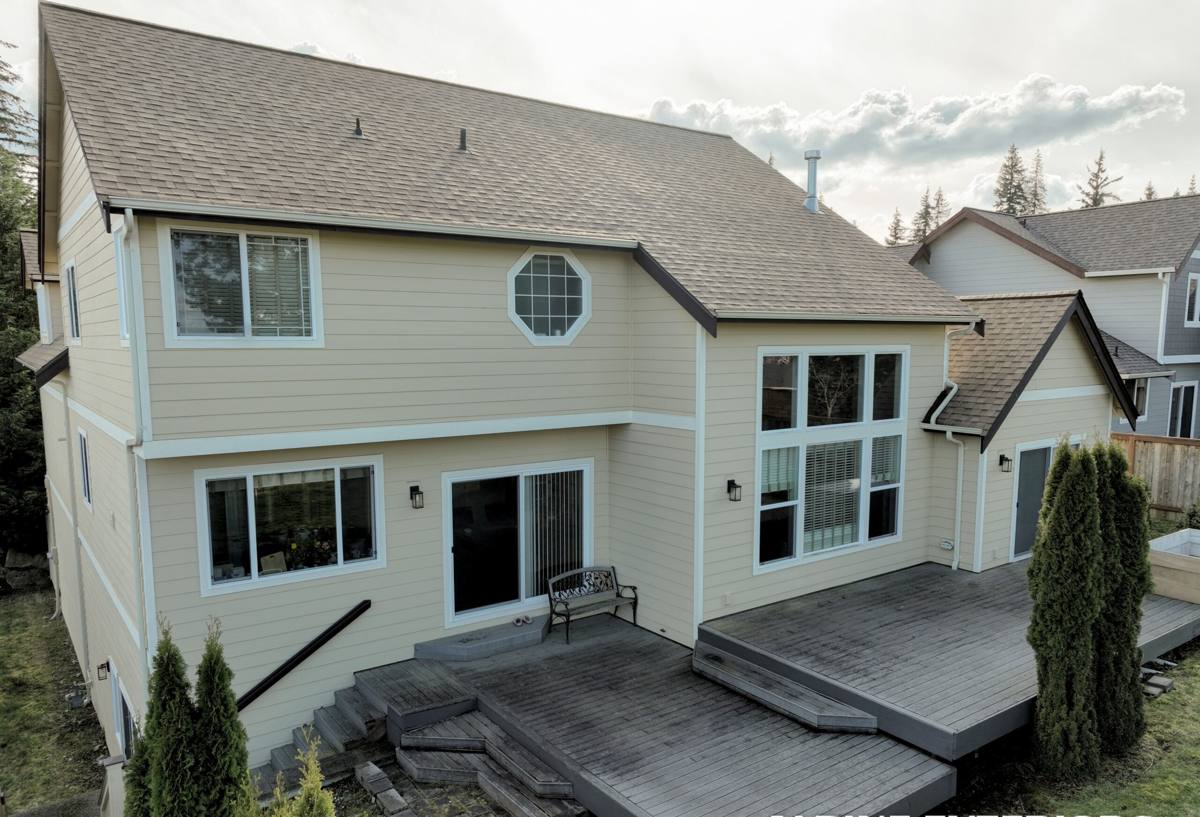
Most deck problems in this area start small and get worse quietly, underneath the boards where you don't look every day. A short walk-around a couple times a year catches most of it before it becomes structural.
- Boards that feel spongy, bounce, or flex more than they used to when you walk across them
- Any gap, dark staining, or soft wood where the deck ledger board attaches to the house
- Rust streaks running down from screws, nails, or joist hangers
- Railings or posts that wiggle when pushed — even a small amount of movement at the top of a post
- Green or black film on stair treads and shaded boards that stays damp for days after rain
- Stair stringers that show splitting or crumbling at the ground contact point
- Gaps opening up between decking boards wider than when the deck was built
- Visible daylight or soft spots around post bases where they meet concrete footings
If you're seeing two or three of these at once, it's usually still a repair job — not a rebuild. Left alone through another wet Whatcom County winter, though, several of these can turn into replacement projects.
The One Sign That Changes Everything
Ledger board problems are the exception to "it can probably wait." The ledger is the framing member bolted to your house that carries a large share of the deck's weight. If it's soft, delaminating, or pulling away from the house band board, that's a structural safety issue, not a maintenance item, and it should be looked at promptly regardless of the season.
Where Decks Actually Fail on the Birch Bay Coastline
Not every part of a deck ages at the same rate. In our experience working this specific stretch of coast, failure follows a fairly predictable pattern tied directly to how water and salt air move through the structure.
| Deck Component | Why It Fails Here | Typical Repair Approach |
|---|---|---|
| Ledger board & flashing | Wind-driven rain forces water behind poorly flashed or aging flashing, rotting the ledger and house band board from behind | Remove decking at the house line, replace flashing, sister or replace the ledger as needed |
| Fasteners & joist hangers | Salt air accelerates corrosion, especially on fasteners that weren't rated for coastal or treated-lumber exposure | Replace with coastal-rated stainless or hot-dip galvanized hardware throughout, not spot-patched |
| Post bases & footings | Standing water and freeze-thaw cycling at grade level rot post bottoms and can shift footings over time | Cut back rotted post material, install proper post base hardware off the concrete, re-anchor if needed |
| Decking boards | Constant damp-dry cycling and moss growth cup, crack, or soften boards, especially on the shaded north side | Selective board replacement, matched where possible, full re-decking when failure is widespread |
| Railings & guardrails | Loose post connections from wood movement and corroding lag bolts, worsened by wind loading off the water | Re-anchor posts with proper structural hardware, replace any undersized original connections |
| Stair stringers | Ground contact and splash-back moisture cause rot at the base faster than anywhere else on the deck | Sister or replace affected stringers, improve ground clearance and drainage at installation |
Repair or Rebuild? How We Make That Call
Homeowners usually want a straight answer on this, and we give one. The decision comes down to how much of the structural frame — as opposed to the surface decking — is actually compromised.
| Factor | Leans Toward Repair | Leans Toward Rebuild |
|---|---|---|
| Ledger & framing condition | Solid, with isolated soft spots | Widespread rot or repeated past patch jobs |
| Age of structure | Under roughly 15-20 years, built to a reasonable original standard | Original construction is old, undersized, or code has changed significantly since |
| Footings & posts | Footings are sound, posts need hardware or partial replacement | Footings are undersized, cracked, or shifting |
| Decking surface | Scattered board failures across an otherwise sound deck | Most boards are cupped, splitting, or beyond fastener life |
| Your plans for the deck | You're happy with the current size and layout | You want a different footprint, added roof, or upgraded railing system |
We'll always open things up and show you what we find before recommending one path over the other. In this climate, a deck that looks rough on the surface can have a perfectly sound frame underneath, and vice versa — a deck that looks fine from the yard can have a rotted ledger you'd never see without pulling boards.
How We Handle a Deck Repair, Start to Finish
1. On-Site Assessment
We walk the whole structure, check the ledger connection, probe suspect boards and framing with a screwdriver or awl, and look at the post bases and stair stringers up close. This is where we tell you honestly what's cosmetic, what's structural, and what can reasonably wait.
2. A Written Scope, Not a Guess
You get a clear description of what's being repaired, what materials and hardware we're using, and why — no vague "as needed" line items. If we find something worse once boards come up, we stop and talk to you before proceeding, not after the invoice.
3. Removal & Structural Repair
Decking comes up where needed to expose the framing underneath. Rotted ledger sections, joists, or posts get sistered or replaced with lumber rated for exterior and coastal exposure. Flashing at the house connection gets addressed properly — this step gets skipped or rushed more than any other, and it's usually the reason a deck fails again within a few years.
4. Hardware & Fastener Upgrade
Any hardware original to an older deck almost never meets today's coastal corrosion standards. We replace joist hangers, post bases, and structural screws with stainless or hot-dip galvanized hardware rated for this environment, not the standard interior-grade fasteners that show up in a lot of original builds.
5. Decking, Railing & Stair Restoration
Damaged boards get replaced and matched as closely as possible to the surrounding material. Loose railings get properly re-anchored to code. Stair stringers with rot at the base are sistered or replaced so the stairs are solid, not just cosmetically patched.
6. Final Walkthrough
We walk the finished deck with you, point out what was done and why, and flag anything worth watching going forward — a shaded corner that'll need more frequent cleaning, for instance, or a board that's borderline and worth revisiting next season.
Wood or Composite: What We Use When Boards Need Replacing
When we're replacing sections of decking rather than the whole surface, matching the existing material is usually the right call for both appearance and budget. When a homeowner is open to switching materials on a badly damaged section, here's how we frame the honest trade-offs:
- Pressure-treated lumber: Lowest material cost, widely available, but needs regular sealing and is the most susceptible to moss growth and surface checking in this climate if maintenance lapses.
- Cedar: Naturally more rot-resistant and a good match for older Pacific Northwest decks, but still needs periodic finishing to hold up against salt air and rain.
- Composite decking: Higher upfront cost, no sealing or staining required, and better resistance to moisture cupping — though it can still grow surface algae if it stays shaded and damp, and it needs proper ventilation underneath to perform as intended.
We don't push one material over another as a blanket rule. The right choice depends on your budget, how much of the deck is being replaced, and how much upkeep you actually want to do each year.
Permits and Code Requirements in Whatcom County
Cosmetic repairs — replacing a handful of boards, refastening a few loose connections — typically don't require a permit. Structural work is a different matter. Replacing a ledger board, altering framing, or rebuilding a guardrail system can fall under Whatcom County permitting requirements, and guardrail height, baluster spacing, and load capacity are governed by building code regardless of when the original deck was built. We handle the permit conversation with you upfront when a repair crosses that line, rather than leaving you to find out later that work needs to be reopened or corrected.
Keeping Moss and Algae From Undoing the Repair
A repaired deck in Cottonwood Beach is still going to face the same long moss season every deck here deals with. A few habits go a long way toward protecting the work:
- Sweep debris and standing organic matter off the deck surface regularly through fall and winter
- Keep gutters and downspouts near the deck clear so runoff isn't dumping extra water onto the structure
- Trim back vegetation that shades the deck and keeps boards from drying out between rains
- Check fastener heads and hardware once a year for early rust, especially after the first winter following a repair
- Re-seal wood decking on the schedule appropriate to the finish product used
Why Hiring a Crew That Already Works Cottonwood Beach Matters
A contractor who mainly works inland jobs isn't wrong about deck repair in general — but they may not have a feel for how fast salt air corrodes standard hardware here, or how a north-facing deck a block from the water holds moisture differently than one further inland. We work this specific stretch of Birch Bay regularly enough to know which failure patterns to expect before we even start pulling boards, which saves time during the assessment and means fewer surprises once the work is underway.
We're also familiar with the older deck construction common to homes in this area, including hardware and framing practices that were standard decades ago but don't hold up to current coastal exposure standards. That local pattern recognition is the difference between a repair that lasts and one that's patching the same failure point again in a few years.
Get an Honest Look at Your Deck
If your deck is showing any of the signs above, or you just want an honest opinion on whether it needs repair now or can reasonably wait, we're happy to come take a look. The estimate is free, there's no pressure attached to it, and you'll get a straight answer about what your deck actually needs — use the form below to get started.