 Birch Bay Exterior
 Deck Building on the Whatcom County Coast
Blaine sits at the northern tip of Whatcom County, right on the water and a few minutes from the Canadian border. That location is part of what makes it a great place to live, but it also means homes here take a different kind of weather than a house twenty miles inland. Wind off the water carries salt. Rain doesn't just fall straight down, it drives sideways into ledger boards and railings. And for a good stretch of the year, shaded surfaces stay damp long enough to grow moss. A deck built to a generic set of plans, with generic hardware, will show its age in Blaine faster than it would in a drier, more sheltered part of the county.
We build decks in Birch Bay and the surrounding area, including Blaine, and we treat coastal exposure as a design condition, not an afterthought. This page covers what that actually means in practice: the materials that hold up, the structural details that matter most, and the process we follow from first visit to final walkthrough.
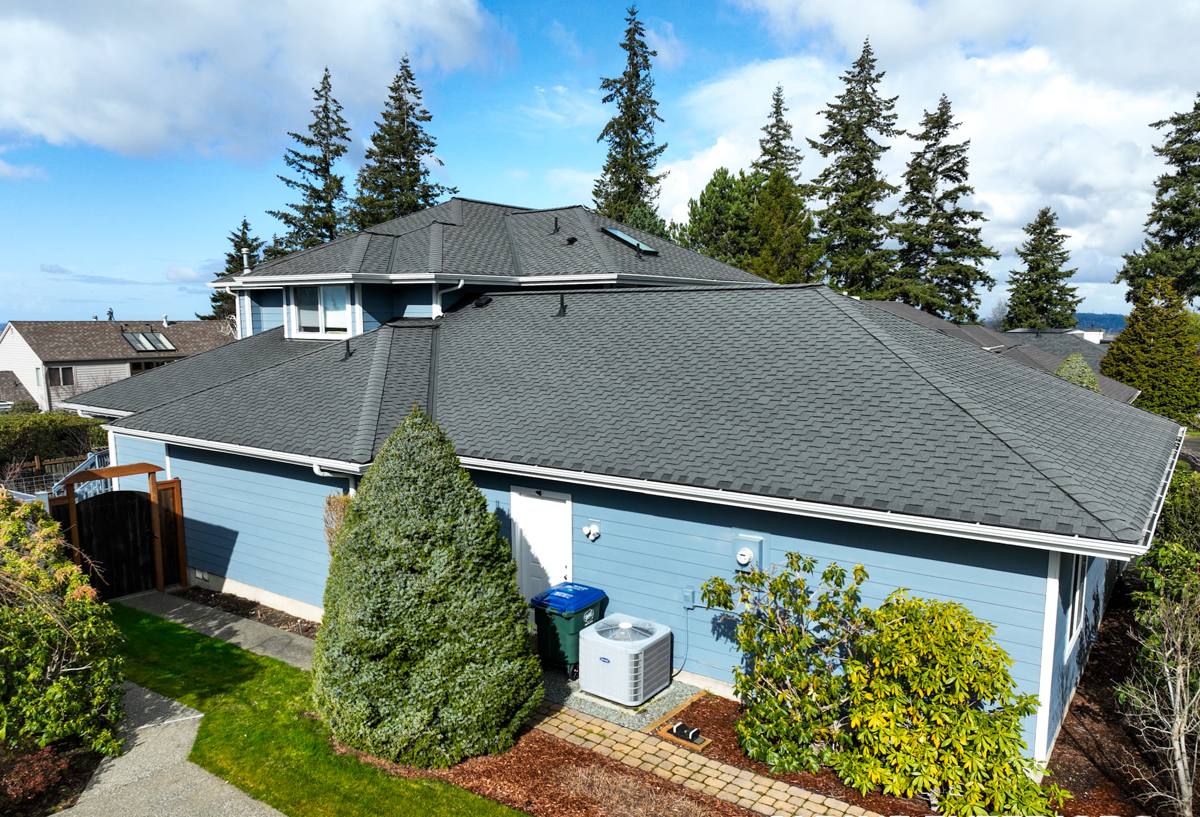
What Salt Air, Driving Rain, and Moss Season Actually Do to a Deck
Salt Air and Corrosion
Airborne salt accelerates corrosion on anything metal — screws, joist hangers, bolts, hinges, and railing hardware. On a standard-grade fastener, that shows up as rust streaks bleeding into the decking within a couple of seasons, and eventually as a weakened connection you can't see until it fails. The fix isn't complicated, but it does mean spending more on hardware up front than a big-box deck kit typically includes.
Driving Rain and Water Intrusion
Rain that comes in at an angle off the water finds its way into places vertical rain never would: behind ledger boards, under poorly lapped flashing, and into the gaps between deck boards where debris collects. Once water gets past the surface and into end grain or a fastener hole, it doesn't dry out quickly in our climate. That slow, repeated wetting is what causes rot, not any single storm.
The Long Moss Season
Shaded decks, north-facing decks, and decks under tree cover stay damp for long stretches of fall, winter, and spring. That's exactly what moss and algae need to take hold. Beyond looking bad, a mossy deck surface is a real slip hazard when wet, and moss holds moisture directly against the wood or composite surface, which shortens the life of whatever is underneath it.
Choosing a Decking Material That Can Handle This Climate
There's no single "correct" decking material for every home — it depends on budget, how much upkeep you want to do, and how exposed the deck is. What matters is picking with the coastal conditions in mind rather than by looks alone. Here's how the common options compare for a marine climate like Blaine's:
| Material | Moisture Behavior | Maintenance | Typical Lifespan |
|---|---|---|---|
| Pressure-treated pine | Prone to cupping and checking if not sealed regularly; end grain absorbs water readily | Annual cleaning, re-sealing every 1-2 years | 10-15 years with upkeep |
| Cedar | Naturally rot-resistant heartwood, but surface still needs protection from constant damp | Regular cleaning and periodic staining/sealing | 15-20 years with upkeep |
| Capped composite | Doesn't absorb water or rot; performs consistently in wet, salty air | Occasional washing; no staining or sealing | 25+ years |
| PVC decking | Fully synthetic, no wood fiber to hold moisture; handles constant damp well | Occasional washing | 25+ years |
We're honest with clients about the trade-offs. Real wood costs less up front and can look great, but it asks for a maintenance commitment — cleaning, sealing, and watching for soft spots — that's harder to keep up with in a climate that stays damp much of the year. Composite and PVC cost more initially but shift that burden away from you, which is why we lean toward them for exposed, shaded, or waterfront-facing decks in this area. Where a client wants the look and feel of real wood and is willing to maintain it, we'll build with it — we just make sure the framing underneath is protected regardless of what's on top.
What Happens Below the Decking: Framing, Footings, and Fasteners
Footings in Damp, Variable Soil
Footings need to be set below frost depth and sized correctly for the soil they're sitting in, which can vary block to block in this area. We also grade and drain around footings so water doesn't pool against concrete or posts — standing water at the base of a support post is a slow, hidden way for a deck to lose structural integrity over years.
Fasteners and Hardware
This is one of the most overlooked details in deck construction, and one of the most important near the water. We use hot-dip galvanized or stainless steel fasteners and connectors rated for exposed, corrosive environments — not the standard hardware that comes bundled with a generic framing package. It costs more per piece, but it's the difference between hardware that's still sound in fifteen years and hardware that's rust-streaked and weakening in three.
Ledger Board Attachment
The ledger board — where the deck attaches to the house — is the single most common point of deck failure nationally, and driving rain makes it more of a risk here, not less. Correct flashing, proper fastener spacing, and a gap or membrane that lets water shed away from the house wall are non-negotiable details, not upgrades.
Our Deck Building Process
Every project runs through the same sequence, whether it's a small ground-level deck or a larger multi-level build:
- Site visit and assessment — we look at sun and wind exposure, drainage, soil, and how the deck will attach to your home before recommending anything.
- Design and material selection — we walk through the trade-offs above so you're choosing with full information, not guessing.
- Permitting — we handle the application and coordinate inspections so you're not chasing paperwork.
- Demolition, if replacing an old deck — including a check of the ledger and framing behind it for hidden rot before we build new.
- Footings and framing — built to code with corrosion-resistant hardware throughout.
- Decking, railings, and stairs — installed with attention to drainage, board spacing, and fastener pattern.
- Final walkthrough — we go over the finished deck with you, including what maintenance (if any) it needs going forward.
Railings, Stairs, and Code Requirements
Guardrail height, baluster spacing, and stair geometry all follow Washington building code, and we build to those specs as a floor, not a suggestion. Railings deserve the same material thinking as decking — a wood rail exposed to constant wind and moisture needs the same upkeep as wood decking, while aluminum and composite rail systems shrug off salt air with far less attention. Cable railing looks clean but uses a lot of small metal hardware under constant tension, which is worth thinking through carefully in a corrosive coastal environment before committing to it.
Living With a Coastal Deck: A Maintenance Checklist
Even a well-built deck benefits from a bit of seasonal attention. Whatever material you choose, this covers the basics for our climate:
- Sweep debris out of board gaps regularly — trapped leaves and needles hold moisture against the surface
- Rinse or wash off salt residue and algae buildup a few times a year, more often on shaded or waterfront-facing decks
- Check fasteners and railing connections annually for rust streaking or looseness
- Inspect the ledger board area and flashing where the deck meets the house each fall before the rainy season
- Re-seal or re-stain wood decking on the schedule the product calls for — don't wait for it to look dry and gray
- Trim back overhanging branches that keep sections of the deck shaded and slow to dry
- Watch for soft or spongy spots underfoot, which usually mean moisture has gotten into the framing below
Permits and Local Site Conditions
Deck projects in and around Blaine typically require a building permit, and depending on the property, shoreline or critical area regulations can affect setbacks and design for lots near the water. We handle the permitting process as part of the job so you're not left figuring out which jurisdiction and requirements apply to your specific lot. If your property has any shoreline proximity or drainage complications, we'll flag that during the initial site visit rather than after the design is finalized.
Why Hire a Crew That Already Works in Blaine
A deck built to a generic national spec can still fail early in a marine climate, even if every step was technically done "to code." What holds up here comes down to details that aren't always obvious from a set of plans: which fasteners actually resist salt air over time, how much drainage a footing needs in this soil, where driving rain finds its way into a structure that would stay dry a few miles inland. That's knowledge that comes from building and maintaining decks in this specific area, season after season — not from a manual.
We're already working in Blaine and the surrounding Birch Bay area, which means we know the local permitting process, we've seen how decks in this climate age over ten and fifteen years, and we build accordingly from the first footing. If you're planning a new deck or need to replace one that's showing its age, we're happy to take a look and give you a straightforward, no-pressure estimate using the form below.