 Birch Bay Exterior
 Windows Built for Cherry Point's Shoreline Climate
Cherry Point sits right on the water along the Strait of Georgia, just outside Birch Bay in Whatcom County, and that shoreline location shapes everything about how windows perform here. Homes on or near this stretch of coast take a steady dose of salt-laden air, wind-driven rain that comes in sideways off the water, and a moss season that runs long into the year given our Pacific Northwest rainfall. Standard window installation practices — the kind that work fine for a house twenty miles inland — often aren't enough out here. Seals fail faster, frames corrode or swell sooner, and moisture finds its way into places it shouldn't.
When we talk about "custom windows" for Cherry Point, we're not just talking about non-standard sizes, though that's part of it. We're talking about matching the frame material, the flashing details, and the installation sequence to what this specific microclimate actually demands. A window that's rated fine for general Pacific Northwest use can still underperform on a property with direct water exposure and prevailing wind off the Strait.
What "Custom" Means When Your Home Isn't a Standard Size
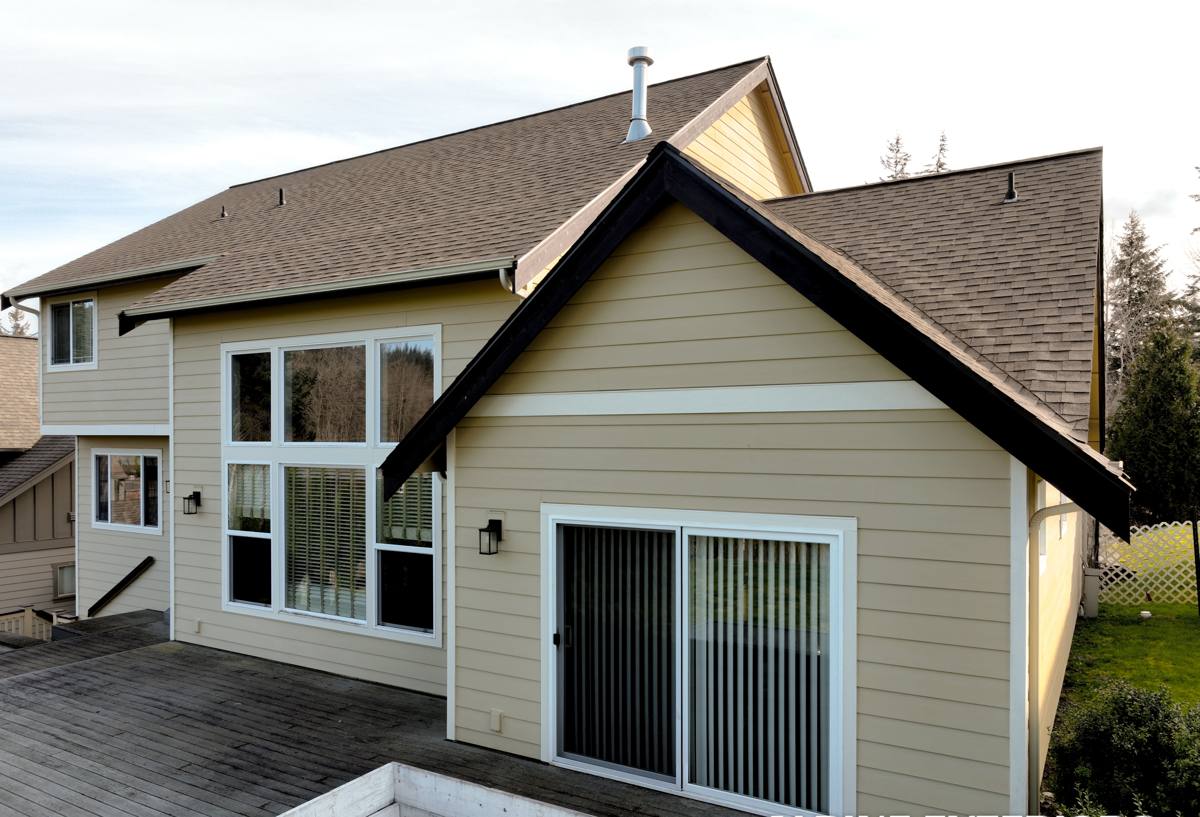
A lot of homes in and around Cherry Point were built in phases, added onto, or updated over the decades — which means rough openings are frequently a quarter-inch (or more) off from anything you'd find on a big-box shelf. Waterfront and near-waterfront properties also tend to have larger view openings, picture windows, or combination units that were sized to the room rather than to a catalog spec.
Custom work means:
- Field-measuring every opening rather than relying on original builder specs, which are often wrong by the time a window is due for replacement
- Ordering frames sized to the actual opening instead of resizing the opening to fit a stock window
- Matching sightlines and trim profiles across a home that may have mismatched window ages and styles
- Accounting for larger glass units on view-oriented walls, which carry more wind load and need different anchoring
Skipping this step and forcing a stock size into an odd opening is one of the most common reasons a window that should last decades starts leaking or drafting within a few years.
Signs Your Current Windows Are Losing the Battle
Salt air and constant moisture exposure don't fail a window all at once — they wear it down gradually, and a lot of homeowners don't notice until the damage has spread past the window itself. Worth checking for:
- Fogging or a hazy film between panes of double-pane glass (a sign the seal has failed and the gas fill is gone)
- Visible pitting, chalking, or corrosion on metal hardware and frame fasteners
- Soft or discolored wood at the sill or jamb, especially on walls facing the water or prevailing wind
- Moss or dark green growth building up in the frame corners or track, not just on the roof or siding
- Windows that stick, won't latch fully, or need force to open — often a sign the frame has swollen or racked
- A persistent draft you can feel with a hand near the frame on a windy day
Any one of these on its own might just mean a repair. Several at once, especially on the water-facing side of the house, usually means the windows are past the point where patching makes sense.
What a Correct Installation Actually Involves
The window unit itself is only part of the job. In a location like Cherry Point, the flashing and sealing details around the window matter as much as the product — arguably more, since a good window installed poorly will leak long before the glass or frame itself gives out.
The details that actually keep water out
A correct install integrates the window with the home's water-resistive barrier in the right order — sill pan flashing first, then side flashing, then head flashing, each one lapped over the layer below so water is always directed outward and down, never trapped behind the siding. Sealant is used to manage air and vapor, not as a substitute for proper flashing sequence. Shimming needs to be done so the frame stays square and doesn't rack under wind load, which matters more here than in a sheltered inland location.
Skipping or rushing any one of these steps is exactly how a brand-new window ends up with rot in the wall cavity within a few years — the window looks fine from outside while water works its way in behind it. This is also why we don't take shortcuts on installation labor to hit a lower price; on this stretch of coast, the installation quality determines the lifespan more than the product line does.
Choosing the Right Frame Material for Salt Air
Frame material choice matters more here than it does for an inland Whatcom County home. Here's how the common options generally hold up under sustained salt air and moisture exposure:
| Frame Material | Salt Air / Moisture Behavior | Maintenance Burden | General Cost Tier |
|---|---|---|---|
| Vinyl | Doesn't corrode; UV and heat can affect long-term color and rigidity over many years | Low — occasional rinse to clear salt film | Lower |
| Fiberglass | Very stable dimensionally, resists corrosion and doesn't swell with moisture | Low | Higher |
| Wood-clad | Interior wood offers warmth but exterior cladding must stay fully sealed; any breach lets moisture reach the wood core | Higher — needs regular inspection of seals and finish | Higher |
| Aluminum | Prone to corrosion and pitting in direct salt exposure unless it's a marine-grade finish | Moderate to high near the water | Varies |
We don't push one material as universally "best" — a sheltered side of the house facing away from the water has different needs than a wall that takes wind and spray directly. Part of our job is looking at each elevation of your home separately rather than specifying one product for the whole house by default.
Our Process for Cherry Point Installations
The process is straightforward, but we don't skip steps just to move faster:
- On-site assessment. We look at each window opening individually, note which walls face prevailing wind and water, and check the condition of the surrounding wall material before quoting anything.
- Field measurement. Every opening gets measured directly — we don't quote off assumed standard sizes.
- Material and product selection. We walk through frame material and glass package options based on which side of the house the window is on, not a one-size answer for the whole project.
- Removal and inspection. When we pull the old window, we check the sheathing and framing underneath for hidden moisture damage before installing anything new — this is often where problems get found that weren't visible from inside.
- Installation with full flashing integration. Sill pan, side, and head flashing installed in the correct sequence and tied into the home's existing water barrier.
- Sealing, insulation, and trim. Gaps are insulated and sealed properly, then trim is finished to match the rest of the home.
- Final walkthrough. We check operation, latching, and seal quality with you before considering the job done.
Why Hiring a Crew That Already Works Cherry Point Matters
General window replacement experience doesn't automatically translate to good results on a shoreline property. A crew that regularly works Cherry Point and the surrounding Birch Bay area already knows which wall orientations take the worst of the wind and salt spray, how far moss and mildew problems tend to travel up from grade level in a wet year, and how the local building department handles window replacement permitting and egress requirements.
That familiarity shows up in small decisions that add up: sealant choice for a wall that gets direct spray versus one that doesn't, whether a given opening needs extra attention to weep paths, and realistic expectations for how a given frame material will hold up on this specific coastline versus a general product spec sheet written for a much broader climate range.
Living With Custom Windows Through Moss Season
New windows still need some basic upkeep in this climate, and a little attention goes a long way toward protecting the investment:
- Rinse exterior frames periodically to clear salt residue, especially after storms with onshore wind
- Keep weep holes at the base of the frame clear of dirt, moss, and debris so water can drain as designed
- Check and clear tracks on sliding or double-hung windows so moss and organic buildup don't hold moisture against the frame
- Inspect exterior caulking annually, particularly on wood-clad units, and touch up before a gap opens up
- Trim back vegetation that shades a window and keeps it damp longer than the rest of the house
None of this is heavy maintenance, but skipping it in a climate like this shortens the life of even a well-installed window.
Get a Straight Answer for Your Home
Every home along this stretch of coast is a little different depending on which way it faces and how exposed it is to wind and spray, so we're not going to guess at what your house needs from a distance. If you're in Cherry Point or elsewhere around Birch Bay and want a straightforward look at your windows — no pressure, no upsell script — request a free estimate below and we'll come take a real look.